
Table of contents
Open Table of contents
Foshan City Highlights
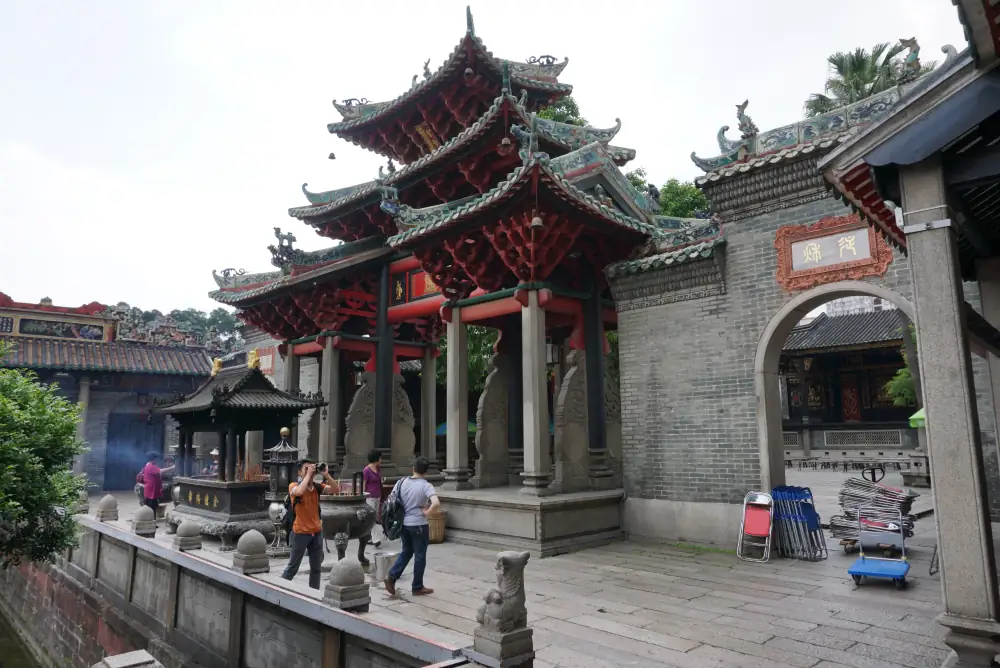
Ancestral Temple (祖庙)
Foshan’s most important heritage site is simultaneously a civic monument, martial arts hub and temple complex dedicated to the northern deity Xuanwu. The core structure dates from the Song Dynasty (approximately 1080 CE), though subsequent dynasties added and rebuilt the complex extensively.
The temple complex is architecturally magnificent: a series of courtyards with the finest examples of Guangdong’s shuiwan (wet clay) ceramic roof-ridge decorations outside of major imperial buildings. The roofline ridge figures — multicoloured scenes from historical narratives depicted in raised relief ceramic — are extraordinary examples of a distinctly South Chinese decorative art.
The temple is also the historical home of Wing Chun kung fu and has a strong connection to Ip Man (the martial arts master who taught Bruce Lee). A dedicated Ip Man museum is adjacent.
Tickets: ¥30 ($4). Open daily 09:00–18:00.
Lingnan Tiandi (岭南天地)
A restored historic district around the Ancestral Temple, Lingnan Tiandi preserves several blocks of Qing Dynasty shop-house architecture — the distinctive 骑楼 (qilou) arcade buildings characteristic of southern China — now converted into restaurants, boutiques and cafes. One of the better examples of southern Chinese commercial heritage preservation.
Shiwan Ceramics
Foshan’s Shiwan district (石湾) has been one of China’s most important ceramic production centres since the Tang Dynasty. The Shiwan tradition is particularly known for its figurative ceramics — especially the mythological characters, monks, immortals and animals that appear as decorative sculptures.
Several ceramics studios and the Shiwan Pottery Sculpture Museum (石湾陶塑) are open to visitors. The museum is free; studio visits typically involve a small demonstration fee (¥20–¥50) with opportunity to purchase.
Shunde: The Food District
Shunde (顺德) is officially a district of Foshan but functionally a separate food universe. The Shunde kitchen has produced more significant Cantonese dishes than any comparable area, and the district has developed serious food tourism infrastructure in recent years.
The Shunde Food Experience
The best approach to Shunde is through its food:
Morning: Dim sum at one of the old-school tea houses in Daliang Town (大良镇), the district capital. Shunde-style dim sum is less ornate but more precise in flavour than Hong Kong dim sum. Look for crullers wrapped in rice noodle rolls (炸两) — a Shunde invention — and the incredibly delicate steamed shrimp dumpling (虾饺) made with hand-pulled thin skin.
Lunch: The centrepiece of any Shunde food visit:
- White-cut chicken (白切鸡): Poached at precisely controlled temperature, sliced, served with ginger-scallion oil. The chicken skin should be lightly gelatinous. This is the Platonic ideal of the dish.
- Double-skin milk (双皮奶): A Shunde original — sweet milk custard with two distinct skin layers formed by alternating heating. Available everywhere; best in the old dairy near Daliang Market.
- Steamed pork and egg (菜远蒸腩): Pork belly and salted egg, steamed. Simple, rich, brilliant.
Afternoon food exploration: The old-town wet market area in Daliang provides an extraordinary visual education in Cantonese ingredient culture.
Dinner: A Shunde seafood restaurant for live fish and river prawns. The Lunjiao seafood village (伦教水乡) area has excellent riverside fish restaurants.
Qinghui Garden (清晖园)
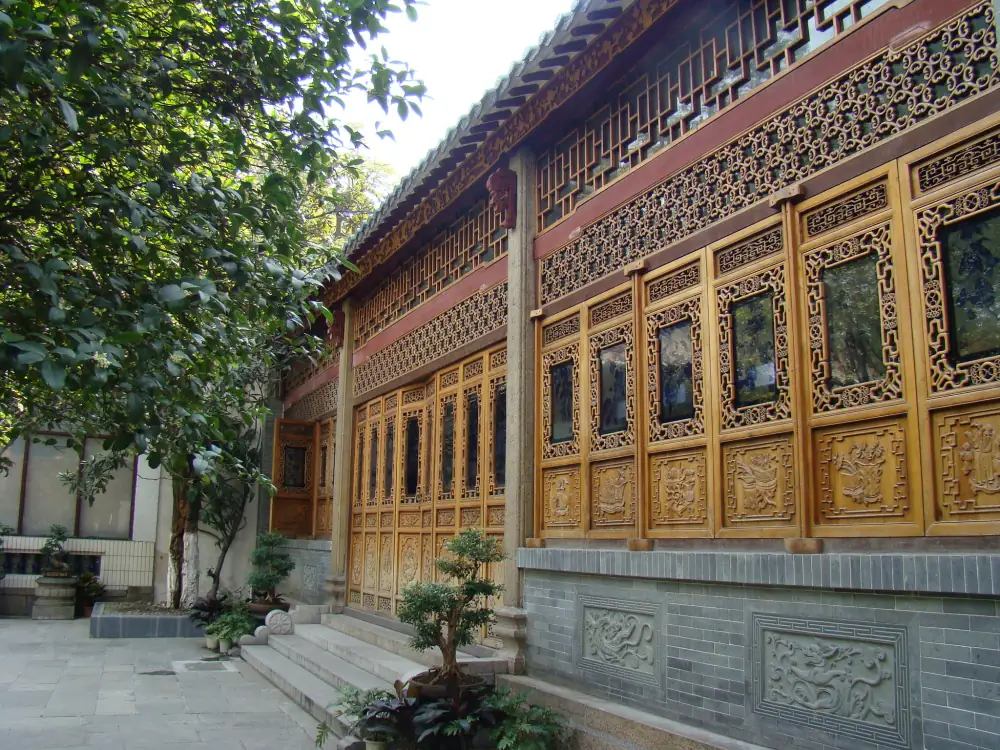
Shunde’s contribution to the canon of classical Chinese gardens. The Qinghui Garden is one of the “Four Famous Lingnan Gardens” — a compact but exquisitely detailed example of the South China garden tradition: subtropical plants, water pavilions, scholars’ rocks and covered walkways in a small but carefully proportioned space.
Tickets: ¥15 ($2). Open daily 08:00–21:30.
Xijiao Ancient Village (西樵古村)
In western Foshan, several well-preserved Lingnan ancient villages offer examples of the Qing-period village architecture of the Pearl River Delta — ancestral halls, stone bridges, carved doorways and the distinctive rural Cantonese architecture that has largely disappeared from the urbanised Delta.
The Ip Man Connection
The martial arts legend Ip Man (叶问, 1893–1972) was born in Foshan and learned Wing Chun here before moving to Hong Kong where he trained Bruce Lee. The international success of the Ip Man film series (starring Donnie Yen) has made Foshan a pilgrimage destination for kung fu enthusiasts worldwide.
Ip Man Martial Arts Cultural Museum (叶问堂): A museum dedicated to Ip Man’s life and the Wing Chun tradition; includes demonstrations and a small indoor training space. Located in Ancestral Temple complex; tickets ¥15 ($2).
Wing Chun Academies: Several academies in Foshan offer short-term experience classes in Wing Chun; from ¥100–¥200 for a 2-hour introductory session.
Getting to Foshan and Shunde
From Guangzhou
Metro: Guangzhou Metro Line 2 and Line 7 both extend directly into Foshan, making this one of the easiest adjacent-city connections in China. Metro Line 2 from Guangzhou Chebei South to Foshan North (Foshan city centre) takes approximately 45 minutes; ¥10–¥12 ($1.4–$1.7).
High-speed rail: Guangzhou South to Foshan (佛山站) approximately 15 minutes; tickets ¥25–¥40 ($3.5–$6).
For Shunde specifically, train from Guangzhou South to Shunde (顺德站) approximately 25 minutes; ¥35–¥55 ($5–$8).
From Hong Kong
High-speed train from Hong Kong West Kowloon: To Foshan West or Guangzhou South, then onward. Total approximately 45–90 minutes.
Bus: Coach services from Hung Hom and other Hong Kong points run directly to Foshan and Shunde; approximately 2 hours.
From Shenzhen
High-speed rail: Shenzhen North to Foshan East or Guangzhou South, then connect; approximately 1 hour total.
Getting Around
Within Foshan: Metro, bus and DiDi. The city is large; DiDi is the most practical for inter-district movement.
Foshan to Shunde: Bus or DiDi, approximately 30–45 minutes. Alternatively, take the train to Shunde station.
Where to Stay
In Foshan Ancestral Temple area: Mid-range (¥280–¥500 / $39–$70): Sheraton Foshan Hotel is centrally located and well-maintained. Several business hotels near Lingnan Tiandi from ¥250–¥400.
In Shunde: Mid-range (¥200–¥380 / $28–$53): Several hotels in Daliang town; the Shunde Kempinski Hotel is the premium option.
Best Time to Visit
Year-round — Foshan and Shunde are accessible throughout the year, with no extreme seasonality. The most comfortable months are October–April (avoiding summer heat and humidity). The Lunar New Year period (January–February) brings significant food festival activity and dragon boat events.
Dragon Boat Festival (端午节): If you’re there in late May or June, Foshan and Shunde’s dragon boat racing culture is extraordinary — one of the most competitive and deeply embedded dragon boat traditions in China.
Practical Tips
- Food ordering: Many Shunde restaurants don’t have picture menus. Bring a translation app; pointing at what other tables are eating works well.
- Dim sum timing: Traditional Cantonese dim sum restaurants in Shunde serve breakfast-and-lunch dim sum from 07:00 to approximately 14:00. Arrive by 09:00 to experience the peak morning rush.
- Ceramics shopping: Shiwan ceramic figures make excellent gifts — not fragile if well-wrapped. Prices range from ¥30 ($4) for simple pieces to several thousand yuan for master craftwork.
- Language: The local language is Cantonese, not Mandarin. Most people are comfortable in Mandarin; some older residents and market stall operators communicate primarily in Cantonese. Polite gesturing and translation apps fill the gap.
Final Word
Foshan and Shunde reward the visitor who organises their trip around the food — but the Ancestral Temple, Qinghui Garden, Lingnan Tiandi and the ceramic tradition add genuine cultural depth. This is a two-day trip that punches far above its weight in terms of experience density, especially for anyone seriously interested in Cantonese culture and cuisine.
Book the best dim sum place you can find in Shunde. Arrive at 08:00. Order everything.