
Table of contents
Open Table of contents
Zhangye — The Rainbow City of the Silk Road
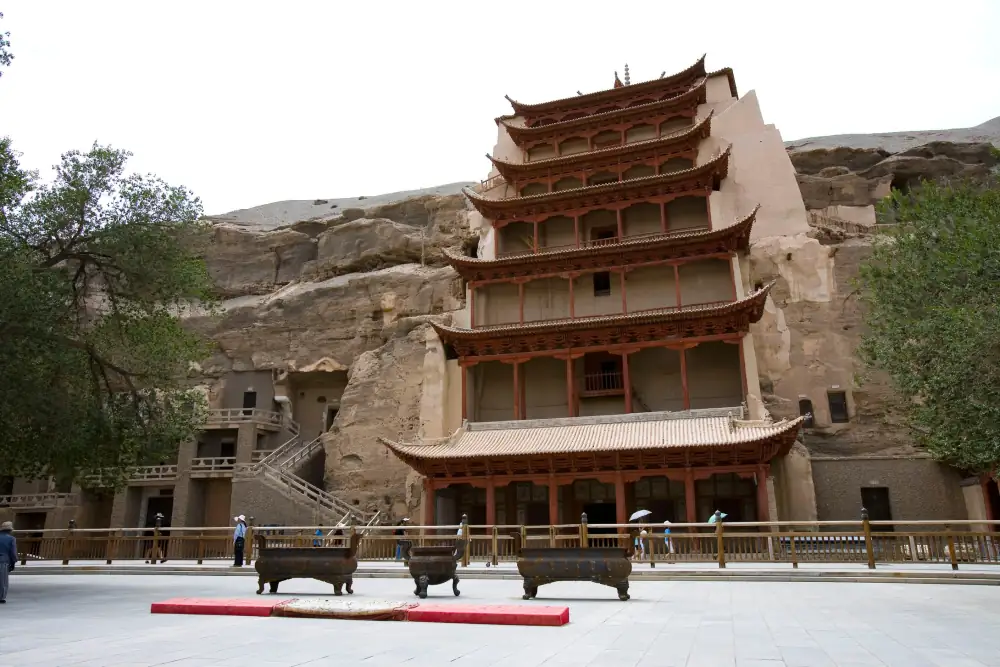
Zhangye (张掖) sits at the geographic centre of the Hexi Corridor, the narrow strip of land between the Qilian Mountains and the Gobi Desert that served as the main artery of the ancient Silk Road. For over 2,000 years, this oasis city has been a critical waypoint for merchants, monks, and armies traveling between China proper and the western regions. Marco Polo reportedly spent a year here, and the city’s name — meaning “Extend the Arm” — refers to its strategic role in reaching toward the west.
But what has put Zhangye on the modern tourist map isn’t its Silk Road history — it’s the Danxia landform, specifically the Zhangye National Geopark, where hillsides are striped in impossible layers of red, yellow, orange, green, and blue. The “Rainbow Mountains,” as they’re known in English, have become one of China’s most iconic images, appearing on magazine covers and travel blogs worldwide. Seeing them in person is even more extraordinary than the photographs suggest.
I visited Zhangye in late September, when the autumn light was warm and the tourist crowds had begun to thin. The combination of Silk Road history and geological wonder makes this one of the most satisfying destinations on the Gansu tourist circuit.
Zhangye National Geopark (张掖国家地质公园)
The Rainbow Mountains
The Zhangye Danxia landform is the result of 24 million years of geological processes. Coloured sandstone and conglomerate were deposited in horizontal layers during the Cretaceous period, then uplifted and tilted by tectonic forces, exposing the layers on cliff faces and hillsides. The different colours represent different mineral compositions — iron oxide produces red and orange, chlorite produces green, and various other minerals create yellow, white, and blue-grey layers.
The result: Hillsides that look like they were painted with a giant brush, stripes of colour flowing across the landscape in curves and waves that seem almost organic. It’s one of the most surreal landscapes on earth.
Visiting the Geopark
The park has two main scenic areas:
Linze Danxia Scenic Area (临泽丹霞景区): The more developed and popular area, about 40 km west of Zhangye city. Four main viewing platforms are connected by shuttle bus:
- Platform 1: The widest panorama — multicoloured hills stretching to the horizon
- Platform 2: Close-up views of individual striped formations
- Platform 3: The most dramatic — steep cliffs of vivid colour
- Platform 4: The sunset platform — the last stop, positioned for the golden hour light
Sunset is the key experience at Zhangye. The colours intensify dramatically as the sun drops, and the low angle of light brings out the texture of the rock layers. Plan to be at Platform 4 for sunset — the park times the shuttle bus schedule to get everyone there in time.
Entrance fee: ¥93 ($13 USD) including shuttle bus. Open 6:00 AM — 8:00 PM (summer), adjusts seasonally. Allow 3-4 hours.
Photography tips: A polarising filter makes a huge difference — it cuts glare and saturates the colours. Bring a wide-angle lens for the panoramas and a telephoto for isolating colour patterns. Tripods are essential for sunset shots.
Binggou Danxia Scenic Area (冰沟丹霞): About 20 km from the Linze area, this less-visited section features different formations — tall, narrow sandstone pillars and walls rather than broad striped hillsides. It’s more dramatic in a different way, and far less crowded. Entrance ¥40 ($5.50 USD) including shuttle bus.
Giant Buddha Temple (大佛寺)
China’s Largest Reclining Buddha
The Giant Buddha Temple (Dafo Si) houses the largest reclining Buddha in China — a 34.5-metre-long, 7.5-metre-tall painted clay statue of the Buddha entering nirvana. The statue dates from 1098 AD (Western Xia Dynasty) and is housed in a wooden hall that has been rebuilt several times over the centuries.
The Buddha is genuinely enormous — his ear alone is over 2 metres long. The statue lies on a platform with ten disciples standing behind him, and the interior of the hall is dim and atmospheric, creating a powerful devotional space. The painted surface, though restored, retains much of its original character.
The temple complex also includes:
- A Buddhist scripture library with rare Ming Dynasty editions
- A white stupa (pagoda) in the courtyard
- Shanxi Guild Hall — an ornate Qing Dynasty building with beautiful wood and stone carvings
Entrance fee: ¥40 ($5.50 USD). Allow 1-1.5 hours.
The Buddhist Scripture Collection
The temple’s library contains the Yongle Northern Canon — a complete set of Buddhist scriptures printed by imperial order during the Ming Dynasty. This is one of the few surviving complete sets in China and is stored in ornate wooden cabinets. The scriptures are not on general display, but the cabinets themselves are impressive.
Mati Temple Grottoes (马蹄寺石窟)
Cave Temples in the Mountains
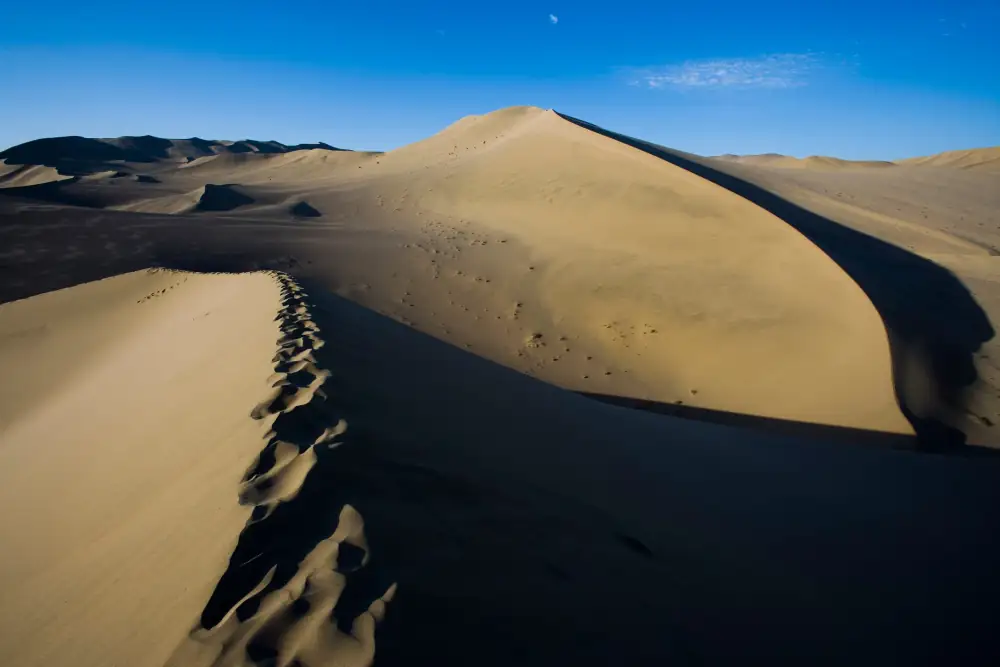
About 65 km south of Zhangye, the Mati Temple complex consists of cave temples carved into the cliffs of the Qilian Mountains over a period from the Northern Wei to the Qing Dynasty (5th — 18th centuries). The site combines Buddhist grotto art with Tibetan cultural elements, reflecting the multicultural character of the Hexi Corridor.
Key areas:
San Sheng Cave (三十三天石窟): The most spectacular — a seven-storey complex of caves connected by narrow tunnels and stairs carved into the cliff face. The climb is steep and slightly claustrophobic, but the views from the upper caves are breathtaking.
Thousand Buddha Cave (千佛洞): A series of smaller caves with Buddhist murals and sculptures, some dating to the Northern Wei period.
Mati (Horse Hoof) Temple: The namesake cave, containing a “horse hoof print” in the rock, said to have been left by a heavenly horse. The cave also contains Tibetan Buddhist murals.
Entrance fee: ¥73 ($10 USD). Open 8:30 AM — 5:30 PM. Allow 3-4 hours.
Getting there: About 1.5 hours by road from Zhangye. Hired car ¥300-400 ($42-55 USD) for the day trip. Limited public transport.
Important: The climb to the San Sheng Cave involves narrow, steep passages — not suitable for those with mobility issues or claustrophobia.
Zhangye Wetland Park (张掖国家湿地公园)
An unexpected oasis on the outskirts of the city — a vast wetland area with walking trails, boardwalks, and bird-watching hides. The contrast between the wetland’s green expanse and the surrounding desert is striking. Free. Pleasant for a morning walk.
Local Cuisine — Hexi Corridor Flavours
Zhangye Saozi Noodles (张掖臊子面): The local speciality — noodles in a sour, spicy broth with minced meat, tofu, and vegetables. ¥10-15 ($1.40-2 USD).
Cu Pizi (搓鱼子): “Rubbed fish” noodles — small, fish-shaped pasta pieces served with stir-fried vegetables or in soup. Unique to Zhangye. ¥12-18 ($1.70-2.50 USD).
Roast Lamb (烤全羊): The Hexi Corridor has excellent lamb, roasted with cumin and chilli. Half lamb ¥200-350 ($28-48 USD).
Apricot Skin Tea (杏皮茶): A sweet-sour drink made from dried apricot skins, popular throughout Gansu. ¥5-8 ($0.70-1.10 USD).
Zhangye Yellow Wine (张掖黄酒): Local rice wine, slightly sweet. ¥10-15 ($1.40-2 USD) per bowl.
Recommended Restaurants
Zhangye Night Market: The best eating in the city — a lively market with stalls serving all local specialities. Budget ¥20-40 ($2.80-5.50 USD) per person.
Mingqing Street (明清街): A renovated old street with restaurants and snack shops. More touristy but reliable. Meals ¥30-60 ($4.20-8.30 USD) per person.
Practical Information
Getting to Zhangye
By High-Speed Train: Zhangye West Station on the Lanzhou-Urumqi high-speed line. From Lanzhou: 3 hours, ¥150-230 ($21-32 USD). From Xining: 2 hours, ¥100-160 ($14-22 USD). From Jiayuguan: 40 minutes.
By Air: Zhangye Ganzhou Airport (YZY) has flights from Lanzhou, Xi’an, and a few other cities.
By Bus: From Lanzhou (6 hours), Jiayuguan (3 hours), Dunhuang (6 hours).
Accommodation
Zhangye Hotel: The most comfortable option. Doubles from ¥250-450 ($35-62 USD).
Danxia Mountain Hotel: Near the geopark. Doubles from ¥200-400 ($28-55 USD). Convenient for sunrise visits.
Budget options: City centre guesthouses from ¥80-150 ($11-21 USD).
Best Time to Visit
- June — September: The best weather — warm days (20-28°C), cool nights, and the most vivid colours in the geopark.
- September — October: Autumn light is excellent for photography. Fewer tourists.
- Winter: The Danxia formations look dramatic with snow, but it’s very cold (-15 to -5°C).
Budget Estimate (2 Days)
| Item | Budget (¥) | Mid-Range (¥) |
|---|---|---|
| High-speed train from Lanzhou (round trip) | 300 | 460 |
| Accommodation (1 night) | 120 | 350 |
| Meals | 120 | 300 |
| Danxia Geopark | 93 | 93 |
| Giant Buddha Temple | 40 | 40 |
| Mati Temple (with transport) | 350 | 400 |
| Local transport | 50 | 100 |
| Total | ¥1,073 ($149 USD) | ¥1,743 ($241 USD) |
Colour and Time
What makes Zhangye remarkable is the juxtaposition of timescales. The Danxia formations represent 24 million years of geological history. The Giant Buddha represents 1,000 years of Buddhist devotion. The Silk Road represents 2,000 years of human commerce and cultural exchange. Standing on a rainbow-striped hillside, looking toward the snow-capped Qilian Mountains, you feel the weight of all these timelines simultaneously. Zhangye is a place where the earth’s deep history and humanity’s restless movement across its surface come together in a single, extraordinary view. Come for the colours, stay for the perspective.