
Gansu Province forms a narrow 1,600km corridor between the Tibetan Plateau and the Mongolian steppe — China’s ancient Silk Road gateway. Every major civilisation to interact with China passed through here.
Table of contents
Open Table of contents
Zhangye (张掖) — Rainbow Mountains
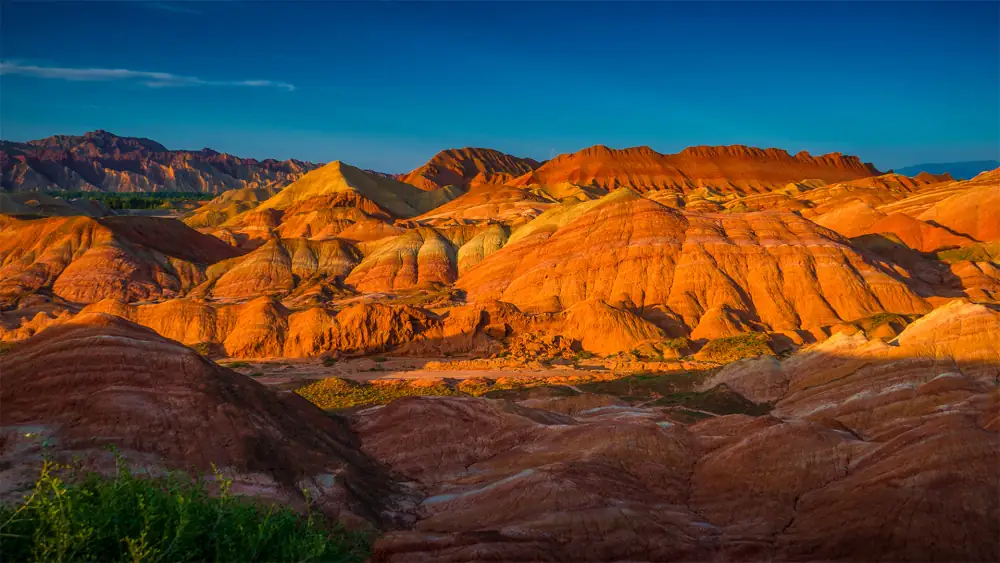
Danxia Geopark (丹霞地貌国家地质公园)
The most spectacular coloured rock formation in the world — 35km² of sandstone layers in vivid red, orange, yellow, green, and purple stripes. The colours are natural, caused by different iron oxide and mineral content in each layer deposited over 24 million years. UNESCO Global Geopark.
Best viewpoints:
- Area 4 (四号景区) — the most dramatic panoramic view; multi-colour striped ridges extending to the horizon
- Area 1 — accessible; good starting point
- Sunset light: The colours intensify dramatically in the hour before sunset (especially rich saturated colours in October after rain)
Entry: ¥75; mandatory shuttle buses within the park (¥40 additional)
Best time: Late afternoon; after rain when colours are most vivid. Autumn (September–October) for clearest skies.
Jiayuguan (嘉峪关) — Great Wall’s Western End
The western terminus of the Ming Dynasty Great Wall — the “First Pass Under Heaven” where Chinese civilisation effectively ended and Central Asia began.
Jiayuguan Fort (嘉峪关城楼)
The most complete surviving Ming frontier fortress in China — three concentric defensive walls, watchtowers, and the ceremonial main gate of the great wall’s end. The fort controlled the critical mountain pass between the Qilian Mountains and the Gobi Desert.
Entry: ¥110 (combined ticket for fort + nearby wall sections)
Overhanging Great Wall (悬壁长城)
A section of wall that climbs impossibly steep to a watchtower on the mountain above the pass — climbing the wall provides extraordinary views over the desert Silk Road corridor. Entry ¥30.
First Beacon Tower (第一墩)
The actual westernmost point of the wall — a crumbling beacon tower on the desert plain beside the Taolai River, with views of the Qilian Mountains. Moving in its isolation.
Dunhuang (敦煌) — Silk Road Oasis
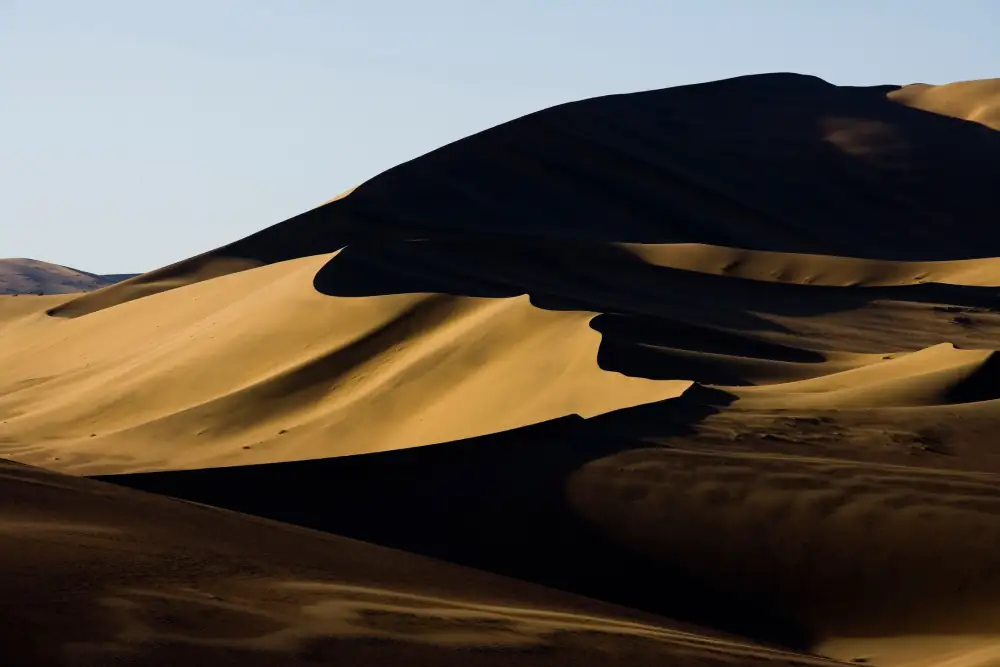
For comprehensive Dunhuang coverage (Mogao Caves, Singing Sand Dunes, Crescent Moon Lake), see the dedicated 14-Day Silk Road Itinerary.
Quick summary:
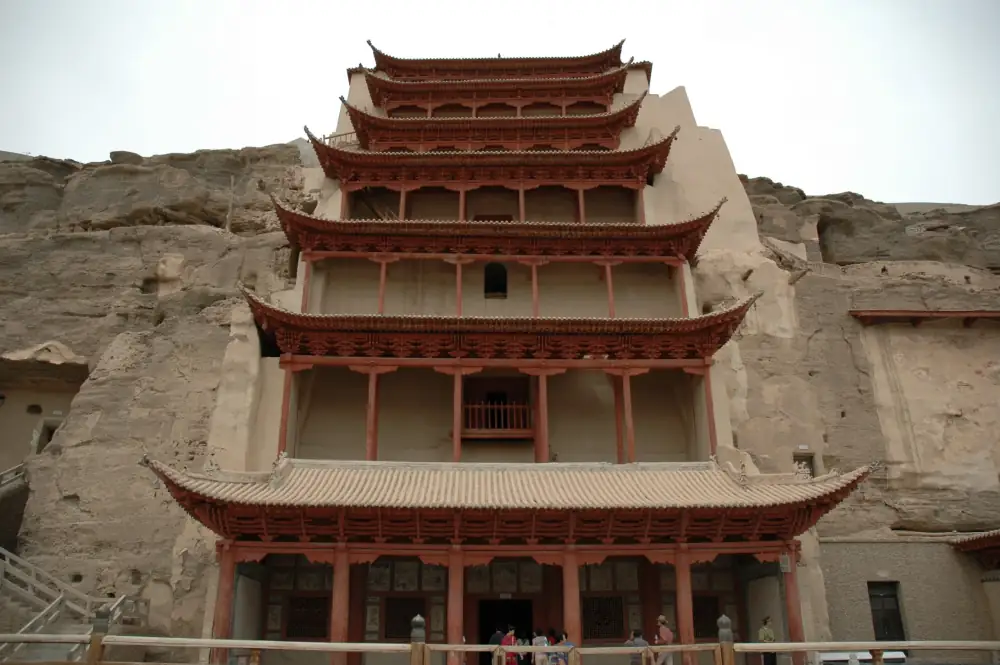
- Mogao Caves — 492 caves with Buddhist art spanning 1,000 years; UNESCO Heritage; book weeks ahead
- Singing Sand Dunes & Crescent Moon Lake — the iconic desert-oasis landscape
- Yumen Pass & Yangguan Pass — ancient frontier gates; historically significant
Maiji Grottoes (麦积山石窟)
Near Tianshui in eastern Gansu — 194 cave temples carved into a naturally haystack-shaped sandstone cliff (hence “haystack mountain”). The caves are accessed via an extraordinary system of plank walkways attached to the cliff face.
The Maiji Grottoes are less famous than Dunhuang’s Mogao but arguably more atmospheric — smaller scale, more intimate, and the setting is dramatic. Over 7,000 clay sculptures spanning from the 4th century to the Qing Dynasty.
Entry: ¥70
Access: High-speed train from Xi’an to Tianshui (3 hours, ¥100)
Lanzhou (兰州) — Noodle City
Gansu’s capital on the Yellow River. Famous for one thing that matters: Lanzhou beef noodles (兰州拉面) — hand-pulled noodles in clear beef bone broth with chilli oil, radish slices, and coriander. The gold standard of Chinese noodle soup. Eaten for breakfast, lunch, or dinner.
Must try: A bowl at any stall displaying the sign 正宗兰州拉面 (authentic Lanzhou pulled noodles) in the morning with the noodle puller in full action. About ¥15–¥20.
Yellow River Iron Bridge (黄河铁桥)
Built in 1909 — the first permanent bridge over the upper Yellow River. Walking across it at sunset with the arid mountains behind and the yellow water rushing below is quietly powerful.
Gansu Provincial Museum (甘肃省博物馆)
The “Flying Horse (马踏飞燕)” — a 2nd-century bronze galloping horse with one hoof on a flying swallow — is China’s national tourism symbol and the museum’s crown jewel. Free entry (registration required).
Practical Info
Transport: Lanzhou Zhongchuan International Airport. Lanzhou to Zhangye: 2 hours high-speed. Lanzhou to Xi’an: 2 hours high-speed.
Best time: May–October. Winters in the Hexi Corridor are harsh (Jiayuguan regularly reaches -20°C).