
Table of contents
Open Table of contents
Labrang Monastery (拉卜楞寺)
Historical Background
Labrang Monastery was founded in 1709 by the first Jamyang Zhépa, a reincarnating lama lineage that continues today. It grew to become one of the six great monasteries of the Gelug school of Tibetan Buddhism (alongside Sera, Drepung, and Ganden in Tibet, plus Kumbum in Qinghai). At its peak in the early 20th century, Labrang housed over 4,000 monks.
Today around 1,200–1,500 monks live and study here. The monastery is a functioning religious institution, not a museum — which means you’ll encounter daily rituals, debates, and the sounds of chanting that fill the narrow lanes between the buildings.
The Prayer Wheel Kora (转经道)
The most famous feature of Labrang is its prayer wheel corridor — 3km of almost unbroken spinning prayer wheels that encircle the entire monastery complex. At any hour of the day you’ll find Tibetan pilgrims walking this circuit clockwise, right hand constantly spinning the wheels, lips moving in silent recitation.
Walking the kora yourself (one full circuit, about 45–60 minutes at a relaxed pace) is one of the best things you can do in Xiahe. Joining the flow of pilgrims in the early morning, around 6–8am, when golden light hits the white wall above the wheels, is a meditative, memorable experience. Appropriate behavior: keep moving clockwise, spin the wheels if you like, don’t take photos of pilgrims without asking.
Inside the Monastery
Guided tours of the main halls run daily, typically at 10am and 3pm. A guide fee of ¥40 per person is charged, which covers entry to several main temple halls. Independent visits to some areas cost ¥80 for a combined ticket.
Main halls to visit:
- Wumianlian Tsuglhakhang (大经堂): The main assembly hall where monks gather for morning and evening prayers. The interior is hung with thangka paintings and butter lamps, creating a warm golden atmosphere.
- Maitreya Temple (弥勒殿): Contains a 7-meter gilded Maitreya statue surrounded by elaborate offering displays
- Serkong Labrang: The Jamyang Zhépa’s residence
- Gongguan Temple (供觉寺): Less visited, more intimate atmosphere
Important: Photography policies in individual halls vary — always ask before shooting. Some halls strictly prohibit photography; others allow it. Don’t photograph monks without permission.
Debating Courtyard
If you’re there in late afternoon, check if the debating courtyard is active. Monastic debate (formal philosophical argument conducted with distinctive hand gestures and dramatic emphasis) is central to Gelug Buddhist education, and watching it is a genuine privilege. It usually happens 4–6pm, not every day.
The Town of Xiahe
The town is split roughly in two by culture and geography — the Tibetan and monastery section at the western end, and the Hui Muslim Chinese section at the eastern end. The division is visible in the architecture, the restaurants, the faces of people you pass.
Walking the Main Street
Xiahe’s main street (Renmin Lu) extends about 3km along the Daxia River. Walking its length takes you from the busy Chinese commercial zone (with its internet cafes and hardware shops) through a transition zone of guesthouses and tourist restaurants, into the genuinely different world of the Tibetan monastery area.
The monastery area has traditional Tibetan architecture with carved wooden window frames, incense burning in front of doorways, and monks striding between buildings. Elderly Tibetan women in traditional chuba dresses and silver jewelry sit in doorways. Nomads from the surrounding grasslands come in for market days, identifiable by their sheepskin coats and the dogs they bring with them.
Shopping
The monastery area has souvenir stalls selling Tibetan religious items — many are genuinely made locally rather than mass-produced. Prayer flags, thangka paintings (simple ones from ¥50, detailed painted ones from ¥500+), prayer wheels (¥30–200), and traditional Tibetan jewelry. Don’t bargain aggressively at religious item stalls.
Sangke Grassland (桑科草原)
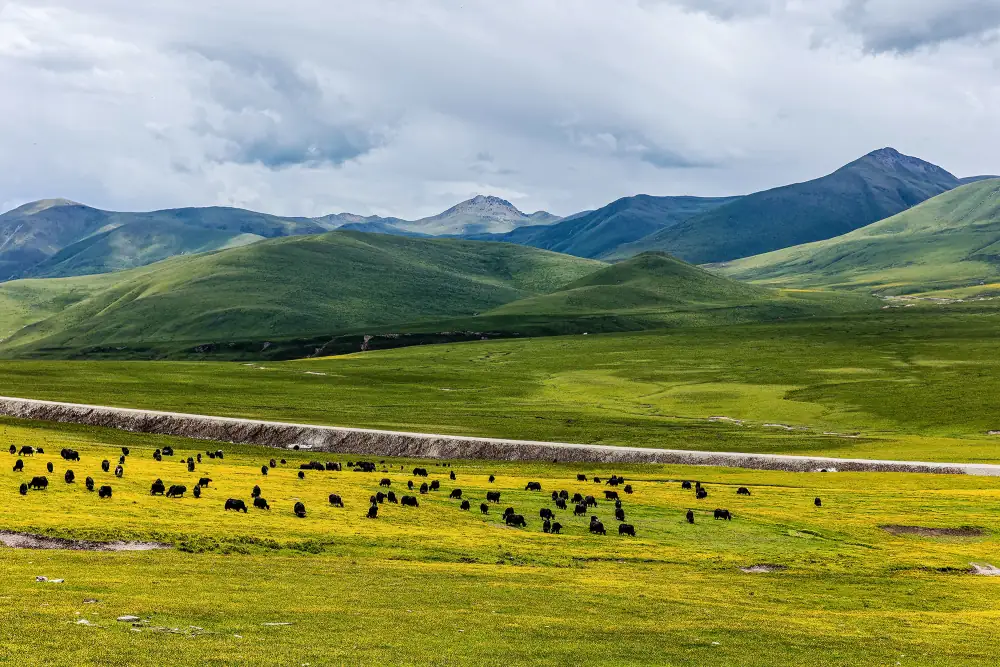
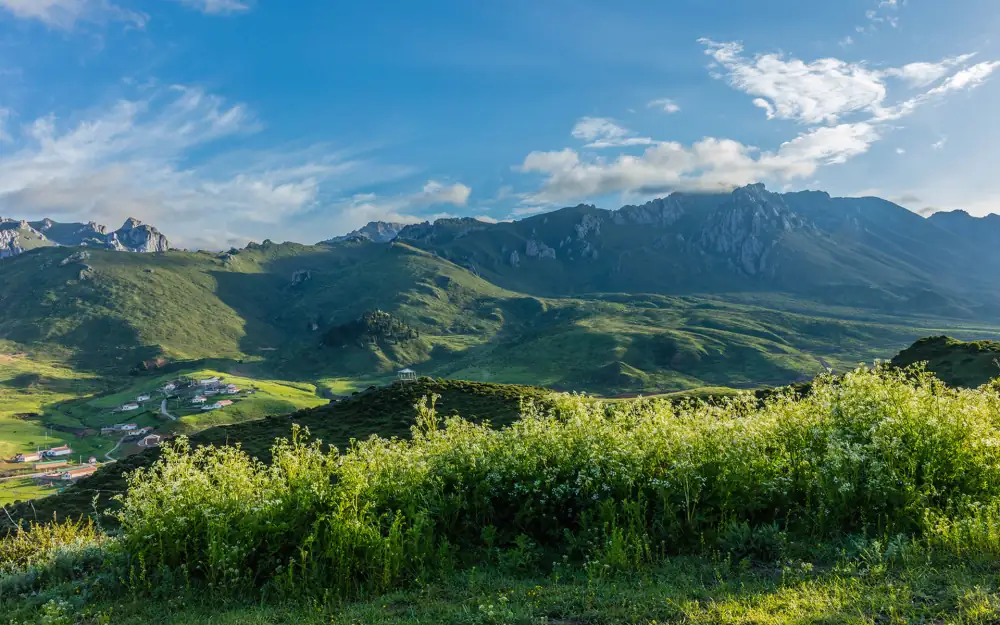
About 14km west of Xiahe, the Sangke Grassland is the most accessible part of the Gannan Plateau — a vast alpine meadow at 3,000m+ where nomadic Tibetan families graze yaks and sheep. The views are enormous, the sky is enormous, and the whole experience is a vivid contrast to the monastery’s enclosed world.
Getting there: Taxi from Xiahe costs ¥30–40 each way. Some guesthouses offer bicycle rentals (¥20–30/day) and the ride out is enjoyable on the flat road.
What to do: The main activity is simply walking and experiencing the scale of the landscape. Tibetan yurt guesthouses (蒙古包式家庭旅社) offer tea, tsampa, and yak products for ¥15–30. Horse riding can be arranged by local families for ¥60–100/hour.
Best time: July and August when the grassland is green and wildflowers are in bloom. The annual Sangke Grassland Horse Racing Festival typically happens in July — a spectacular event worth planning around.
Festivals and Best Times to Visit
Monlam Festival (传昭大法会)
The most important annual event at Labrang is the Monlam Great Prayer Festival, held in the first month of the Tibetan calendar (usually January–February in Gregorian terms). This is when thousands of monks and pilgrims gather for multi-day ceremonies including the unveiling of massive thangka paintings on the hillside behind the monastery.
The thangka ceremony (挂唐卡), where an enormous embroidered silk painting of the Buddha is unfurled on the hillside, is one of the most visually spectacular religious events in China. Crowds are large but the atmosphere is extraordinary.
Other festivals throughout the year
- Butter Lamp Festival (酥油花灯节): 15th day of the first Tibetan month — elaborate butter sculpture displays
- Cham Dance Festival: 29th day of the first Tibetan month — monks perform ceremonial dances in elaborate costumes
- Summer Prajna Festival (噶尔夏密大法会): 4th Tibetan month
- Maitreya Procession: 14th–16th Tibetan month
Getting exact Gregorian dates requires converting from the Tibetan lunar calendar — check Labrang Monastery’s official notices or ask your guesthouse in advance.
Getting to Xiahe
From Lanzhou
The most common route. Lanzhou is Gansu’s capital with good flight and train connections to major Chinese cities.
Bus from Lanzhou: From Lanzhou Bus Station (汽车南站 or 西部客运站), direct buses to Xiahe run several times daily. Journey: 3.5–4.5 hours depending on which bus. Cost: ¥50–65. This involves some mountain road driving.
Via Linxia: Some travelers break the journey at Linxia (临夏, an interesting Hui Muslim city), staying overnight and continuing to Xiahe next day.
By taxi/private car: From Lanzhou, about ¥350–450 for a private car, 3.5 hours. This gives more flexibility for stops along the way.
From Hezuo
Hezuo (合作) is the capital of Gannan Tibetan Autonomous Prefecture and has an airport with some flights from Chengdu and Xi’an. From Hezuo, frequent minibuses go to Xiahe in about 1.5 hours (¥20).
Train to Linxia
A new rail connection opened in recent years linking Lanzhou and Linxia. From Linxia station, buses or taxis continue to Xiahe (about 2 hours).
Where to Stay
Budget (¥80–180/night)
Multiple Tibetan-style guesthouses (民宿) line the main street of the Tibetan quarter. Rooms are basic — wooden furniture, Tibetan carpet floors, simple bathroom. Most include breakfast (tsampa porridge, yak butter tea, bread).
- Overseas Tibetan Hotel (海外藏人宾馆): Long-running traveler favorite, good information board
- Red Rock Guesthouse: Reliable, friendly
Mid-Range (¥200–400/night)
Several newer boutique guesthouses have opened in the Tibetan area with better rooms and more amenity. Linze Guesthouse and similar options from ¥250/night.
Chinese Commercial Hotels
Along the main road near the Hui quarter, standard Chinese business hotels (¥150–250/night) if you prefer familiar amenity and reliable hot water.
Food in Xiahe
The culinary experience in Xiahe is an interesting blend of Tibetan and Hui Chinese cooking.
Tibetan food:
- Tsampa (roasted barley flour, mixed with yak butter tea into a dough) — ¥15
- Yak meat dumplings (莫莫): ¥20–30 for a steamer
- Thukpa (Tibetan noodle soup with yak meat): ¥20–25
- Yak butter tea (酥油茶): ¥10–15 per cup — an acquired taste but fortifying at altitude
Hui Chinese food:
- Hand-pulled noodles (拉面): ¥12–18 — Gansu-style, different from Lanzhou style
- Fried flatbreads with various fillings: ¥5–10
- Roasted whole lamb on some restaurants’ menus: ¥200+ for a whole animal
Don’t skip the morning market food stalls near the mosque — tea with bread and curds is the local breakfast.
Practical Information
Altitude: Xiahe sits at 2,920m. Most visitors acclimatize fine with a gentle first day. Some headaches are normal — rest, drink water, avoid alcohol the first night.
Best months: May–June (spring wildflowers on the grassland) and September–October (clear skies, golden autumn light). The rainy season (July–August) brings lush green landscapes but muddy trails.
Getting a permit: No special permit is required for Xiahe (unlike some other Tibetan areas). Chinese citizens and foreign visitors can enter freely.
Weather: Summer highs around 18–22°C, evenings cool (10°C). Bring layers even in July. Winter (December–February) is very cold (-15 to -5°C) but the monastery is most atmospheric during Monlam Festival.
Respectful behavior: Dress modestly. Don’t enter monastery buildings during ceremonies without permission. Walk around the monastery and prayer wheels clockwise. Don’t touch religious statues or offerings. Ask before photographing people.
Language: Most monastery staff and guesthouse owners speak some Mandarin and basic English. Tibetan is the main local language.
Xiahe is one of the places in China where the phrase “off the beaten track” still has meaning. The monastery is world-class, the grassland landscape is awe-inspiring, and the Tibetan culture here is genuine rather than performed. Come with respect and curiosity and you’ll leave changed.