
Foshan is effectively an extension of Guangzhou now — the two cities merged into a single urban agglomeration decades ago — but it maintains a distinct identity. Founded 2,500 years ago, it was historically one of the four great market towns of China, famous for silk weaving, ceramics, and metalwork. Its two most internationally recognizable exports: Bruce Lee (whose family is from Junhe Village in Foshan’s Shunde District) and Wing Chun kung fu (originated here in the early Qing Dynasty).
Getting here from Guangzhou takes 30–45 minutes by metro or 20 minutes by high-speed train, making it one of the best half-day or full-day trips from the Pearl River Delta.
Table of contents
Open Table of contents
Foshan Ancestral Temple (祖庙)
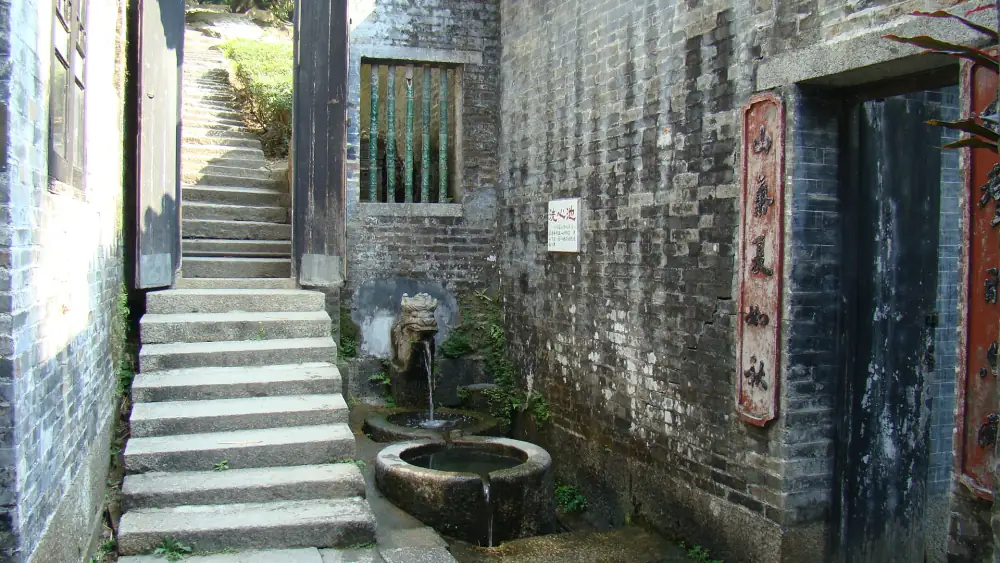
The Foshan Ancestral Temple is the defining monument of the city — a temple dedicated to Xuantian Shangdi (玄天上帝, the Northern Emperor or “Supreme Beidi”), a Taoist deity associated with water and the north. It was the spiritual center of the Foshan area for centuries and the focus of religious and civic life.
The complex was founded in the Song Dynasty and underwent major expansion in the Ming period. The architecture is classic Guangdong temple style: elaborate ceramic ridge decorations (shiwan ceramics, the famous Foshan pottery), intricate stone carving, and gilded woodwork throughout.
Opening hours: 9:00am–6:00pm
Entry fee: ¥20 per person
Location: Zumiao Road, central Foshan
What to Look For
The main hall roof: The ridge of the main hall is decorated with a 65-metre-long ceramic tableau depicting a battle scene from the Romance of the Three Kingdoms, with hundreds of tiny painted ceramic figures. This is among the finest examples of Shiwan ceramic decorative work surviving.
The bronze cast Beidi statue: The main statue in the shrine hall, a 2.5-tonne bronze figure from the Ming Dynasty, is considered one of the finest examples of Song/Ming bronzecast religious sculpture in southern China.
The Huang Feihong Memorial Hall (黄飞鸿纪念馆): Located within the Ancestral Temple complex, this exhibition documents the life and legacy of Wong Fei-hung (Huang Feihong) — the legendary real-life Foshan martial artist who has been portrayed in over 100 films. If you’ve ever seen a Wong Fei-hung film, this explains the historical person behind the legend. Entry included in temple ticket.
Wan Fuk Theatre (万福台)
Within the temple complex, the Wan Fuk Theatre is one of the finest examples of traditional Guangdong opera performance space — a full stage with elaborate backstage facilities, built in 1658. Traditional Cantonese opera performances occasionally take place here (schedule varies; check at the entrance).
Nanfeng Ancient Kiln (南风古灶)
The Nanfeng Ancient Kiln in Shiwan (石湾), the ceramics district of Foshan, has been in continuous operation since 1506 — over 500 years without stopping the fires. It’s the oldest continuously operating dragon kiln in the world.
Opening hours: 8:30am–5:30pm
Entry fee: ¥20 per person
Location: Gaomiao Road, Shiwan District (different from the Ancestral Temple area — about 3km west)
The kiln is a long, tunnel-shaped climbing kiln built into a hillside, using the natural draft of the hill to maintain temperature. You can watch active firings of Shiwan ceramic ware and, in some periods, participate in hands-on pottery workshops.
Shiwan ceramics: Foshan’s Shiwan district produces a distinctive type of glazed ceramic sculpture — particularly famous for figure sculptures using a deep blue-green glaze and for architectural roof ornaments. The decorative figures on the Ancestral Temple’s roof are Shiwan work.
Lingnan Tiandi (岭南天地)
Lingnan Tiandi is a restored historic district in central Foshan — Ming and Qing Dynasty buildings converted into restaurants, cafes, boutique shops, and galleries. The restoration has been done to a high standard: the historic architecture is genuine, and the commercial development is tasteful by Chinese urban standards.
Best for: Evening dining and drinks in historic settings
Notable restaurants: Multiple Cantonese restaurants serving Foshan-style cuisine; dim sum at traditional teahouses
Location: Near the Ancestral Temple, within walking distance
Wing Chun and Foshan Martial Arts Heritage
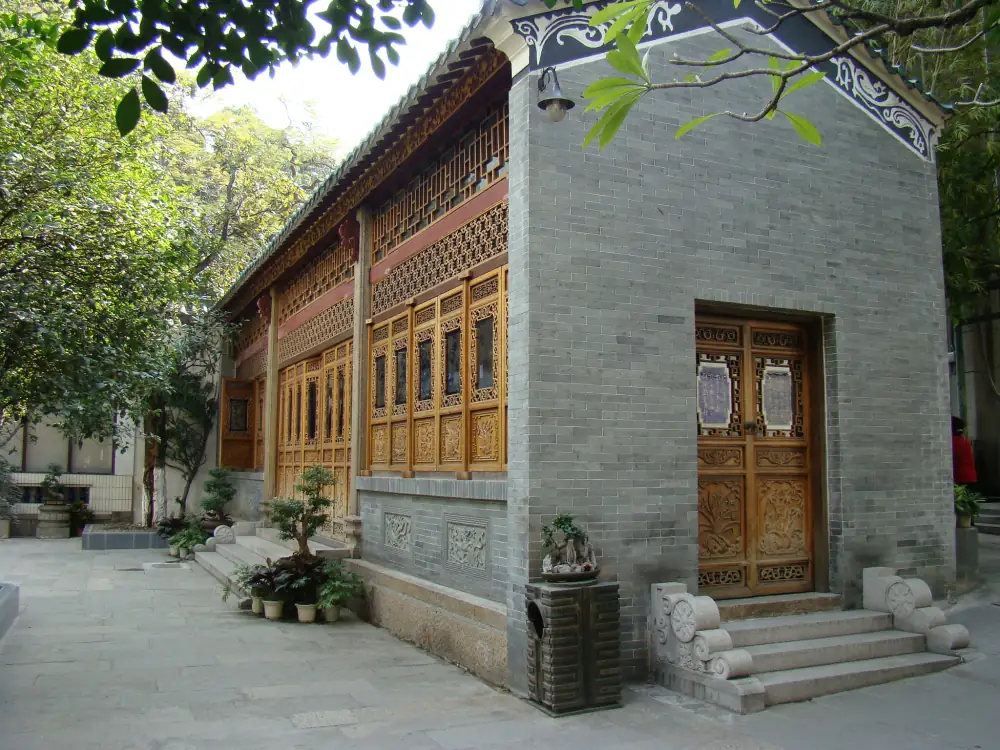
Wing Chun (咏春拳) is a kung fu style created by a woman (according to legend, a kung fu master named Yim Wing-chun, 严咏春) and developed in Foshan in the early Qing Dynasty. It spread from here throughout southern China and then globally, particularly through Bruce Lee (a Wing Chun student) and his fame.
Foshan has several Wing Chun schools that offer classes and demonstrations:
- Ving Tsun Athletic Association (咏春拳总会): The main official body; demonstrations and classes available
- Various schools in the old martial arts district near the Ancestral Temple
Bruce Lee’s ancestral village (李小龙祖居): In Junhe Village, Shunde District (顺德区均禾镇), about 20km south of central Foshan. The house where Bruce Lee’s grandfather lived is preserved as a small museum. Entry ¥10. Note: this is genuinely remote and not well-served by public transport — hire a car or join a tour.
Foshan’s Ceramics Market
Foshan is also the wholesale centre for China’s ceramics building materials industry — tiles, sanitary ware, architectural ceramics. The Dongfangbao Ceramics Market (东方宝陶瓷城) in Jihua Road is one of the largest ceramics markets in China, with hundreds of showrooms.
This is more of interest to trade buyers, but for design-minded visitors it’s a fascinating space — room after room of tiles, marble finishes, and bathroom ceramics.
Where to Eat
Foshan food is Cantonese — specifically, the Shunde sub-style of Cantonese cooking, which some argue is the finest in Guangdong.
Shunde cuisine specialties:
- Double skin milk pudding (双皮奶): A cold-set milk pudding with a delicate double-skin on top; the Foshan version is considered the standard. ¥10–15 at dessert shops.
- Wading cow rice noodles (逼潮牛): Thin rice noodles in a deep beef broth with paper-thin cooked beef; essentially the Shunde/Foshan equivalent of the Chaozhou teochew beef noodle
- Poon choi (盆菜): A traditional festive dish of layered meats, seafood, and vegetables in a large pot; ¥80–200 per person for the full version at specialist restaurants
- Braised goose (卤鹅): Slow-braised goose in a five-spice master stock
Restaurant recommendation: Qihua Building Restaurant (奇花楼) in the Lingnan Tiandi area — good Shunde-style Cantonese with terrace seating in a heritage building.
Getting to Foshan
From Guangzhou by metro: Guangzhou Metro Line 6 connects directly to Foshan’s Ancestral Temple area. About 45 minutes from central Guangzhou.
From Guangzhou by high-speed train: Guangzhou South to Foshan West, about 15–20 minutes, ¥20–30. Very fast.
From Guangzhou by bus: Multiple bus routes; about 1 hour depending on traffic.
Within Foshan: Metro Lines 1 and 2 cover the main tourist areas. Taxi is convenient for the distance between the Ancestral Temple and Nanfeng Kiln areas.
Suggested Day Trip from Guangzhou
- 9:00am: Arrive Foshan (metro from Guangzhou)
- 9:30am–12:00pm: Foshan Ancestral Temple complex (2.5 hours)
- 12:00pm–1:30pm: Lunch in the Lingnan Tiandi area (Shunde cuisine)
- 1:30pm–4:00pm: Nanfeng Ancient Kiln and Shiwan ceramics area
- 4:00pm: Afternoon tea and return to Guangzhou
This makes a full and satisfying day trip. Alternatively, stay overnight to visit the Wing Chun schools and the Bruce Lee ancestral village.