
Weizhou Island — China’s largest volcanic island, with lava coastlines, coral reefs, and a 19th-century French Gothic church on the hilltop
The Guangxi coast along the Beibu Gulf (北部湾) is the least-visited coastal region in southern China — and arguably the most interesting. The volcanic island of Weizhou, the colonial-era port of Beihai, and the shared China-Vietnam waterfall at Detian create a coastal zone with extraordinary variety.
Table of contents
Open Table of contents
Weizhou Island (涠洲岛)
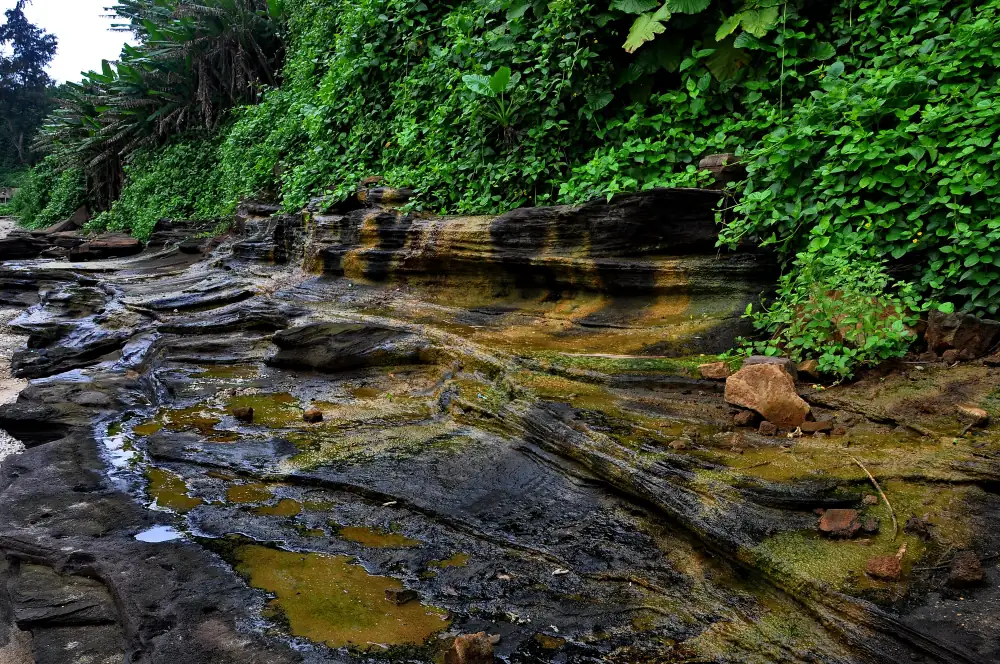
China’s largest and youngest volcanic island — formed by volcanic eruptions 3–6 million years ago, 27 km south of Beihai. The island’s coral reefs are among the healthiest in the South China Sea; the basalt sea cliffs and volcanic rock formations make the coastline dramatically different from anything else in China.
What Makes Weizhou Unique
The lava landscape: Unlike China’s sandy beach islands, Weizhou’s coast alternates between lava flow formations (collapsed lava tubes, pillow basalt, columnar jointing), white sand coves, and coral rubble beaches. The diversity within a small area (24 km²) is striking.
The coral reefs: In the clear Beibu Gulf water, the coral reef at Shenggujing (圣古井) and Beihai Bay (北海湾) sections of the island is visible from the surface. Snorkelling and recreational diving have a much richer marine environment than the better-known Hainan reefs.
The church: Shengmu Cathedral (圣母堂) — a 1883 Gothic church built by French missionaries on the island’s central hill, with a view of the sea on both sides. Still an active Catholic community; unusually photogenic combination of European ecclesiastical architecture and tropical volcanic landscape.
Getting There and Around
Ferry: From Beihai ferry terminal — approximately 2.5 hours (large ferry) or 1.5 hours (fast boat). Multiple daily crossings.
On the island: Rent an electric scooter (¥60–80/day) — the island is small enough to circuit in half a day on a scooter. No main roads; the coastal paths require some navigation.
Accommodation: Several boutique guesthouses and surf-oriented places. Book ahead during July–August peak season.
Shengmu Cathedral on Weizhou Island — an 1883 French Gothic church where volcanic island and European ecclesiastical architecture create a unique combination
Beihai (北海)
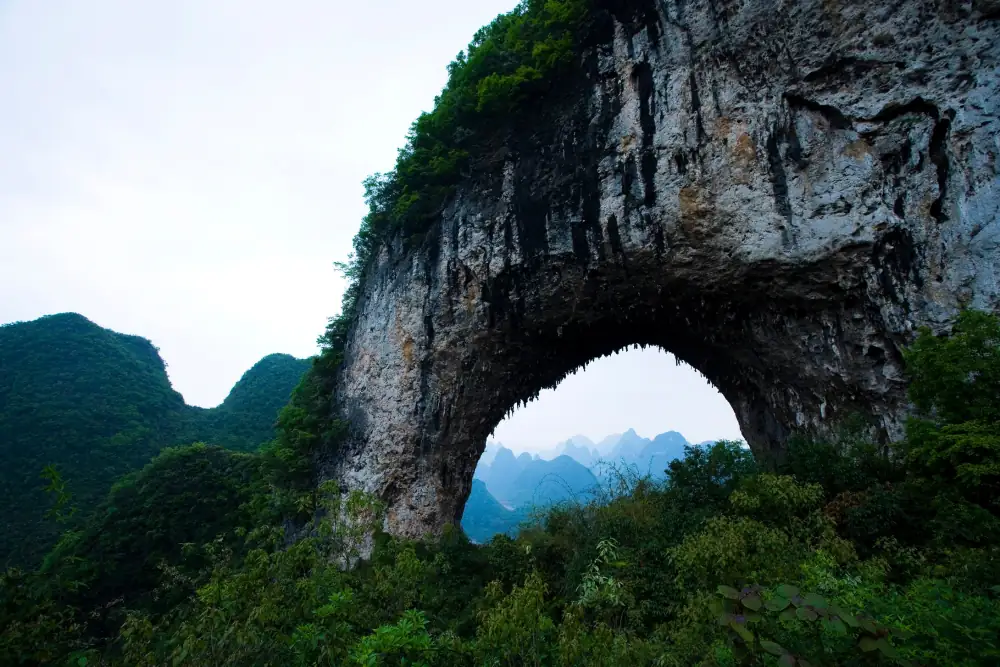
A Qing Dynasty treaty port on the northern shore of the Beibu Gulf — one of the few southern China ports with intact colonial architecture and a distinctly multicultural history.
Old Street (北海老街): A 1.4 km street of southern Chinese colonial shophouse architecture from the 1880s–1920s — long colonnaded arcades, European-style upper facades, Chinese-style internal courtyards. The best-preserved example of this architectural hybrid on the entire southwest coast.
Silver Beach (北海银滩): A 24 km white sand beach with very fine-grained quartz sand — billed as the “first beach in the world” for sand quality. The beach is extremely long and more accessible than Hainan with fewer crowds and lower costs.
Beihai Silver Beach — 24 km of fine white quartz sand on the Beibu Gulf, far less crowded than Hainan’s resorts
Detian Waterfall (德天大瀑布)
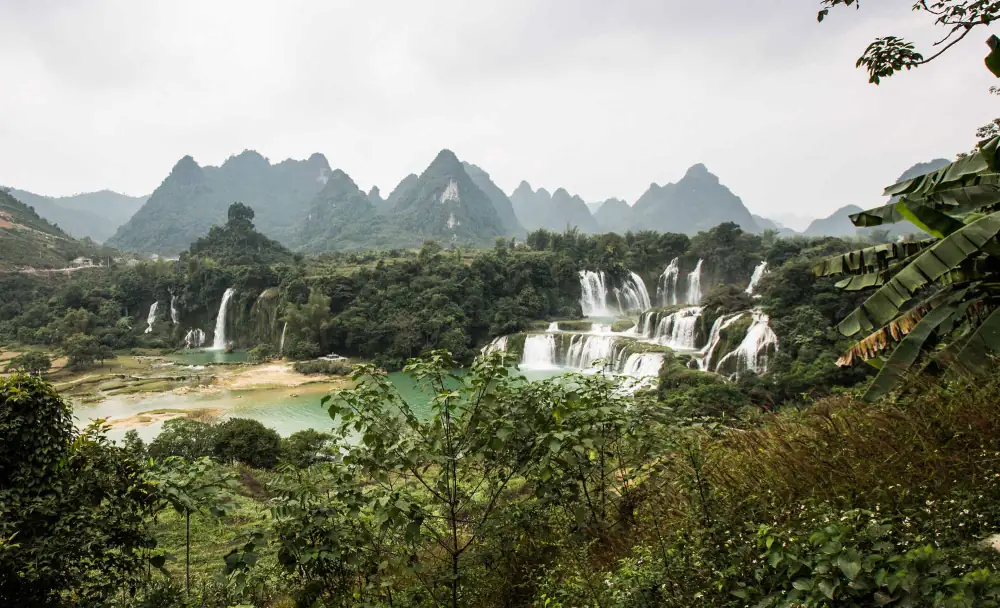
On the border of China and Vietnam, the Gui-Yue River forms the Detian Falls on the Chinese side — at 200 metres wide, it is the fourth-largest transnational waterfall in the world. The Vietnamese side is called Ban Gioc Falls.
The viewing platform allows views of both falls simultaneously, with the small Vietnamese border market area visible across the river. Rafts operate on the Chinese side approaching the falls base. ¥90 entry.
Practical Tips
Getting to Beihai: Beihai Fucheng Airport (BHY) — flights from Guangzhou (1 hr), Kunming (1.5 hrs), Chengdu (2 hrs). Or high-speed rail from Nanning (1.5 hrs).
Nanning (南宁): The Guangxi capital — a necessary transit hub and a pleasant tropical city. The Guangxi Museum has an excellent collection of Zhuang bronze drums (铜鼓) — the most important ritual objects of the Zhuang minority people.
Getting to Detian: 4–5 hours by bus from Nanning via Chongzuo (崇左); or as a full-day tour from Nanning.
Last updated: May 2026