
Longji Rice Terraces “Dragon’s Backbone” — 650-year-old terrace bands carved into the Guangxi mountains by the Zhuang and Red Yao peoples, best photographed in spring flooding season
The Longji Rice Terraces (龙脊梯田, “Dragon’s Backbone”) in Guangxi’s Longsheng County are among the most photographed agricultural landscapes in China — steep mountain ridges carved into parallel terrace bands over 650 years by the Zhuang and Red Yao minority peoples, creating a landscape that looks architectural at a distance and reveals extraordinary agricultural engineering close up.
Table of contents
Open Table of contents
The Terraces
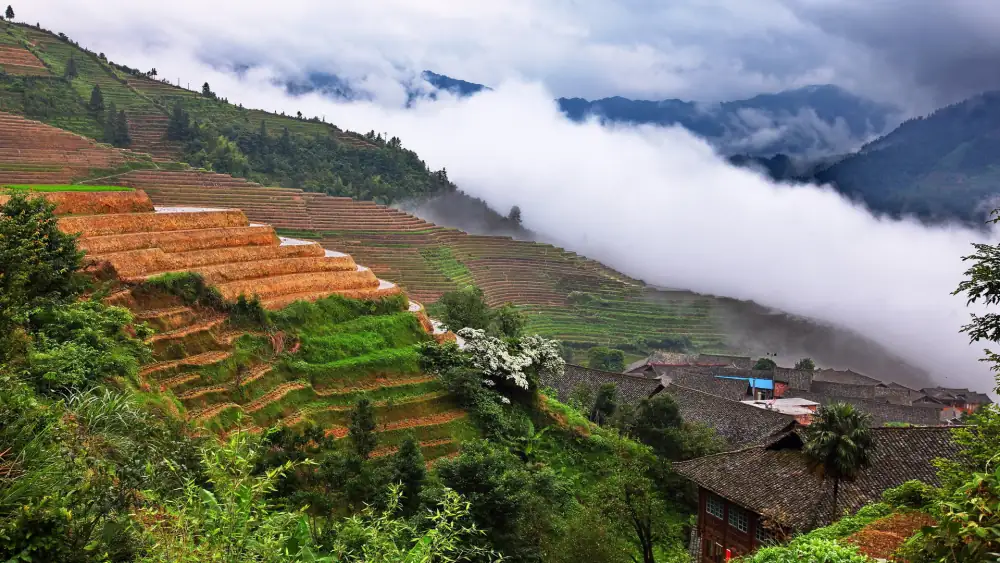
The Longji terrace system covers 66 km² at altitudes of 380–1,180 metres — built from the Yuan Dynasty (1271–1368) through the Qing, with the first terraces laid on accessible lower slopes and the system gradually extended up the steeper ridges over centuries.
The scale: Individual terraces are typically 1–5 metres wide; the entire mountain from valley floor to cloud-scraping ridge top is terraced. Looking at the ridgeline from a distance, the horizontal lines of the terraces create a pattern resembling the scales of a dragon — hence the name.
Four Seasons, Four Different Landscapes
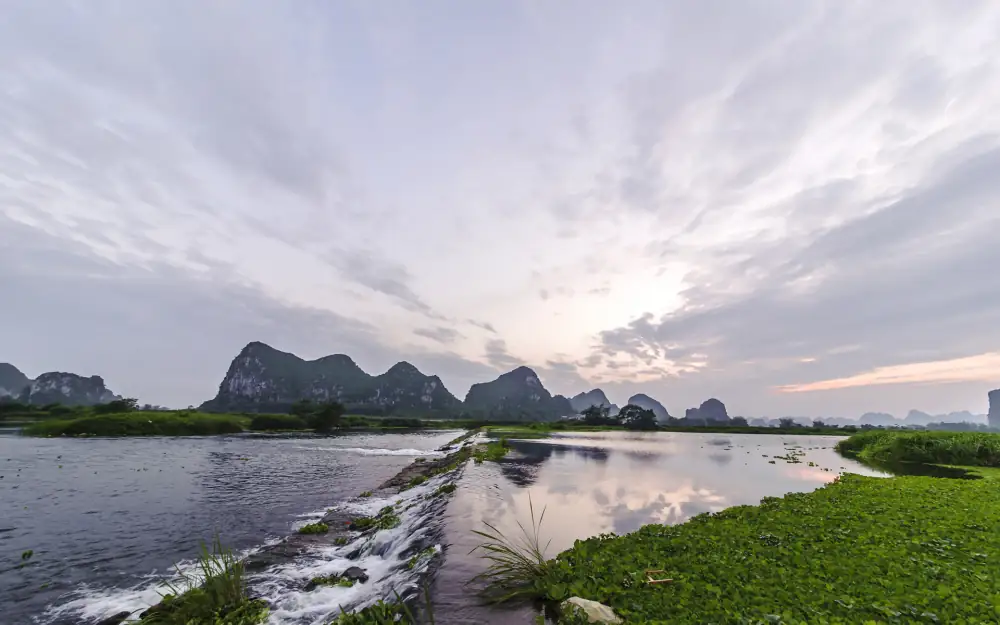
The reason serious photographers return multiple times:
Spring (April–May): Flooding season. The terraces are flooded with water for rice planting — the water surface reflects the sky, turning the entire mountain into a mosaic of mirror panels. The flooding happens progressively from lower to higher terraces; the silver-white reflection against the dark earth dike lines is extraordinary.
Summer (June–September): Green wave. The growing rice creates an intense emerald landscape — every terrace a different shade of green, the whole mountain alive and vertical.
Autumn (October–November): Golden harvest. The rice ripens to gold simultaneously across the terraces — the most-photographed season. The amber fields against the dark wooden minority houses and the mist-filled valley is the definitive Longji image.
Winter (December–February): Snow. The snow-covered terraces create an abstract black-and-white geometric pattern — unusual and beautiful, accessible only in cold years when snow actually accumulates.
The Two Main Areas
Ping’an Zhuang Village (平安壮族村): The more accessible section, with the most developed tourist facilities. The classic “Seven Stars and Moon” (七星伴月) terrace formation is viewable from Viewpoint 1 and 2 above the village.
Dazhai (大寨) Red Yao Village: 10 km further on a winding mountain road — the more spectacular terrace formations (Jinfo Terrace, 金佛顶) and the Red Yao women with their extraordinarily long hair (which can exceed 2 metres) are the distinguishing characteristics. The highest viewpoint here gives the most sweeping panorama.
Minority Culture

Red Yao women (红瑶妇女): The Red Yao women of Dazhai maintain a tradition of growing hair extremely long — never cutting it after adolescence. The hair is washed, oiled, and styled differently for different occasions; the most elaborate styling indicates marital and social status. Photographs of this tradition require permission and sometimes payment.
Zhuang weaving (壮锦): The Zhuang minority produce one of China’s four famous silk brocades — geometric patterns on cotton using supplementary weft technique. The Ping’an village area has active weavers; watching the back-strap loom work produces understanding of the technical complexity behind the patterns.
Practical Tips
Getting there: From Guilin city — 2 hours by bus or private car. Multiple daily buses from Guilin North Bus Station to Longsheng town; then local minibus to the terrace areas.
Viewpoint access: Each village area charges entry (¥100 combined ticket). The viewpoint platforms are 20–60 minute walks uphill from the village entry.
Accommodation: Staying overnight in a minority village guesthouse — basic wooden-house rooms, meals of local minority cooking (bamboo rice, smoked pork, mountain vegetables) — is the recommended experience. The early morning and late evening mist conditions are the best terrace light.
Last updated: May 2026