
Table of contents
Open Table of contents
Guangzhou’s Green Mountain: Why Baiyun Matters
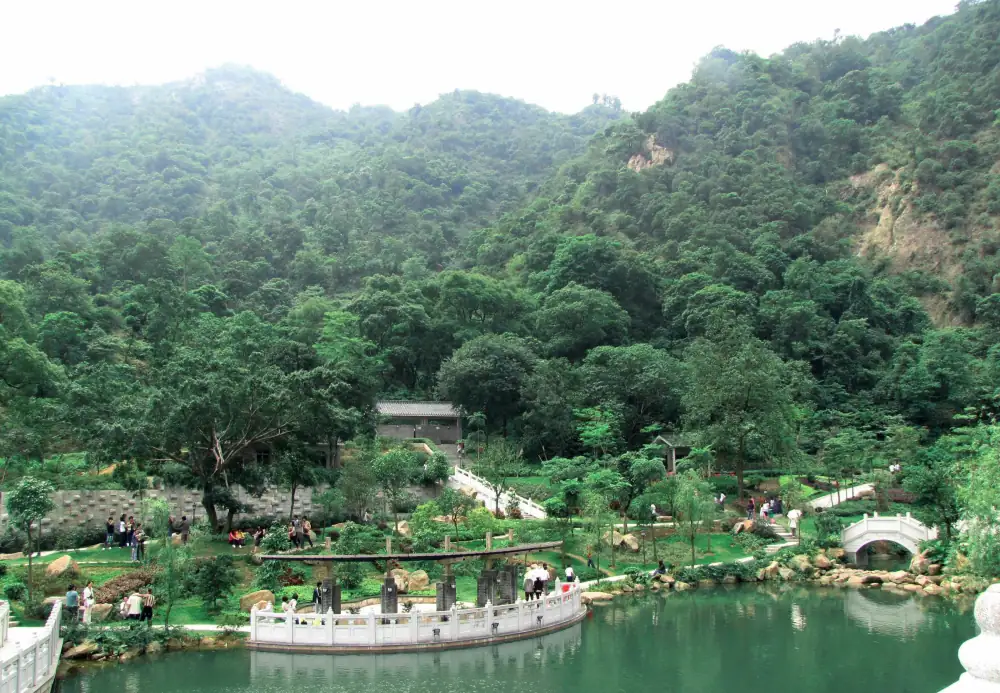
In a city of 18 million people built on flat delta land, the fact that a 428-metre forested mountain rises within 10km of the city centre is remarkable. Baiyun Mountain (白云山, Bái Yún Shān) — White Cloud Mountain — has been Guangzhou’s green lung, recreational escape, and spiritual backdrop for thousands of years.
Historical records document ancient temples on the mountain from the Eastern Han dynasty. During the Song dynasty, it became famous for the “White Cloud Return of Morning Twilight” (白云晚望), one of the classical Eight Scenes of Guangdong. In the 1980s and 1990s, as Guangzhou’s rapid development consumed green space at alarming rates, the mountain was formally protected as a national scenic area.
Today the mountain receives over 20 million visitors per year — mostly Guangzhou residents using it as their neighbourhood park, jogging trail, and dawn tai chi venue. The mountain also draws visitors from across China and beyond who want to understand the remarkable contrast of subtropical forest and megacity visible from the summit.
The Mountain’s Zones and Trails
Baiyun Mountain is organised into several scenic sub-areas, each with different character.
Moxing Ridge (摩星岭)
The highest point on Baiyun Mountain at 382 metres. Getting here involves either the cable car or a serious hike — and the reward is a panoramic view over Guangzhou that, on clear days (more common in autumn and winter), extends from the Pearl River delta all the way to the sea. The ridge is a genuine summit with vertiginous views on multiple sides.
Hiking to Moxing Ridge: From the North Gate (北门) entrance, a well-marked trail climbs 280m elevation over approximately 3km. Allow 1.5–2 hours up. The trail passes through subtropical forest with impressive tree ferns, banyan trees, and dense undergrowth. Clearly marked, not technical, but steep in sections.
Cable car to Moxing: A gondola operates from near the South Gate area to near the summit. Single journey approximately ¥35, return ¥60. Saves the climb but misses the forest experience.
Mingchun Valley (鸣春谷)
A valley in the central part of the mountain famous for its bird population. The valley has a dedicated bird habitat area with over 200 species recorded. Dawn birdwatching is excellent here — bring binoculars. A separate ticketed “Bird Paradise” area houses exotic species in large enclosures. Entry to the special area ¥30.
Luhu Lake Area (麓湖)
At the southern foot of the mountain, Luhu Lake is a pleasant landscaped park used by Guangzhou residents for walking and picnicking. Less strenuous than the upper mountain, attractive for families. The lakeside cafe strip makes for a pleasant coffee stop.
Tianping Forest Park (天平架森林公园)
The northwestern area of the mountain is less visited and offers more serious hiking through intact subtropical forest. Trails here are less manicured but more atmospheric. Good for those seeking to escape the weekend crowds.
Entry Tickets and Practical Information
Entry Fees (2026)
- Main scenic area entrance: ¥10 per person (peak season), ¥5 (off-season)
- Cable car: ¥35 one-way, ¥60 return (Nanmen cable car to Moxing area)
- Bird Paradise special area: ¥30
- Electric sightseeing cart: ¥15–30 per segment
The entry fee for the main mountain park is remarkably low — one of the better bargains in Guangzhou. The cable car and special attractions cost extra.
Opening Hours
Main park: 6:00 AM – 6:00 PM (extended to 7:30 PM in summer) Cable car: 8:30 AM – 5:30 PM (weather permitting) Dawn entry: Many regulars enter before official opening time via the north entrance for morning exercise. Enforcement is relaxed.
Getting to Baiyun Mountain
Metro
Guangzhou Metro Line 2 has a stop at Baiyun Mountain (白云山站) but this is actually quite far from the main mountain entrances. Better options:
- Metro Line 3 to Baiyun Avenue (白云大道): Then short taxi or bus to the North Gate (北门)
- Metro Line 2 to Jiahewanggang (嘉禾望岗): Then bus 239 or 284 to mountain entrances
Bus
Multiple bus lines serve the various mountain entrances:
- Route 24: From the city centre to the North Gate (北门入口)
- Route 95: To the South Gate (南门入口) from Tianhe District
- Route 239: To the main North/East gate areas
Taxi/Didi
From Tianhe District (central Guangzhou): approximately 20–30 minutes, ¥30–50 depending on traffic. Guangzhou traffic can be severe — metro and bus often faster during peak hours.
Best Times to Visit
Early Morning: The Local Way
Guangzhou residents use Baiyun Mountain seriously for morning exercise. From 6 AM, hundreds of people climb the steps to the summit, practice tai chi in the forest clearings, and walk the ridge trails. This pre-tourist-hour experience gives a truer sense of the mountain’s role in the city’s life.
Autumn and Winter (October–February): Best Views
Guangzhou’s famous air pollution and humidity are worst in summer and spring. In the drier autumn-winter months, the air clears noticeably and views from Moxing Ridge can be exceptional. This is also when the mountain forest turns slightly cooler and takes on richer foliage tones.
Spring (March–May): Wildflowers and Bird Migration
The subtropical forest blooms with wild orchids, azaleas, and other plants in March–April. Spring migration brings large numbers of raptors and migratory songbirds through the mountain. Dawn birdwatching at Mingchun Valley in April can be excellent.
Summer (June–September): Rainy Season
The rainy season brings heavy downpours, high humidity, and misty visibility from the summit. The forest is intensely green. Trails can be slippery and occasionally closed after heavy rain. Not the ideal season but Guangzhou residents hike year-round regardless.
Highlights and Hidden Spots
The Old Military Road (军事路)
An old vehicle track that predates the modern tourist infrastructure, now used as a hiking route through sections of the mountain that see fewer visitors. Ask at the North Gate about this trail.
Ancient Ficus Trees
Several enormous banyan and ficus trees on the mountain are hundreds of years old, with remarkable aerial root systems spreading over wide areas. The largest is marked and can be found on the trail between the North Gate and Moxing Ridge.
Yunyan Temple (云岩寺)
A Qing dynasty Buddhist temple on the mountain’s eastern slope, largely overlooked by tourists heading to the summit. The temple is small but genuinely atmospheric, set in forest with an ancient incense altar. Monks are occasionally in residence.
Moxing Ridge at Sunset
The ridge has an excellent west-facing aspect. On clear evenings from October through February, the sunset view over the Pearl River Delta and Guangzhou’s skyline from the ridge is spectacular — the entire city spread below, the pearl delta gleaming in the distance.
Combining Baiyun Mountain with Guangzhou Attractions
Yuexiu Park (越秀公园)
The main city park below the mountain’s southern flanks, Yuexiu houses the famous Five Goats Sculpture — the symbol of Guangzhou — and excellent views of the city skyline. Entry free. A natural complement to a mountain morning: descend from the mountain and walk through Yuexiu to the city centre.
Zhenhai Tower (镇海楼) and Guangzhou Museum
Within Yuexiu Park, this Ming dynasty tower houses an excellent city history museum and provides views over the old city. Entry ¥15.
Chen Clan Ancestral Hall (陈家祠)
One of the finest examples of late Qing dynasty folk architecture in China, with extraordinary carved and painted decorative elements covering every surface. About 5km from the mountain’s south entrance. Entry ¥15.
Local Food Near Baiyun Mountain
The area around the mountain’s north and east entrances has a string of Cantonese restaurants and tea houses popular with the post-hike crowd.
Dim sum (点心): Classic Cantonese dim sum is available at teahouses from early morning. Order from trolleys or tick-box menus. Per-person cost for a satisfying dim sum breakfast: ¥40–80. Cantonese dim sum at a traditional tea house is as much a cultural experience as a meal.
Congee (粥): Smooth Cantonese rice porridge served with fish, lean pork, century egg, or toppings of your choice. Light, restorative, and ideal after a morning hike.
Roast goose (烧鹅): Guangzhou-style roast goose — the city’s proudest culinary achievement. Crispy skin, fragrant flesh. A half-goose serves 2–3 people. ¥80–150 depending on size.
Practical Tips
Footwear: Trail runners or hiking shoes recommended for any trail beyond the paved main paths. The mountain paths can be slippery after rain.
Monsoon season: During typhoon season (June–October), Baiyun Mountain trails close during and after severe weather. Check conditions before visiting.
Hydration: The subtropical forest is deceptively thirsty work even in cooler months. Carry water. Vendors operate along major routes.
Photography: Smog is genuinely an issue for distant views in Guangzhou. Apps showing real-time AQI help plan clear-view visits. The best clarity is typically in November–February after cold dry fronts push pollution out.
Crowds: Weekend crowds on the main trail to Moxing Ridge can be very dense from 9 AM onward. Either go early (before 8 AM) or take alternative trail routes.