
Langde Upper Village: The Miao Village That Gets It Right
Langde Upper Village (郎德上寨, Lǎngdé Shàngzhài) in Leishan County, southeastern Guizhou, receives considerably fewer visitors than the more famous Xijiang “Thousand Household” Miao Village 30 km away — and is, for that reason, more interesting.
The approximately 300 families of Langde belong to the Long-skirt Miao (长裙苗) branch — one of dozens of distinct Miao subgroups distinguished by regional dress traditions. They are famous for three things: the silver jewellery worn by women during festivals, the lusheng pipe instrument, and a reputation for hospitality to outsiders that extends to sharing rice wine from a communal bowl before allowing guests to enter the village.
Miao Culture at Langde
The Silver Tradition
Miao silver (苗银) is among the most elaborate jewellery tradition in China. Festival dress for women of the Long-skirt Miao includes a headdress, collar, chest pieces, arm rings, and ankle rings made of hammered and engraved silver — the total weight worn by a fully dressed woman during major festivals can exceed 15 kg.
Symbolism: The designs are not purely decorative; specific motifs (butterflies, water buffalo horns, dragons) carry meanings related to ancestry, fertility, and the Miao creation myth involving the goddess Butterfly Mother.
Langde’s silver workshop: Several families in the village maintain active silversmithing workshops; visitors can observe the hammering and engraving process. The workshop products (sold at the village, at genuine artisan prices) are among the most authentic Miao silver work available outside museum collections.
Lusheng Music
The lusheng (芦笙) — a polyphonic reed pipe instrument with multiple bamboo tubes — is the central musical instrument of Miao culture. Lusheng dances, performed in circles on the village threshing floor (晒谷场), are performed at every significant community occasion.
Watching a genuine performance: The village performs for visitors, but the context matters — performances connected to actual village events (weddings, new year festivals, the agricultural calendar) are qualitatively different from demonstration performances for tourists. Ask at accommodation about scheduled village events.
Lusheng festival calendar: The Miao New Year (苗年) celebrations in November-December and the spring Lusheng Festival (timing varies by village) are the most elaborate occasions.
Indigo Batik (蜡染)
The Miao women of this region are skilled practitioners of wax-resist indigo dyeing (蜡染) — applying molten beeswax in patterns to fabric before dyeing, creating geometric and figurative designs in blue-on-white. The technique requires years to master; the finest work has a crispness and complexity comparable to woodblock printing.
Workshops: Several women in the village offer batik-making demonstrations and short classes (¥50–80/session; basic workshop with materials).
The Village Layout
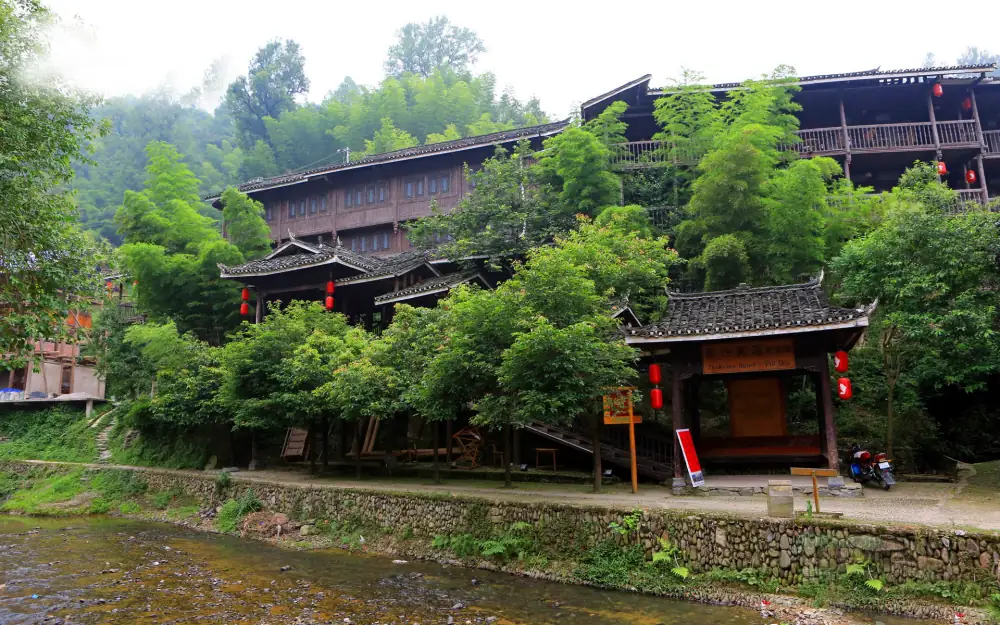
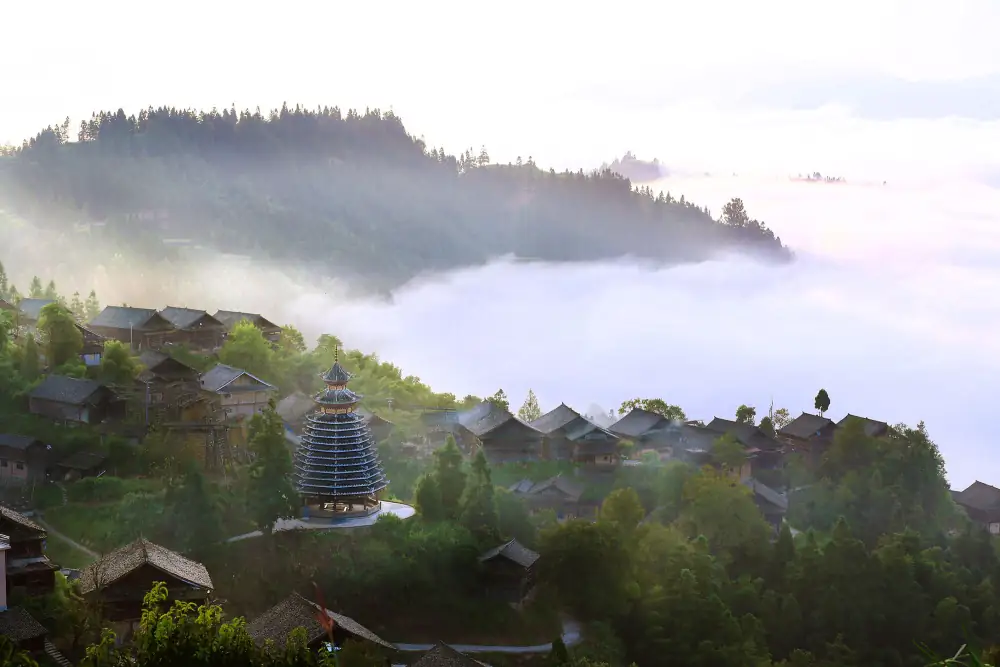
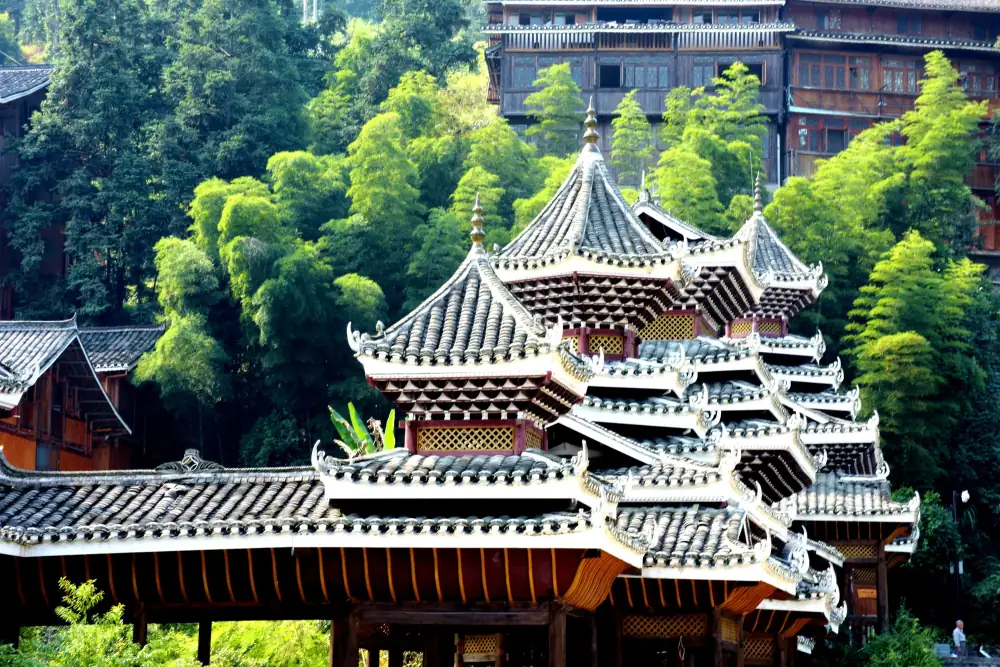
Langde is a cluster of traditional Miao stilt houses (吊脚楼) on a south-facing hillside above the Bala River — the wooden multi-storey buildings elevated on timber piles with living quarters on upper floors and animal housing or storage below. The older buildings are entirely in wood and roofed with dark slate; newer construction mixes materials less gracefully.
The terraced fields: Surrounding the village, rice terraces step down to the river valley — planted in spring, lush green in summer, harvested golden in October. The landscape from the village looking outward over the terraces is the typical Guizhou Miao landscape.
Practical Information
Getting there: From Kaili (凯里) — the regional hub for southeastern Guizhou Miao tourism — take a local bus toward Leishan (40 min); Langde is a 10-minute taxi from the main road.
Combining with Xijiang: Xijiang’s “Thousand Household Miao Village” (40 min from Langde) is larger and more spectacular physically, but heavily commercialised. Visit Langde first for cultural context, then Xijiang for the landscape scale.
Where to stay: Several village families operate guesthouses in traditional stilt houses (¥100–200/night). Eating with the family is typically included or available at modest additional cost.
Respectful visiting: The village is a community, not a theme park — ask before photographing people, respect private spaces in courtyard houses, and purchase directly from artisans rather than from middlemen.
Langde is what Guizhou’s Miao villages look like when tourism hasn’t completely reshaped them — the silver is still worn for actual ceremonies, the lusheng is still played for actual occasions, and the rice wine at the entrance is actual hospitality rather than a ticket system.