
Hainan Island is China’s southernmost province — a tropical island the size of Belgium in the South China Sea. It’s most famous as a beach destination rivalling Thailand and Bali, but beyond the coastal resorts lies a mountainous interior with primeval rainforest, volcanic landscapes, and the indigenous Li and Miao minority cultures.
Table of contents
Open Table of contents
Sanya (三亚)
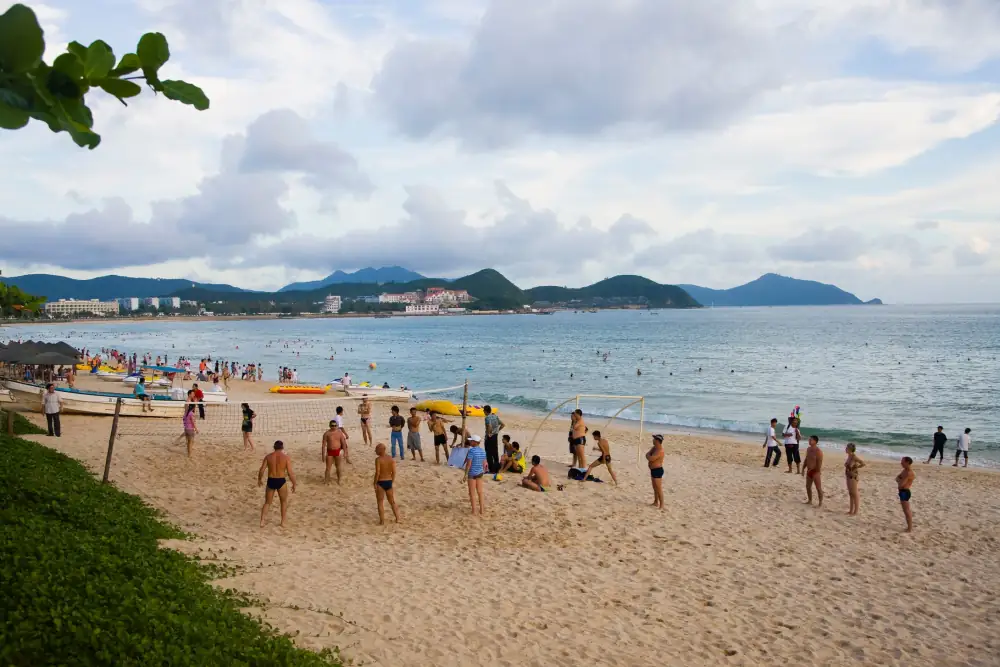
Sanya is Hainan’s main tourism hub — a 30km coastal strip of white sand beaches backed by luxury resorts, water sports operations, and seafood restaurants.
Yalong Bay (亚龙湾)
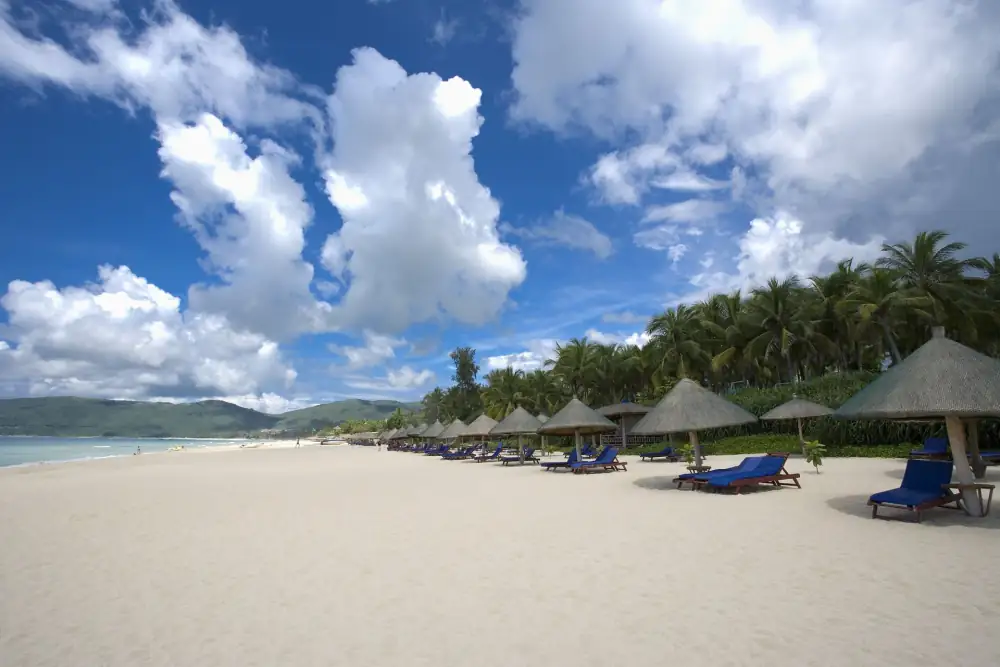
China’s best beach by general consensus — a 7km crescent of fine white sand in a protected bay, with clear turquoise water, consistent quality water sports (snorkelling, jet ski, parasailing), and the most upscale resort strip in China. Hilton, Sheraton, InterContinental, and Ritz-Carlton all have properties here.
Water visibility: 5–8 metres on good days (best October–April)
Coral reef snorkelling: Yacht tours depart from Yalong Bay Marina to offshore coral gardens (¥200–¥350 for half-day)
Tianya Haijiao (天涯海角)
“Edge of the Sky, Rim of the Sea” — a rocky coastal viewpoint with enormous inscribed boulders in the surf. Historically a place of exile for banished officials; now one of Hainan’s most romantic (and crowded) locations. Entry ¥95.
South China Tropical Botanic Garden (中国热带植物园)
Near Danzhou city — China’s largest tropical botanical garden with 13,000 plant species including rare tropical fruit trees, medicinal plants, and a spectacular orchid valley. Accessible as a day trip from Sanya.
Hainan Interior: Li & Miao Minority Regions
Wuzhishan (五指山)
The mountain at Hainan’s heart — “Five Finger Mountain” at 1,867m, the highest peak in the province. The surrounding area is Hainan’s most authentic Li and Miao minority culture zone.
Li culture: The Li people (黎族) have inhabited Hainan for 3,000 years. Their traditional boat-shaped thatched houses, brocade weaving, and tattoo traditions (now mostly in elderly women) are unique. Li and Miao Minority Culture Village (¥80) demonstrates traditional crafts and dance.
Hiking: Forest trails from Wuzhishan city through rainforest to mountain viewpoints. The peak circuit trail (2 days, camping required) is for experienced hikers only.
Neihuang Rainforest (霸王岭热带雨林)
A 70,000-hectare nature reserve protecting Hainan’s primary rainforest — the only place in China where the Hainan gibbon (黑冠长臂猿, fewer than 40 individuals remaining) still survives. Guided rainforest walks available; occasional gibbon sightings possible at dawn.
Haikou (海口) — Capital City
Haikou has been transformed by the Hainan Free Trade Port status (announced 2020, full implementation ongoing) — major Chinese and international companies are establishing headquarters here, and a free trade zone allows duty-free purchases.
Old Town (骑楼老街)
Southeast Asian-influenced shophouse architecture from the early 20th century — covered walkways (qilou) along street fronts. The most intact example in mainland China/Hainan.
Haikou Duty-Free Complex
Since 2020, international travellers (and China domestic tourists) can purchase substantial allowances of international goods duty-free in Hainan. Major brands, cosmetics, electronics, and watches at prices 20–40% below mainland rates. Multiple complexes in Sanya and Haikou.
Practical Information
Best time: November–April (dry season, 26–32°C, minimal rain)
Avoid: June–September (typhoon season; occasional powerful storms)
Getting there: Flights from all major Chinese cities; Meilan International Airport (Haikou) and Phoenix International Airport (Sanya)
Getting around: High-speed rail circles the island (Haikou to Sanya: 1.5 hours, ¥90); rental scooters widely available
Currency: RMB only; no special currency zone despite free trade status