
Mount Wutai (五台山, “Five Terrace Mountain”) is the sacred mountain of Manjushri Bodhisattva, the embodiment of wisdom in Mahayana Buddhism. The five flat-topped peaks of the mountain give it its name, and the valley between them — Taihuai (台怀) — is home to more than 50 active monasteries ranging from Tang Dynasty foundations to modern Tibetan-style temples decorated in vivid colours.
Unlike China’s other sacred mountains, Wutai is not a single peak to summit — it’s a mountain landscape with a living monastic community at its heart. The monks here include both Chinese Buddhist (Han tradition) and Tibetan Buddhist monks, making the religious atmosphere notably diverse. Tibetan pilgrims walk the circuit of the five peaks; Chinese Buddhists visit the ancient Han temples; and a growing number of international visitors come for the history, the architecture, and the remote mountain scenery.
Table of contents
Open Table of contents
Getting There
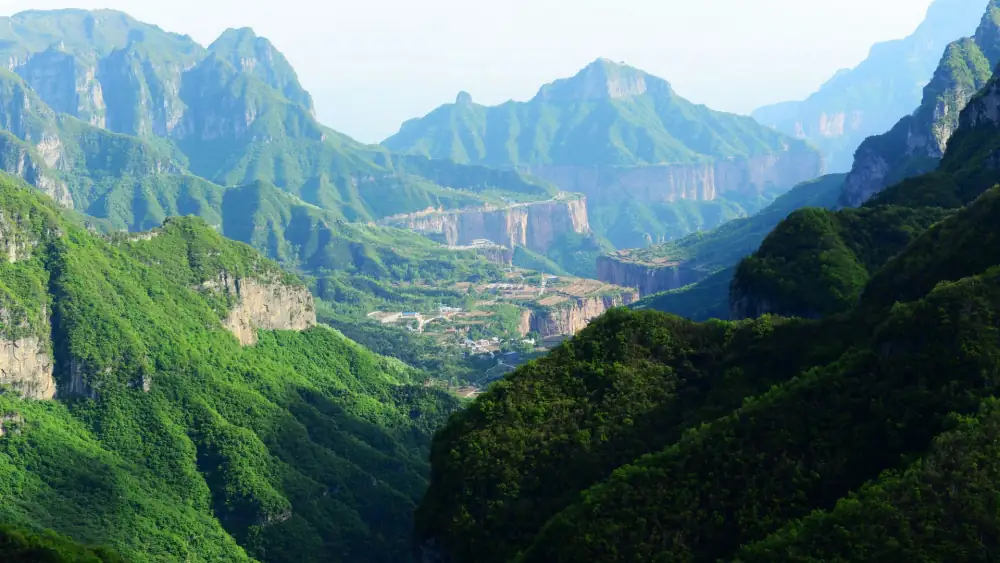
Mount Wutai is in northeastern Shanxi, about 240km from Taiyuan (the provincial capital).
From Taiyuan: Buses depart Taiyuan Long Distance Bus Station (太原长途汽车站) for Wutai about every 1–2 hours, 4–5 hours journey, ¥60–80. Or take the high-speed train to Xinzhou East Station (忻州东站) and transfer to a local bus or taxi (1.5 hours, ¥80–120 by taxi).
From Beijing: Buses from various Beijing stations to Wutai, about 6 hours. Or high-speed train to Xinzhou then transfer.
From Datong: Bus to Wutai via Xinzhou, about 4 hours.
There is a dedicated entrance to the scenic area with a mandatory ticket purchase.
Scenic area entrance fee: ¥135 per person
Opening: The mountain is accessible year-round; the scenic area ticket gates are open 7:00am–6:00pm
The Taihuai Valley: Main Temple Area
The valley town of Taihuai is where most accommodation, restaurants, and the densest concentration of temples are located. It sits at about 1,700 metres elevation — notably cooler than the lowlands.
Tayuan Temple (塔院寺)
The most visually striking temple in Taihuai. The defining image of Wutai is the massive white Tibetan-style dagoba (stupa) here, 56 metres tall, gleaming against the mountain backdrop. Tayuan is a working monastery with Tibetan monks, and morning prayers are open to quiet visitors.
Entry: ¥5 per temple (or covered by general pass)
Morning chanting: 5:30am–6:30am
Xiantong Temple (显通寺)
The oldest temple on Wutai, with parts dating to the Eastern Han Dynasty (68 AD, though extensively rebuilt). The complex is massive — 400+ rooms — and contains the famous “Copper Hall” (铜殿), an all-copper temple building from the Ming Dynasty. One of the most important Buddhist sites in China.
Entry: ¥10
Pusading Temple (菩萨顶)
Perched on a ridge above Taihuai, this is a Tibetan-style monastery accessible via a steep stone staircase of 108 steps (108 is a sacred number in Buddhism). The views over the valley and surrounding peaks are excellent.
Entry: ¥5
Tip: Come at dawn for the mist in the valley below
Luohou Temple (罗喉寺)
Contains the “Opening Flower” (开花现佛) — a large lotus-shaped mechanism that opens to reveal gilded Buddha figures. It’s operated during prayer times and is a remarkable piece of religious theatrical design.
The Five Peaks Circuit
For serious pilgrims and trekkers, walking the circuit of all five peaks is the traditional Wutai experience. The peaks are:
- Central Peak (中台, 2,894m)
- Northern Peak (北台, 3,058m) — highest point, snow often year-round
- Eastern Peak (东台, 2,795m) — best sunrise views
- Southern Peak (南台, 2,485m) — warmest, with wildflower meadows in summer
- Western Peak (西台, 2,773m) — most remote, least visited
The full circuit on foot takes 3–4 days covering about 80km. Most pilgrims do it over a week at a slower pace, staying in temple guesthouses at each peak. You can also hire a car or take taxis between the peaks (each has a road access) and walk just to the temple at the top of each.
Mini-buses from Taihuai visit the main peaks with flexible schedules: approximately ¥50–80 per person per peak, or ¥300–400 for a car for the day.
Prayer Flags Valley (彩虹瀑布附近)
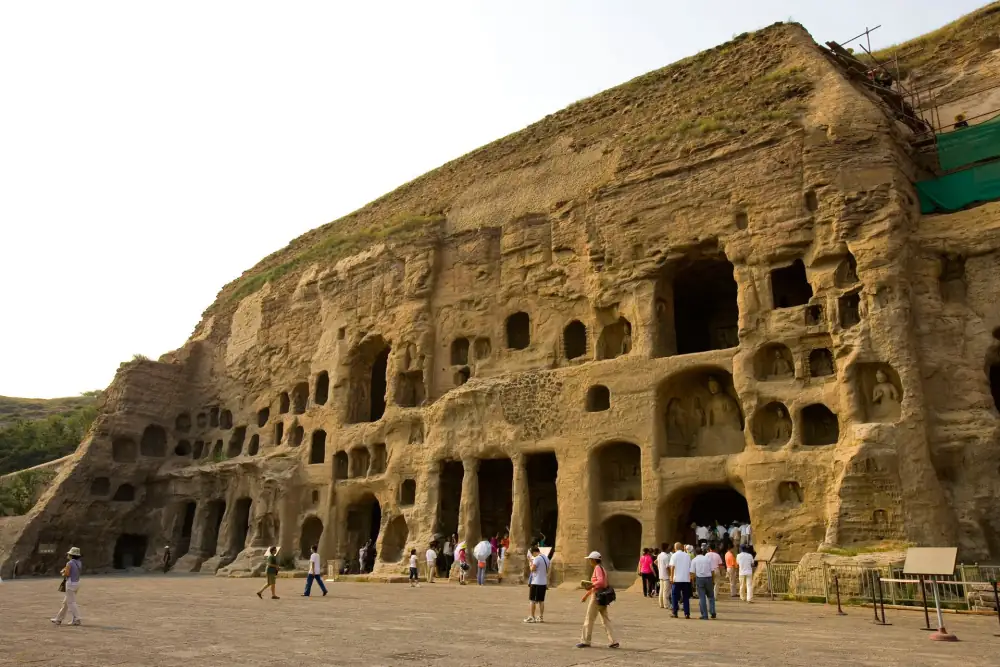
The road between Taihuai and the northern circuit passes through a valley section where Tibetan-style prayer flags have been strung between the pine trees — thousands of them, creating a corridor of colour. It’s a 5-minute stop but very photogenic, especially in wind when the flags flutter.
What Wutai Feels Like
Wutai has a different atmosphere from China’s other tourist mountains. The monastic community here is large and genuinely active — you’ll regularly walk past monks going about their day, hear chanting from temples at dawn and dusk, and encounter pilgrims (often elderly, often walking difficult sections on their knees as a form of devotion) at various points around the mountain.
The commercial tourist infrastructure exists — there are souvenir shops, tourist restaurants, and package tour groups — but the religious centre of gravity is strong enough that Wutai retains a sense of purpose beyond tourism.
Staying Overnight at Wutai
Spending at least one night is essential. The morning atmosphere — the sound of drums and chanting at 5am, mist in the valleys between peaks — is the best thing Wutai offers.
Temple guesthouses (香积厨): Some monasteries provide accommodation for pilgrims and visitors; basic facilities, ¥80–150 per person per night. Ask at individual temples.
Hotels in Taihuai: Range from ¥200–600/night. The town is not large and options book up during peak season (July–August and Chinese public holidays).
Peak season: July–August is the busiest period (Chinese summer holidays). Spring (May–June) and autumn (September–October) are the recommended times.
When to Visit
Summer (June–August): Peak season, most active religious calendar, warm weather (15–25°C in the valley, cooler on peaks). Busiest and most expensive.
Spring (May–June): Excellent — wildflowers on the southern peak, fewer crowds, good weather.
Autumn (September–October): Beautiful foliage, crisp air, manageable crowds.
Winter (November–April): Snow covers the mountain (the northern peak may have snow even in summer). Very few tourists. The winter atmosphere is extraordinarily quiet. Most hotels are open; some food options limited. Cold — bring proper winter gear.
Permit Requirements
As of 2026, foreign visitors to Wutai Mountain do not require a separate permit beyond the standard scenic area entrance ticket. Check current requirements before visiting as policies occasionally change.
Practical Tips
- Altitude: The valley is at 1,700m; peaks reach 3,058m. Some visitors experience mild altitude symptoms (headache, fatigue) — acclimatise gradually.
- Dress conservatively for temple visits — covered shoulders and knees
- The main temple areas prohibit photography during active prayer services
- Food in the valley is basic; vegetarian options are plentiful near the temples
- ATMs are available in Taihuai town