
Shandong is one of China’s cultural heartlands — the birthplace of Confucius and Mencius, the location of one of the five sacred mountains, and the province whose overseas diaspora gave the world kung pao chicken and Tsingtao beer. It’s also one of the most accessible provinces for first-time China visitors: good infrastructure, relatively English-friendly in Qingdao, and easy HSR connections from Beijing (1.5 hours) and Shanghai (1.5 hours).
Five days covers the four main destinations: Jinan, Taishan, Qufu, and Qingdao.
Table of contents
Open Table of contents
Getting There & Around
Entry points:
- Jinan Yaoqiang Airport (TNA) for the western circuit
- Qingdao Jiaodong International Airport (TAO) for the coastal start
HSR connections within Shandong:
- Beijing → Jinan: 1.5 hours (¥130-165)
- Jinan → Tai’an (for Taishan): 30 minutes (¥35-50)
- Tai’an → Qufu East: 30 minutes (¥35)
- Qufu → Qingdao: 2 hours (¥100-140)
- Qingdao → Shanghai: 4.5 hours (¥210-280)
Recommended routing: Start in Jinan, head south to Taishan and Qufu, then east to Qingdao for the final two days and coastal departure.
Day 1: Jinan — City of Springs
Jinan (济南) has been called the City of Springs since the Tang Dynasty — 72 famous springs bubble up naturally through the limestone bedrock within the old city, fed by rainfall from the mountains to the south.
Baotu Spring Park
Baotu Spring (趵突泉, ¥75) is the most famous of the 72 springs — three columns of water bubble continuously from a square pool fed by underground aquifers. The surrounding park has additional springs, traditional pavilions, and the Li Qingzhao Memorial (李清照纪念馆, included) honoring China’s most celebrated female poet, who was born in Jinan.
Allow 2-3 hours. In the park’s main teahouse, you can drink tea brewed with Baotu spring water (¥30-60/pot) — a tradition mentioned in classical Chinese literature.
Daming Lake Park
Daming Lake (大明湖, ¥30 to enter the scenic area, though the northern section is free) is a lake in the heart of the old city — larger than Baotu Spring but more relaxing than historical. The lake is fed by the same underground springs and the water stays clear year-round.
Five Dragon Pool Area
Five Dragon Pool (五龙潭, ¥30) is the third major spring complex — quieter and less touristed than Baotu, with a more contemplative character. Good for an evening walk.
Jinan Food
Shandong cuisine (鲁菜, Lu Cai) is one of China’s eight major regional cuisines and is considered the most refined — many imperial court recipes derived from Shandong techniques. Key dishes:
- Jiuzhuan dachang (九转大肠, braised pork intestines with sweet, sour, and savory glaze, ¥40-60) — a Jinan specialty that sounds alarming and tastes extraordinary
- Sweet and sour Yellow River carp (糖醋黄河鲤鱼, ¥60-100) — the whole fish is deep-fried then dressed with sauce, presented in a curved “jumping fish” presentation
- Scallion-stuffed flatbread (大葱饼, ¥5-8) — standard Shandong street food
Day 2: Taishan (Mount Tai)
Journey: HSR Jinan → Tai’an, 30 minutes, ¥35-50. Then taxi or bus from the station to the mountain entrance (¥15-20 taxi).
Mount Tai (泰山, ¥125 scenic area, cable car ¥100 one-way) is the most sacred of China’s five Daoist mountains and has been a place of imperial pilgrimage for 3,000 years. Every Chinese emperor who wanted to demonstrate his legitimacy came here to perform the Feng and Shan sacrifice rituals.
The mountain is 1,545m high but the climb from the base gate to the summit is 6,293 steps — the famous South Tianmen Route (南天门). The climb takes 3-5 hours depending on fitness. Most visitors take the cable car up (¥100) and walk down, or walk both ways for the full experience.
Climbing for Sunrise
The most celebrated experience on Taishan is watching sunrise from the summit — an experience that’s been recorded in Chinese poetry for 2,000 years and that Mao Zedong put in his poetry after climbing in 1919. To see the sunrise:
- Leave the mountain base at 11pm-midnight (night climbing is safe and common — the path is lit and there are vendors all the way up)
- Reach the summit by 3-4am and wait for dawn (around 5am in summer, 6:30am in winter)
- The temperature at the summit is 10-15°C colder than the base — bring a layer regardless of the season
Alternatively, stay overnight at a summit hotel (¥400-1,200/night, book well ahead) and walk out in time for sunrise.
Summit Area
The Jade Emperor Temple (玉皇庙, ¥5) at the true summit. Wangri Viewing Platform (望日峰) for sunrise and sunset. The Bei Tianmen (North Heavenly Gate) area has a concentration of food stalls, souvenir shops, and the most visited views.
On descent, the Zhongtianmen (Middle Heavenly Gate) cable car station is the most convenient descent point. Or walk all the way down via the Western Route (西路) which is quieter and passes through forests.
Day 3: Qufu — Confucius’ Hometown
Journey: HSR Tai’an → Qufu East, 30 minutes, ¥35.
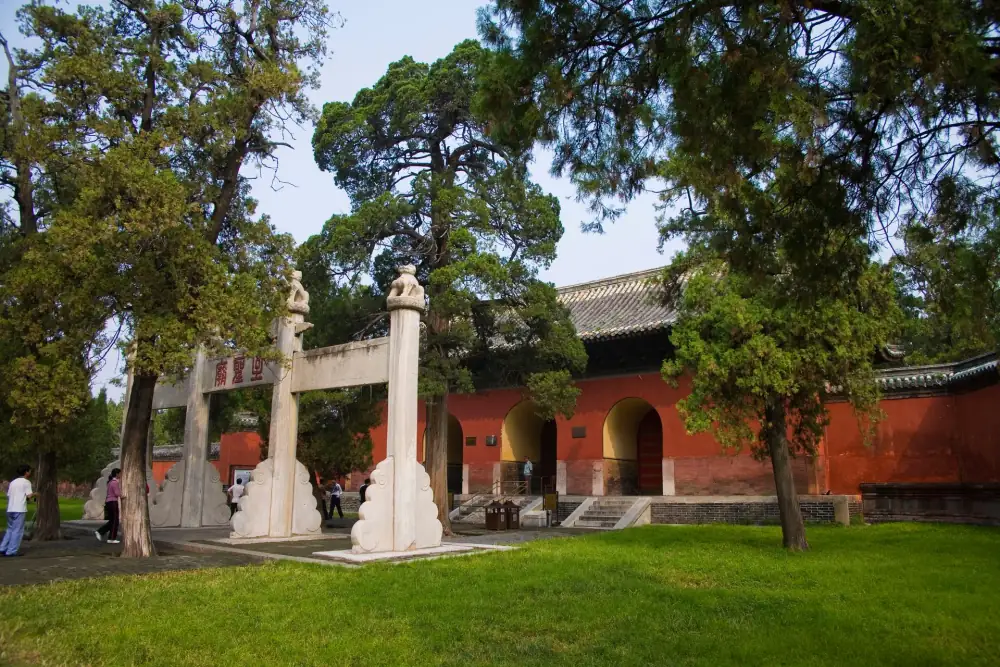
Qufu (曲阜) is the birthplace of Confucius (551 BCE) and has been a pilgrimage site for Chinese scholars, officials, and emperors for 2,500 years. The three main sites — the Mansion, Temple, and Cemetery of the Kong family — are collectively known as the Three Kongs (三孔) and are UNESCO World Heritage Sites.
Temple of Confucius
Temple of Confucius (孔庙, ¥90 for Three Kongs combined ticket) — founded in 478 BCE, one year after Confucius’ death. The complex grew over 2,500 years into a 9-courtyard ceremonial complex covering 18 hectares. The Dacheng Hall (大成殿) — the main sacrificial hall — rivals the Forbidden City in scale and is roofed with double-eave yellow imperial tiles, a color normally reserved for the emperor.
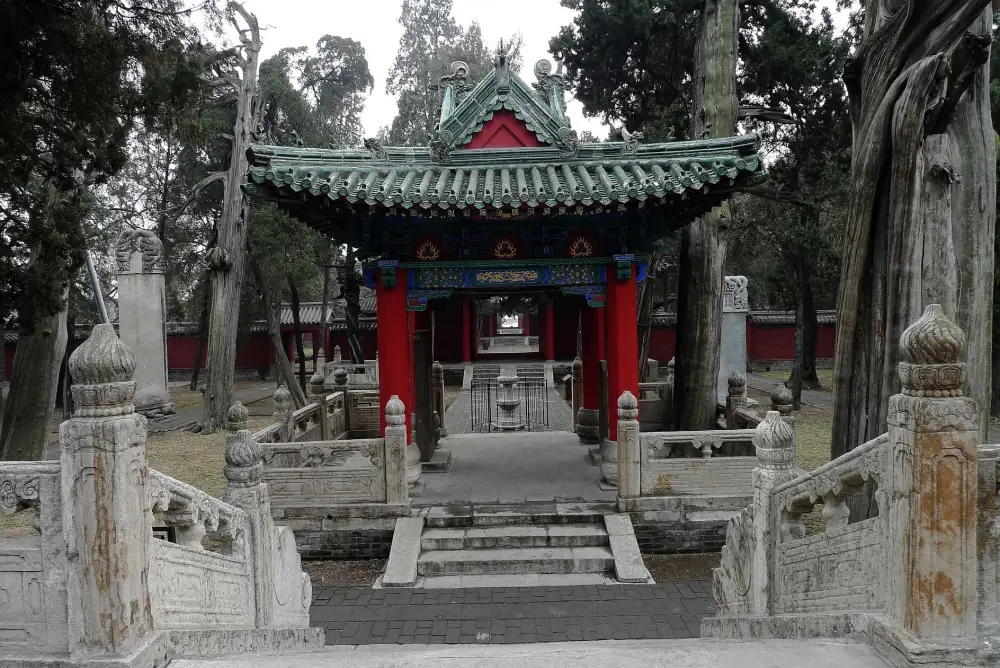
The Apricot Altar (杏坛) within the temple grounds is where Confucius taught — a Tang Dynasty pavilion in a courtyard of cypress trees. The gnarled ancient cypresses (planted by Han Dynasty officials) are as memorable as the architecture.
Mansion of Confucius
Mansion of Confucius (孔府, included in combined ticket) — the residence of the Kong family, direct descendants of Confucius, who lived here continuously for 77 generations until 1948. The complex has 463 rooms and functioned as a miniature imperial court. The family maintained their privileges through every dynasty including the Mongol Yuan.
Cemetery of Confucius
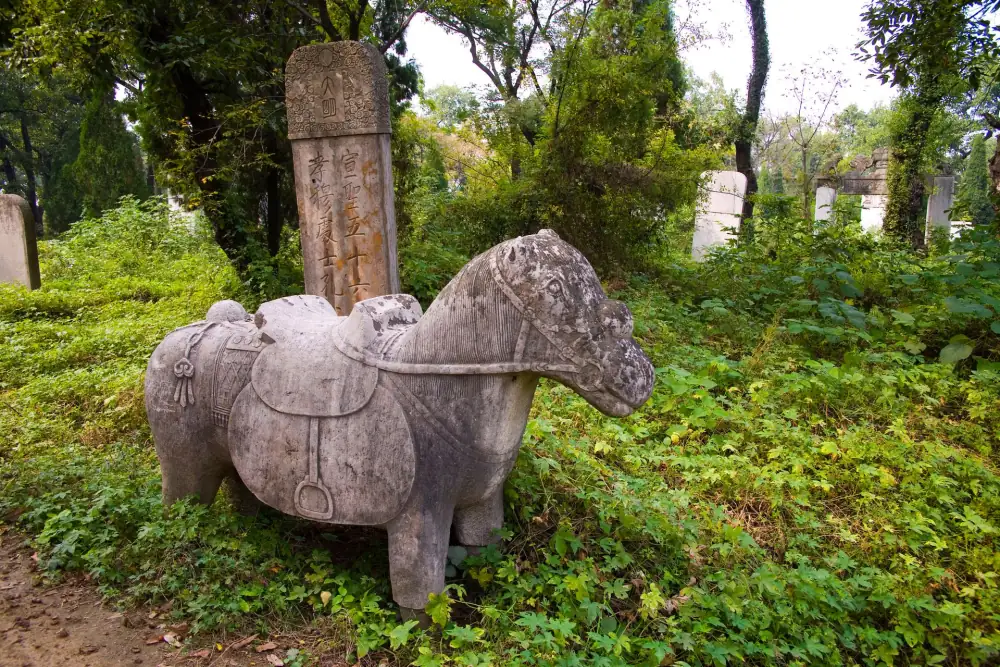
Cemetery of Confucius (孔林, ¥90 or included in combined ticket) — 2km north of the city center, a 3km² woodland where Confucius, his descendants, and family members have been buried for 2,500 years. The forest has over 100,000 trees planted by generations of scholars paying respects. Walking the paths through the ancient trees to Confucius’ tomb is genuinely moving.
Take a rickshaw from the city center to the cemetery and back (¥15-30 per person each way) — they’re lined up outside the main gate.
Days 4-5: Qingdao — Beer, Beaches & German Colony
Journey: HSR Qufu East → Qingdao, ~2 hours, ¥100-140.
Qingdao (青岛) is China’s most European-looking city — the Germans leased the territory in 1898 and spent 16 years building a colonial city of red-roofed Germanic houses, churches, and breweries. Japan then held it from 1914-1922. The result is a city with extraordinary architectural diversity and a beach culture that makes it the summer playground of northern China.
Day 4: The German Colony & Tsingtao Brewery
Governor’s Residence (总督府, ¥15) — the restored German colonial mansion that served as the center of the Kiautschou Bay concession. Excellent museum on the German colonial period.
Protestant Church (基督教堂, ¥10) on Jiangsu Road — the 1910 German church in its original condition, with the clock tower still telling correct time. One of the most scenic viewpoints in Qingdao from the bell tower.
Zhanqiao Pier (栈桥, ¥10) extends 440m into Qingdao Bay — the city’s most iconic image. Free to walk; the ¥10 ticket gets you inside the Huilan Pavilion at the end. Best in the early morning before crowds build.
Tsingtao Beer Museum (青岛啤酒博物馆, ¥85 including beer sampling) — in the original 1903 brewery building. The history of how a German-founded brewery survived Japanese occupation, Chinese civil war, and Cultural Revolution to become China’s most internationally recognized brand is genuinely interesting. The fresh unfiltered beer from the on-site tap is excellent.
Day 5: Beaches & Signal Hill
Bathing Beach No. 1 (第一海水浴场) is Qingdao’s main public beach — 580m of sand backed by the city. Gets crowded in July-August but is pleasant in May-June and September. The water is actually swimmable and reasonably clean (cold: 18-24°C in season).
Signal Hill Park (信号山公园, ¥15) — a small hill with a rotating viewing pavilion at the top, offering 360° views over the red-roofed old town, the bay, and the Qingdao skyline. The juxtaposition of German colonial rooftops with modern skyscrapers behind is the definitive Qingdao image.
Polar Ocean World (极地海洋世界, ¥210) if you have children — one of China’s largest oceanariums.
Practical Information
| Item | Cost |
|---|---|
| Baotu Spring Park | ¥75 |
| Taishan scenic area | ¥125 |
| Taishan cable car one-way | ¥100 |
| Three Kongs combined ticket | ¥180 |
| Qufu Cemetery separate | ¥90 |
| Tsingtao Beer Museum | ¥85 |
| Jinan → Tai’an HSR | ¥35-50 |
| Tai’an → Qufu East HSR | ¥35 |
| Qufu → Qingdao HSR | ¥100-140 |
| Budget hotel | ¥150-300/night |
| Qingdao beach hotel (peak season) | ¥400-900/night |
Best time: April-June (spring: comfortable temperatures, less crowded) and September-October (autumn: good beach weather, festivals). Taishan sunrise is theoretically possible year-round but winter nights are extremely cold (below -15°C at the summit).
Qingdao food: Beyond the ubiquitous Tsingtao beer, the fresh seafood here is some of China’s best — the combination of the cold Yellow Sea and fishing tradition means steamed clams (蛤蜊, ¥30-60/kg), abalone (鲍鱼, ¥50-100 each), and sea urchin (海胆, ¥20-30 each) are fresher and cheaper than anywhere inland. The backstreet restaurants around Taidong Pedestrian Street (台东步行街) have the best quality-to-price ratio.