
Table of contents
Open Table of contents
- Linyi — Layers of History, Mountains of Meaning
- Silver Sparrow Mountain Han Tomb (银雀山汉墓)
- Yimeng Mountain Revolutionary Base (沂蒙山革命根据地)
- Meng Mountain Scenic Area (蒙山旅游区)
- Linyi Underground Gallery (临沂地下大峡谷)
- Ancient Civilization Sites
- Linyi Cuisine — Shandong Flavours
- Practical Information
- Budget Estimate (2 Days)
- A City of Unexpected Depth
Linyi — Layers of History, Mountains of Meaning
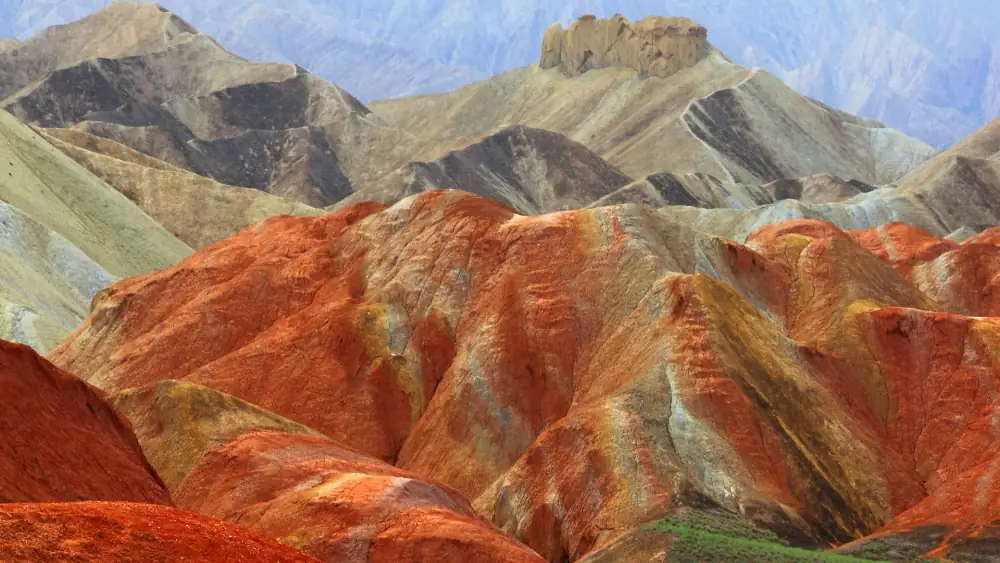
Linyi (临沂) is not a city that announces itself. It doesn’t have Qingdao’s beaches, Tai’an’s mountain, or Qufu’s philosophical pedigree. What it has is depth — layer upon layer of history, from a 2,000-year-old tomb that rewrote Chinese military history to the revolutionary bases that helped create modern China. The landscape around Linyi is equally layered — the Yimeng Mountains rise from the plains, hiding underground caves and dramatic gorges beneath their forested slopes.
I came to Linyi primarily for the Han Dynasty bamboo strips — ancient military texts discovered in 1972 that fundamentally changed our understanding of Chinese military history. I left with an appreciation for a city that represents, more completely than most, the full sweep of Chinese civilisation from antiquity to revolution.
Silver Sparrow Mountain Han Tomb (银雀山汉墓)
The Discovery That Changed History
In 1972, construction workers in Linyi discovered a Han Dynasty tomb dating to approximately 140-118 BC. Inside were over 7,500 bamboo strips inscribed with texts — including two of the most important military treatises in Chinese history: Sun Tzu’s The Art of War (孙子兵法) and Sun Bin’s Military Methods (孙膑兵法).
Why was this significant? For centuries, scholars had debated whether Sun Bin was a real historical figure or a fictional creation, and whether the two texts were actually the same work. The discovery of both texts in the same tomb proved definitively that Sun Tzu and Sun Bin were different people from different eras, and that both works were genuine. It was one of the most important archaeological discoveries in Chinese history.
What You’ll See
The Tomb Site: The original tomb has been preserved in situ, enclosed in a museum building. You can look down into the tomb and see the positions where the bamboo strips were found.
The Bamboo Strip Exhibition: The museum displays original bamboo strips (the most important ones) and detailed replicas. The strips are remarkably well-preserved — the characters are still legible after 2,100 years. The exhibition explains the significance of the discovery and the content of the texts.
Military History Gallery: Displays of ancient weapons, chariots, and military equipment from various Chinese dynasties.
Entrance fee: ¥30 ($4.20 USD). Allow 1-1.5 hours.
Note: The museum is small but exceptionally significant. If you have any interest in Chinese military history or The Art of War, this is a pilgrimage site.
Yimeng Mountain Revolutionary Base (沂蒙山革命根据地)
Red Tourism in the Mountains
The Yimeng Mountains (沂蒙山) were one of the most important revolutionary base areas during the Chinese Civil War (1945-1949) and the War of Resistance Against Japan (1937-1945). The Communist Party’s Eighth Route Army operated from mountain hideouts here, supported by the local peasant population whose sacrifices became legendary in Chinese Communist mythology.
The term “Yimeng Spirit” (沂蒙精神) — referring to the selfless dedication of the local people to the revolutionary cause — is still invoked in Chinese political discourse today. The key sites include:
Menglianggu Battle Memorial (孟良崮战役纪念馆): Commemorates the pivotal 1947 battle in which Communist forces destroyed the Nationalist 74th Division, one of Chiang Kai-shek’s elite units. The memorial includes a museum with weapons, photographs, and personal effects, plus the battlefield itself. ¥40 ($5.50 USD).
Yimeng Red嫂 Memorial (沂蒙红嫂纪念馆): “Red Sisters-in-Law” refers to the local women who supported the Communist forces — making shoes, nursing wounded soldiers, and in some cases, using their own bodies to bridge rivers for advancing troops. The memorial tells their stories through artefacts and photographs. ¥30 ($4.20 USD).
Dazhuang Village (大庄): A preserved revolutionary-era village where visitors can see how soldiers and villagers lived during the war. Free.
Is it worth visiting if you’re not interested in Communist history? The mountain scenery is genuinely beautiful, and the memorials provide insight into how modern China understands its own history. I’d recommend it even for non-specialists.
Meng Mountain Scenic Area (蒙山旅游区)
The Natural Side of Yimeng
Meng Mountain (蒙山), one of the two peaks that give the Yimeng range its name, is a scenic area of forested slopes, waterfalls, and Taoist temples. At 1,156 metres, it’s the second-highest mountain in Shandong after Taishan.
Key attractions:
- The Glass Bridge: A 200-metre-long glass-bottomed bridge spanning a deep valley. Not for the faint-hearted.
- Meng Mountain Taoist Temple: A Ming Dynasty temple dedicated to the Jade Emperor, with a fine view from its hilltop position.
- The Waterfall Trail: A 3 km path past multiple waterfalls and pools. Pleasant and relatively easy.
- The Summit: Reached by cable car or a 2-hour hike. Panoramic views across the Yimeng range.
Entrance fee: ¥80 ($11 USD). Cable car ¥60 ($8.30 USD) each way.
Linyi Underground Gallery (临沂地下大峡谷)
A Subterranean Wonder
About 25 km from Linyi city, this massive cave system extends for over 6 km and features extraordinary formations — stalactites, stalagmites, flowstone curtains, and underground rivers. The cave is impressively large — some chambers are 50 metres high.
The unique feature of this cave is the underground river rafting — a 1 km section where you float through the cave on a small raft. The experience of drifting through darkness with only the cave’s coloured lighting for illumination is memorable.
Entrance fee: ¥96 ($13 USD) including rafting. Allow 2-3 hours.
Ancient Civilization Sites
Dongyi Culture
Linyi is one of the centres of the Dongyi (东夷) culture, an ancient civilisation that existed in eastern China 5,000-8,000 years ago. Several archaeological sites around Linyi have produced significant finds:
The Linyi Museum (临沂市博物馆): Displays artefacts from local excavations, including neolithic pottery, jade objects, and Dongyi cultural items. ¥10 ($1.40 USD).
Xiwangcheng Site: An ancient city site dating back about 5,000 years. Limited visitor infrastructure but significant for archaeology enthusiasts.
Linyi Cuisine — Shandong Flavours
Local Specialties
Linyi Sa (糁): The city’s most iconic food — a thick, peppery soup made from beef or chicken broth with wheat kernels, eggs, and black pepper. Eaten for breakfast, it’s warming and intensely flavoured. ¥5-10 ($0.70-1.40 USD).
Linyi Fried Chicken (临沂炒鸡): Chicken stir-fried with chillies, garlic, and Shandong soybean paste. Spicier than most Shandong food. ¥38-58 ($5.30-8 USD).
Eight Treasures Fermented Bean Curd (八宝豆豉): A Linyi speciality — fermented bean curd with a complex, savoury flavour. ¥10-20 ($1.40-2.80 USD) per jar.
Mengyin Pancake (蒙阴煎饼): Thin, crepe-like pancakes made from millet or corn flour. A Shandong staple, particularly associated with the Yimeng area. ¥2-3 ($0.30-0.40 USD) each.
Yimeng Black Goat (沂蒙黑山羊): Goat meat from the mountainous areas, braised with local herbs. ¥48-78 ($6.70-11 USD).
Recommended Restaurants
Linyi Old Town Food Street: Multiple stalls serving local specialities. The sa soup here is particularly good. Budget ¥15-30 ($2.10-4.20 USD) per person.
Yimeng Mountain Farmhouse: Near Meng Mountain, serving hearty mountain food. Meals ¥30-50 ($4.20-7 USD) per person.
Practical Information
Getting to Linyi
By High-Speed Train: Linyi North Station connects to Jinan (1.5 hours, ¥80-120/$11-17 USD), Qingdao (2 hours), and other Shandong cities. The rail network is expanding rapidly.
By Air: Linyi Qiyang Airport (LYI) has flights from Beijing, Shanghai, Guangzhou, and several other cities.
By Bus: From Jinan (3 hours, ¥60/$8.30 USD), Qingdao (3.5 hours), and other regional cities.
Accommodation
Linyi City: Multiple hotels from ¥150-400 ($21-55 USD).
Meng Mountain Area: Guesthouses and small hotels from ¥100-250 ($14-35 USD).
Best Time to Visit
- Spring (April — May) and Autumn (September — November): The best seasons for comfortable temperatures and mountain scenery.
- Summer (June — August): The caves are a cool escape from the heat.
- Winter: Cold but quiet. Some mountain areas may have limited access.
Budget Estimate (2 Days)
| Item | Budget (¥) | Mid-Range (¥) |
|---|---|---|
| Train from Jinan (round trip) | 160 | 240 |
| Accommodation (1 night) | 120 | 280 |
| Meals | 120 | 280 |
| Han Tomb Museum | 30 | 30 |
| Meng Mountain | 80 | 140 |
| Underground Gallery | 96 | 96 |
| Local transport | 60 | 120 |
| Total | ¥666 ($92 USD) | ¥1,186 ($164 USD) |
A City of Unexpected Depth
Linyi is a city that rewards curiosity. It doesn’t have a single blockbuster attraction that draws the masses. Instead, it has layers — ancient bamboo strips that changed history, mountain redoubts that changed politics, and underground caves that change your perspective. It’s a city that asks you to dig deeper, to look past the surface, and to discover that Shandong has far more to offer than its famous coastal cities. Come to Linyi with time and an open mind, and you’ll leave with a much richer understanding of what this province — and this country — is really about.