
For travelers who think they’ve seen all of China’s ancient wonders, the Tang and Liao dynasty wooden structures hidden in Shanxi and Hebei provinces offer a revelation. These are not just old buildings—they are the world’s oldest surviving wooden structures, predating anything similar in Japan or Korea by centuries. This guide takes you off the beaten path to explore the masterpieces that Chinese architecture lovers revere as the ‘Holy Grail’ of ancient construction.
Table of contents
Open Table of contents
- Why Shanxi and Hebei?
- Top Sights
- Suggested Itinerary
- Getting There & Around
- Where to Stay
- Food
- Best Time to Visit
- Costs & Practical Tips
- FAQ
- What is the best way to get from Beijing to the Tang temples in Wutai Mountain?
- Are the Tang dynasty wooden structures fragile? Can visitors enter them?
- Do I need a guide to appreciate these sites?
- What is the significance of the dougong (bracket sets) in these buildings?
- Can I combine this trip with a visit to the Yungang Grottoes?
- Are there any festivals or events related to these ancient structures?
Why Shanxi and Hebei?

Shanxi (山西, Shānxī) and Hebei (河北, Héběi) are the heartland of China’s ancient wooden architecture. The region’s dry climate and relative isolation preserved structures that elsewhere succumbed to war, fire, and decay. Here you’ll find the only surviving Tang dynasty (618–907) wooden buildings—Nanchan Temple and Foguang Temple—as well as the finest examples of Liao dynasty (907–1125) architecture, including the towering Yingxian Wooden Pagoda.
Top Sights
Nanchan Temple (南禅寺, Nánchán Sì)
Located in a remote valley near Wutai Mountain, Nanchan Temple’s Great Buddha Hall is the oldest surviving wooden building in China, dating to 782 AD. The hall is small but perfectly proportioned, with sturdy columns, deep eaves, and a sense of solidity that defines Tang architecture. Inside, original Tang clay sculptures of Buddhas and bodhisattvas are masterpieces of Chinese sculpture.
Foguang Temple (佛光寺, Fóguāng Sì)
Discovered by the legendary architect Liang Sicheng and his wife Lin Huiyin in 1937, Foguang Temple’s East Hall (东大殿, Dōng Dàdiàn) is a Tang masterpiece built in 857 AD. It is the largest Tang wooden structure in existence. The hall houses a rare collection of Tang architecture, sculpture, painting, and calligraphy—all under one roof.
Yingxian Wooden Pagoda (应县木塔, Yìngxiàn Mùtǎ)
Officially called the Sakyamuni Pagoda of Fogong Temple, this 67-meter-tall pagoda is the world’s tallest and oldest wooden pagoda, built in 1056 during the Liao dynasty. It has survived numerous earthquakes and even artillery fire, thanks to its ingenious dougong (斗拱, interlocking bracket) system. Climbing the pagoda offers a close-up view of its intricate wooden structure.
Kaiyuan Temple Pagoda (开元寺塔, Kāiyuán Sì Tǎ)
Also known as Liaodi Pagoda (料敌塔, Liàodí Tǎ), this 84-meter-tall brick pagoda in Dingzhou (定州, Dìngzhōu) was built in the Song dynasty and served as a military observation tower. Its solid brick construction and elegant silhouette make it a must-see.
Quyang Beiyue Temple (曲阳北岳庙, Qūyáng Běiyuè Miào)
This temple complex features the largest surviving Yuan dynasty wooden hall, the De’ning Hall (德宁殿, Déníng Diàn). Inside, massive murals depict celestial processions, and the site’s stele forest is the largest in Hebei.
Other Notable Sites
- Dingzhou Museum (定州博物馆, Dìngzhōu Bówùguǎn): Houses three national treasures, including a jade screen and jade bi disk from the Han dynasty.
- Kaishan Temple (开善寺, Kāishàn Sì): One of the ‘Eight Liao Structures’, with a grand hall using the column-reduction technique.
- Geyuan Temple (阁院寺, Géyuàn Sì): Home to the oldest surviving wooden window lattices in China, dating to the Liao dynasty.
Suggested Itinerary
Day 1: Dingzhou & Quyang
Start in Dingzhou, accessible by high-speed rail from Beijing (about 1 hour). Visit Dingzhou Museum in the morning to see the Han dynasty jade treasures. After lunch, walk to the Kaiyuan Temple Pagoda—climb for panoramic views of the city. In the afternoon, take a taxi or bus to Quyang Beiyue Temple (30 minutes). Spend an hour exploring the hall and murals, then return to Dingzhou for the night.
Day 2: Wutai Mountain Tang Temples
Take an early bus or hire a driver from Dingzhou to Wutai County (about 3 hours). First visit Nanchan Temple (30 minutes from the county town). The temple is small, so you can finish in an hour. Then drive to Foguang Temple (another 30 minutes). Spend at least two hours here to appreciate the hall, sculptures, and the Tang pagoda in the courtyard. Stay overnight in Wutai County or at a guesthouse near the temples.
Day 3: Yingxian Wooden Pagoda
From Wutai County, take a bus or drive to Yingxian (about 2.5 hours). Visit the Yingxian Wooden Pagoda in the morning. You can enter the first floor to see the giant clay Buddha, but climbing higher may be restricted. After lunch, take a high-speed train from Yingxian West Station to Datong or Beijing to continue your journey.
Extended Option: Liao Structures in Hebei
For architecture enthusiasts, add two days to visit Kaishan Temple in Gaobeidian and Geyuan Temple in Laiyuan. These are remote but rewarding. Base yourself in Zhuozhou (涿州, Zhuōzhōu), which also has the Zhuozhou Twin Pagodas (涿州双塔, Zhuōzhōu Shuāngtǎ)—two Liao dynasty brick pagodas.
Getting There & Around
Getting to the Region
- By Air: Fly into Beijing Capital International Airport (PEK) or Beijing Daxing (PKX). From there, take the high-speed train to Dingzhou (1 hour) or Shijiazhuang (1.5 hours).
- By Train: High-speed trains connect Beijing with Dingzhou East Station (定州东站, Dìngzhōu Dōngzhàn) and Shijiazhuang Station (石家庄站, Shíjiāzhuāng Zhàn). From Shijiazhuang, you can reach Wutai County by bus (3 hours).
Getting Around
- High-speed rail: Ideal for long distances (e.g., Beijing to Dingzhou).
- Buses: Public buses connect county towns, but schedules can be infrequent. For remote temples, consider hiring a private driver for the day (¥300–500).
- Taxis and ride-hailing: DiDi (滴滴, Dīdī) works in cities but not in remote areas. Carry the destination in Chinese characters.
Where to Stay
- Dingzhou: Choose a hotel near the city center for easy access to the museum and pagoda. Mid-range options like the Dingzhou International Hotel (定州国际酒店) are comfortable.
- Wutai County: Simple guesthouses near Nanchan and Foguang temples offer a rustic experience. For more comfort, stay in Wutai Town (五台镇, Wǔtái Zhèn).
- Yingxian: The Yingxian Hotel (应县宾馆) is basic but clean. Book in advance during holidays.
Food
- Dingzhou: Try Dingzhou donkey meat (定州驴肉, Dìngzhōu lǘròu)—a local specialty served in pancakes or stew.
- Wutai County: Vegetarian dishes are common due to Buddhist traditions. Sample Wutai shan vegetarian (五台山素斋, Wǔtái Shān sùzhāi).
- Yingxian: Shanxi noodles (山西面食, Shānxī miànshí) are a must. Look for dao xiao mian (刀削面, knife-cut noodles).
Best Time to Visit
- Spring (April–May) and Autumn (September–October) are ideal, with mild temperatures and clear skies.
- Summer can be hot and rainy, but the temples are less crowded.
- Winter (November–March) is cold, especially at Wutai Mountain, but you may have the sites to yourself.
Costs & Practical Tips
Estimated Budget (per person, 3 days)
- Transport: ¥200–400 (local buses and taxis)
- Accommodation: ¥200–400 per night (mid-range)
- Entrance fees: Nanchan Temple ¥20, Foguang Temple ¥40, Yingxian Pagoda ¥60, Dingzhou Museum free (ID required), Beiyue Temple ¥30.
- Food: ¥100–150 per day
- Guide: Hiring a local guide for Foguang Temple (¥100–200) is recommended for historical context.
Practical Tips
- Mobile payment: Alipay and WeChat Pay are widely accepted. Carry some cash for small vendors or entry fees at remote temples.
- Visa: Most travelers need a tourist visa (L visa). The 144-hour transit visa is available in Beijing but does not cover this entire region.
- Etiquette: Dress modestly when visiting temples. Remove shoes before entering some halls. Photography may be restricted inside—always check signs.
- Language: English is not widely spoken in rural areas. Download a translation app and have key phrases in Chinese.
FAQ
What is the best way to get from Beijing to the Tang temples in Wutai Mountain?
Take a high-speed train from Beijing West Station to Shijiazhuang Station (about 1.5 hours), then transfer to a bus from Shijiazhuang to Wutai County (about 3 hours). From Wutai County, take a local bus or taxi to Nanchan and Foguang temples. Alternatively, hire a private driver for the entire journey from Beijing (around ¥800–1,200).
Are the Tang dynasty wooden structures fragile? Can visitors enter them?
Yes, they are fragile, but visitors can enter most halls. Foguang Temple’s East Hall is open to the public, though you must walk on designated paths. Nanchan Temple allows entry to view the sculptures. Yingxian Wooden Pagoda’s first floor is open, but upper levels are closed to protect the structure.
Do I need a guide to appreciate these sites?
A guide is highly recommended, especially for Foguang Temple and the Yingxian Pagoda, where the architectural details and historical context are complex. English-speaking guides are available in larger cities like Datong or through specialized tour operators. For a deeper dive, consider joining a small-group tour focused on ancient architecture.
What is the significance of the dougong (bracket sets) in these buildings?
Dougong is a system of interlocking wooden brackets that support the roof and transfer weight to the columns. It is a hallmark of Chinese architecture and reached its peak in Tang and Liao structures. The dougong at Foguang Temple and Yingxian Pagoda are considered the finest examples, demonstrating incredible engineering skill.
Can I combine this trip with a visit to the Yungang Grottoes?
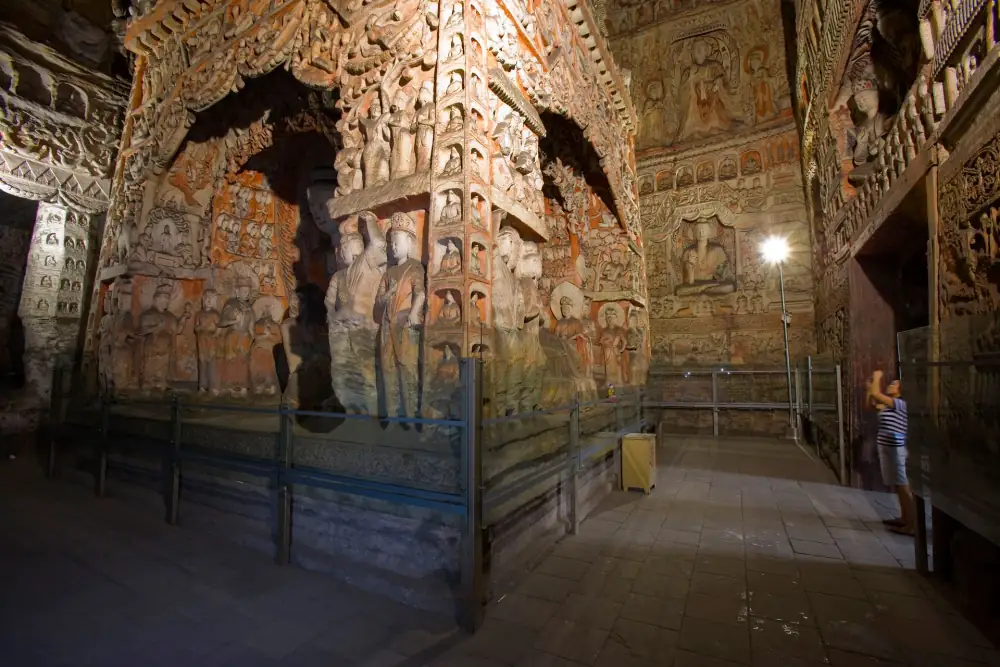
Yes. The Yungang Grottoes (云冈石窟, Yúngāng Shíkū) are near Datong, about 2 hours north of Yingxian. You can easily add a day to your itinerary: visit Yingxian Pagoda in the morning, then take a bus to Datong (1.5 hours) and explore the grottoes the next day. For more itineraries, see our China itineraries page.
Are there any festivals or events related to these ancient structures?
The Wutai Mountain International Buddhist Culture Festival (五台山国际佛教文化节) is held in July or August, featuring ceremonies and cultural performances at Foguang and other temples. The Yingxian Wooden Pagoda Cultural Tourism Festival (应县木塔文化旅游节) in September includes folk performances and exhibitions.
For more on the history and culture behind these sites, explore our history and culture tags. If you’re interested in other architectural wonders, check out our north China guide.