
Pingyao: China’s Most Complete Ancient City
Pingyao (平遥) is a miracle of architectural survival: a complete Ming dynasty walled city — 6 km of wall enclosing 2.25 square kilometres of streets, courtyard houses, temples, and civic buildings — that was bypassed by industrialisation, spared by war, and preserved by poverty too thoroughly to demolish and rebuild.
The city walls were built in 1370 CE and remain entirely intact — the finest surviving example of Chinese pre-modern defensive architecture. The street grid inside has changed little in 600 years. When UNESCO listed Pingyao in 1997, the inscription noted that the city represented “an outstanding example of the exchange of human values, over a span of time, in the development of urban planning.”
The City Walls
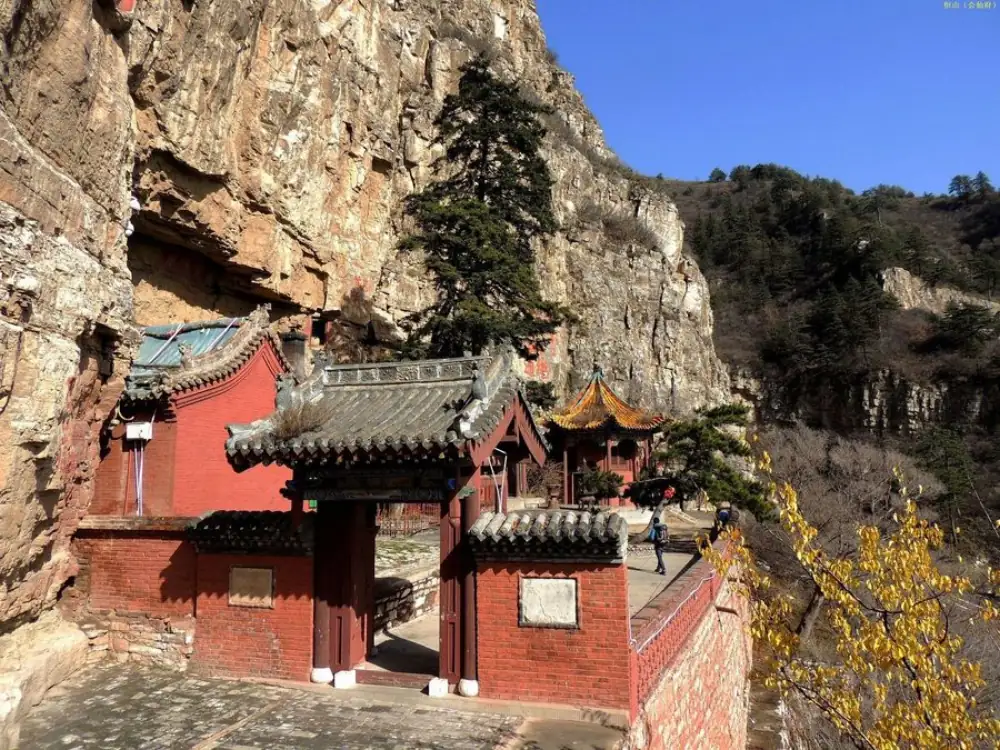
Pingyao’s walls are the essential experience. 6.4 km in circumference, 10 metres high, 3–6 metres wide at the top, with 72 watchtowers (representing Confucius’s 72 disciples) and 3,000 crenellations (representing Confucius’s 3,000 students). The south gate complex is the most elaborate — a double gate system with a holding courtyard.
Walking the full wall circuit takes approximately 1.5–2 hours; the views over the grey-tiled roofscape of the old city, and over the surrounding Shanxi farmland, are the best orientation available.
Admission: ¥150 (comprehensive ticket including all city sights; the wall is the single best use of this ticket).
Shanxi Banking: China’s Wall Street
Pingyao was the financial capital of China from approximately 1823 to 1914 — a fact that most visitors find surprising and that explains the extraordinary wealth visible in the city’s merchant architecture.
The Rishengchang Exchange House (日升昌票号), founded in 1823, is credited as China’s first draft banking institution — creating a system of promissory notes that allowed merchants to transfer funds between cities without physically moving silver. By the mid-19th century, Pingyao-based draft banks (piaohao) controlled financial flows throughout China and had branches from Beijing to Chongqing.
The Rishengchang Museum occupies the original building — a surviving example of a Shanxi merchant courtyard adapted for banking. The museum traces the complete operation of the draft bank system: how funds were transferred, how the vault was secured (the vault’s iron door weighs 300 kg), and why the system collapsed in 1914 when modern banks replaced it.
The city’s South Street (南大街) was known as China’s “Wall Street” — lined with the headquarters of competing draft banks, each in a large courtyard compound whose facade deliberately communicated wealth and stability to clients.
Merchant Courtyard Houses (四合院)
The residential architecture of Pingyao is among the finest surviving examples of Chinese merchant courtyard houses (四合院) — compounds of interconnected courtyards, each surrounded by single-storey buildings, with elaborate brick carvings on facades, wooden screens in doorways, and kang (heated sleeping platforms) in bedrooms.
Key examples open to visitors:
- Qiao Family Courtyard (乔家大院): 30 km outside Pingyao; the most elaborate surviving Shanxi merchant compound — 6 interconnected courtyards, 313 rooms; made internationally famous by Zhang Yimou’s film Raise the Red Lantern.
- Wang Family Compound (王家大院): 35 km from Pingyao; even larger (123 courtyards, 1,118 rooms) and architecturally more varied.
Where to Stay
Staying inside the walled city in a converted courtyard guesthouse (¥200–¥600/night) is the essential Pingyao experience. The best guesthouses have:
- Rooms in original Qing dynasty buildings with period furniture
- Courtyard breakfast service
- Central location allowing easy walking to all sights
Recommendation: Stay minimum 2 nights inside the walls to experience the city early morning and late evening when day-trippers have left.
Practical Information
Getting there: High-speed train from Taiyuan (30 min); from Beijing, train to Taiyuan then connection (total 3–4 hours). Best time: Spring (April–May) and autumn (October). Avoid July–August (hot and crowded) and major Chinese holidays. Day trip vs. overnight: Day trips are possible from Taiyuan but miss the essential experience. Two nights minimum recommended.
Pingyao is the rare place where Chinese traditional urban form is fully intact — streets, walls, houses, temples, all at original scale and in original location. Walking here at dawn, when the grey tiles are wet with dew and no one else is out, is the closest available approach to a Ming dynasty city as it actually was.