
Table of contents
Open Table of contents
Jinci Temple (晋祠)
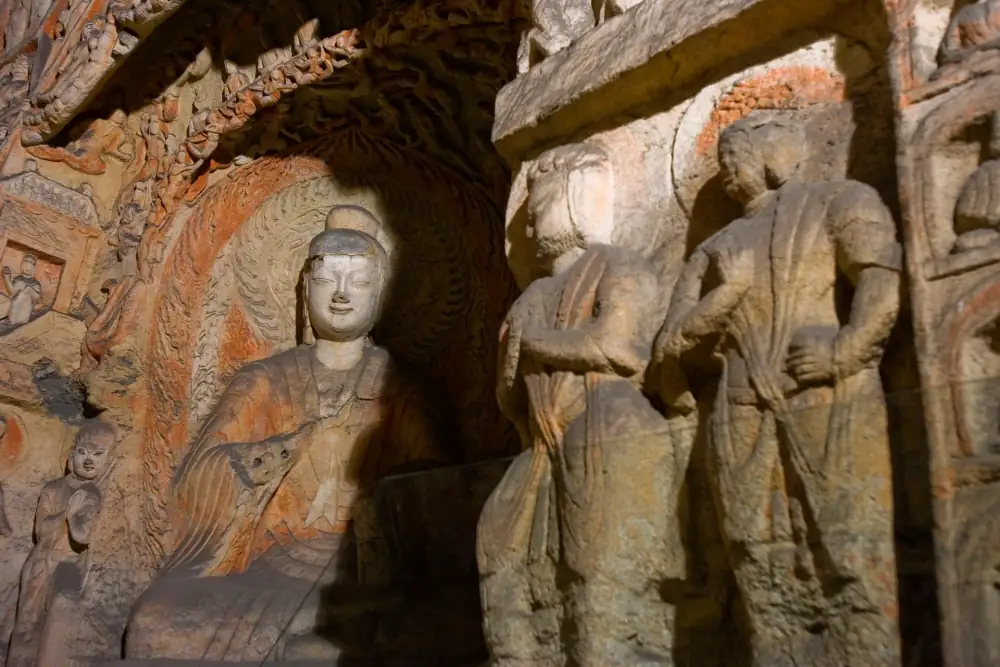
Jinci is Taiyuan’s finest attraction and one of China’s most historically significant garden-temple complexes. Located 25 km southwest of the city centre at the foot of the Xuanweng Mountains, it combines active religious function with extraordinary historical architecture.
The site’s core attraction is the Holy Mother Hall (圣母殿) — a 1023 AD Song Dynasty structure that is among the finest surviving examples of Song architectural style. The hall houses the Holy Mother of the Jinci (Tang founder Li Yuan’s mother or the water goddess, depending on interpretive tradition) and is notable for its remarkable Song Dynasty painted clay statues — 43 attendant figures whose lifelike, individuated faces represent a peak of Chinese figurative sculpture.
Other key structures:
- Mirror Pool (鱼沼飞梁): A Song Dynasty cruciform stone bridge over a fish pool — the oldest surviving cross-shaped bridge in China
- Eternal Youth Spring (难老泉): A spring that has flowed continuously for approximately 3,000 years; the source of Jinci’s ritual importance
- Tang Junyi Cypresses: Several ancient cypress trees believed to date from the Zhou Dynasty, over 2,700 years old
The surrounding garden is exceptional — classical rockery, pavilions over water, ancient trees — making Jinci as much pleasure garden as temple.
Tickets: ¥70 ($10). Open daily 08:00–17:30. Allow 3–4 hours. Transport: Bus 308 from Taiyuan city centre, approximately 1 hour, ¥2–¥3.
Shanxi Museum (山西博物院)
One of China’s best provincial museums, the Shanxi Museum collects the extraordinary material heritage of a province that was central to Chinese civilisation from the earliest periods. The collection includes:
- Pre-Qin bronzes: Among China’s finest Bronze Age artifacts, including Spring and Autumn period pieces from Jin State
- Han Dynasty stone carvings and ceramic figures
- Buddhist sculptures from the Wei-Tang period
- Shanxi merchant (晋商) culture exhibits: The rise of the great Shanxi merchant families who dominated Chinese finance and trade from the 14th through 19th centuries
Tickets: Free. Open Tuesday–Sunday 09:00–17:00.
Taiyuan Twin Pagoda Temple (双塔寺)
Taiyuan’s most recognisable skyline feature: two matching 13-storey pagodas (built 1612, Ming Dynasty) rising 54 metres, standing about 50 metres apart. The twin-tower configuration is unusual in Chinese pagoda architecture, and the visual effect of the two towers rising above the lower buildings around them is striking.
Tickets: ¥30 ($4). Open daily 08:30–17:30.
Tianlong Mountain Buddhist Caves (天龙山石窟)
Located about 40 km southwest of Taiyuan in the hills above the Fen River valley, Tianlong Mountain’s Buddhist caves were carved during the Eastern Wei, Northern Qi, Sui and Tang Dynasties (6th–8th centuries CE). The statues here represent the peak of Tang Dynasty Buddhist sculpture — fluid, sensuous forms radically different from the more hieratic Wei Dynasty style.
Unfortunately, the site was severely looted in the early 20th century; most of the finest heads and figures ended up in international museum collections (many are now in the Metropolitan Museum, the Freer, and other Western institutions). However, a number of significant carvings remain in situ, and the cave architecture itself is impressive.
Tickets: ¥60 ($8). Bus from Taiyuan South Bus Station.
Day Trips from Taiyuan
Pingyao (平遥)
The most famous destination in Shanxi: a complete Ming Dynasty walled city preserved within its original walls. The city has been lived-in and functioning since the late 14th century, with remarkable traditional courtyard residences, ancient banking establishments (Shanxi merchants ran China’s first national banking system) and well-preserved street layouts.
High-speed rail from Taiyuan: 25 minutes; tickets ¥25–¥40 ($3.5–$6). Pingyao warrants at least one overnight stay.
Wutai Mountain (五台山)
One of China’s Four Sacred Buddhist Mountains, Wutai is about 170 km northeast of Taiyuan. The plateau-top temple complex contains some of China’s oldest surviving wooden structures (the main hall of Foguang Temple dates to 857 AD). A UNESCO World Heritage Site.
Bus from Taiyuan: 3–4 hours; ¥60–¥80 ($8–$11). An overnight stay is strongly recommended.
Yungang Caves, Datong (云冈石窟)
China’s greatest Buddhist cave art complex — 53 major caves containing over 50,000 Buddhist carvings from the Northern Wei Dynasty (5th century CE). Located 270 km north of Taiyuan in Datong.
High-speed rail Taiyuan → Datong: 1.5 hours; tickets ¥100–¥160 ($14–$22).
Taiyuan Food
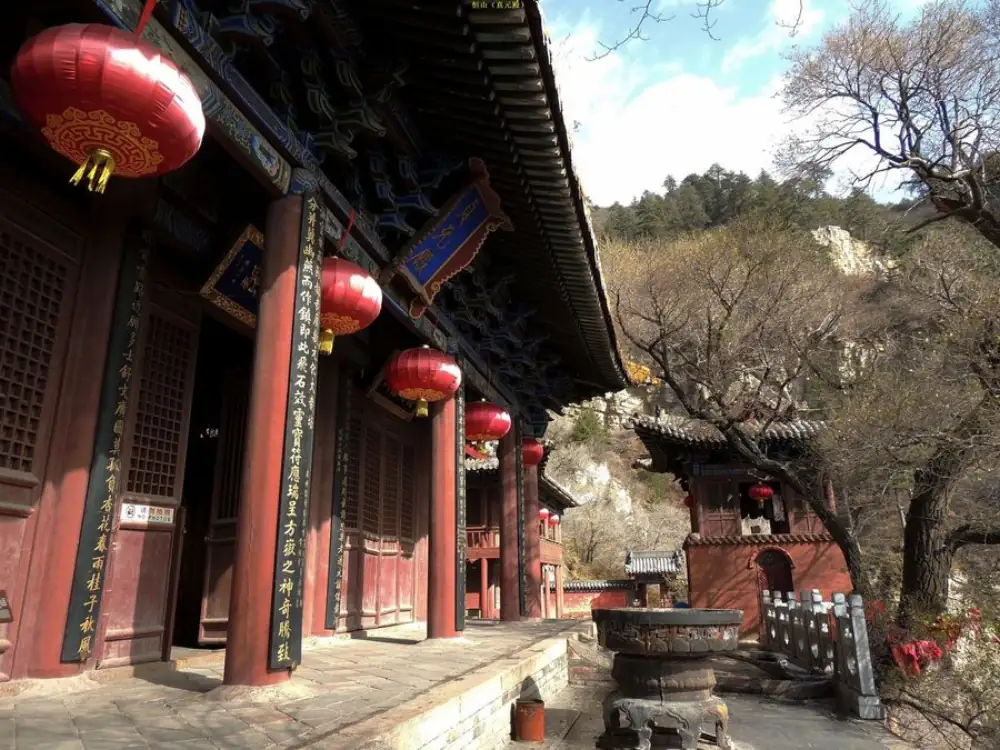
Shanxi cuisine is noodle-country — the province claims to have over 280 varieties of noodle, and any serious food-focused visit should be organised around testing this claim.
Key dishes:
- Knife-cut noodles (刀削面): The most famous Shanxi noodle — sliced directly from a ball of dough with a specially curved knife into boiling water, creating thick irregular noodles with good texture. Available everywhere.
- Braised pork over noodles (过油肉面): A rich, vinegar-tinged pork stir-fry over knife-cut noodles
- Shanxi sour soup (酸汤): Shanxi’s ubiquitous mild rice vinegar appears in countless dishes
- Millet congee (小米粥): Shanxi produces China’s finest millet; the congee is golden and nutty
- Walnut cake (核桃糕): The Shanxi highlands produce excellent walnuts; the cake is a staple souvenir food
Restaurant areas: Liuxiang Street (柳巷) in the city centre has concentrated food options. A filling noodle dinner costs ¥20–¥40 ($3–$6).
Getting to Taiyuan
- From Beijing: Beijing West to Taiyuan South by high-speed rail, approximately 2.5 hours; tickets ¥170–¥260 ($24–$36)
- From Xi’an: Xi’an North to Taiyuan South, approximately 2.5–3 hours; tickets ¥160–¥250 ($22–$35)
- From Zhengzhou: Approximately 3.5 hours by high-speed; tickets ¥175–¥280 ($24–$39)
- By air: Taiyuan Wusu International Airport (TYN) has extensive domestic connections; 1 hour from Beijing
Where to Stay
Budget (¥100–¥200 / $14–$28): Budget chain hotels near Taiyuan South Station (the high-speed hub). 7 Days Inn and Hanting Express are the reliable choices.
Mid-range (¥250–¥450 / $35–$63): Shanxi Grand Hotel (山西大酒店) is a long-established central option. Wyndham Taiyuan offers international-standard service.
Upscale (¥600+ / $84+): InterContinental Taiyuan and Kempinski Hotel Taiyuan are the flagship business hotels.
Best Time to Visit
Spring (April–May): Beautiful — the Wei-Tang and Song architectural sites in spring greenery. Light crowds.
Autumn (September–October): My personal recommendation — clear skies (Taiyuan can be hazy from coal-related air quality issues in winter), comfortable temperatures, and Shanxi’s harvest season produces excellent agricultural products.
Winter: Functional; rail connections make the cold manageable. Pingyao in snow is particularly atmospheric.
Practical Tips
- Air quality: Taiyuan has historically had coal-related air quality issues. Check AQI before planning outdoor activities. The situation has improved significantly since 2019 but high-pollution days still occur in winter.
- Combine itinerary: Taiyuan, Pingyao and Wutai Mountain form a natural three-stop Shanxi circuit, ideally over 4–5 days.
- Noodle etiquette: When eating knife-cut noodles at local restaurants, it’s appropriate to order a side of vinegar — Shanxi’s famous Zhenjiang-style rice vinegar (actually, Shanxi’s own Ninghua Fu vinegar is even more famous) enhances the dish.
Final Word
Taiyuan is the kind of city that pays dividends to the traveller who uses it properly — not as a destination in itself, but as a base for some of northern China’s greatest heritage sites. The Jinci Temple alone is worth the trip from Beijing or Xi’an; the noodles make it worth staying for dinner.