
Suzhou’s Canal Network: The City of Water Gardens
Suzhou (苏州) has been called “the Venice of the East” since the 13th century — a comparison that flatters neither city (each is remarkable in distinct ways) but captures the essential truth: Suzhou is a city built on water, its urban geometry defined by canals that were for centuries the primary transport network.
Marco Polo reportedly passed through Suzhou and remarked on its beauty. Song dynasty poets called it a paradise for merchants and scholars. Today, the canals survive — reduced in commercial activity but still physically present, still defining the old city’s character.
Understanding Suzhou means understanding its layered experience: the UNESCO-listed classical gardens (remarkable on their own terms), the historic canal neighborhoods, and the extraordinary legacy of silk production that funded the city’s cultural achievements.
The Canal System
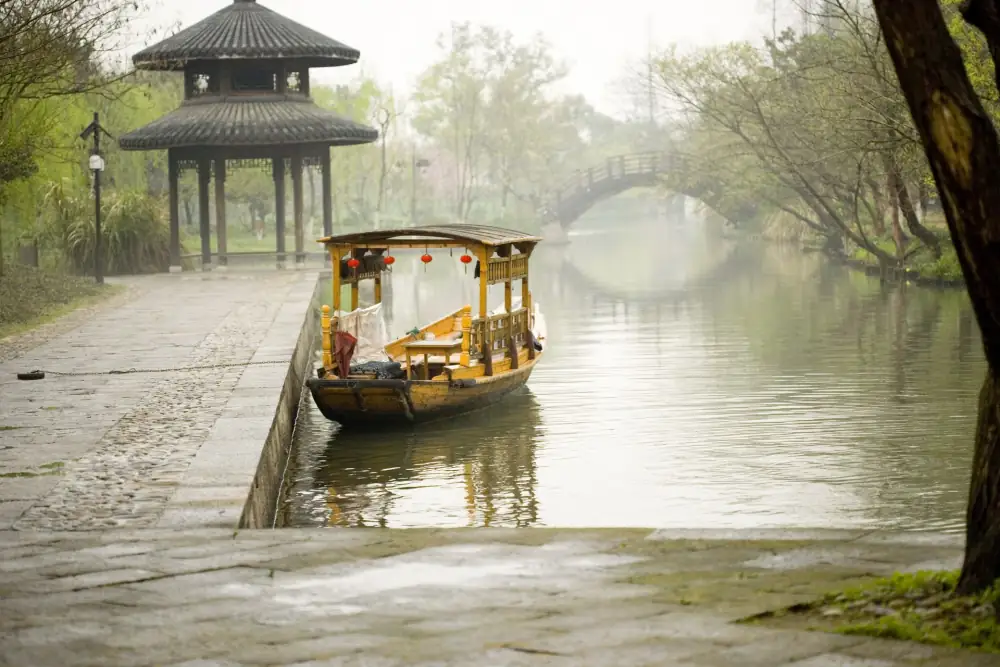
Suzhou’s canal network is concentrated in the old city (古城区), roughly bounded by the ancient city moat (护城河). Within this area, parallel canals run north-south and east-west, with the old city divided into traditional neighborhoods (街坊, jiē fáng) by the water.
The most photogenic and intact canal sections are:
- Shantang Street (山塘街): The most famous canal street — a 3.5-km canal and pedestrian street combination leading from Chang Gate toward Tiger Hill
- Pingjiang Road (平江路): Arguably the most authentic — a canal-front street with traditional residences that are genuinely inhabited, not fully commercialized
- Nanyuan section: Quieter canal neighborhoods south of the main tourist areas
Shantang Street: History’s Main Canal Artery
Shantang Street (山塘街) was built by Tang dynasty poet-official Bai Juyi during his tenure as regional governor in the 9th century CE. He oversaw the construction of both the canal and the elevated walkway alongside it, creating Suzhou’s most important commercial artery.
Today, the street is a mix of tourist commercialization (the western half, near Tiger Hill) and genuine neighborhood life (the eastern half, toward Changmen Gate). The pedestrian streets and the canal run side by side for 3.5 km, connected by old stone bridges.
Night on Shantang: Red lanterns are lit after dark, reflecting in the canal water. The restaurants and tea houses along the banks open onto the water. Suzhou locals gather to walk, eat, and sit by the canal. This is one of the more genuinely pleasant heritage street evenings in China — less crowded than Nanjing’s Qinhuai district, more authentic than many reconstructed heritage streets.
Pingjiang Road: The Authentic Canal Neighborhood
If Shantang Street is the tourist experience, Pingjiang Road (平江路) is the real one. Running parallel to the Pingjiang River (one of Suzhou’s inner canals), this 1.6-km street is still largely residential — families live in the buildings facing the canal, and the commercialization (cafes, art shops, small restaurants) coexists with actual daily life.
The street was listed by UNESCO as part of its China Urban Planning Best Practices program — an example of how historic urban neighborhoods can be preserved without being destroyed by tourism.
What makes it different: The canal is narrow here — only wide enough for small boats. Stone bridges cross it every 50-100 meters. The buildings (gray tile roofs, whitewashed walls, wooden shopfronts) are largely intact. On weekend mornings, elderly residents exercise along the canal banks while tourists stroll alongside.
Best time: Early morning (before 9 AM) or late afternoon (after 4 PM). The light in the later afternoon hours illuminates the canal from an angle that makes the reflections extraordinary.
Canal Night Cruises
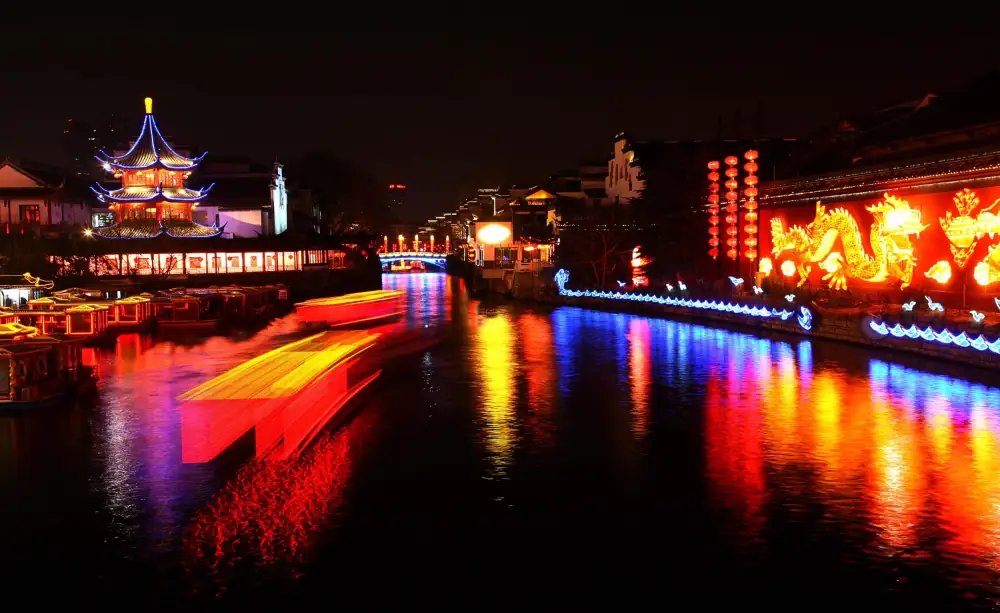
Taking a traditional wooden boat (画舫, huà fǎng) through Suzhou’s inner canals is one of the city’s signature tourism experiences, and unlike many Chinese tourism experiences, the delivery matches the promise.
From Shantang Street: Multiple departure points along the canal; boats depart when full (or on schedule, depending on the operator). The 45-60 minute trip passes under multiple stone bridges, through quiet residential canal sections inaccessible on foot, and provides views of the backs of traditional houses facing the water.
From the classic garden areas: Some tours depart from piers near the Humble Administrator’s Garden (拙政园) area, combining canal views with proximity to the garden district.
Prices: ¥100-150 per person for standard boat tours. Private charter boats are available for around ¥400-500 for a small group.
Night vs. Day: Both are beautiful; night tours with lantern illumination are more romantic but slightly less visually detailed. Day tours show more architectural texture.
Classical Gardens: The Cultural Framework
No guide to Suzhou is complete without addressing the classical gardens — the reason UNESCO has listed the city as a World Heritage site and the cultural achievement that defines Suzhou’s identity.
Suzhou has over 60 surviving classical gardens, of which nine are UNESCO-listed. The gardens were designed as private retreats for scholar-officials and wealthy merchants — compressed versions of ideal natural landscapes within city walls, using rock, water, pavilions, and carefully framed views to evoke mountains and wilderness within a small space.
The Major Gardens
Humble Administrator’s Garden (拙政园): The largest (5.2 hectares) and most famous. Built in the 16th century by a retired government official. The design combines connected water features, pavilions, and rock gardens into a series of interlocking views. Entry: ¥90.
Lingering Garden (留园): Famous for its remarkable rock garden featuring Guanyun Peak, a 6.5-meter “scholar’s rock” (太湖石) considered one of China’s four most famous. The garden spaces are smaller and more intimate than the Humble Administrator’s Garden. Entry: ¥45.
Master of Nets Garden (网师园): The most compact of the major gardens; considered by many connoisseurs the most perfectly balanced in its proportions. Entry: ¥45. Evening performances: On selected evenings, the Master of Nets Garden hosts traditional music and opera performances in its courtyard spaces — one of Suzhou’s most atmospheric cultural events.
Garden of the Surging Waves (沧浪亭): One of the oldest surviving gardens in Suzhou (11th century CE) and the most austerely beautiful — its defining feature is a long corridor that runs along both sides of a moat, with the garden on one side and a public canal on the other. Entry: ¥20.
Water Town Day Trips
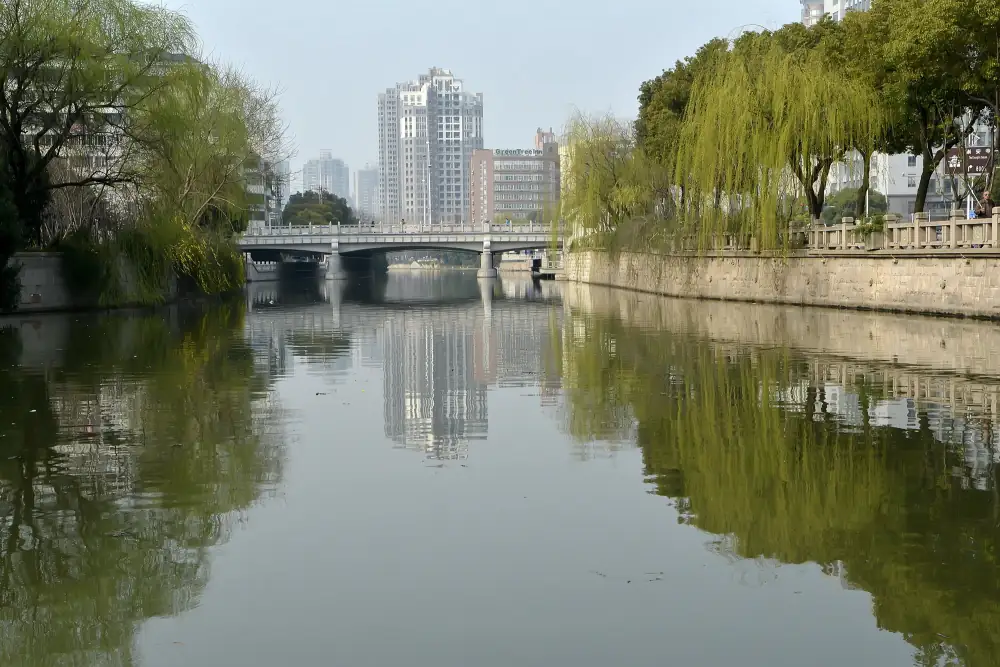
Within 1-2 hours of Suzhou, several water towns (水乡古镇) preserve an even more complete version of the traditional canal-town lifestyle that Suzhou has partially maintained.
Zhouzhuang (周庄)
China’s most famous water town — a double-canal town with over 60 bridges over its intersecting canals, and two remarkable Ming dynasty mansions (Shen’s and Zhang’s mansions). Extremely touristy but visually extraordinary.
Avoid: National Day and Chinese New Year holidays — crowd levels are genuinely overwhelming. Weekday non-holiday visits are manageable.
Getting there: Bus from Suzhou North Bus Terminal (北汽客运站), approximately 1 hour. Direct buses also from Shanghai.
Tongli (同里)
Less famous than Zhouzhuang, more authentic in atmosphere. Tongli has been inhabited continuously since the Song dynasty, and the traditional layout — five islands connected by 49 bridges, with well-preserved Ming and Qing dynasty architecture — is less impacted by mass tourism.
The Retreat and Reflection Garden (退思园) in Tongli is UNESCO-listed and is one of the most intimate and perfectly preserved classical gardens in the Suzhou tradition.
Getting there: Bus from Suzhou South Bus Terminal (苏州客运南站), approximately 40 minutes.
Wuzhen (乌镇)
Located across the border in Zhejiang province (about 2 hours from Suzhou), Wuzhen is technically not a Suzhou water town but has become one of the most visited examples of the genre.
The town’s East District (东栅) has been preserved as a working museum of traditional Jiangnan life — silk production, dye printing, rice wine fermentation, shadow puppet making — all presented in active demonstrations within traditional buildings.
The West District (西栅) is more resort-like with upscale accommodation (including the famous Wuzhen Theater, host of the annual Wuzhen Theater Festival attended by internationally significant productions).
Note: Wuzhen is famous among the Chinese cultural elite partly because writer Mao Dun (茅盾, 1896-1981) was born here. The Mao Dun Memorial Hall in the town has good documentation of early 20th-century Chinese literary history.
Suzhou Silk and Embroidery
Suzhou’s prosperity was built on silk. The city’s climate, water quality, and skilled artisan class made it the center of China’s silk industry from at least the Song dynasty through the 20th century. At its peak, Suzhou had over 10,000 silk looms and exported throughout Asia, the Middle East, and Europe.
Suzhou Silk Museum (苏州丝绸博物馆): Excellent museum covering the history of silk production in the region, with demonstrations of traditional hand-weaving. Free admission.
Suzhou Embroidery (苏绣): Suzhou embroidery is one of China’s four great regional embroidery traditions. The characteristic technique uses extremely fine silk threads (sometimes a single thread split into 16 strands) to create photographic-quality images. A single high-quality embroidered work can represent hundreds of hours of work.
Where to see and buy: The Suzhou Arts and Crafts Museum (苏州工艺美术博物馆) has good examples; dedicated embroidery shops near the gardens sell works at various price points from ¥100 for simple decorative pieces to ¥50,000+ for major works.
Practical Information
Getting to Suzhou:
- High-speed train from Shanghai: 25 minutes (¥30-45); multiple trains per hour
- High-speed train from Nanjing: 1 hour (¥80-120)
- High-speed train from Hangzhou: 40-60 minutes via high-speed rail
Getting Around: Suzhou’s old city is walkable and well-served by cycling. Metro Lines 1, 2, and 4 cover the main attractions.
Best Season: Spring (March-May) for garden flowers; autumn (September-November) for comfortable walking weather. The summer gardens have their own beauty but the heat is significant.
Duration: 2 full days minimum for the gardens and main canal areas; 3-4 days if including water town day trips.
Food: Suzhou cuisine is part of the Jiangnan (江南) tradition — mild, slightly sweet, focused on freshwater ingredients. The signature dishes include braised pork with tofu skin (走油肉), various fresh lake fish preparations, and Suzhou-style red bean rice cakes (豆沙粽). The markets and restaurants around Guanqian Street (观前街) near the main temple area are the best concentration of local food options.
Suzhou rewards unhurried appreciation. Rush through a garden, and you’ll wonder what the fuss is about. Sit in a pavilion for 30 minutes watching how the view changes as clouds cross the sun, and you begin to understand why Chinese literati painted and wrote about these spaces for 1,000 years.