
Table of contents
Open Table of contents
Top Sights in Hefei
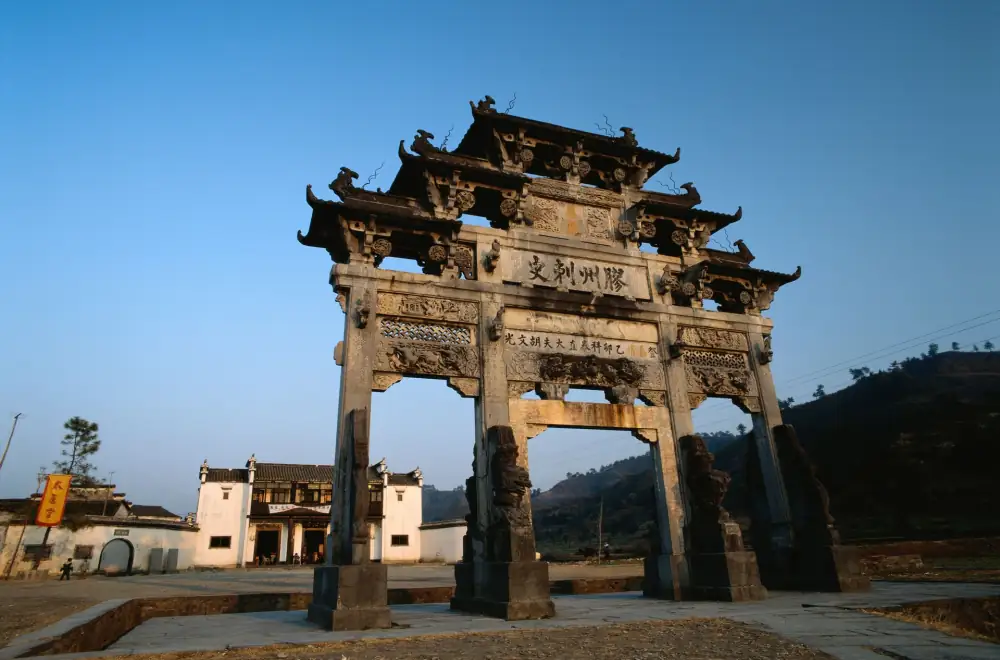
Bao Gong Temple Scenic Area (包公园)
Hefei’s most famous historical attraction is dedicated to Bao Zheng (999–1062), the Song Dynasty official who became the archetypal symbol of incorruptible justice in Chinese culture. Known as “Justice Bao” or “Black-Faced Bao,” he appears in thousands of Chinese dramas, stories and films as the fearless judge who punished wrongdoers regardless of their rank.
The park complex beside Baogong Lake contains several interconnected courtyards, a temple to Bao Zheng, his actual tomb (transferred here), and a display museum covering his life and cases. The setting — a formal garden around a lake — is pleasant, and the exhibition provides useful context for the ubiquitous Bao Zheng references in Chinese popular culture.
Tickets: ¥45 ($6). Open daily 08:00–17:30.
Li Hongzhang Former Residence (李鸿章故居)
Li Hongzhang (1823–1901) was one of the most powerful and controversial figures of late Qing China: statesman, military commander, moderniser and, in the Western view, the man who negotiated China’s humiliating peace treaties. His family compound in central Hefei has been well-preserved and converted into a museum.
The architecture is beautiful — a perfect example of Huizhou-style residential design with carved woodwork, narrow courtyards and whitewashed walls. The exhibition provides a relatively nuanced portrait of a complex historical figure, touching on both his modernisation projects (the Beiyang Fleet, early railways) and the context of China’s 19th-century predicament.
Tickets: ¥20 ($3). Open daily 09:00–17:00.
Chao Lake (巢湖)
China’s fifth-largest freshwater lake covers about 770 square kilometres and sits 40 km south of central Hefei. Its northern shore has been developed as a recreation area with promenades, seafood restaurants and boat trips; the lake itself is a critical wetland for migratory birds.
The most atmospheric view of Chao Lake is from the Zhongmiao Temple on a small peninsula jutting into the water — a Song Dynasty Buddhist temple complex that has been used as a spiritual marker for the lake since its founding. The temple and surrounding park charge a small admission (¥15, $2); boat trips around the peninsula run ¥30–¥60 ($4–$8).
Getting there: Bus or taxi from Hefei, 45–60 minutes. An expressway connecting Hefei to the Chao Lake shoreline makes this very accessible.
Anhui Provincial Museum (新馆)
The new building of the Anhui Provincial Museum, opened in 2011, contains the province’s best historical collection including Han Dynasty bronzes, Tang Dynasty ceramics, Qing Dynasty Huizhou woodcarvings and a large natural history section. The building itself — designed to evoke Huizhou architecture at monumental scale — is architecturally interesting.
Tickets: Free (registration required at entrance). Open Tuesday–Sunday 09:00–17:00.
Ming Jiao Si (明教寺)
An active Buddhist temple on the western edge of the old city, Ming Jiao Si sits above the remains of Hefei’s ancient city walls. Despite its urban location, the temple maintains a genuine devotional atmosphere. The city wall fragments have been incorporated into a small park offering good views over the surrounding streets.
Free admission. Respectful dress required.
Science and Technology Attractions
Quantum Information Science National Laboratory (量子信息科学国家实验室)
The lab itself is not open to tourists, but the Hefei Science Island area (合肥科学岛) hosts a small public science museum explaining quantum communication, fusion energy research (the “Chinese artificial sun” EAST reactor is located here) and photovoltaic technology. The museum is aimed at Chinese school groups but has enough English-language content to be worthwhile for interested visitors.
Tickets: ¥30 ($4). Book in advance via the official WeChat account.
Hefei Food Scene
Hefei’s food is distinctly Anhui — heavy use of preserved meats, wild plants and freshwater fish from Chao Lake, cooked with the characteristic Anhui technique of slow braising over low heat.
Must-try:
- Lujiang steamed carp (庐江模子糕): Lake fish braised in red fermented sauce. Available at restaurants around Chao Lake’s north shore.
- Hefei mixed noodles (合肥卤面): A braised noodle dish with pork and soy sauce; essentially Hefei’s answer to Wuhan’s hot dry noodles.
- Fried sesame tofu (炸麻豆腐): Street snack popular near Bao Gong Park.
- Crispy duck (三河肥鸭): From Sanhe Ancient Town — slow-cooked duck that falls apart. Available in Hefei and essential in Sanhe itself.
Restaurant areas: The Huaihe Road Pedestrian Street (淮河路步行街) has concentrated street food and casual restaurants. For sit-down meals, the area around Wanda Plaza has the most variety.
Day Trips from Hefei
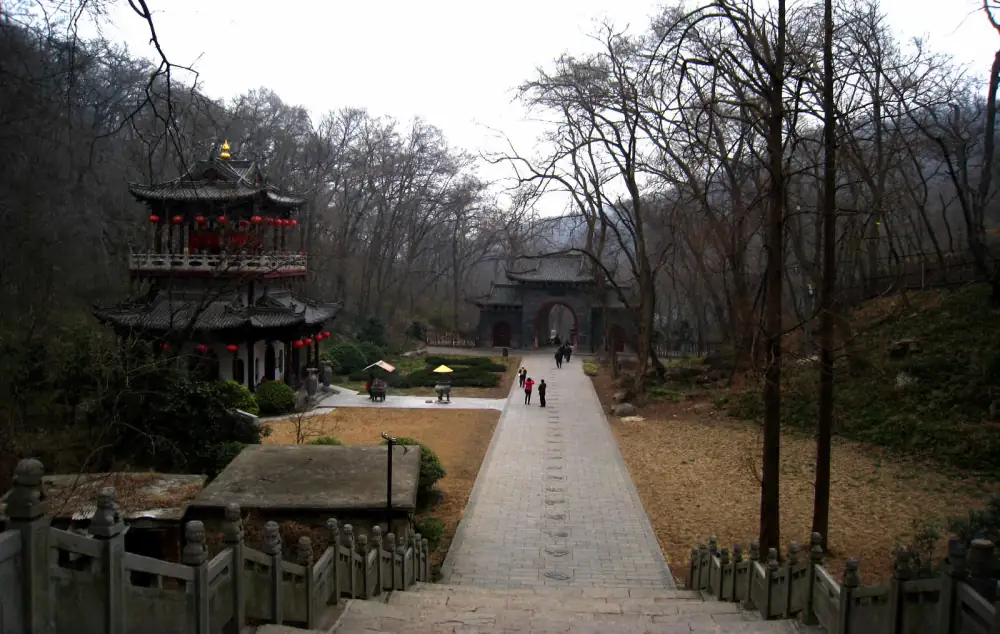
Sanhe Ancient Town (三河古镇)
One of Anhui’s most accessible water towns, Sanhe (40 km southwest of Hefei) is a remarkably well-preserved merchant town from the Qing and Republic of China periods. Three rivers converge here, and the old town’s network of canals, stone bridges, traditional tea houses and ancient temples make for a very pleasant half-day.
The food is excellent: Sanhe is famous for its xiaomi wine (小米酒), marinated duck and glutinous rice products. The town entrance is free; individual attraction tickets are ¥10–¥30 ($1.4–$4) each.
Transport: Bus or tourist bus from Hefei South Bus Station, 1 hour, ¥15–¥20 ($2–$3).
Feixi Zijing Cave (肥西紫金洞)
A relatively undiscovered karst cave system in the hills west of the city — smaller and less developed than the famous show caves of Guizhou, but with fewer visitors and a pleasantly wild feel.
Using Hefei as a Travel Hub
This is arguably the strongest reason to spend a night in Hefei: the city is the main interchange for onward travel to Anhui’s most famous attractions.
Hefei → Huangshan (Yellow Mountain): High-speed rail from Hefei South to Huangshan North, 1h20m, tickets ¥115–¥175 ($16–$24). Services run several times daily.
Hefei → Jiuhua Mountain (Nine Glories Mountain): Bus from Hefei’s main bus terminal to Jiuhuashan, 2.5 hours, ¥65–¥85 ($9–$12). The sacred Buddhist mountain with dozens of active temples.
Hefei → Tongcheng/Qianshan: Regular bus services to the northern Anhui mountains and scenic areas.
Getting to Hefei
From Shanghai: Shanghai Hongqiao to Hefei South by high-speed rail, 1h20m–1h45m; tickets ¥120–¥200 ($17–$28).
From Nanjing: 30–40 minutes by high-speed rail; tickets ¥60–¥90 ($8–$13).
From Wuhan: 1h15m–1h45m high-speed; tickets ¥110–¥160 ($15–$22).
From Beijing: 3–3.5 hours by high-speed; tickets ¥250–¥400 ($35–$56).
By air: Hefei Xinqiao International Airport (HFE) has flights from most major Chinese cities. The airport is 30 km from the city centre; express bus or DiDi to central Hefei costs ¥25–¥50 ($3.5–$7).
Where to Stay
Budget (¥150–¥300 / $21–$42): Several hostels and budget hotels clustered near Hefei South Railway Station and in the Sanxiaokou area. 7 Days Inn and Hanting Express have reliable mid-budget properties.
Mid-range (¥350–¥600 / $49–$84): Crowne Plaza Hefei offers excellent mid-range comfort near the main commercial district. Wyndham Grand Hefei is good value.
Upscale (¥800+ / $112+): Hilton Hefei and Grand Hyatt Hefei are the flagship properties for business and luxury travellers.
Practical Tips
- Weather: Hefei has classic Yangtze Delta climate — hot and humid summers (35–40°C in July–August), mild springs and autumns, cold but rarely snowy winters. The best visiting months are April–June and September–November.
- Technology culture: The concentration of universities and tech companies means Hefei has a notably lively cafe and co-working culture for a city of its size. Good speciality coffee shops exist around the USTC campus area.
- Booking onward trains: Hefei South is one of the major Yangtze River Delta rail hubs. Book onward trains to Huangshan or Shanghai early, especially during Golden Week.
Final Word
Hefei won’t appear on many “must-visit” China lists, and that’s fine. It’s a working city with good food, accessible historical sites and a strategic transport position that makes it a natural overnight stop on a central China circuit. Spend one night, eat well, see the Bao Gong Temple and Chao Lake, and use the excellent rail connections to continue your journey. You won’t regret the detour.