
Table of contents
Open Table of contents
Jiuhua — The Mountain of the Great Vow
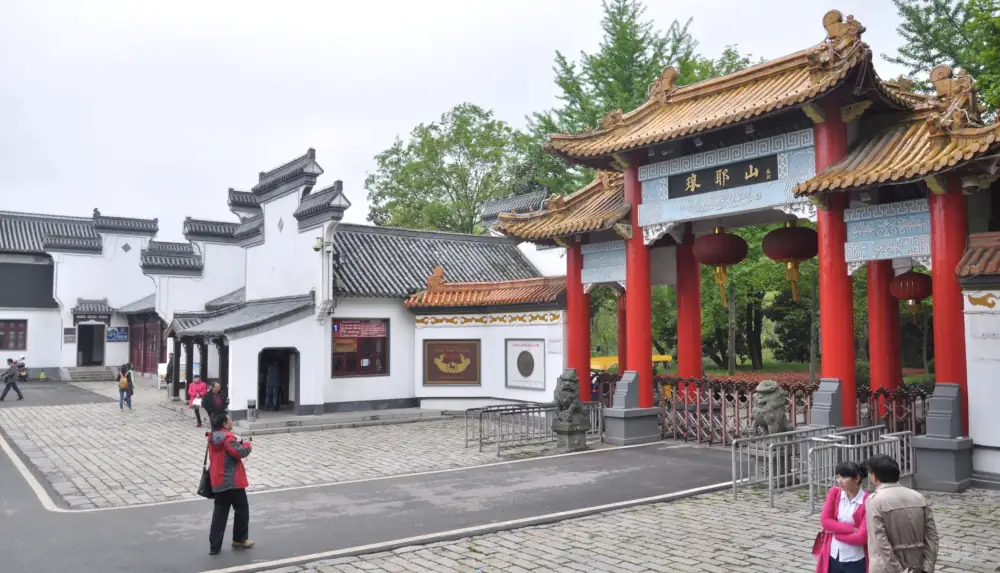
Of China’s four sacred Buddhist mountains, Jiuhua (九华山, “Nine Glorious Mountains”) is perhaps the most intimate. Wutai is vast, Emei is dramatic, Putuo is coastal — but Jiuhua, tucked into the hills of southern Anhui, wraps around you like a meditation shawl. It’s the bodhimanda of Dizang (Ksitigarbha in Sanskrit), the Bodhisattva who vowed not to achieve Buddhahood until all hells are emptied. That vow — compassionate, stubborn, and slightly impossible — seems to permeate the mountain itself.
I arrived at Jiuhua on a misty morning after an overnight bus from Shanghai, groggy and sceptical about what a “sacred mountain experience” could possibly offer a secular Westerner. By the time I left three days later, I’d chanted with monks at dawn, eaten the best vegetarian meal of my life, and found myself, despite my best intentions, genuinely moved by the devotion I witnessed. Jiuhua doesn’t require faith — it simply requires presence.
The History — A Korean Prince and a Mountain
Jiuhua’s Buddhist history begins with Kim Qiaojue (金乔觉), a Silla Kingdom (Korean) prince who arrived in China in 719 AD and chose this mountain for his monastic practice. He spent 75 years in meditation and ascetic practice on Jiuhua, and upon his death in 794, his body showed no signs of decay — leading his disciples to identify him as an incarnation of Ksitigarbha. The mountain has been a major pilgrimage destination ever since.
At its peak during the Ming and Qing Dynasties, Jiuhua had over 300 temples and 5,000 monks. Today, about 90 active temples remain, and the mountain draws both devout Buddhist pilgrims and secular tourists seeking natural beauty and cultural depth.
Key Temples
Huacheng Temple (化城寺)
The central temple of Jiuhua and the oldest on the mountain, founded in the Tang Dynasty. Huacheng serves as the main assembly point for pilgrims and houses the Jiuhua Mountain Historical Museum, which displays Buddhist artefacts, ancient scriptures, and items associated with Kim Qiaojue.
The temple’s location, in a small basin surrounded by peaks, gives it a sense of being at the centre of a natural mandala. The ancient ginkgo tree in the front courtyard is said to be over 1,000 years old.
Entrance: Free. Museum ¥10 ($1.40 USD).
Baisui Palace (百岁宫)
The “Hundred-Year Palace” houses the flesh-body relic (肉身) of Wuxia, a Ming Dynasty monk who died in 1623 at the age of 126. His body, which has not decayed in over 400 years, sits in a glass case in the main hall, covered in gold leaf. It’s a striking — and for some, unsettling — sight.
The temple itself is perched on a cliff face and is reached by a steep stone path or cable car. The views from the temple are among the best on the mountain.
Cable car: ¥55 ($7.60 USD) one way, ¥100 ($14 USD) round trip. Walking takes about 30 minutes uphill.
Zhiyuan Temple (祗园寺)
One of the four great temples of Jiuhua, Zhiyuan is known for its beautiful architecture and its role as the main venue for major Buddhist ceremonies. The main hall contains a massive statue of Ksitigarbha, and the temple’s bell tower houses a 2,000 kg bronze bell from the Qing Dynasty.
Entrance: Free. The temple is particularly worth visiting during morning chanting (about 5:30 AM) or evening ceremonies.
Tending Garden Monastery (旃檀林)
The largest temple complex on Jiuhua, built in the Ming Dynasty and extensively renovated. The complex includes three major halls dedicated to different Buddhist figures, and the main Ksitigarbha statue is 12 metres tall. The monastery is active, with about 50 resident monks, and you can observe — or participate in — daily chanting sessions.
Pilgrimage Trails and Peaks
The Main Peak Circuit
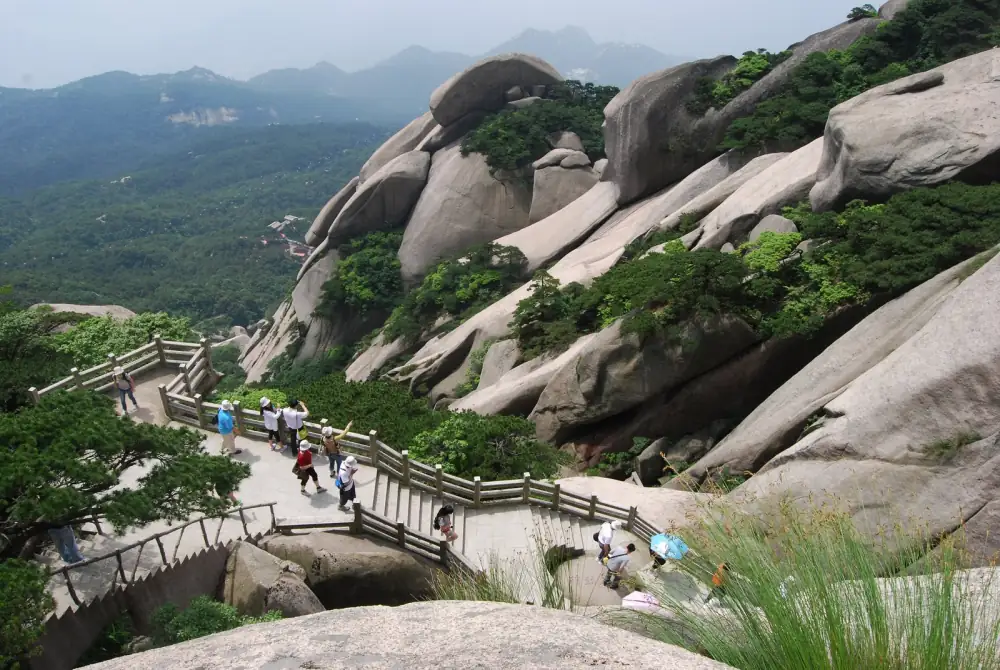
Jiuhua’s 99 peaks offer numerous hiking routes. The most popular circuit connects the main temples and takes about 5-6 hours:
Route: Huacheng Temple → Zhiyuan Temple → Baisui Palace (via cable car or path) → Guanyin Peak → Tiantai Peak → Ancient Lecture Temple → return via Guoming Temple
Tiantai Peak (天台峰): At 1,306 metres, this is the highest accessible peak and the most important pilgrimage destination on the mountain. The Tiantai Temple at the summit is where Kim Qiaojue is said to have meditated. The final climb involves 800+ stone steps, and pilgrims count them as a form of moving meditation. The views from the top are magnificent — a sea of misty peaks stretching to the horizon.
Difficulty: Moderate. The path is well-maintained but involves significant elevation gain. Start early to avoid the midday heat in summer.
The North Path
A quieter, less-travelled route that connects several smaller temples on the mountain’s northern slopes. This path sees far fewer tourists and offers a more contemplative hiking experience. Allow 3-4 hours. Not well-marked — consider hiring a local guide for ¥100-200 ($14-28 USD).
Monastery Stays
Sleeping in a Temple
Several temples on Jiuhua offer guesthouse accommodation to visitors, providing a unique opportunity to experience monastic life:
Baisui Palace Guesthouse: Basic but clean rooms within the temple complex. ¥100-200 ($14-28 USD) per person per night, including simple vegetarian breakfast. Wake at 5:00 AM for morning chanting.
Zhiyuan Temple Guesthouse: Similar arrangement. ¥80-150 ($11-21 USD) per person.
What to expect: Simple rooms (bed, table, shared bathroom), vegetarian meals, early mornings, and the sound of chanting and bells. Alcohol and meat are not permitted. The experience is profoundly peaceful — there’s something about sleeping in a 500-year-old temple that puts modern anxieties into perspective.
Booking: Contact the temple directly or arrange through the Jiuhua Mountain Tourism Office. Availability is limited, especially during Buddhist festivals.
Buddhist Vegetarian Cuisine
Eating on the Mountain
Jiuhua’s vegetarian tradition is one of the oldest and most refined in China, with recipes developed by monks over centuries:
Buddha’s Delight (罗汉斋): A medley of mushrooms, bamboo shoots, tofu, and vegetables in a light sauce. The Jiuhua version is particularly refined. ¥28-48 ($3.90-6.70 USD).
Tofu Skin Rolls (腐皮卷): Tofu skin wrapped around a filling of mushrooms and vegetables, then steamed. Delicate and delicious. ¥18-28 ($2.50-3.90 USD).
Mushroom Soup (山菌汤): Made from wild mushrooms foraged on the mountain. Rich, earthy, and deeply satisfying. ¥28-38 ($3.90-5.30 USD).
Vegetarian Duck (素鸭): Tofu skin and mushrooms prepared to resemble duck — a classic Buddhist vegetarian technique. ¥22-35 ($3-4.90 USD).
Jiuhua Yellow Peach (九华黄桃): Local peaches from the mountain slopes, available in summer. Sweet and fragrant. ¥10-15 ($1.40-2 USD) per kilo.
Where to Eat
Temple Restaurants: Most major temples serve vegetarian meals to visitors. Lunch ¥20-30 ($2.80-4.20 USD), dinner ¥25-40 ($3.50-5.50 USD). The food is simple but well-prepared.
Jiuhua Street Restaurants: The commercial street near Huacheng Temple has several vegetarian restaurants. Meals ¥30-50 ($4.20-7 USD) per person.
Practical Information
Getting to Jiuhua Mountain
By High-Speed Train: Jiuhuashan Station (on the Hefei-Fuzhou line) is about 20 km from the mountain. From Shanghai: about 3 hours, ¥150-250 ($21-35 USD). From Hefei: about 1.5 hours, ¥70-120 ($9.70-17 USD). Shuttle bus from station to mountain ¥10 ($1.40 USD).
By Air: Jiuhuashan Airport (JNH) has flights from Beijing, Shanghai, Guangzhou, and Chengdu. About 40 km from the mountain.
By Bus: Direct buses from Huangshan (2.5 hours), Nanjing (3.5 hours), and Shanghai (5 hours).
Mountain Entrance
Entrance fee: ¥160 ($22 USD) peak season (March — November), ¥110 ($15 USD) off-peak. The ticket is valid for one entry and includes the scenic area shuttle bus.
Getting Around the Mountain
Shuttle bus: Free with entrance ticket, runs between the major temple areas.
Cable cars: Baisui Palace cable car ¥100 ($14 USD) round trip. Tiantai cable car ¥160 ($22 USD) round trip.
Walking: The mountain is large but the main temple areas are concentrated. Allow 1-2 full days to see the major sites.
Best Time to Visit
- Spring (April — May): Azaleas in bloom, mild temperatures. One of the best seasons.
- Autumn (October — November): Clear skies, comfortable hiking weather, autumn colours.
- Buddhist festivals: The Ksitigarbha Birthday Festival (地藏法会, 30th day of the 7th lunar month, usually September) draws thousands of pilgrims and features elaborate ceremonies. An extraordinary cultural experience, but book accommodation well ahead.
- Avoid: Chinese National Day (October 1-7) when the mountain is extremely crowded.
Accommodation
Monastery Guesthouses: As described above, ¥80-200 ($11-28 USD) per person.
Jiuhua Street Hotels: Numerous hotels in the commercial area near the mountain entrance. From ¥150-400 ($21-55 USD) per double room.
Luxury: Jiuhua Resort Hotel — the most comfortable option on the mountain. Doubles from ¥500-1,000 ($69-138 USD).
Budget Estimate (2 Days)
| Item | Budget (¥) | Mid-Range (¥) |
|---|---|---|
| Train from Shanghai (round trip) | 300 | 500 |
| Mountain entrance | 160 | 160 |
| Accommodation (1 night) | 100 | 350 |
| Meals | 100 | 250 |
| Cable car | 0 | 160 |
| Miscellaneous | 50 | 100 |
| Total | ¥710 ($98 USD) | ¥1,520 ($210 USD) |
A Mountain That Asks Nothing But Your Presence
Jiuhua is not a mountain that demands extreme effort or deep faith. It simply asks you to show up and be present — to walk its paths, listen to its bells, and taste its vegetarian cooking. The monks I met there seemed genuinely content in a way that’s increasingly rare, and their morning chanting, echoing off the misty peaks, created a sound I can still hear when I close my eyes. Whether you come as a pilgrim or a tourist, Jiuhua offers something that has nothing to do with religion and everything to do with simply being human in a beautiful, quiet place. That might be the most sacred thing of all.