
Shexian and the Tang Yue Memorial Arches
Shexian County (歙县) in southern Anhui Province was the political capital of the ancient Huizhou prefecture — the administrative and cultural heartland of the same prosperous merchant culture that produced the white-walled villages of Wuyuan and the extraordinary architecture of Yixian. As the prefecture capital, Shexian accumulated the most concentrated collection of memorial arches (牌坊, páifāng) in China — stone structures erected to commemorate virtuous individuals, loyal officials, and chaste widows.
The Tang Yue Memorial Arch Group (棠樾牌坊群) — seven arches standing in a line outside Shexian — is the finest surviving example of this tradition.
Tang Yue Memorial Arches (棠樾牌坊群)
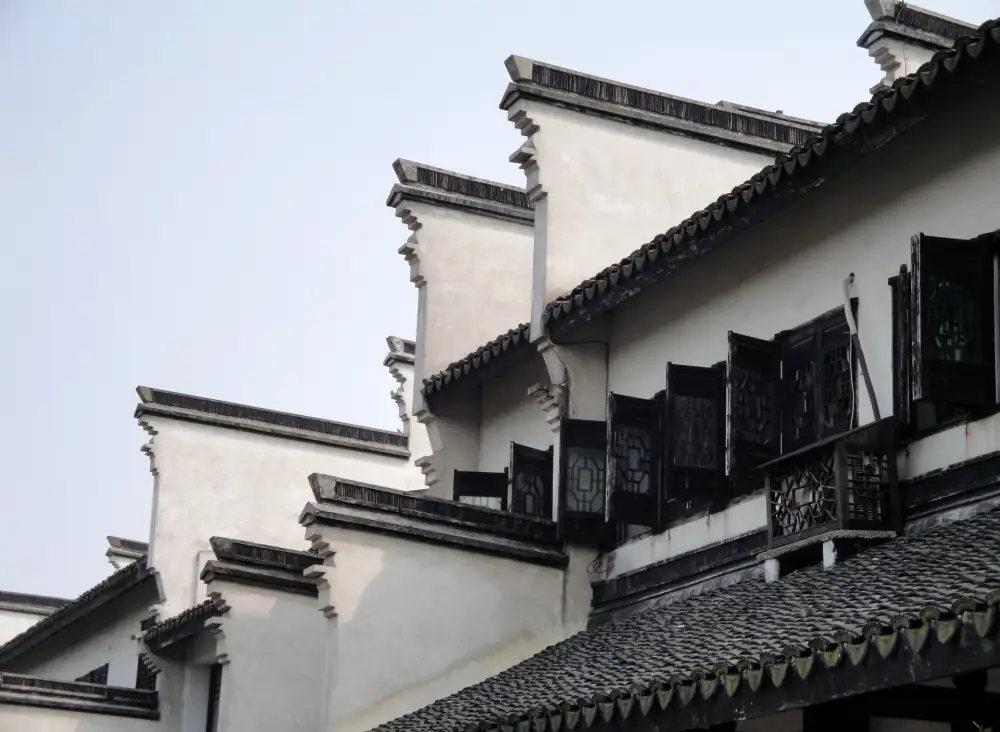
Seven stone memorial arches stand in a precise line along the entrance to the former estate of the Bao clan, spanning approximately 200 metres. They were erected at different times between the Ming and Qing dynasties, each commemorating a different member or principle of the Bao family.
The Seven Arches
Reading from east to west, the arches alternate between loyalty arches (commemorating men who died in service to the state) and chastity arches (commemorating women who did not remarry after their husbands’ deaths). This alternation was deliberate — the sequence embodies both male and female Confucian virtue.
Architecture: Each arch is built from massive blocks of grey-blue sandstone without mortar; the structural logic depends entirely on the precision of the stone cutting and the weight of the upper elements pressing down on the lower. The elaborately carved panels — dragons, phoenixes, calligraphic inscriptions, and memorial texts — took teams of craftsmen months to complete.
Admission: ¥100 (includes Tang Yue arches + Bao clan ancestral hall complex).
Shexian Ancient County Town
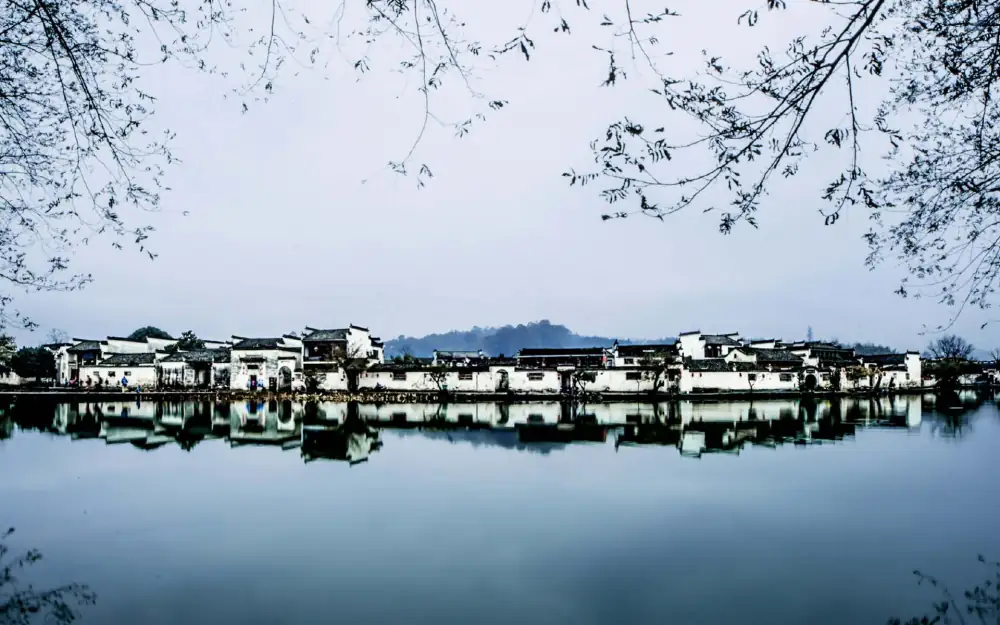
The county town itself is one of the best-preserved ancient administrative centres in Anhui:
Xu State Street (徽州古城): The preserved section of old Shexian, centred on the ancient prefecture gate (谯楼, an ancient drum tower still intact). The streets behind the gate contain traditional shops, tea houses, and ink stone studios.
Bao Gong Ancestral Hall (包公祠堂): A memorial to the famous Northern Song official Bao Zheng (999–1062 CE) — the most celebrated incorruptible judge in Chinese history, whose ancestors originated from Shexian. The ancestral hall contains documents and artefacts related to the Bao clan lineage and the historical Judge Bao.
Shexian Ink Stone (歙砚)
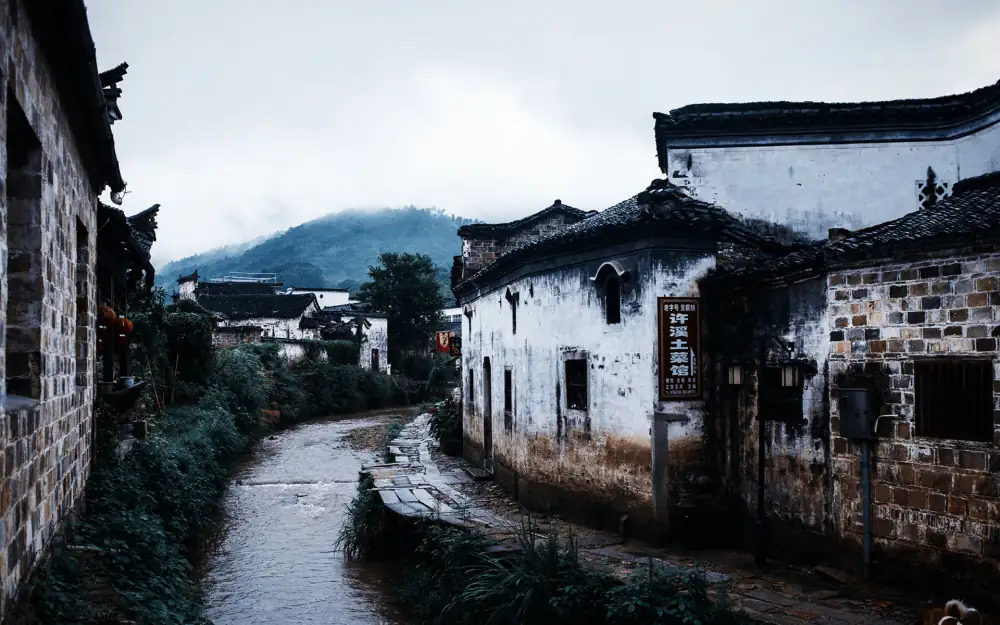
One of China’s Four Famous Ink Stones, the She Ink Stone (歙砚, Shè Yàn) has been produced in Shexian for over 1,000 years from a specific slate quarried in the nearby mountains. The stone’s qualities — fine grain, excellent ink retention, slight self-lubrication — made it the preferred writing tool of Tang and Song dynasty officials and scholars.
The craft tradition is maintained by approximately 40 remaining master craftsmen in the county. Several workshops on the old town streets accept visitors:
- Watch the carving process: Master carvers use steel chisels to cut relief designs (dragons, landscapes, calligraphy) into the stone surface; the process requires both artistic skill and deep knowledge of the stone’s grain.
- Buy: Functional ink stones for calligraphy practice (¥80–¥500); collector pieces (¥1,000–¥50,000+). The price range is wide enough that browsing without intent to purchase is welcomed.
- Tourist caution: Mass-produced ink stones from other regions are widely sold in Chinese souvenir markets; genuine She ink stones have a characteristic grey-black colour with subtle green or blue undertones visible in the right light.
Practical Information
Getting there: From Huangshan City (屯溪) — the gateway city for Yellow Mountain — to Shexian is 20 km (30 minutes by bus or taxi). Shexian is a natural half-day addition to any Huangshan itinerary.
Best combined with: Xidi Village (西递) and Hongcun (宏村) — two UNESCO-listed Huizhou villages 30–40 km from Shexian — for a complete 2-day Huizhou heritage circuit.
Admission to Shexian Ancient Town: ¥80 (comprehensive ticket for old town and main sights).
The Tang Yue arches are monuments to an idea — that virtuous conduct across generations could be made permanent in stone. Whether the idea is admirable or disturbing depends on which stories you know about the women commemorated in the chastity arches. The stone is neutral; the interpretation is yours.