
Ganden Monastery: Tibet’s Sunrise Pilgrimage Circuit
On a rocky ridge 4,300 metres above sea level, 45 km east of Lhasa, the semi-ruined and partially rebuilt Ganden Monastery (甘丹寺) commands a view over the Kyichu River valley that the founder of the Gelug school of Tibetan Buddhism, Tsongkhapa, is said to have selected personally in 1409.
For Tibetan Buddhists, Ganden is one of the holiest sites in the world — the first of the three great Gelug monasteries (the others are Drepung and Sera), the location of Tsongkhapa’s tomb, and the headquarters of the tradition that produced the Dalai Lamas. The Ganden Kora — a 3.5 km pilgrim circuit around the ridge — is walked daily by both monks and lay pilgrims; in the golden light of early morning, this walk ranks among the most profound mountain experiences in Asia.
The Route from Lhasa
Getting There
Public bus: A public minibus departs from the Tromzikhang (八廓街商场) in Lhasa’s old city at approximately 6:30 AM, arriving at Ganden around 9:30 AM. Return buses depart around 14:00–15:00. Cost: ¥30–¥40.
Chartered vehicle: A taxi or hired SUV from Lhasa takes approximately 1.5 hours (¥200–¥300 one-way). This allows departure early enough for sunrise.
Ganden to Samye trek: The 4-day trek from Ganden Monastery to Samye Monastery is one of Tibet’s classic multi-day routes, crossing a pass above 5,200 m. This requires a licensed guide, camping equipment, and Tibet trekking permits.
Permits
All visitors to Tibet (including Chinese citizens from outside Tibet) require a Tibet Travel Permit arranged through a licensed travel agency. Foreign nationals additionally require an Alien’s Travel Permit and, for sites beyond 60 km from Lhasa including Ganden, may need an Area Permit. Confirm current permit requirements with your Tibet travel agency.
The Ganden Kora (Circuit)
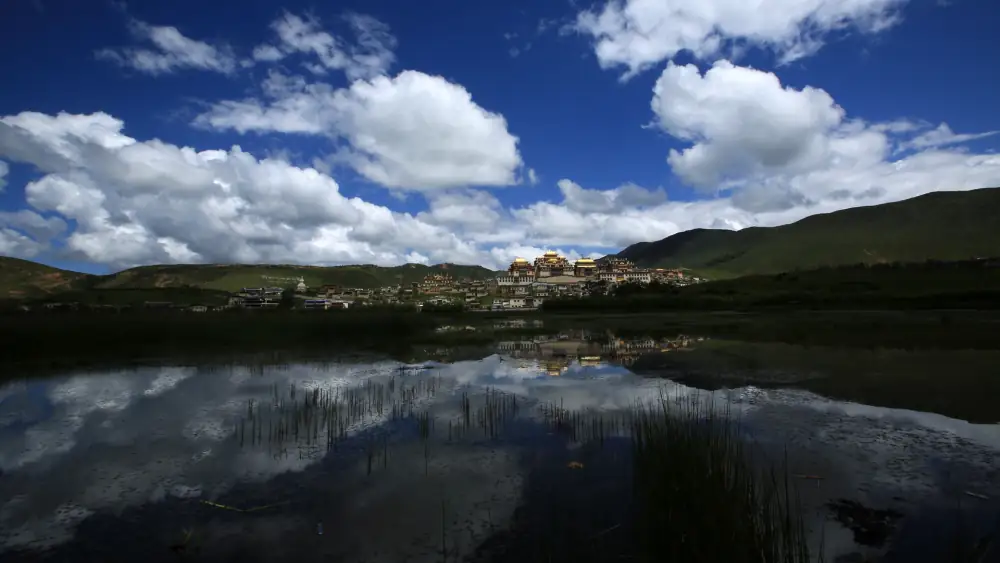
The kora — a clockwise circumambulation of a sacred site — is the primary form of Buddhist merit practice at Tibetan sites. The Ganden Kora begins and ends at the monastery’s main gate, circuits the entire ridge on a path worn into the rock over 600 years of pilgrims’ footsteps, and takes approximately 2 hours at a comfortable walking pace.
The Path
Start: Main monastery gate area. Proceed clockwise (this is essential in Buddhist practice — walking counterclockwise is considered inauspicious).
First section (0–0.5 km): Ascending steps and flagstone path past prayer flag strings; views begin opening over the Kyichu Valley.
Ridge section (0.5–2 km): The highest and most exposed part of the circuit; path traverses the narrow ridge with drops on both sides. Views extend over the full Lhasa Valley — on clear mornings (October–April best), you can see the Potala Palace 45 km distant.
Northern slope (2–2.5 km): The path descends slightly into a sheltered section with rock cairns and prayer wheels operated by passing pilgrims. Juniper incense smoke rises from burners set into the rock.
Return section (2.5–3.5 km): Gradual return to the monastery; passing the Tsongkhapa shrine and several smaller chapels.
What You See
- Pilgrims: Tibetan lay practitioners complete the kora in groups of 2–10, sometimes prostrating (full-body prostrations in which the person lies flat on the ground, rises, and repeats) for the entire circuit — this takes 4–6 hours and represents extraordinary devotion.
- Monks in debate: After the early morning prayer periods, monks sometimes continue informal philosophical debate near the main courtyard — the animated rapid-fire exchanges of Tibetan scholastic debate are remarkable to witness.
- Rock carvings: Ancient inscriptions in Tibetan script, some dating to the monastery’s foundation, carved directly into exposed rock faces along the kora path.
The Monastery Complex
Tsongkhapa’s Tomb
The Serdung (Golden Mausoleum) of Tsongkhapa — enshrining the preserved body of the founder — is the holiest object in the monastery. Pilgrims queue to enter the chapel and touch their foreheads to the base of the stupa. The gold leaf and gems encrusting the stupa represent centuries of accumulated offering.
The original stupa was destroyed during the Cultural Revolution (1966–76) when Ganden suffered some of the most severe destruction inflicted on any Tibetan monastery. An estimated 95% of the complex was demolished by the Red Guards; the current monastery represents careful reconstruction since 1980.
The Reconstruction and Memory
Walking through Ganden, you are simultaneously in a living monastery and in a site of memory. The rebuilt chapels are fresh and bright; behind them, ruined walls and scattered stone blocks from the pre-1966 complex are visible, not cleared away but left as testimony. The monks who remember the destruction — now very elderly — are still sometimes found sitting in the rebuilt halls.
This combination of reconstruction and visible loss is different from visiting a pristine historical site; it asks something from the visitor.
Namgyelma Lhakhang
A small chapel dedicated to the deity Namgyelma (Usnisa Vijaya), known for extending lifespan. Pilgrims make specific merit-making visits to this chapel; the walls are lined with small butter-lamp offerings.
Sunrise on the Kora
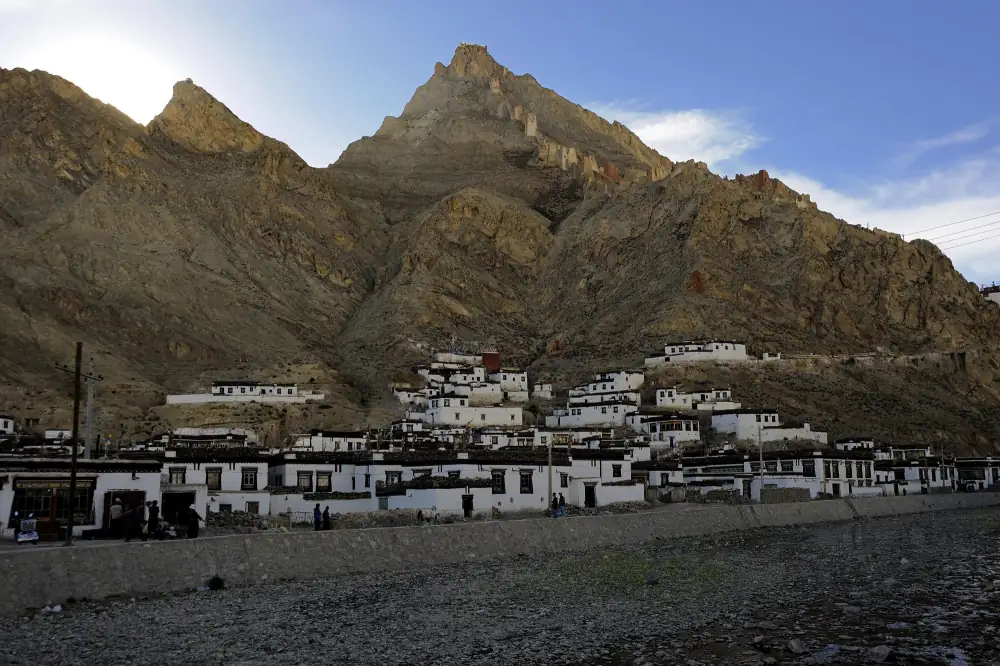
For the most profound experience of Ganden, arrive in time to begin the kora at sunrise (approximately 7:00–7:30 AM in summer; 8:00–8:30 AM in winter). At this hour:
- The bus tours have not yet arrived.
- The pilgrims who walked to the monastery on foot (some from Lhasa, taking 2 days) are completing their final circuits.
- The prayer hall chanting is audible across the ridge in the cold still air.
- The light on the Kyichu Valley below turns from grey-blue to warm gold over approximately 20 minutes.
The experience of walking in this light, surrounded by pilgrims for whom this walk represents a lifetime of accumulated faith, is one of the most quietly extraordinary available to a traveller in Tibet.
Altitude and Physical Preparation
Elevation: The monastery is at 4,300 m. The high point of the kora is approximately 4,380 m.
- Do not visit Ganden on your first or second day in Lhasa (3,600 m). Spend at least 2–3 nights acclimatising in the city before ascending further.
- The kora path is not technically difficult but the altitude makes any physical effort more demanding; expect to walk more slowly than you would at sea level.
- Carry water — the thin, dry air at 4,300 m dehydrates quickly.
- Symptoms requiring descent: Severe headache, vomiting, loss of coordination, or confusion at any altitude are warning signs; descend immediately and seek medical advice.
Ganden is not a tourist site with a Buddhist monastery attached — it is a Buddhist monastery at which tourists are permitted. The distinction is visible in everything: the way the pilgrims move, the unphotographed private moments in the chapels, the silence that falls when the morning prayer period ends and the monks disperse into their day. Go prepared to participate as respectfully as you can.