
The Barkhor (八廊街) circuit around the Jokhang Temple (大昭寺) is the most important pilgrimage route in Tibetan Buddhism — and one of the most emotionally affecting travel experiences in China. The constant circumambulation (always clockwise) of pilgrims from every region of Tibet and the Himalayan world, many prostrating every three steps, some completing the full circuit in full-body prostrations (touching their face to the ground at each step), creates an atmosphere of concentrated devotional intensity unlike anything in the wider China experience.
The Jokhang Temple (大昭寺)
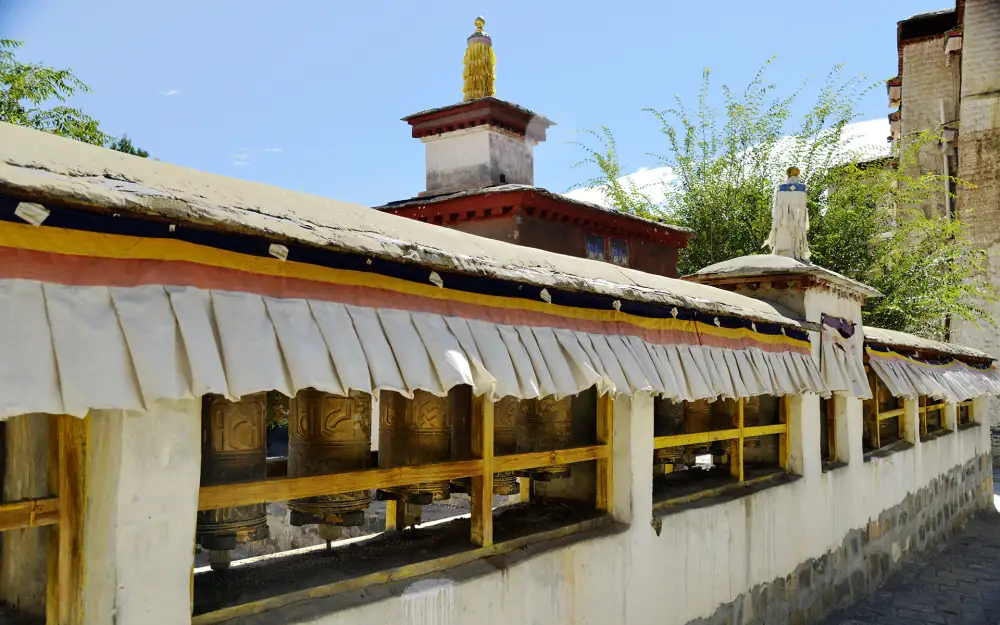
The Jokhang is the most sacred temple in Tibet — built in 641 AD by King Songtsen Gampo to house a statue of the 12-year-old Jowo Sakyamuni (觉卧仁波切) brought as a dowry by his Chinese bride Princess Wencheng. The statue — showing Shakyamuni Buddha at age 12, considered the most sacred in the Tibetan Buddhist world — is in the innermost sanctuary.
What to see inside:
- The main hall with the Jowo statue (queue can be 30–60 minutes but worth waiting)
- The surrounding chapels (all active worship spaces, incense smoke, butter lamps, monks in prayer)
- The rooftop — golden dharma wheels against the sky, views of Potala Palace across the square
Entry: ¥85. Opens 8am. Arrive before 9am to avoid tour groups.
The living temple: The Jokhang is not a museum — monks conduct rituals, pilgrims offer scarves and butter lamp donations, the elderly woman counting her mani beads in a corner is not posing. Photographing respectfully means observing without interrupting, and asking before photographing individuals.
The Barkhor Circuit
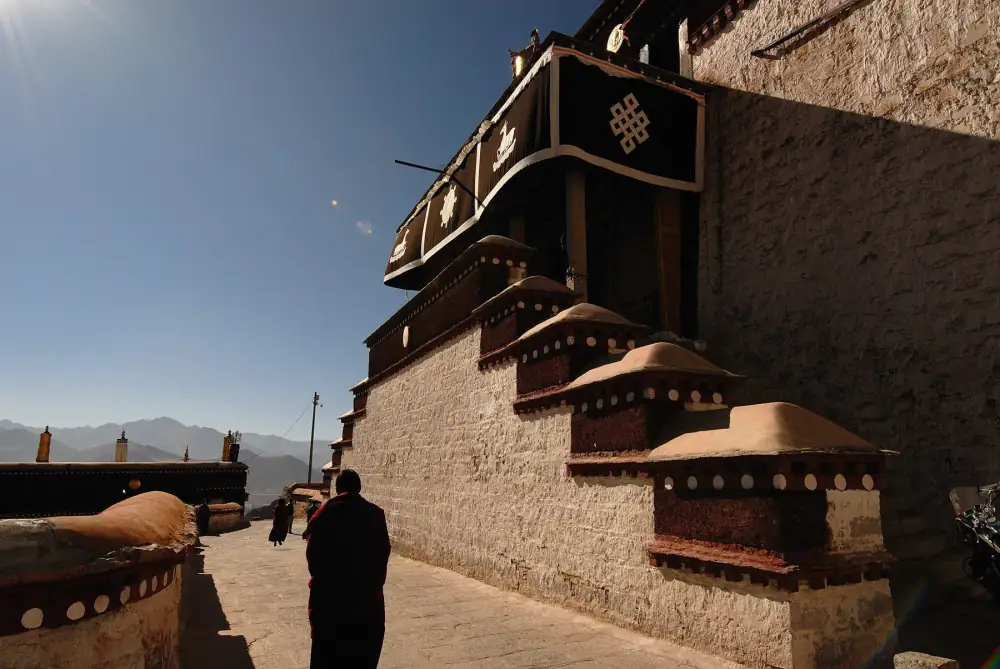
The Barkhor is a roughly 800m circumambulation route around the Jokhang — the “middle circuit” of Lhasa’s three sacred kora routes (the inner circuit is inside the temple; the outer Lingkhor goes around all of old Lhasa).
When to walk it: Tibetan pilgrims do the Barkhor at dawn (5–7am) and again in the evening (4–7pm). The midday tourist crowd is the least authentic version. An early morning or evening walk when pilgrims outnumber tourists is the most affecting experience.
The prostrating pilgrims: Full-body prostration (五体投地) is the most physically demanding form of devotional circumambulation. The pilgrim stands, puts hands together, raises them overhead (1), then bends to touch the ground with hands (2), then lowers full body to the ground face-forward (3), then rises and advances their body length before repeating. The circuit takes hours. Many pilgrims travel days to reach Lhasa specifically to complete this.
The market and shops: The Barkhor commercial area sells Tibetan religious items (prayer wheels, thangka paintings, mani stones, butter lamps), turquoise and coral jewellery, yak wool garments. The religious items are genuine; many are used by actual pilgrims. Prices are negotiable.
The Potala Palace (布达拉宫)
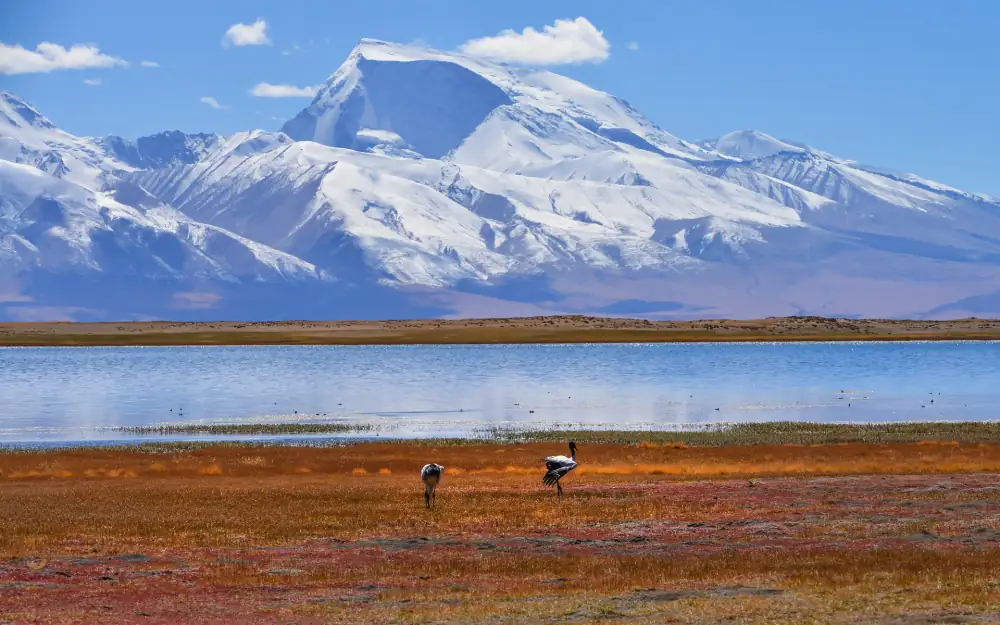
The Potala Palace — the winter palace of the Dalai Lamas, visible from everywhere in Lhasa — requires a timed booking system.
Entry system: Online booking (potalapalace.cn) required weeks in advance for peak season (June–September). Non-peak season: some same-day tickets available at 9am.
The visit: Group tours of 1 hour, strictly timed. The interior chapels, the golden tombs of previous Dalai Lamas, and the view from the roof are the highlights.
Entry: ¥200 peak season, ¥100 off-season.
Tibet Permit Reminder
All visits to Tibet require a Tibet Travel Permit (西藏旅游许可证) in addition to a Chinese visa. This must be arranged through a licensed Tibet travel agency before booking flights to Lhasa. Full Tibet permit guide.
Also see: Tibet Everest Base Camp Guide | Tibet Lhasa Complete Guide | China Buddhist Heritage Guide