
Tibet sits on the world’s highest plateau — the “Roof of the World” — at an average elevation of 4,500 metres. It’s one of the most spiritually charged and visually overwhelming destinations on Earth, and visiting it requires more planning than almost anywhere else in China.
Table of contents
Open Table of contents
Essential: Tibet Permits
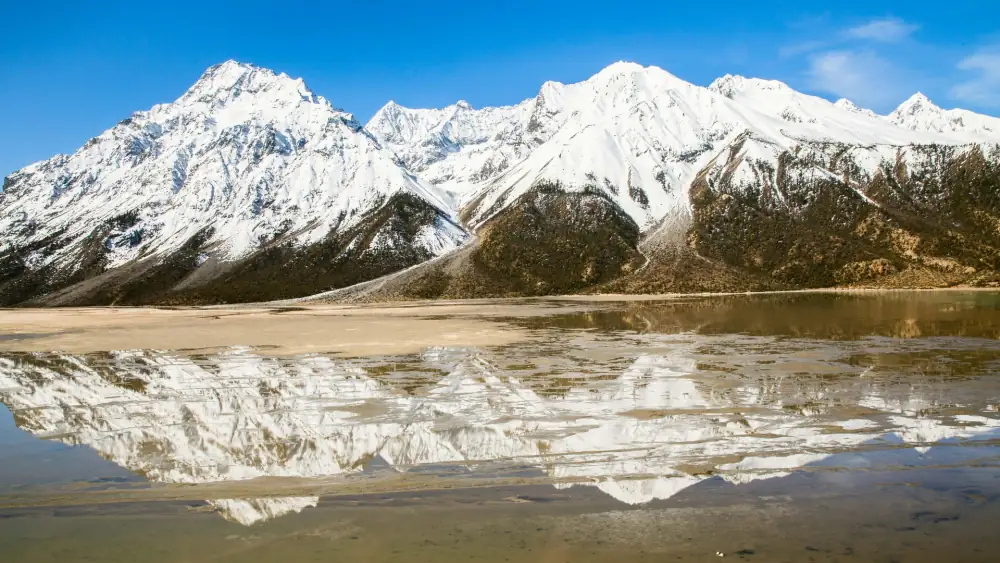
Unlike the rest of China, Tibet requires special travel permits for all foreign visitors.
Tibet Travel Permit (西藏旅游许可证)
Mandatory for all foreigners. Cannot be applied for independently — you must book through a registered Tibet travel agency, which handles the permit application on your behalf.
How to get it:
- Book a Tibet tour package (or hire a guide + vehicle) through a registered agency
- Send your passport scans to the agency 7–14 days before travel
- Receive the permit — it will be checked at Lhasa airport/train station
Additional Permits Required for Certain Areas
- Military Area Command Permit (军事区许可证) — required for Everest Base Camp, Mount Kailash
- Alien’s Travel Permit (边境管理区通行证) — for some border areas
Registered Tibet Travel Agencies (English-speaking)
- Tibet Ctrip Travel Service
- Explore Tibet
- Wind Horse Adventure (Lhasa-based)
Cost of Tibet travel: Independent-style travel is not permitted — you must have a licensed guide and registered vehicle. Typical costs: ¥500–¥1,000/day per person for guide + vehicle, excluding accommodation and food.
Lhasa (拉萨) — Holy City
Lhasa (“Place of the Gods” in Tibetan) sits at 3,650m on the Kyichu River. Allow 2–3 days minimum for acclimatisation before attempting higher-elevation sites.
Potala Palace (布达拉宫)
The most iconic building in Tibet — the winter palace of the Dalai Lamas, rising 117 metres above Marpo Ri (Red Hill) with 1,000 rooms, 10,000 shrines, and 20,000 statues. Built in the 7th century AD, expanded in the 17th century by the 5th Dalai Lama.
Visiting: Timed tickets must be pre-booked online (www.potalapalace.cn); maximum 2,300 visitors/day; 1-hour visit with guide inside. Exterior photography unrestricted. Entry ¥200.
Best exterior photo: From the Potala Palace Square (布宫广场) or from the roof of Banak Shol guesthouse area in the morning.
Jokhang Temple (大昭寺)
The holiest site in Tibet — built in 639 AD, the Jokhang houses a gold statue of Jowo Rinpoche (the 12-year-old Buddha) considered the most sacred object in Tibetan Buddhism. Pilgrims from across Tibet prostrate themselves around the temple circuit (Barkhor kora) continuously.
Experience: Join the morning kora (circumambulation) of Barkhor Square at 6–8am — pilgrims in traditional chuba robes turning prayer wheels, monks in maroon robes, smoke from burning juniper. An extraordinary sensory immersion.
Sera Monastery (色拉寺)
Famous for its daily debating sessions — monks engage in formal philosophical debate on Buddhist texts, using dramatic hand gestures and shouts to make points. Held in the monastery courtyard 3–5pm Monday–Saturday. One of the most fascinating things to witness in Tibet. Entry ¥50.
Norbulingka Palace (罗布林卡)
The summer residence of the Dalai Lamas — a palace complex set in extensive parkland; the most relaxed and green environment in central Lhasa. Traditional Tibetan opera (Lhamo) is performed here during the Shoton Festival (August). Entry ¥60.
Namtso Lake (纳木错)
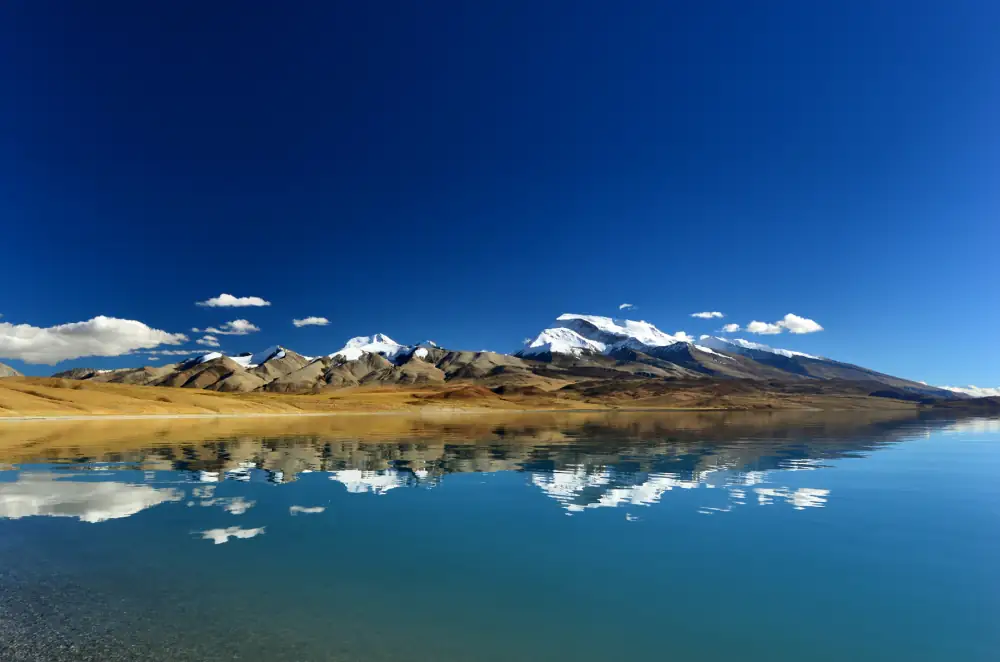
At 4,718m altitude, Namtso is one of the world’s highest and largest saltwater lakes — 1,920 km² of turquoise water surrounded by snow peaks. Tibetan Buddhist pilgrims walk the entire 120km circuit of the lake (30–40 days on foot).
Day trip from Lhasa: 5 hours by 4WD; full day trip with 3–4 hours at the lake. The Tashi Dor Peninsula (扎西岛) on the lake’s northern shore has the best viewpoints and several small monasteries.
Altitude warning: Namtso is 1,000m higher than Lhasa — acute mountain sickness is common. Acclimatise in Lhasa for at least 2 nights before visiting.
Overnight stay: Guesthouses on the peninsula allow witnessing the extraordinary sunrise and sunset light on the lake. Basic but unforgettable (¥80–¥200/night).
Everest Base Camp (珠穆朗玛峰大本营)
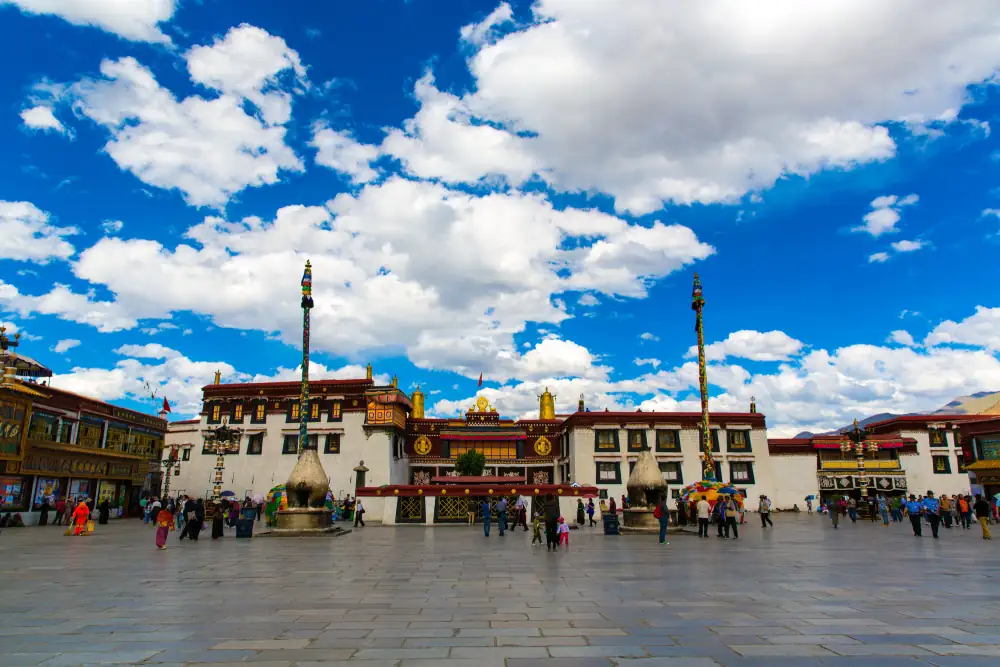
Tibet’s EBC is the “real” Everest Base Camp — the classic view of Everest’s north face from the 5,200m Rongphu Monastery is the most famous mountain photograph in history.
Getting There
From Lhasa: 2-day drive via Shigatse → Lhatse → Tingri → EBC (620km total). Requires Military Area Permit.
Typical itinerary:
- Day 1: Lhasa → Shigatse (270km, 4 hours); visit Tashilhunpo Monastery (扎什伦布寺)
- Day 2: Shigatse → EBC via Tingri (350km, 6 hours over high passes including Gyatso La Pass at 5,220m)
- Day 3: EBC → photograph Everest at dawn → return to Lhasa
Rongphu Monastery (绒布寺)
The world’s highest monastery at 4,980m — just 8km from EBC. Staying overnight here gives access to dawn photography of Everest with prayer flags in the foreground, one of the world’s most powerful images.
EBC camping: During the mountaineering season (April–May, September–October), expedition base camps fill the glacier moraine — surreal spectacle of hundreds of coloured tents at the foot of the world’s highest mountain.
Qinghai-Tibet Railway (青藏铁路)
The world’s highest railway — 1,956km from Xining (Qinghai) to Lhasa, including the 975km section at over 4,000m elevation. A feat of engineering and an extraordinarily beautiful journey.
Journey time: Xining to Lhasa — approximately 24 hours
Best class: Soft sleeper for the overnight comfort; sit in the upper berth for better views
Highest point: Tanggula Pass (唐古拉山口) at 5,072m — altitude sickness bags distributed in carriages
Scenic highlights: Qinghai Lake at sunrise, Coco Xili (hoh xil) wildlife zone (Tibetan antelope), Tanggula Mountains
Booking: Via 12306.cn or Trip.com; soft sleeper ¥800–¥1,100 Xining to Lhasa.
Practical Info
Best time: April–October for road access; May and September are ideal (stable weather, fewer crowds)
Winter: Lhasa city is accessible year-round (mild days even in January); outer areas and EBC road closed November–March
Health: Carry Diamox (acetazolamide) for altitude prophylaxis; rest on arrival days; no alcohol for first 48 hours
Currency: ATMs in Lhasa accept foreign cards; smaller towns may be cash-only