
Beijing’s Drum and Bell Towers: Where the City Once Kept Time
Before electric clocks and smartphones, Beijing’s 9 million residents knew the time from two towers at the city’s geographic center: the Drum Tower (鼓楼, Gǔlóu) announced the hours with massive drums; the Bell Tower (钟楼, Zhōnglóu) followed moments later with the resonance of an enormous iron bell.
For nearly 700 years, from the Yuan dynasty through the Qing, this system governed daily life in the capital. Workers counted their hours, officials scheduled their audiences, and market vendors knew when to close by the sound emanating from these two towers.
Today, the towers survive in excellent condition, and the surrounding neighborhood — known simply as the Gulou area — has become one of Beijing’s most appealing urban environments: a mix of traditional hutong life, excellent coffee shops and bars, creative studios, and residential streets that preserve the texture of pre-high-rise Beijing.
The Drum Tower (鼓楼)
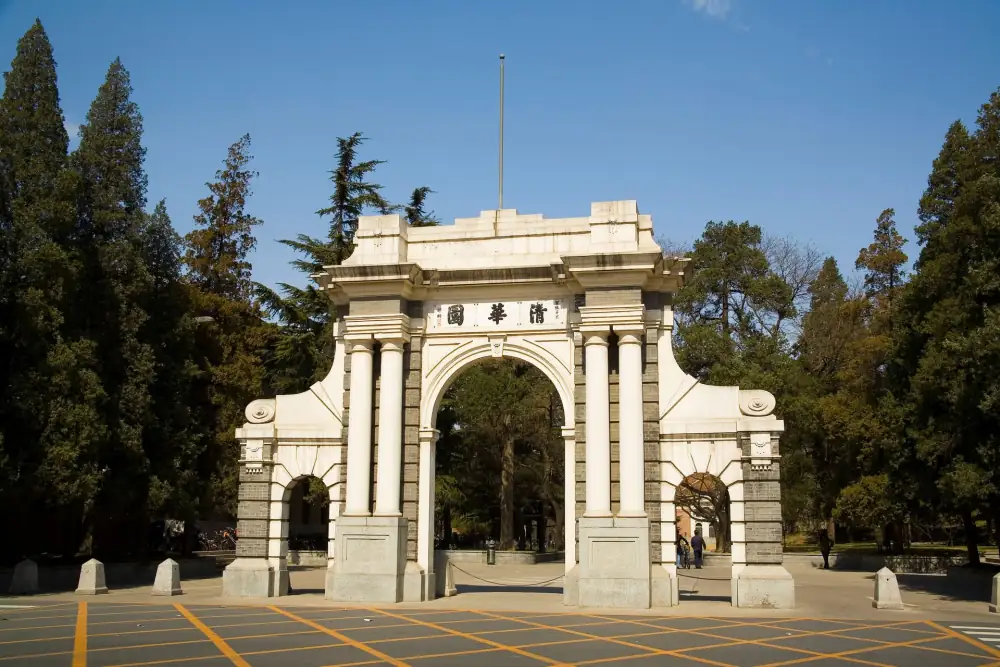
History: The current Drum Tower was built in 1420 during the early Ming dynasty, though the site had towers since the Yuan dynasty (1297 CE). The tower held 24 drums; only one original drum survives, and it is kept on permanent display. The other drums visible today are modern replicas.
The drum-striking schedule was precise: drums were struck at set intervals through the day and night to announce the time. The system required dedicated “time-keepers” who worked in shifts maintaining the water clock (漏刻, lòu kè) that measured the hours and triggered the drum strikes.
What to see:
- The original Yuan dynasty drum (one of Beijing’s most significant historical artifacts)
- The enormous main hall with its replica drums arranged in traditional configuration
- The steep staircase climb (a genuine workout) up to the viewing platform
- Panoramic views over the Gulou neighborhood’s grey-tiled rooftops toward the Forbidden City to the south
Drum Performances: Scheduled drum performances (every 30-60 minutes, depending on season) recreate the historical time-keeping performance using traditional rhythms. The performances are surprisingly powerful — 25 drummers in traditional costume performing thunderous coordinated patterns.
Practical details: Entry ¥20; open 9 AM – 5 PM; combined ticket with Bell Tower available (¥30)
The Bell Tower (钟楼)
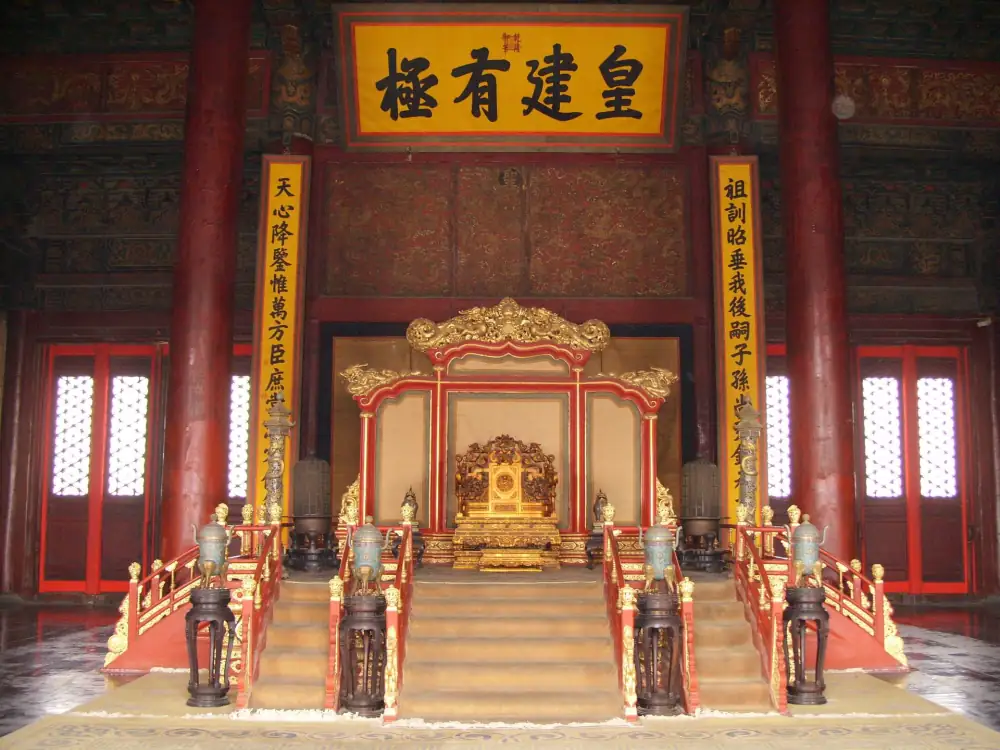
History: Located 100 meters behind the Drum Tower (north), the Bell Tower was built in 1420 alongside the Drum Tower. The original wooden tower burned down in 1745 and was replaced by the current stone and brick structure.
The bell — the largest bell in the pre-modern Beijing system at 63 tons — was cast in 1420. When struck, the resonance was designed to carry across the entire imperial capital.
What to see:
- The enormous Ming dynasty bronze bell (one of the largest surviving ancient bells in China)
- The bell-striking mechanism
- Views south toward the Drum Tower and north toward the Drum Tower area’s hutongs
- The bell clapper mechanism and its history of bell-striking techniques
Bell striking demonstrations: Less theatrical than the drum performances but genuinely impressive — the bell’s resonance when struck carries through the stone tower in a physical vibration.
Practical details: Entry ¥15; open 9 AM – 5 PM
The Gulou Neighborhood
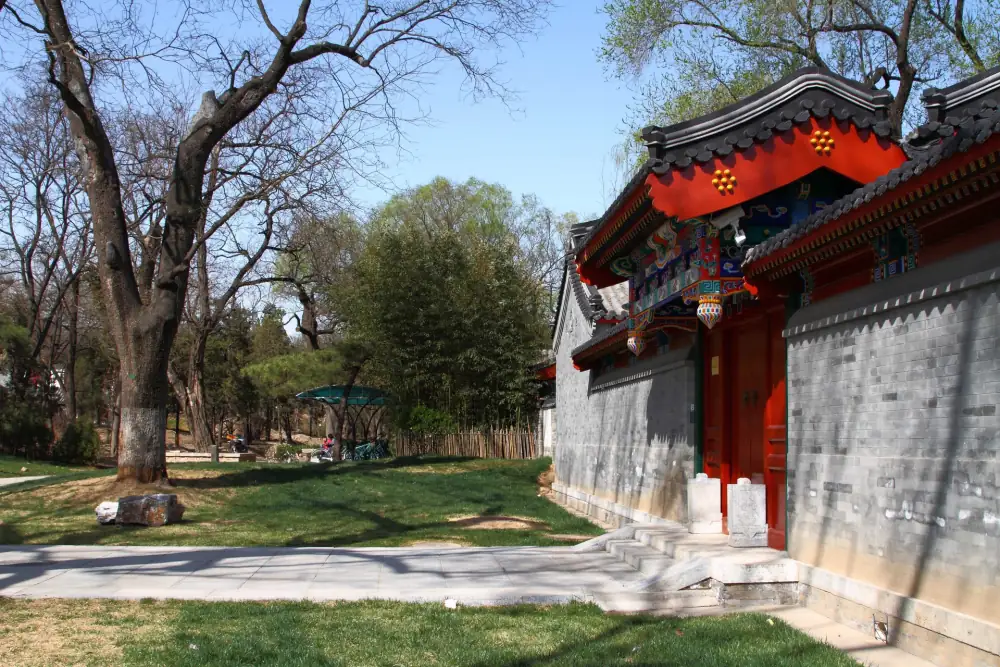
The area surrounding the Drum and Bell Towers is one of Beijing’s most appealing neighborhoods for wandering — a mix of traditional hutong residential streets, converted courtyard houses (now cafes, bars, and boutiques), and the daily life of a dense urban community.
Coffee Culture
Gulou has become Beijing’s specialty coffee epicenter. The concentration of high-quality independent coffee shops in the hutong lanes around the towers is remarkable — and the visual setting (stone-paved lanes, ancient courtyard walls, bicycle delivery workers) creates a context for coffee drinking unlike anywhere else in the world.
Standout cafes:
- Soloist Coffee: In a converted former utility building; excellent single-origin brewing
- Seesaw Coffee (Gulou branch): The Shanghai-based specialty chain’s Beijing presence
- Various unnamed independent cafes: Some of Beijing’s best coffee is in small, unnamed shops in the deeper hutong lanes; look for places where baristas are actively dialing in their grinder
The Gulou atmosphere: Unlike the tourist-dense streets near the Forbidden City, Gulou retains a genuinely neighborhood feel. Elderly residents play chess in the lanes; delivery riders navigate the narrow passages; students sit in courtyard cafes for hours. The contrast with the imperial grandeur a kilometer to the south is Beijing in miniature.
Hutong Exploration
The hutongs (胡同, hútòng) — traditional narrow alleyways lined with single-story courtyard houses — fan out in all directions from the towers. The most intact examples are north and west of the Bell Tower.
Recommended walks:
- Baochao Hutong (宝钞胡同): One of the most photogenic lanes, with preserved gate posts and intact courtyard houses
- Mao’er Hutong (帽儿胡同): Historically associated with bannermen (Qing dynasty military) families; several well-preserved large courtyard compounds
- Beiluoguxiang (北锣鼓巷) → Nanluoguxiang (南锣鼓巷): The famous tourist hutong runs south from near Gulou; less touristy at the northern end than the southern
What to look for: Pay attention to the gate piers (门墩, mén dūn) — the stone blocks flanking courtyard house gates. Their size, material, and carving complexity indicated the owner’s social rank; they’re a reading of social history.
Shichahai Lake (什刹海)
A few minutes’ walk west of the towers, Shichahai is a complex of three connected historic lakes (Qianhai, Houhai, and Xihai) surrounded by willow-lined paths and traditional restaurants. The lakes were part of the Yuan dynasty Grand Canal terminus.
Today: The lake perimeter is popular for cycling, walking, and the water activities that change by season (boating in summer, occasional ice skating in winter). The Houhai Bar Street (后海酒吧街) along the lake’s south shore is a Beijing bar/restaurant institution — somewhat touristy but genuinely lively on summer evenings.
Yinding Bridge (银锭桥): The small bridge connecting Qianhai and Houhai lakes was historically the best vantage point for viewing the Western Hills (西山) in the distance. On clear days (increasingly rare), the mountains visible from this bridge were one of Beijing’s most famous vistas.
Prince Gong’s Mansion (恭王府)
Within walking distance west of Gulou, this is the most complete surviving example of a Qing dynasty aristocratic mansion. Prince Gong (1833-1898) was one of the most powerful men in late Qing China — his restored mansion and garden occupy 6 hectares.
The interior is open to visitors and includes a remarkable private garden (the only Qing dynasty imperial-quality garden accessible to the public in Beijing outside the imperial parks).
Entry: ¥40; open 8:30 AM – 4:30 PM (closed Mondays in winter)
Practical Information
Getting There: Metro Line 8 or 6, Gulou Dajie Station; or Metro Line 2, Guloudajie Station. The towers are a 5-minute walk from either station.
Best Time:
- Morning (8-10 AM): The neighborhood is calm, with morning market activity in the lanes and excellent lighting for photography
- Evening (5-8 PM): The cafe and bar culture comes alive; the towers are lit
- Avoid: Weekend afternoons in summer are extremely crowded; Nanluoguxiang is particularly bad
Food in the Area: The hutong lanes around Gulou have excellent mid-range restaurants for Shandong food (a Beijing specialty), local duck restaurants, and various international options. The Wudaoying Hutong (五道营胡同), parallel to Nanluoguxiang, has a better food-to-crowd ratio.
Combination with Nearby: The Drum/Bell Tower area pairs perfectly with a Forbidden City visit — the two sites are part of Beijing’s ancient central axis and are a 15-minute walk apart. Many visitors also combine with a morning at Jingshan Park (北海后花园), which offers an elevated view back down the central axis.
The Drum and Bell Towers aren’t just historical monuments — they’re anchors of a neighborhood that represents Beijing’s best contemporary expression of old-city living. The towers are the reason to come; the hutong neighborhood around them is the reason to stay.