
China’s ancient villages offer something the cities cannot: the physical texture of pre-modern Chinese life — rammed earth walls, carved wooden screens, stone-paved lanes, wells used by generations of the same family for five centuries. The best-preserved examples are UNESCO World Heritage sites; the least known are entirely untouristed. This guide covers both.
Table of contents
Open Table of contents
- Hongcun and Xidi: Anhui’s UNESCO Villages
- Furong Village (芙蓉村): The Cliff Village of Zhejiang
- Zhuge Village (诸葛村): The Labyrinth of Lanxi
- Dangjia Village (党家村): Shaanxi’s Hidden Gem
- Zhaoxing Dong Village (肇兴侗寨): Guizhou’s Wind-Rain Bridges
- Luodai Ancient Town (洛带古镇): Chengdu’s Hakka Colony
- Visiting Ancient Villages Responsibly
Hongcun and Xidi: Anhui’s UNESCO Villages
The villages of Hongcun (宏村) and Xidi (西递) in She County, Anhui Province, were inscribed on the UNESCO World Heritage List in 2000 as outstanding examples of Huizhou (徽州) architecture. Both were settled and developed by the Wang and Hu merchant clans during the Ming and Qing Dynasties, when Huizhou merchants dominated China’s salt trade.
Huizhou architectural style
The defining features:
- White-lime plaster walls (粉墙) — brilliant white, maintained with regular replastering
- Grey tile roofs with upturned eaves (黛瓦)
- Horse-head walls (马头墙, mǎ tóu qiáng): tiered protective walls rising above the roofline, originally to prevent fire spread between closely spaced houses; now the iconic visual symbol of Huizhou
- Carved stone, wood, and brick (石雕、木雕、砖雕 — the “three carvings”): elaborate decorative work on gates, window frames, and interior courtyards
Hongcun (宏村)
The water system: Hongcun’s extraordinary achievement is its Ming Dynasty water supply system: a network of channels brings stream water through the centre of the village, through a moon-shaped central pond (月塘, Yuè Táng) and into the houses for daily use. The entire system was engineered 600 years ago and still functions today.
The South Lake (南湖): A half-moon lake constructed at the village’s southern edge, creating the iconic reflected-image view of white Huizhou buildings in still water with willow trees. This is the image used on the 50 yuan note and in approximately 70% of all Anhui tourism photographs.
Academy of Arts: Many Chinese art students come to Hongcun to sketch and paint the architecture. You’ll often find students with easels set up around the South Lake at dawn.
Practical: Admission ¥104. Reached from Tunxi/Huangshan City by bus (1 hour). Many visitors combine with Huangshan (Yellow Mountain) and Xidi in a 3-day itinerary.
Xidi (西递)
Slightly less visited than Hongcun and slightly better preserved — fewer tourist shops within the historic core. Xidi’s layout is centred on a long main street leading to the Hu Wenguang Memorial Arch (胡文光牌坊) — a towering Ming Dynasty commemorative gateway (1578) that stands at the village entrance.
Interior courtyards: Xidi’s individual houses have more accessible interior courtyards than Hongcun. Many families allow visitors to enter for a small fee (¥5–¥10); the carved woodwork inside (screens, balconies, ancestor shrine rooms) is extraordinary.
Furong Village (芙蓉村): The Cliff Village of Zhejiang
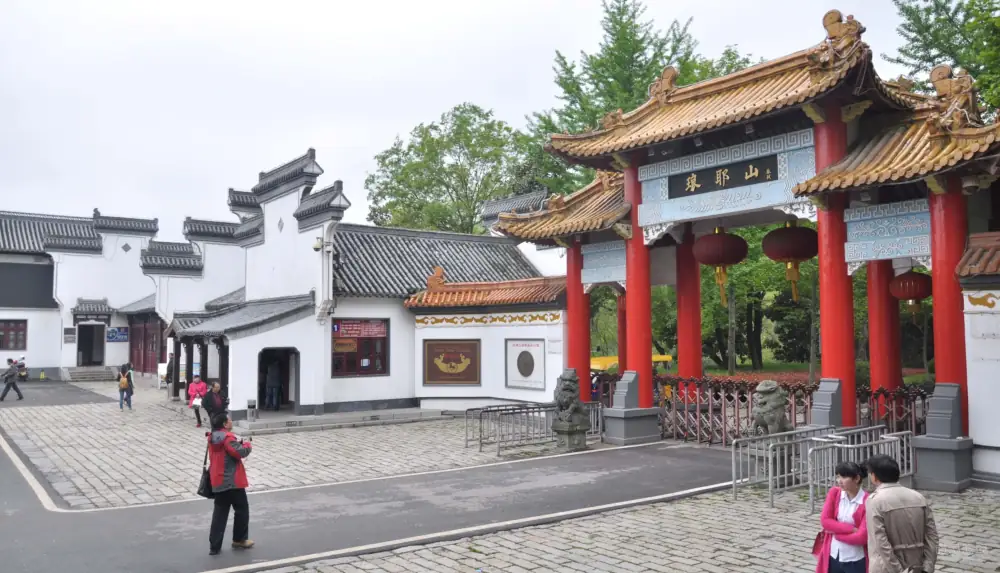
Furong Village (芙蓉村) in Yongjia County, Zhejiang Province, is one of China’s most dramatically sited villages — perched on a cliff edge above a valley, with waterfalls visible in wet season and extraordinary mountain views year-round. It’s been inhabited since the Tang Dynasty and has 330+ buildings from the Song to Qing periods.
The village is famous for its “七星八斗” (Seven Stars, Eight Dou) layout — seven stone-paved lanes designed to resemble a star pattern, with eight courtyard wells (水井斗) representing the Dou constellation. The village planning reflects Taoist cosmological principles.
Getting there: Yongjia County bus from Wenzhou (温州), then taxi to Furong Village (约60km from Wenzhou city). Best combined with other楠溪江 (Nanxi River) valley ancient villages.
Zhuge Village (诸葛村): The Labyrinth of Lanxi
Zhuge Village (诸葛村) in Lanxi County, Zhejiang, claims descent from Zhuge Liang — the famous strategist of the Three Kingdoms period (184–280 AD). Whether the genealogy is accurate is debatable; what is beyond dispute is the extraordinary village layout: based on the Eight Trigrams (八卦) pattern from the I Ching, with streets radiating from a central “Sky Pond” (钟池) in a pattern that deliberately confuses navigation — keeping enemies lost and defenders oriented.
Visitors frequently get lost in the labyrinthine lanes; this is by design. The oldest buildings date from the Ming Dynasty.
Getting there: Lanxi County by high-speed train from Hangzhou (1 hour), then bus to Zhuge Village.
Dangjia Village (党家村): Shaanxi’s Hidden Gem
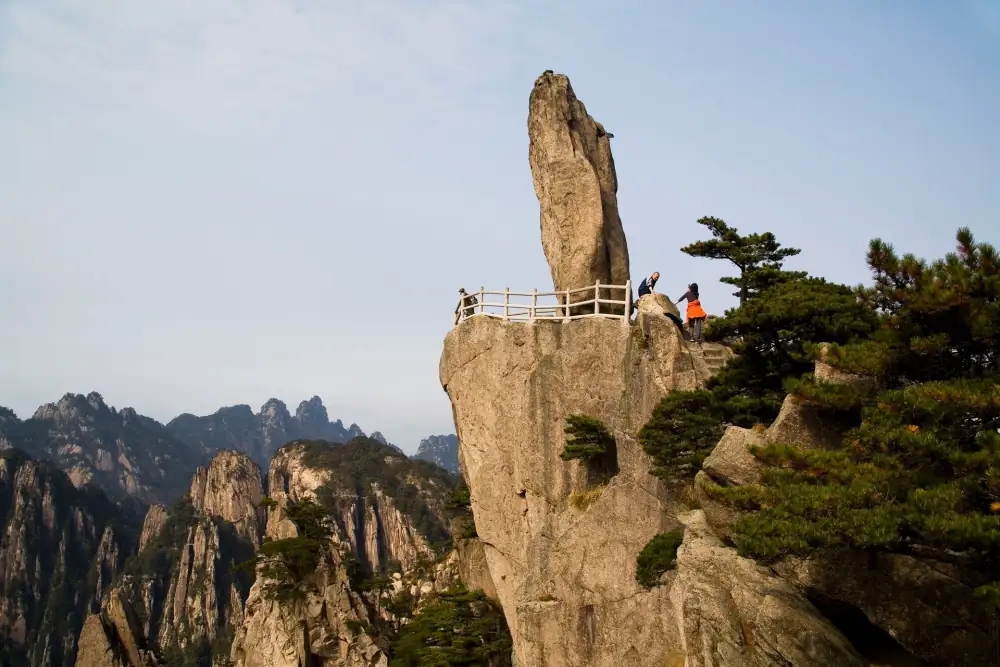
Dangjia Village (党家村) in Hancheng, Shaanxi Province, is almost unknown outside China but contains 125 preserved Ming and Qing Dynasty courtyard houses (四合院) in near-perfect condition — the finest concentration of northern Chinese vernacular architecture surviving.
Unlike Anhui’s white-walled style, these are northern Chinese compounds: high blank outer walls, interior courtyards with carved stone gate towers (门楼), and interior rooms connected by covered walkways. The village has been continuously inhabited by the Dang and Jia clans for over 600 years.
Getting there: 10km from Hancheng; accessible by bus from Hancheng bus station. Hancheng is on the Xi’an-Yuncheng railway line (1.5 hours from Xi’an).
Zhaoxing Dong Village (肇兴侗寨): Guizhou’s Wind-Rain Bridges

Zhaoxing (肇兴), in Liping County, Guizhou, is the largest Dong ethnic minority village in China — approximately 1,000 Dong families in a mountain valley. The village is famous for its five drum towers (鼓楼, one for each of the five clan groups) and five Wind-Rain Bridges (风雨桥): covered wooden bridges that are simultaneously functional crossings and community gathering spaces.
The Dong people have no written language; their cultural memory is carried entirely in oral tradition — particularly through the polyphonic singing tradition (侗族大歌) that UNESCO inscribed on the Intangible Cultural Heritage list.
Best time: the Dong New Year celebrations (November by lunar calendar) or the Harvest Festival (mid-September) for traditional performances in the drum tower squares.
Getting there: Liping County by overnight train from Guangzhou or Guiyang, then bus to Zhaoxing (2 hours from Liping). Or fly to Liping Airport from Guiyang (50 minutes).
Luodai Ancient Town (洛带古镇): Chengdu’s Hakka Colony
Most people don’t know that Chengdu has an ancient Hakka colony 20km from the city centre. Luodai Ancient Town (洛带古镇) was settled by Hakka migrants from Guangdong and Fujian in the Qing Dynasty, after the catastrophic population loss in Sichuan during the Ming-Qing transition wars. The town preserves Hakka clan halls (会馆) with architecture that would look at home in Guangdong — a jarring and fascinating cultural transplant in the heart of Sichuan.
Getting there: Metro Line 18 from central Chengdu to Luodai Station (30 minutes). Free from the metro; small ancient town entrance fee (¥20).
Visiting Ancient Villages Responsibly
Residents still live here: most of these villages are inhabited — not preserved as museums but as working communities. Respect private spaces; don’t enter homes without invitation.
Photography: acceptable in all public spaces. Ask permission for close portraits.
Economic support: buying local crafts, food, and handicrafts directly from village residents (rather than tour-packaged souvenirs) keeps income within the community.
Timing: arrive early (before 9am) or late (after 4pm) to experience the village before or after the day-trip coach tours.
Last updated: May 2026