
Table of contents
Open Table of contents
Three Lanes and Seven Alleys (三坊七巷)
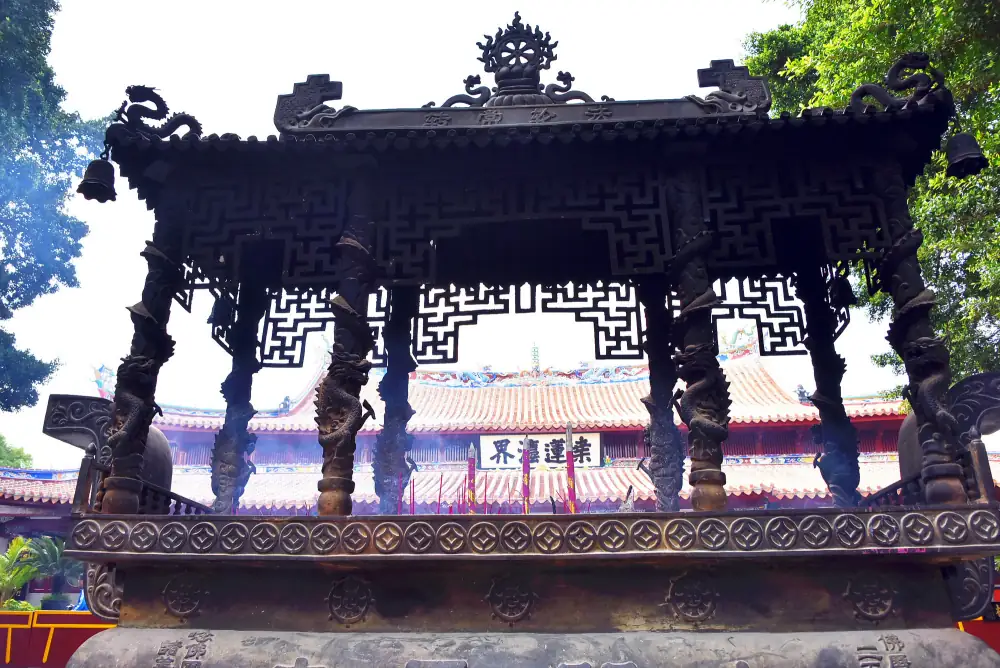
The most famous site in Fuzhou and one of the best-preserved urban heritage districts in China, Three Lanes and Seven Alleys (Sanfang Qixiang) occupies about 40 hectares in the heart of the old city. The district dates from the Tang Dynasty and reached its peak of cultural importance during the Song through Qing periods, when it housed the families of Fuzhou’s most prominent scholars, officials and merchants.
The Layout
The district takes its name from three north-south “lanes” (坊) running west of the main axis, and seven east-west “alleys” (巷) running east. Within this grid, the architecture consists primarily of two-story courtyard residences built in the distinctive Fuzhounese style: white-plastered walls, curved “saddle-back” rooflines and interior courtyards with carved wooden screens and decorative stone.
Key Sites Within the District
Lin Zexu Memorial Hall (林则徐纪念馆): Lin Zexu (1785–1850) was born in Fuzhou and grew up near here. The commissioner who ordered the destruction of British opium in Guangzhou in 1839 — triggering the First Opium War — is remembered as a national hero. The memorial museum is well-done and provides the Chinese perspective on the Opium War in considerable historical detail.
Shen Baozhen Former Residence (沈葆祯故居): The Qing Dynasty official who developed Fuzhou’s famous Mawei Shipyard — China’s first modern naval shipyard — lived in this well-preserved courtyard. Excellent example of scholar-official residential architecture.
Sanfang Qixiang Museum (三坊七巷历史文化博物馆): An overview of the district’s history and the families who lived here. Well-curated with English labeling.
Folk Customs Houses: Several preserved residences function as museums of Fuzhounese folk customs, craft demonstrations and domestic architecture.
Visiting the District
The main pedestrian axis through the district is always accessible. Many individual buildings charge small entry fees (¥10–¥30 each); a combined ticket (¥80–¥100, $11–$14) covers the main museums.
The district is best experienced on weekday mornings before tour groups arrive. The western peripheral lanes are less visited and more atmospherically residential.
Hot Springs (温泉文化)
Fuzhou is built on a geothermal zone and has been famous for its hot springs for over 1,700 years. The springs emerge naturally throughout the city, and Fuzhounese culture has integrated bathing into daily life to a degree unusual for a major modern Chinese city.
Downtown Hot Spring Areas
Several public bathhouses (汤屋) maintain original hot spring access in the Gulou and Taijiang districts. Entry from ¥30–¥80 ($4–$11) depending on facility standard. These are genuine neighbourhood bathhouses — you’ll be sharing with local regulars.
Hot Spring Park (温泉公园)
A public park in the city centre incorporating original spring access points and bathing facilities. The park is open daily; basic spring soaking from ¥30 ($4).
Hotel Hot Springs
Many Fuzhou hotels tap the geothermal system for room-temperature bathing and pool facilities. The Lakeside Hotel Fuzhou and several others advertise natural hot spring room-facilities; check descriptions carefully as some use heated tap water.
Best hot spring area: The Yihe Hot Spring Hotel in the Taijiang area has genuine geothermal access with a range of pool temperatures; from ¥150 ($21) for day bathing.
Buddhist and Taoist Temples
Fuzhou has an exceptionally rich temple tradition reflecting the region’s long connection with Buddhism, Mazu worship (the sea goddess) and Taoism.
Yongquan Temple (涌泉寺), Drum Mountain (鼓山): Fuzhou’s most important Buddhist temple, founded in 908 CE, located on Drum Mountain 8 km east of the city. The temple houses remarkable Song Dynasty ceramics collection and is active with daily ritual. The mountain walk to the temple passes cliff inscriptions dating from the Song period — over 400 inscribed poems and notes, one of the largest collections of cliff calligraphy in China. Tickets: ¥50 ($7). Bus or cable car from the city.
Xichan Temple (西禅寺): An active Chan Buddhist monastery within the city; less touristic than Yongquan, with a quieter devotional atmosphere. Free entry; respectful dress required.
White Pagoda (白塔, Baita) and Black Pagoda (乌塔, Wuta): Two Tang Dynasty pagodas standing about 400 metres apart in the city centre. The White Pagoda is the more photogenic; both are accessible as part of the Three Lanes and Seven Alleys area. Tickets: ¥10 ($1.4) each.
Fuzhou Cuisine
Fuzhounese cuisine is a distinct branch of the Fujian culinary tradition, characterised by:
- Very light seasoning relative to other Chinese regional cuisines
- Emphasis on the natural flavours of extremely fresh seafood
- Frequent use of distillers’ lees (糟) as a marinade or braising liquid
- Distinctive sour-sweet flavour profiles from red rice vinegar
Must-eat dishes:
- Buddha Jumps Over the Wall (佛跳墙): Fuzhou’s most famous dish — a complex slow-cooked casserole of abalone, sea cucumber, shark fin (now often replaced with mushroom), scallops, chicken and pork, braised for 48+ hours in Shaoxing wine. Expensive (¥150–¥300 per person, $21–$42), but iconic.
- Red lees pork (红糟肉): Pork belly marinated in red rice wine lees; distinctive red colour and complex flavour.
- Clear broth fish ball soup (鱼丸汤): Fuzhou fish balls are made from hand-beaten fish paste — light, bouncy and completely unlike the frozen variety. ¥10–¥15 a bowl.
- Flat rice noodles (线面): Long, thin fresh rice noodles always served in longevity-associated contexts; a Fuzhou birthday meal staple.
Where to eat: The Yizhong area (义中路) near the Three Lanes and Seven Alleys has good concentrations of traditional Fuzhounese restaurants.
Day Trips from Fuzhou
Mawei Shipyard and Naval Museum (马尾船政文化博物馆)
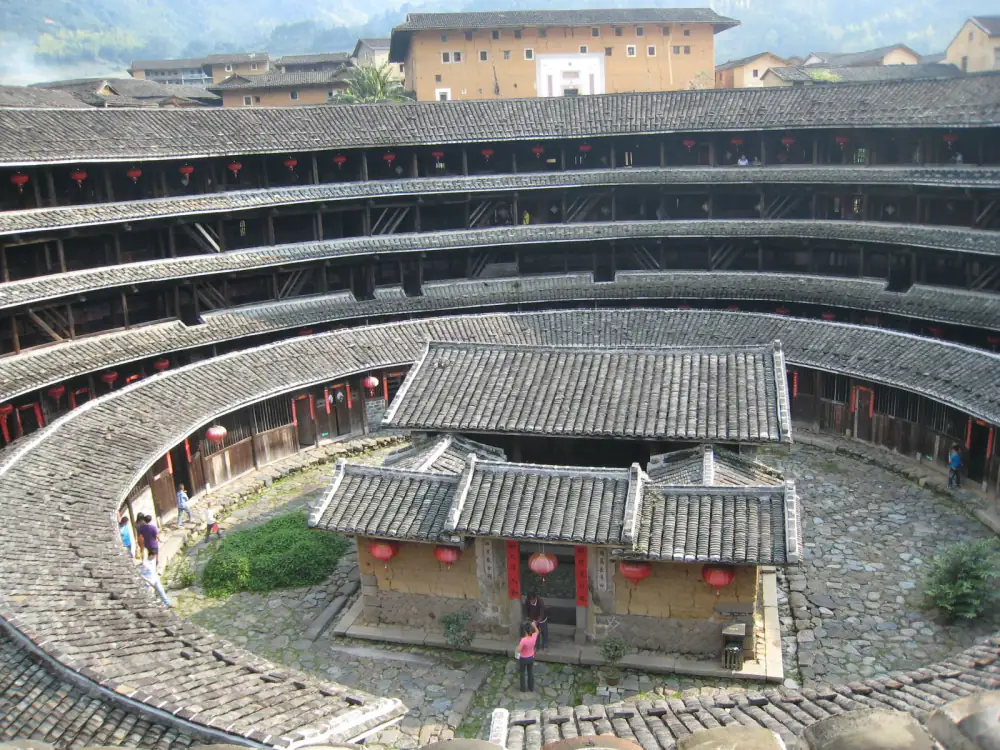
About 15 km from central Fuzhou, the Mawei district was the site of China’s first modern naval shipyard, established by Shen Baozhen in 1866 with French technical assistance. The original building complex has been converted into a museum covering China’s early naval modernisation — an important but often overlooked chapter of 19th-century Chinese history.
Tickets: ¥30 ($4). Bus from central Fuzhou, approximately 40 minutes.
Pingtan Island (平潭岛)
About 70 km south of Fuzhou, Pingtan is the closest point between mainland China and Taiwan (approximately 68 km of open water) and has been designated a cross-strait economic cooperation zone. The island has excellent beaches, dramatic coastal scenery (particularly the blue cave sea at Blue Eye Cave) and is being developed for tourism.
High-speed rail from Fuzhou South: Approximately 40 minutes. Island admission and specific attraction fees apply.
Getting to Fuzhou
- From Xiamen: High-speed rail Xiamen North to Fuzhou South, approximately 1.5 hours; tickets ¥95–¥145 ($13–$20)
- From Shanghai: High-speed rail Shanghai Hongqiao to Fuzhou approximately 3.5–4 hours; tickets ¥220–¥350 ($31–$49)
- From Guangzhou: High-speed rail approximately 4 hours; tickets ¥280–¥420 ($39–$59)
- By air: Fuzhou Changle International Airport (FOC) has extensive domestic and some international connections
Where to Stay
Budget (¥120–¥220 / $17–$31): Guesthouses near the Three Lanes and Seven Alleys area. Hanting Express near Fuzhou South Station is reliable.
Mid-range (¥300–¥550 / $42–$77): Marriott Fuzhou and Hilton Fuzhou are the standard business hotel options.
Upscale (¥700+ / $98+): The Ritz-Carlton Fuzhou opened recently and is the flagship luxury property.
Boutique/heritage: A few small courtyard hotels within the Three Lanes and Seven Alleys district offer atmospheric accommodation from ¥400–¥800/night ($56–$112).
Best Time to Visit
March–May: Mild weather (18–26°C), good for walking the historic district. Plum blossom season in late February-March.
September–November: Autumn is clear and comfortable; the best season for outdoor exploration.
Winter (December–February): Mild compared to northern China (10–18°C daytime); hot springs are most pleasurable in cooler weather.
Avoid: July–August for extreme heat and high typhoon risk.
Practical Tips
- Three Lanes and Seven Alleys: The main tourist axis is open 24 hours; the inner lanes are most atmospheric at dawn and after 20:00 when crowds thin.
- Hot spring etiquette: Traditional Fuzhou bathhouses are gender-separated; swimwear sometimes optional in single-gender spaces. Check specific venue rules.
- Buddha Jumps Over the Wall: The genuine version of this dish requires advance ordering (at least 24 hours) at any serious Fuzhounese restaurant. Ask your hotel concierge to arrange this; don’t expect to walk in and order.
Final Word
Fuzhou is a grown-up city for grown-up travellers — understated, historically profound, excellent for food and genuinely self-contained. The Three Lanes and Seven Alleys represent some of the finest Ming-Qing residential architecture in China, and the combination with hot spring culture and outstanding seafood makes it a memorable destination that fully justifies inclusion in any extended Fujian circuit.