
The tulou (土楼, “earth buildings”) of Fujian are among China’s most architecturally extraordinary structures: circular or rectangular fortress-mansions built from rammed earth, housing entire Hakka clans for centuries. The largest can accommodate 600+ people in a self-contained community with wells, ancestral halls, and grain stores within the walls. Since their UNESCO World Heritage designation in 2008, they’ve become one of southern China’s most rewarding destinations — but visiting them correctly requires knowing which clusters to go to and how to do it beyond the coach-tour experience.
Table of contents
Open Table of contents
Understanding Tulou Architecture
The purpose
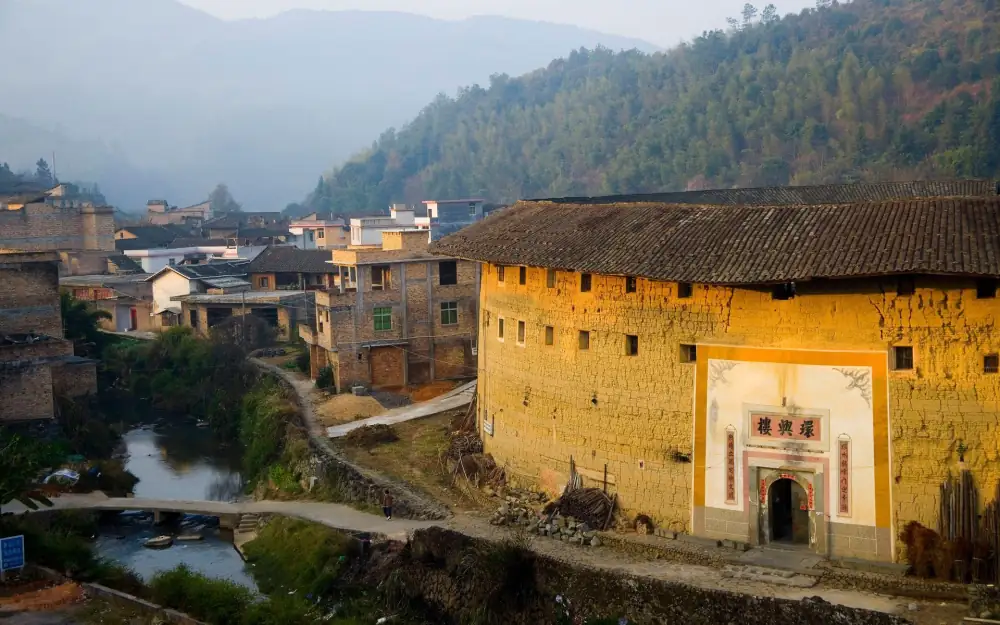
Tulou were defensive communal residences built by Hakka (客家, kè jiā) people — Han Chinese who migrated from north-central China to Fujian, Guangdong, and Jiangxi over multiple centuries. “Hakka” literally means “guest families” — migrants who arrived after the indigenous populations had settled.
As relative newcomers, Hakka communities built defensively: thick earthen walls (sometimes 1.5–2 metres), narrow ground-floor windows (no openings at all in the lowest floor — entry was through one heavily reinforced gate), and communal construction that housed an entire clan within one structure.
Key design features
Round tulou (圆楼): the most distinctive form, ranging from small (diameter 30m) to large (diameter 73m). Multiple floors of identical rooms arranged in rings around a central courtyard containing an ancestral hall and well(s).
Square tulou (方楼): rectangular form; often older; less photographed but often better-preserved interiors.
Structure: the outer wall is rammed earth (夯土, hāng tǔ) — a mixture of local subsoil, sand, water, and organic materials like rice husks and egg whites compacted in wooden forms. The internal structure is timber. Ground floor: grain storage and animal pens. Second floor: additional storage. Upper floors: residential rooms. Ancestral hall: the centrepiece of the courtyard.
Lifespan: well-maintained tulou last 500+ years. The oldest verified tulou date from the Ming Dynasty (15th century); the most recently built functional examples date from the 1970s.
The Best Tulou Clusters

Nanjing Tulou (南靖土楼)
Location: Nanjing County (南靖县), approximately 70km from Xiamen, 40km from Zhangzhou.
Why visit Nanjing: Contains the most photogenic individual tulou — particularly the famous “Four Archetypes” (四菜一汤, literally “four dishes and one soup”), a famous cluster of four circular tulou surrounding one smaller round tulou. Also contains Tianluokeng Scenic Area (田螺坑景区), the image used in almost all UNESCO Tulou promotional material.
Tianluokeng Scenic Area (田螺坑): A valley containing five tulou arranged in a pattern visible from the hillside viewing platform. The classic aerial-view photograph — three circular tulou, one oval tulou, and one square tulou — is taken from a purpose-built viewing pavilion. Very photographed; genuinely beautiful. Entrance fee included in area ticket (¥90–¥110).
Hekeng Tulou Cluster (河坑土楼群): 13 tulou dating from the Ming Dynasty in a valley still inhabited by the same family clans. Less visited than Tianluokeng; more atmospheric; residents still live traditional lives.
Yongding Tulou (永定土楼)
Location: Yongding District, approximately 120km from Xiamen.
Why visit Yongding: More tulou overall (the Hongkeng Village cluster has 13 tulou); larger tourist infrastructure; more convenient for guided tours. The Hakka culture museum (客家土楼民俗文化村) is here.
Chengqi Lou (承启楼): The largest circular tulou (diameter 73m, 4 rings, 72 rooms per floor). Inside, four rings of rooms surround a central ancestral hall — like a small city contained within circular walls. Still inhabited by 600+ people.
Which is better, Nanjing or Yongding?
| Nanjing | Yongding | |
|---|---|---|
| Iconic photography | Better (Tianluokeng) | Good |
| Tourist development | Moderate | Higher |
| Authentic living | Higher | Moderate |
| Accessibility | Closer to Xiamen | More remote |
| Accommodation in tulou | Available | Available |
Most independent travellers prefer Nanjing for its better photography conditions and slightly less commercial atmosphere.
Sleeping Inside a Tulou
This is the experience that separates the genuine tulou visit from a coach tour. Several tulou in both Nanjing and Yongding offer basic accommodation in rooms within the original buildings.
What to expect
- Rooms are genuine tulou residential rooms — typically 3–4 metres wide, with an internal window looking into the courtyard
- Basic furnishings: bed, traditional quilt, wooden floor, no private bathroom (shared facilities in the courtyard or outer building)
- Price: ¥80–¥150 per person per night including breakfast
- The experience: waking at 5:30am to the sound of the courtyard coming to life — chickens, the ancestral hall bell, morning chanting
Recommended tulou guesthouses
In Nanjing: Hekeng Cluster and the smaller Shuyang Cluster offer family-run accommodation. Contact: ask at the cluster entrance or book through Ctrip/Agoda under “土楼客栈”
In Yongding: Hongkeng Village has several established guesthouses within tulou; more organised and easier to book in advance.
Getting there without a tour
From Xiamen to Nanjing Tulou:
- Bus from Xiamen Songyu Bus Station (五通客运站) to Nanjing county seat (¥30, 1.5 hours)
- Then local bus or taxi to Tianluokeng area (20–30 minutes)
- Or: direct tourist bus from Xiamen North Bus Station on weekends
From Xiamen to Yongding:
- Bus from Xiamen to Longyan (龙岩) then bus to Yongding county seat (¥60, 2.5 hours total)
- Then local bus or taxi to Hongkeng Village
Hakka Food in Tulou Areas
The cuisine of the tulou areas reflects Hakka cooking traditions — practical, preserved, and highly flavoured:
Pork with preserved mustard greens (梅菜扣肉): braised pork belly with preserved Hakka mustard greens; the most iconic Hakka dish.
Salt-baked chicken (盐焗鸡): a Hakka speciality using an ancient preservation technique — chicken baked in hot salt. Moist, golden, fragrant.
Rice wine chicken (客家娘酒鸡): chicken braised in locally-made rice wine; warming and aromatic.
Bamboo shoots: fresh and preserved bamboo in multiple preparations; abundant in the mountain areas.
Most tulou accommodation includes meals cooked by the host family. This is strongly recommended — authentic home-cooking in a traditional Hakka courtyard kitchen.
Practical Information
Combined entrance ticket: Both Nanjing and Yongding have area admission tickets covering multiple tulou clusters. Nanjing: ¥90–¥110. Yongding: ¥120–¥150.
Best time to visit:
- Spring (March–May): green hills, blooming flowers around the tulou valleys; frequent mist creates atmospheric conditions
- Autumn (September–November): clear skies; rice harvest season adds colour
- Avoid: Golden Week (October 1–7 national holiday) when crowds are extreme
Photography notes:
- The Tianluokeng viewpoint is best at dawn — arrive 30 minutes before sunrise for the best light and fewest people
- Interior tulou photography is spectacular at any time; the concentric ring architecture photographs well even in overcast conditions
Last updated: May 2026 · Tulou tickets and transport options may change seasonally.