
In 1271 AD, when Marco Polo called Zayton (his name for Quanzhou) “the greatest port in the world,” he was exaggerating, but not by much. Quanzhou at its height in the Song and Yuan dynasties was among the most commercially active ports on earth — the eastern terminus of the Maritime Silk Road, where Arab, Persian, Indian, and Southeast Asian merchants unloaded spices, ivory, and incense, and loaded Chinese porcelain, silk, and tea.
The result of centuries of cosmopolitan trade was a city where practically every major religion in the medieval world left physical traces. Quanzhou has the remains of a mosque (the Qingjing Mosque, built in 1009 AD — one of the oldest in China), a Hindu temple with Tamil Shiva carvings, a Manichean temple, multiple Buddhist monasteries, and Taoist temples. This diversity was recognized by UNESCO when the city was inscribed as a World Heritage Site in 2021 under the title “Quanzhou: Emporium of the World in Song-Yuan China.”
Table of contents
Open Table of contents
- Kaiyuan Temple (开元寺)
- Qingjing Mosque (清净寺)
- Manyue Mountain Ashab Tomb (灵山圣墓)
- Tamil Hindu Carvings (番佛寺遗址)
- Quanzhou Maritime Museum (泉州海外交通史博物馆)
- Chongwu Ancient Walled Town (崇武古城)
- Huian Stone Sculpture (惠安石雕)
- Getting to Quanzhou
- Walking the Old City
- Where to Eat
- Combining Quanzhou with Xiamen and Fujian
Kaiyuan Temple (开元寺)
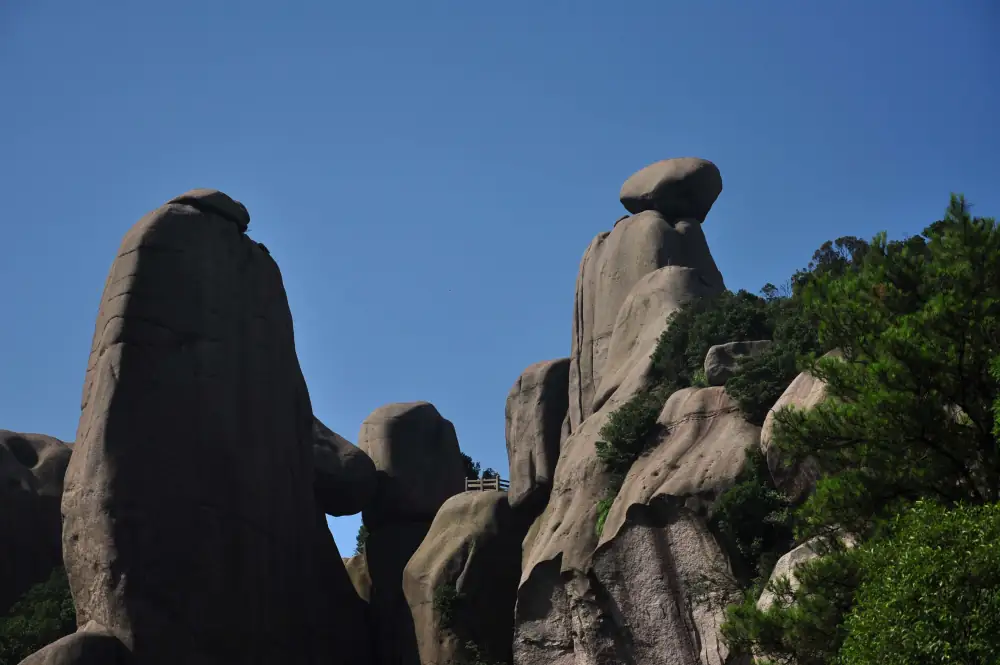
Kaiyuan Temple is the largest and most famous Buddhist temple in Fujian, founded in 686 AD during the Tang Dynasty. The complex covers 7.8 hectares and is anchored by a Great Hall of stunning scale, flanked by two stone pagodas — the East Tower (Zhenguo Ta) and the West Tower (Renshou Ta) — that are the most recognizable landmark in Quanzhou.
Opening hours: 7:00am–7:00pm
Entry fee: ¥10 per person
Location: Xijie, central Quanzhou
The two stone pagodas are remarkable: 48 and 44 metres tall respectively, built in the Song Dynasty from granite, and intact enough that their intricate relief panels depicting Buddhist figures are still clearly readable after 700+ years. The stone carving quality is exceptional.
The Great Hall houses five large gilded Buddhas and, fascinatingly, columns whose capitals are carved with stone winged angels — an intrusion of Western (possibly Roman or Byzantine via Silk Road) artistic imagery into a Chinese Buddhist temple, reflecting Quanzhou’s medieval cosmopolitan connections.
The Mulberry Tree: According to legend, the Tang Dynasty Emperor Taizong saw a mulberry tree transform into a lotus flower in a dream, prompting the temple’s construction. The grounds contain ancient mulberry trees still living.
Qingjing Mosque (清净寺)
The Qingjing Mosque, founded in 1009 AD, is one of the oldest mosques in China. Built entirely in the Arabian style (unlike later Chinese mosques which adopted Chinese architectural forms), it uses local grey granite in a form that could have been transplanted from the Middle East.
Opening hours: 8:00am–6:00pm
Entry fee: ¥3 per person
Location: Tumen Street, central Quanzhou
The main hall is now roofless — the structure collapsed in an earthquake centuries ago — but the remaining walls and archways, covered in Arabic calligraphy carvings, give a vivid sense of the original building’s scale and ambition. The entrance gate is the best-preserved section.
Active worship: The mosque is still in use by Quanzhou’s Hui Muslim community. A smaller contemporary prayer hall was built alongside the historic ruins.
Manyue Mountain Ashab Tomb (灵山圣墓)
About 3km east of the city centre, the tomb of two of the Prophet Muhammad’s companions who are said to have brought Islam to China in 628 AD. Regardless of the historicity of this specific claim, the site has been a pilgrimage destination for Chinese Muslims for over a millennium, and the ancient cemetery behind the tombs is genuine.
Entry: Free
Worth the short trip for anyone interested in the history of Islam in China
Tamil Hindu Carvings (番佛寺遗址)
Scattered throughout the city and incorporated into various buildings are stone carvings in South Indian (Tamil Dravidian) style — Shiva lingas, lion figures, and temple column pieces from a Hindu temple that stood in Quanzhou’s medieval Indian merchant quarter. Many are now in the Quanzhou Maritime Museum.
The carvings are evidence of a genuine Indian community that lived and worshipped in Quanzhou during the Song and Yuan periods.
Quanzhou Maritime Museum (泉州海外交通史博物馆)
The Maritime Museum tells the story of Quanzhou’s role as the Maritime Silk Road hub. The collection includes:
- Quanzhou Song Dynasty ship: An excavated wooden merchant vessel from the Song Dynasty, over 24 metres long, found buried in Quanzhou Bay in 1974. The ship and its cargo are on display — the most tangible surviving artifact of the Medieval Quanzhou trade.
- Foreign religious artifact collection: Hindu temple carvings, Islamic inscriptions, Syriac Christian tombstones — the physical evidence of Quanzhou’s multi-religious medieval community.
- Historical trade goods: Samples of spices, textiles, and ceramics from the trading routes.
Opening hours: 9:00am–5:30pm, closed Mondays
Entry: Free
Location: East Lake Park area
This is one of the best specialist history museums in Fujian and essential context for understanding the UNESCO designation.
Chongwu Ancient Walled Town (崇武古城)
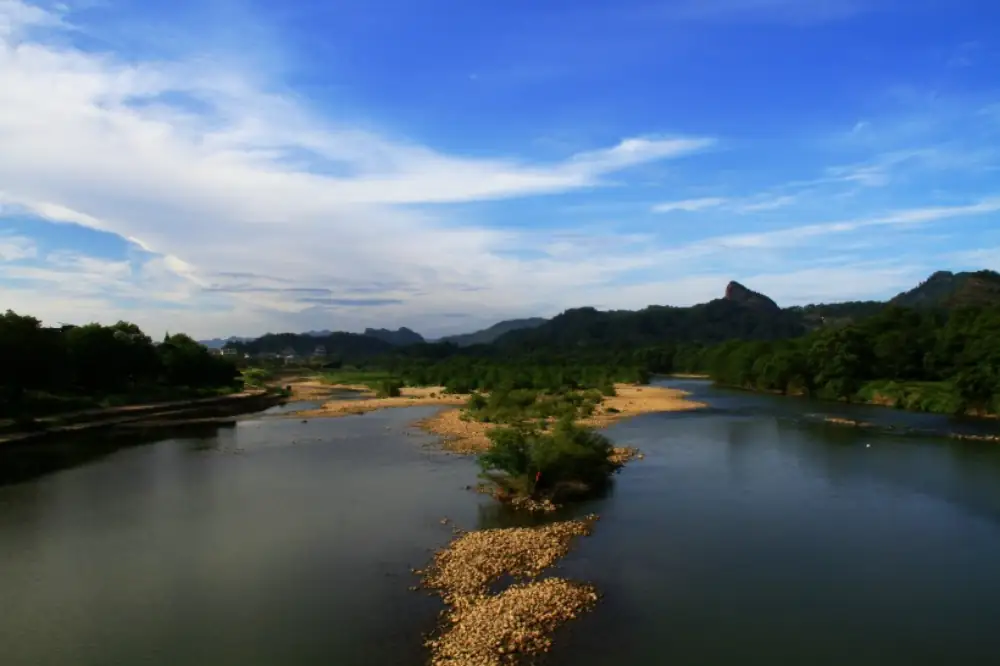
About 40km east of Quanzhou, Chongwu is a fully intact Ming Dynasty coastal defense town with a 2.4km wall enclosing granite-built streets. It was built in 1384 specifically to defend against Japanese pirate raids.
Unique feature: This is still a living town inside the walls — local people fish, cook, and live in the historic buildings. It’s one of the least touristy walled towns in China.
Entry fee: ¥40 per person (wall access)
The Huian Women (惠安女) from this area have a distinctive traditional costume — bright yellow headscarf, silver-embroidered blouse, and wide trousers — that photographers have documented for decades. The costume is still worn daily by older women.
Huian Stone Sculpture (惠安石雕)
Huian County, adjacent to Quanzhou, has a 1,600-year tradition of stone carving. The granite-carving craftspeople here are responsible for much of the stonework in temples across Southeast Asia. Walking through the Chongwu area, you’ll pass stone-carving workshops where enormous granite figures are being worked.
For buyers: Huian stone carving products — from decorative architectural pieces to memorial figures — are available at markets throughout the area. Pieces range from a few hundred yuan for small items to tens of thousands for large commissioned work.
Getting to Quanzhou
From Xiamen: High-speed train, about 30–40 minutes, ¥35–55. The most practical connection.
From Fuzhou: High-speed train, about 1 hour, ¥60–90.
From Shanghai: About 4 hours by high-speed, ¥250–330.
Quanzhou’s high-speed station is Quanzhou Station (泉州站) — well connected to the city centre by city bus or taxi (¥15–25).
Walking the Old City
The best way to experience Quanzhou is on foot through the old city street grid.
Tumen Street (涂门街): The historic street connecting the Qingjing Mosque area to other key sites. Still a working commercial street with traditional shops.
Zhongshan Road (中山路): Colonial-era arcade street with overhanging second floors providing shade. Good for independent shops and food.
West Street (西街): Running past Kaiyuan Temple; one of the oldest commercial streets in Quanzhou with excellent architecture.
Rentou Lane and adjacent alleys: Old residential lanes with late Qing and Republican-era courtyard houses; quieter than the main streets.
Where to Eat
Quanzhou food is Fujian coastal cuisine — sweet and sour influences, excellent seafood, and famous for oyster-based dishes.
Local specialties:
- Oyster cake (蚝仔煎): Oysters with egg and sweet potato starch, pan-fried; ¥8–15 from street stalls
- Satay noodles (沙茶面): Quanzhou’s version of Southeast Asian satay in noodle form; distinctly flavoured with peanut and spice; ¥12–20
- Bā bǎo fàn (八宝饭): Eight-treasure rice pudding, a festive sweet dish
- Seafood at the night market: Gulou night market area has good fresh seafood stalls
Budget meal: Street breakfast along West Street near Kaiyuan Temple — rice congee, fried turnip cake, and oyster omelette for ¥15–25.
Combining Quanzhou with Xiamen and Fujian
The Fujian coastal circuit of Quanzhou + Xiamen + Fuzhou covers three distinct cities with their own distinct identities within 2 hours of each other by high-speed rail. Add Wuyuan in northern Jiangxi (3 hours from Quanzhou by HSR) for a comprehensive southeast China itinerary.
Recommended: 2 days in Quanzhou, 2 days in Xiamen, 1–2 days in the Fujian Tulou area (土楼, the circular earthen buildings of the Hakka people, about 2 hours from Xiamen).