
Confucius was born in Qufu in 551 BC, taught here, and died here in 479 BC. His ideas about society, governance, family relationships, and personal cultivation shaped Chinese civilization for 2,500 years — and through China’s cultural influence, shaped much of East and Southeast Asia. The site of his birth and family home became one of the most sacred and carefully maintained places in China.
The “Three Kongs” (三孔) — the Confucius Temple, Kong Family Mansion, and Confucius Cemetery — form a UNESCO World Heritage Site of extraordinary size and continuity. The family that descends from Confucius (the Kong family) maintained these sites for 2,500 years with imperial patronage. The 77th and 78th generation descendants are alive today.
Table of contents
Open Table of contents
The Confucius Temple (孔庙)
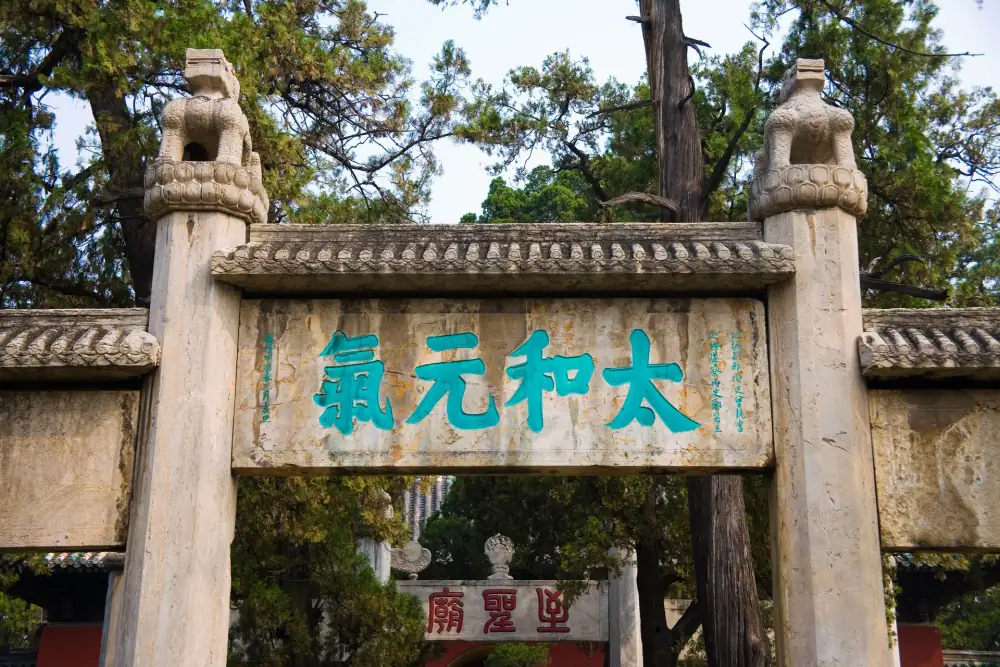
The Confucius Temple (Kong Miao) is one of the largest temple complexes in China, covering 22 hectares and containing 466 rooms. It was founded in 478 BC — the year after Confucius died — when Duke Ai of Lu converted Confucius’s house into a shrine. It has been expanded and rebuilt by practically every subsequent Chinese dynasty.
Opening hours: 8:00am–6:00pm (summer), 8:30am–5:30pm (winter)
Entry fee: ¥90 per person (or ¥150 combined ticket for all Three Kongs)
Combined ticket (strongly recommended): ¥150 for Temple + Mansion + Cemetery
What to See
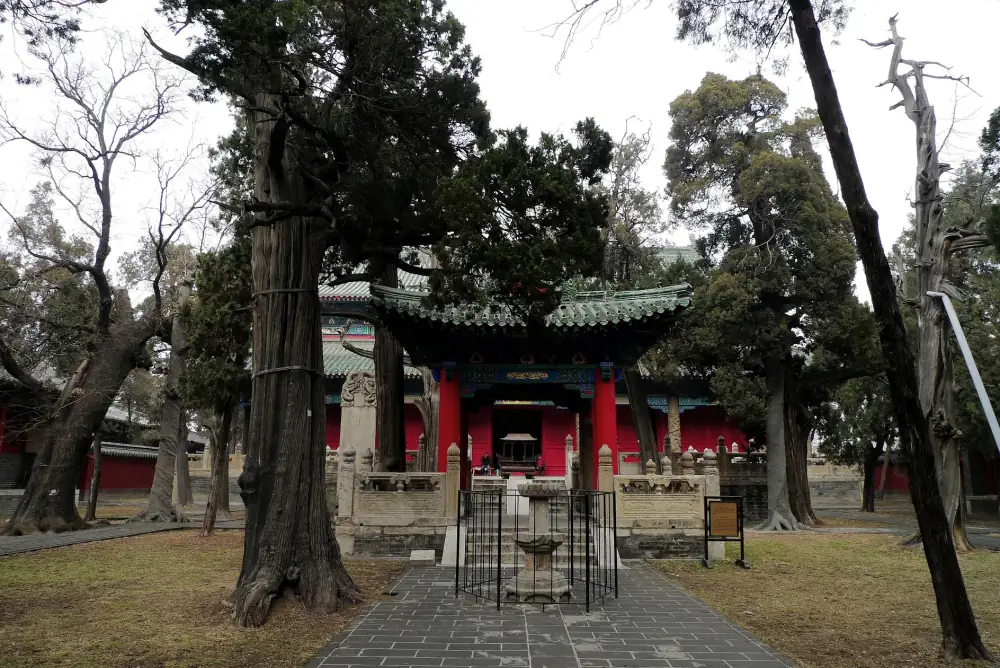
Dacheng Hall (大成殿): The main hall of the complex, rebuilt in 1724 during the Qing Dynasty. At 32 metres high, it’s one of the largest surviving timber-frame structures in China. The 28 dragon-carved stone columns supporting the front portico are the finest of their type anywhere — each column carved with paired dragons ascending through clouds, unique to Qufu and not replicated even in Beijing’s Forbidden City.
Apricot Altar (杏坛): A pavilion marking the spot where Confucius is said to have taught his students under apricot trees. The current structure is Song Dynasty, but the site is ancient.
Thirteen Stele Pavilions: An extraordinary collection of stele (stone inscribed tablets) from every dynasty, including Tang, Song, Yuan, Ming, and Qing emperors who visited to pay their respects. The imperial calligraphy here is exceptional.
Kuiwen Pavilion (奎文阁): A 2-story library pavilion from the Song Dynasty (originally), rebuilt in 1504. Housed the vast collection of books and documents donated to the temple by imperial courts.
The scale of the temple requires 2–3 hours to do it justice. Walking the full length of the main axis from the south entrance to Dacheng Hall covers about 1km.
Kong Family Mansion (孔府)
Immediately adjacent to the Confucius Temple, the Kong Family Mansion is the former home of the direct descendants of Confucius. With 463 rooms across multiple courtyards, it is the largest and best-preserved example of aristocratic residence in China.
The Kong family held the title of “Duke Yansheng” — the most senior hereditary noble title in China, second only to the imperial family — from the Han Dynasty through to the 20th century. The mansion reflects this: it has official and residential sections, guest quarters, gardens, and a section once used for conducting Confucian rituals.
Entry: Included in combined ticket
What to See:
- Front Ceremonial Halls: Where official Confucian rituals were conducted
- Inner Residential Quarters: The private rooms of the Kongs across generations
- The Back Garden (花园): One of the most beautiful private gardens in Shandong, planted with centenarian pine and magnolia
- The Kitchen and Storerooms: A glimpse into the domestic management of a massive aristocratic household
The mansion gives a fascinating look at how Confucian ideas about hierarchy, ceremony, and family were embodied in physical space — the layout itself expresses the philosophy.
Confucius Cemetery (孔林)
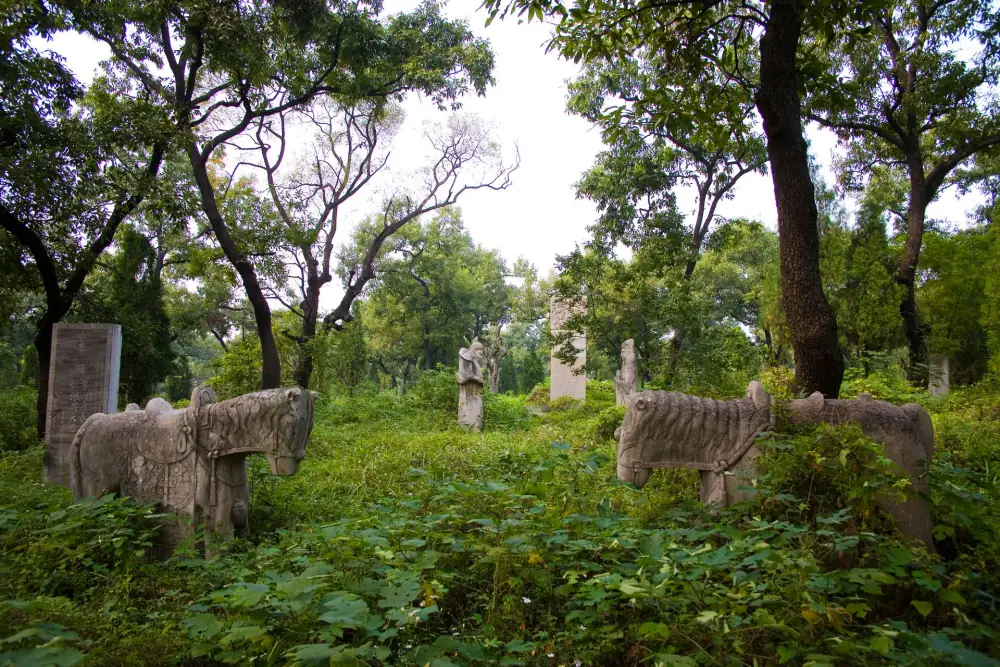
The Confucius Cemetery (Kong Lin) is a walled forest cemetery of about 200 hectares that has served as the burial ground for the Kong family for 2,500 years. It is the largest family cemetery in the world and contains over 100,000 graves of Confucius’s descendants.
Entry: Included in combined ticket
Opening hours: 8:00am–5:30pm
Getting there: 1.5km north of the city centre; walk (20 minutes), bike (10 minutes), or cycle-rickshaw (¥10)
The cemetery is a genuine forest — 20,000 trees including ancient cypresses, pine, and elms, many centuries old. The paths between the tombs wind through deep shade. The effect is completely different from the architectural grandeur of the Temple and Mansion.
Confucius’s Tomb: The central attraction is simple — a grass mound surrounded by a low wall, with a stone stele reading “Tomb of the Supreme Sage and Most Exalted Teacher Kong” in calligraphy. The simplicity is striking given the complexity of the buildings built in his honor.
72 Disciples’ Area: Near the main tomb, the graves of Confucius’s closest disciples cluster around the sage’s burial site.
Spring and Autumn atmosphere: Visit in autumn when the leaves turn and the cemetery becomes genuinely beautiful. In spring, the ground cover of wild flowers adds colour.
Confucius’s Birthplace (尼山)
About 30km southeast of Qufu, Nishan is the hill where Confucius was born (or where his parents prayed for a child — accounts vary). The Nishan Sacred Site includes an ancient temple, Academy, and a relatively new large-scale cultural complex opened in 2019.
The large Nishan Confucius Temple (尼山孔庙) complex is worth visiting if you want to see a modern interpretation of Confucian architecture at grand scale.
Entry: ¥60 per person
Getting there: Buses from Qufu, about 1 hour, or taxi (¥60–80)
The Confucius International Cultural Festival (孔子文化节)
Every year in late September, Qufu holds a formal ceremony to mark the anniversary of Confucius’s birth (traditionally September 28). The ceremony includes costumed rites, music on ancient instruments, and performances in the Confucius Temple. It draws scholars, diplomats, and visitors from across East Asia.
If your dates coincide, it’s worth trying to attend — the ceremonies have a formality and gravity that’s unusual in modern China’s cultural events.
Getting to Qufu
From Jinan (provincial capital): High-speed train to Qufu East Station (曲阜东站), about 35–50 minutes, ¥50–75.
From Beijing: High-speed to Qufu East, about 2–2.5 hours, ¥180–230.
From Taishan/Tai’an: Bus from Tai’an Bus Station to Qufu, about 1.5 hours, ¥30–40. Or take the high-speed from Tai’an Station to Qufu East (about 20 minutes, ¥35).
From Shanghai: High-speed to Qufu East via Jinan or direct, about 3–3.5 hours, ¥200–280.
Qufu East Station is about 15km from the city centre — take the tourist shuttle bus (¥15, runs between the station and the Three Kongs area) or a taxi (¥25–35).
How Long Do You Need?
Day trip from Jinan or Tai’an: Feasible for the Three Kongs alone, but it’s a lot of walking in a short time.
Overnight stay: Recommended. The evening in Qufu — when the day-trippers have left and the town is quiet — has a different atmosphere, and you can walk the cemetery early morning when it’s at its best.
Two nights: Allows for Nishan and a leisurely pace through all three sites.
Where to Stay and Eat
Qufu is a small town (about 700,000 people) with accommodation clustered near the Three Kongs area.
Hotels: Mid-range options from ¥200–450/night. Queli Hotel (阙里宾舍) is the most famous local hotel — ¥400–800/night, right next to the Confucius Temple, and a genuinely historic building.
Food: Look for restaurants serving Confucian cuisine (孔府菜) — a formal style of cooking developed for the Kong family’s banquets, featuring intricate presentation and traditional Shandong flavors. Full banquet ¥100–200 per person at specialized restaurants. Simpler Shandong food (braised pork, pancakes with vegetables) available everywhere for ¥15–40.