
Cycling Yangshuo: China’s Most Beautiful Bike Ride
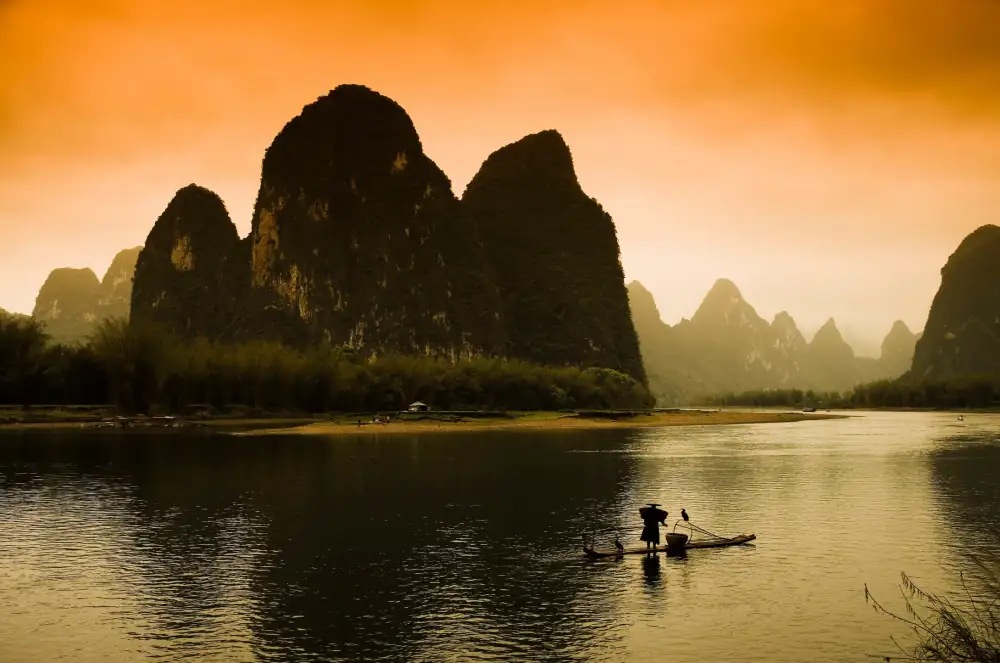
Yangshuo (阳朔) in Guangxi province is consistently ranked among the world’s best cycling destinations, and the reputation is entirely deserved. The cycling is not challenging — the terrain around the Yulong River valley is almost flat, the distances between villages are short, and the road surfaces are mostly paved. What makes it extraordinary is the scenery: every pedal stroke takes you through a landscape of towering karst limestone peaks, emerald rice paddies, bamboo groves, and traditional farmsteads.
Most visitors see this landscape from the tourist boat on the Li River. Cycling gives you something the boats can’t: the ability to stop whenever you want, turn down any lane, and be present in the landscape rather than just passing through it.
The Bicycle Options
Where to rent bikes in Yangshuo: Along West Street (西街) and the streets nearby, dozens of rental shops offer bicycles. Quality ranges widely.
What to rent:
- Basic mountain bike: ¥20-40/day. Functional for most routes but heavy and poorly maintained at the cheaper end.
- Quality hybrid/mountain bike: ¥50-80/day. Worth the extra cost for longer rides; look for shops that actually maintain their bikes.
- Electric mountain bike (e-bike): ¥80-150/day. Useful in hilly terrain and for those who want to cover more distance with less effort. The additional range changes what’s possible in a day.
- Road bike: Occasionally available; not necessary for most Yangshuo routes (the “roads” are often unpaved farm tracks that destroy road bike tires).
Quality check before leaving: Test the brakes carefully. Spin both wheels to check for wobble. Test gear shifting through the full range. A bike that fails in the countryside is a long hot walk back.
Bring: Water (2+ liters for any serious day ride), sunscreen, snacks, a basic repair kit if you know how to use it, and a phone with offline maps downloaded.
Route 1: Yulong River Path (玉龙河骑行道)
Distance: 20-35 km round trip (depending on how far you go) Difficulty: Easy Time: 3-5 hours with stops
The Yulong River cycling path is the most popular and beautiful ride in the Yangshuo area. The path follows the west bank of the Yulong River through a series of small villages, bamboo-shaded sections, and viewpoints over the karst peaks.
Starting point: Dragon Bridge (大榕树/遇龙桥) — the most common starting point, about 10 km from West Street by road. You can cycle there or take a taxi.
What you’ll pass:
- Dragon Bridge (遇龙桥): A beautifully preserved Song dynasty stone arch bridge over the Yulong River. The karst backdrop makes this one of Yangshuo’s most photographed spots.
- Bamboo Rafting section: You’ll cycle past the stretches of river used for bamboo raft tourism. The intersection of cycling path and river is a wonderful place to watch the raft operations.
- Xiangui Village (相桂村): A traditional Zhuang minority farming village. The transition between the cultivated fields and the village edge is one of those visual moments that Yangshuo delivers again and again.
- Fuli Town (福利): If you continue far enough (about 17 km from Yangshuo), Fuli is a small town famous for its fan-painting tradition. Artists paint Chinese landscape scenes on paper fans — the process is fascinating to watch.
The return: Cycling back the same way is pleasant (the scenery works in both directions); alternatively, you can arrange a taxi back from further points.
Route 2: Moon Hill and Back Country Villages
Distance: 25-40 km round trip Difficulty: Moderate (one significant climb) Time: 4-6 hours
Moon Hill (月亮山, Yuèliàng Shān) is a distinctive karst peak with a natural arch near its summit, visible for kilometers in every direction. Getting there requires more climbing than the Yulong River route, but the variety of scenery and the less-touristed back-country sections make this the more adventurous option.
The climb to Moon Hill base: A genuine workout — steady uphill for about 3 km on a paved road. The summit trail itself (separate from the bike route) involves significant stair climbing if you choose to ascend.
Around Moon Hill: The farming villages in the valley behind Moon Hill see far fewer tourists than the river valley. Families working in fields, water buffalo at rest, and the deep quiet of rural China make this section feel like stepping into an older China.
Black Buddha Caves (黑佛洞/大榕树景区): The area near Moon Hill has several cave systems and the famous banyan tree (大榕树) that appears in the Butterfly Lovers legend. The banyan is approximately 1,400 years old and photogenic in a maximally Chinese-landscape way.
Route 3: Xingping to Guilin Via Countryside
Distance: 65 km point-to-point (Xingping to Guilin) Difficulty: Moderate to difficult Time: Full day (7-9 hours)
For more serious cyclists, the road from Xingping (兴坪) along the Li River back toward Guilin is one of China’s great cycling days — rural roads through the most dramatic section of the Li River karst landscape.
Xingping: The small town of Xingping, 27 km north of Yangshuo, sits in the middle of the Li River’s most spectacular karst scenery. The view from Xingping’s Old Wharf (老码头) of the “nine horses fresco” hill formation (九马画山) was used on China’s 20-yuan banknote.
Getting to Xingping: Bus from Yangshuo (frequent, ¥10, 40 minutes). Cycling all the way to Xingping is possible but adds significant distance.
The cycling route from Xingping: The road north of Xingping follows the river through several traditional villages — Liugong Village (刘公村), Yangtian Village (仰天村) — before eventually reaching Guilin. Most cyclists take a bus or taxi for the final section.
Practical Cycling Tips
Road Conditions
Yangshuo’s cycling infrastructure is better than it looks — most of the popular paths have been paved in recent years. However:
- Farm tracks and village lanes are often unpaved; a hardtail mountain bike or hybrid handles them fine
- Some paved roads have been damaged by agricultural vehicles and have rough sections
- The main tourist cycling paths (particularly the Yulong River path) are well-maintained
Traffic
- Main roads (county-level and above): Moderate traffic; cars and trucks. Be alert.
- Scenic cycling paths: Minimal motor traffic; mainly cyclists and the occasional motorbike
- Village lanes: Slow-moving local traffic, free-ranging chickens, and occasional tractors
Weather
Yangshuo’s subtropical climate means:
- Summer (June-September): Hot and humid. Start early (6-7 AM) and return by noon. The afternoon heat is genuinely dangerous for extended cycling.
- Autumn (October-November): Ideal cycling weather — warm days, cool evenings, clear skies
- Spring (March-May): Good temperature; more rain than autumn. Wet roads require careful braking.
- Winter (December-February): Cool and occasionally cold (5-12°C); possible fog. The reduced crowds make this an excellent season for experienced cyclists.
Navigation
Download offline maps before leaving (MAPS.ME has good Yangshuo coverage; Baidu Maps is excellent for China). The cycling paths are well-marked in the main tourist areas; rural sections require more attention.
A GPS device or phone mounted on the handlebars is ideal; smartphone screen glare can be difficult in bright sun.
Food and Water on the Routes
Water: Fill up your bottles at the start and at restaurants/convenience stores in villages. Water is available at most inhabited points along popular routes. Carry at minimum 2 liters in summer, 1.5 liters in cooler months.
Food: Rural villages along cycling routes typically have small restaurants (家常菜, jiā cháng cài — home cooking) serving simple Guilin rice noodles, stir-fried vegetables, and rice. Prices are very low (¥20-40 for a full meal). Point to what neighboring tables are eating if the menu is Chinese-only.
Local specialties: Look for local snacks sold at village stores — sesame rice cakes (芝麻糍粑), local fruit (including fresh pomelo in autumn), and cold sweetened tofu (豆腐花).
Guided vs. Self-Guided Cycling
Self-guided is perfectly feasible for most routes described here and is the most rewarding experience — you set your own pace, stop wherever interesting, and make spontaneous decisions.
Guided tours make sense for:
- Extended routes into less-mapped territory
- Riders not confident with navigation
- Groups where ability levels vary significantly
- Trips that combine cycling with specific cultural experiences (village visits, traditional cooking, local guide commentary)
Multiple operators in Yangshuo offer half-day and full-day guided cycling with various focus areas. Prices: ¥150-300 per person including bike rental and guide.
Yangshuo’s cycling doesn’t ask much of you physically — but it gives back in proportion to your engagement with it. The more slowly you ride, the more you stop, and the more you turn down the unplanned side lane, the more this landscape reveals itself. Plan for less distance than you think you need. You’ll be glad you did.