
Table of contents
Open Table of contents
Day 1: Guiyang City — Jiaxiu Pavilion, Qingyan Temple, Evening Night Market
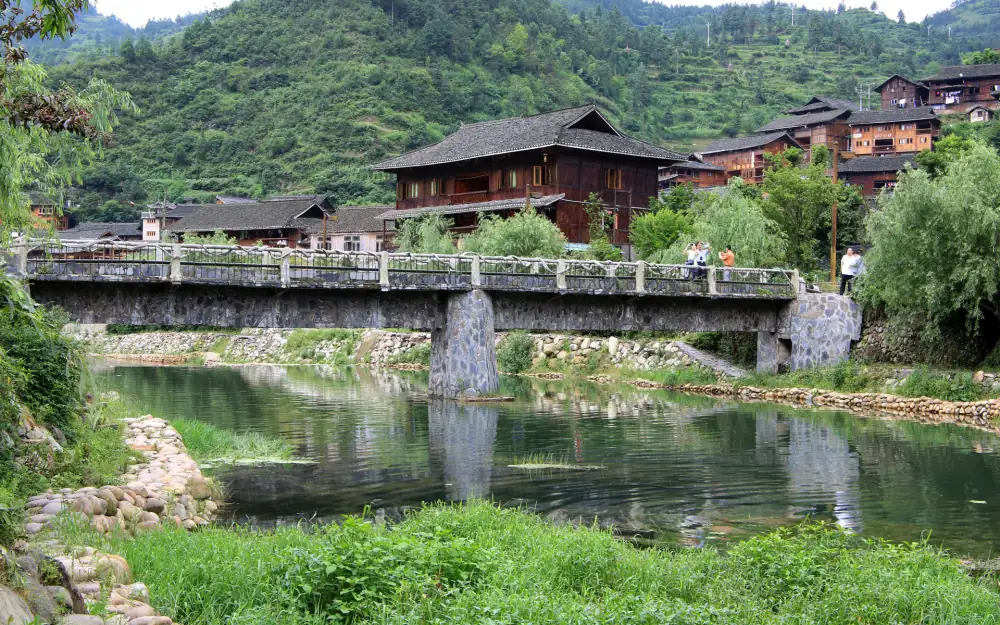
Morning: Jiaxiu Pavilion and Nanming River Walk (8:30am–12:00pm)
The Jiaxiu Pavilion (甲秀楼) is Guiyang’s symbol — a three-story pavilion perched on a natural rock in the middle of the Nanming River, connected to both banks by stone bridge arches. Built in 1598 and rebuilt multiple times, it’s the oldest surviving structure in Guiyang and one of the most iconic buildings in Guizhou.
The pavilion is best seen in the morning when tour groups are absent. Walk the Nanming River embankment in both directions from the pavilion — the old bridge arches and the combination of water, rock, and traditional architecture give several good photography compositions.
Entry: ¥20/person. Open 8am–6pm.
Adjacent Cuiwei Garden (翠微园): The Ming-Qing garden complex adjacent to Jiaxiu Pavilion has several temple halls and is worth exploring — less famous than the pavilion but atmospheric and worth an hour.
Mid-Morning: Urban Walking — Zhonghua Middle Road (中华中路)
Guiyang’s main historic commercial street has several late-Qing and Republican-era buildings surviving among the modernization. The area around the old Post Office building and the early 20th century bank buildings shows the city’s commercial past.
The Guiyang Museum (贵阳市博物馆) near Guiyu Road has good contextual material on Miao, Buyi, and Dong ethnic cultures. Free entry.
Lunch: Sour Soup Fish (酸汤鱼) — The Guizhou Signature (12:30pm)
Guizhou cuisine is built around two flavors: sourness (酸) and spiciness (辣). The sourness doesn’t come from vinegar but from naturally fermented ingredients — fermented chili, fermented tomatoes, and the distinctive sour soup made from wild vine tomatoes (毛辣角) that gives the regional cooking its unique character.
Sour Soup Fish: A whole freshwater fish (typically Guizhou’s clear-mountain fish) cooked in a clear, slightly sour broth with Miao-style fermented red pepper. The broth is tangy and complex; the fish is tender. This is the dish to try in Guiyang. ¥60–100 depending on fish size.
Best area for lunch: The Qingyan Ancient Town Road area (青岩古镇方向) or the local restaurants around the Guiyang University area.
Afternoon: Guiyang’s Local Markets (2:30–5:30pm)
Huaxi Wetland Grassland Area (花溪湿地公园): 20km south of the city center, a pleasant natural escape popular with locals for afternoon walks and picnics. Beautiful in spring (March–April) when the peach trees bloom.
Yunyan Road crafts area: Traditional Miao silver jewelry, embroidery, and batik cloth are sold in craft shops near the Yunyan Road area. Prices are reasonable for genuine handwork — silver Miao earrings from ¥80, embroidered cushion covers from ¥150.
Evening: Qianling Park (黔灵公园) and Night Market (6:00–10:00pm)
Qianling Mountain Park, 15 minutes from the city center, has macaque monkeys, old Buddhist temple buildings, and a lake at its center. The evening light on the lake is pleasant. A 1-hour visit is enough.
Night market dinner: The Qingyan Road area (青岩路) evening food street runs from 5pm–midnight and is one of Guiyang’s best night food concentrations:
- Guiyang tofu (贵阳豆腐果): Hollow cubes of tofu grilled over charcoal and filled with fermented chili and sesame sauce. ¥1–2 each. The definitive Guiyang street snack.
- Spicy tripe (辣椒凉粉): Cold starch noodles (凉粉) with chili sauce. ¥6–10.
- Fried noodles (炒粉): Thick rice noodles stir-fried with fermented ingredients. ¥12–18.
Day 2: Qingyan Ancient Town and Village Market (Full Day)
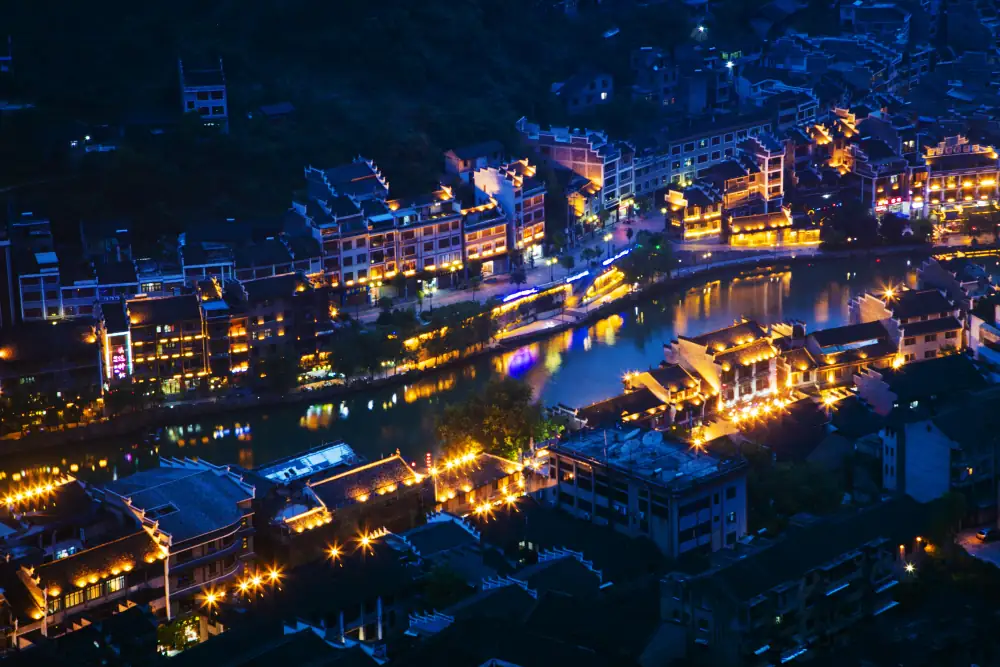
Getting to Qingyan
Qingyan Ancient Town (青岩古镇) is 30km south of central Guiyang — an easy day trip.
By bus: From Guiyang South Bus Station (花溪汽车站), buses run frequently to Qingyan, about 40 minutes, ¥6.
By taxi/DiDi: 45–60 minutes, ¥70–90 each way.
Entry: ¥90/person for the main scenic area (covers most major sites within the town).
Qingyan Ancient Town: What Makes It Special
Qingyan is one of China’s best-preserved ancient towns and — crucially — has retained residential population within its walls. People actually live here rather than the place existing purely as a tourist performance. This means you encounter functioning community life: residents carrying groceries past the ancient gate towers, children playing in the old lanes, and local market activity that isn’t staged.
The Town Structure: Qingyan was a Ming Dynasty military garrison, established to protect the area from Miao uprisings. The grid of lanes is enclosed within stone walls, and four gate towers mark the cardinal directions. The architecture is a mix of military stone construction and traditional Guizhou merchant buildings.
Key Sites:
- South Gate (南门): The most impressive and most photographed gate tower. Approach from outside the walls for the best view.
- Zhouyu Gong Temple (赵公庙): Active Taoist temple within the town walls
- The Catholic Church and Protestant Church: Qingyan has an unusually strong Christian heritage from 19th century missionary activity. The Catholic Church (圣若瑟教堂) in particular is a charming mix of Chinese architecture and Gothic detailing.
- Yao Ji Halva (姚记荞灰粑粑) shop: Qingyan’s famous local food is buckwheat halva and various traditional Guizhou pastries. Buy directly from the shops lining the main lane.
Braised Pig’s Feet: Qingyan is famous across Guizhou for its slow-braised pig’s trotters (猪脚). Every second shop seems to sell them. The local version is well-seasoned and tender — ¥15–25 per trotter.
Afternoon: Return via Huaxi Village Market
If the day happens to fall on a market day (check with your accommodation — markets rotate between villages on different days of the lunar calendar week), the Huaxi Sunday village market (花溪周日赶集) is one of the most authentic ethnic minority market experiences accessible from Guiyang.
Miao women in traditional clothing, the sound of Miao language in the air, and market goods ranging from medicinal herbs and livestock to handwoven fabrics and cooking ingredients. This is not a tourist market — it’s where local communities gather for essential commerce.
Photography: Village market photography is about relationships, not just images. Spend time wandering before photographing. Many Miao women are photographed frequently and are comfortable with cameras; always show the image to the person afterward.
Evening: Return to Guiyang for Hotpot
Guizhou hotpot is different from Sichuan hotpot — the broth base is sour soup (酸汤) rather than spicy oil. The contrast between the tart-clean broth and the ingredients is unique.
Recommended: Several hotpot restaurants in the Zhongjian Road (中建路) area serve the authentic sour soup hotpot for ¥50–80/person.
Day 3: Nature or Culture — Huangguoshu Waterfall or Miao Villages
Option A: Huangguoshu Waterfall Day Trip
China’s most famous and most powerful waterfall, 130km from Guiyang. Entry: ¥180. The falls are 77m high and 101m wide — one of the most voluminous in Asia, at peak flow (summer/autumn) the roar is audible from 1km away.
Getting there: Organized tours from Guiyang ¥150–250/person including transport, or direct bus from Guiyang South Station (3 hours, ¥40–50). Allow a full day.
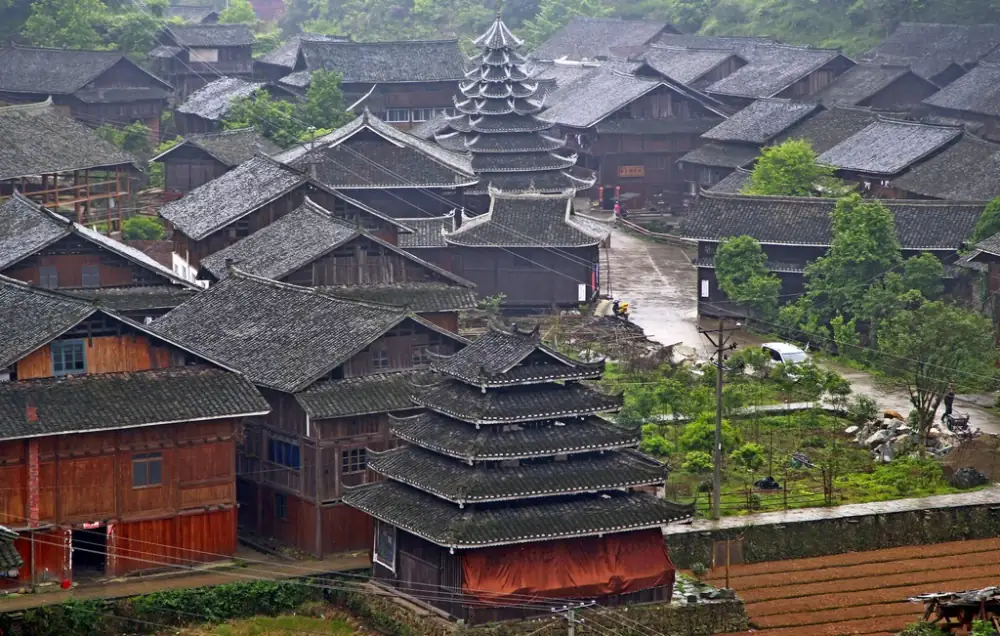
Option B: Miao Village Homestay Near Kaili
Kaili (凯里), the “capital” of the Miao cultural heartland, is 2 hours from Guiyang by HSR. The surrounding villages — Xijiang (西江, China’s largest Miao village cluster) and many smaller villages — offer genuine Miao cultural immersion: traditional embroidery, rice wine (米酒), and the famous Miao silver jewelry tradition.
Xijiang entry: ¥100/person. Overnight homestays in Miao families: ¥80–120/night including meals. This option requires an extra night but is highly recommended for travelers with deeper cultural interest.
Evening: Departure or Maotai Tasting
Guizhou is the home province of Maotai (茅台), China’s most famous baijiu spirit. The city has Maotai-brand stores where tastings are possible, and bars specializing in high-quality Chinese spirits are scattered through the Yunyan Road area.
A tasting flight (品鉴套餐) of different Guizhou spirits at a specialty bar: ¥60–150 depending on selection. An interesting alternative to the foreign tourist’s usual beer.
Practical Information
Getting to Guiyang:
- From Chongqing North: 2 hours HSR, ¥110–160
- From Kunming: 3.5 hours HSR, ¥180–250
- From Guangzhou South: 4 hours HSR, ¥220–300
- From Shanghai Hongqiao: 8 hours HSR
- Guiyang Longdongbao International Airport (KWE): Direct flights from all major cities
Getting around: Guiyang Metro Lines 1, 2, and 3 serve the main city. Taxi base ¥8.
Climate: Pleasant year-round (10–26°C range), with more rain in summer. The high altitude means cooler temperatures than coastal cities at the same latitude. Spring (March–May) and autumn (September–November) are best.
Miao Festival calendar: The region has extraordinary festivals throughout the year — check the Kaili and surrounding county festival calendars before planning your trip. The Long Table Banquet Festival (苗族长桌宴) and various village-level festivals can be once-in-a-trip experiences if timing aligns.
Guiyang rewards the traveler who takes it seriously. The city itself is modest, but its position as the gateway to Guizhou’s extraordinary landscapes and ethnic cultural heritage makes it one of southwestern China’s most underrated destinations.