
Fenghuang Ancient Town: Where Stilt Houses Meet History
Looking at Fenghuang from the opposite bank of the Tuojiang River at dusk — the rows of dark-timbered diaojiaolou (吊脚楼) stilt houses overhanging the water, their red lanterns just beginning to illuminate, the reflections rippling in the current, the Ming-dynasty city wall behind — it is easy to understand why this town was described by the New Zealand writer Rewi Alley as “perhaps the most beautiful city in China.”
Alley wrote those words in the 1940s. Fenghuang is now a major tourist destination, its old town receiving millions of visitors annually. The paradox of Fenghuang is that despite the commercialisation — the tourist restaurants, the souvenir stalls, the light-show river cruises — the physical fabric of the town remains genuinely beautiful, and the surrounding countryside of western Hunan (Xiangxi) retains an authenticity that the town itself has partially lost.
The Town
The Old Town Layout
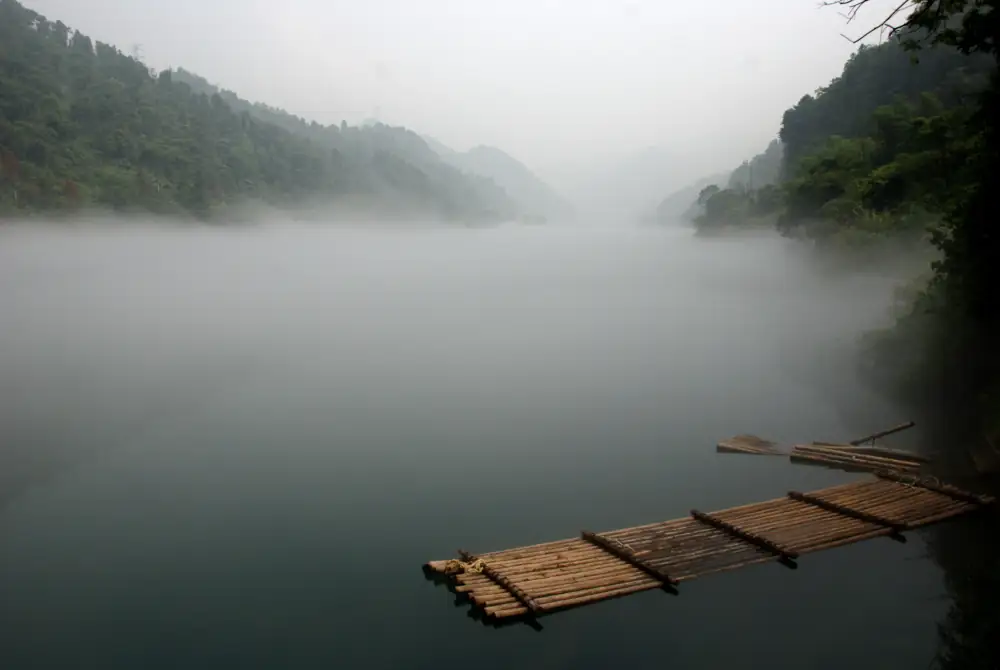
Fenghuang old town occupies a triangular peninsula formed by a bend in the Tuojiang River. The North Gate Wall (北门城楼) — a section of the original Ming dynasty city wall with an intact gate tower — closes the land approach; the river forms the other two sides.
The town’s main commercial streets (North Street and East Street, both pedestrianised) run parallel to the river, lined with Ming and Qing dynasty wooden buildings now housing cafes, jewelry shops (silver is the local craft speciality), bars, and guesthouses.
The riverside lane behind the main commercial streets is narrower and more residential in character — traditional houses with carved wooden balconies overlooking the water, some still occupied by local Miao families. This is the most authentically atmospheric part of the old town.
Diaojiaolou (吊脚楼): The Stilt Houses
The overwater stilt houses are Fenghuang’s defining architectural image. Built directly over the river on wooden piles, the diaojiaolou are the traditional dwelling form of the Tujia and Miao peoples throughout Xiangxi. The houses are built entirely of dark timber (Chinese fir and catalpa); the lower structure rises from the water on carefully braced piles; the upper floors cantilever over the water.
The best-preserved row of diaojiaolou extends along the south bank for approximately 500 metres. These houses are among the oldest and most complete examples of stilt house architecture anywhere in China.
The North Gate City Wall
The Ming dynasty city wall is one of the most intact short sections of Ming military architecture outside the main Great Wall system. The gate tower, reconstructed, rises approximately 10 metres; the adjacent wall sections allow visitors to walk the rampart for a short distance. The view from the tower at sunset combines the Tuojiang River, the stilt houses, and the surrounding hills in a composition that becomes the best single photograph of the town.
Miao Silver Culture
Fenghuang and the surrounding Xiangxi region have a strong Miao silver jewelry tradition — similar to but distinct from the Qiandongnan Miao silver described in the Kaili guide.
The Xiangxi Miao style tends toward more geometric patterns and smaller ornaments than the Guizhou Miao, with particular focus on silver bracelets and hair ornaments. Several silver workshops in the old town offer genuine handmade pieces (¥200–¥3,000) alongside mass-produced tourist jewelry; the distinction is visible under close examination — hand-hammered pieces have slight irregularities that machine-made pieces lack.
The Fenghuang County Museum (in the old town) has an excellent display of regional Miao silver, providing context for purchases.
The Surrounding Area
Dehang Miao Village Valley (德夯苗寨)
35 km north of Fenghuang, the Dehang Valley contains a spectacular canyon with waterfalls and gorges alongside several large traditional Miao villages. The valley floor is accessible by a 3-hour walking circuit from the scenic area entrance, passing through villages where the traditional culture is maintained more actively than in the tourist-oriented old town.
Admission: ¥90 (includes village access).
Laomaohe Nature Reserve (老茅河自然保护区)
Wild forested hills 60 km south of Fenghuang with good birdwatching (particularly parrots and broad-billed rollers) and hiking trails to Tujia minority villages inaccessible by road.
Food in Fenghuang

Local Specialities
Sour Fish (酸鱼): Carp pickled in rice wine and local herbs for months in ceramic pots — deeply flavoured, pungent, and strongly regional.
Blood Duck (血鸭): Duck cooked with fresh duck blood as a sauce thickener — a dish with a long tradition in western Hunan that challenges adventurous eaters.
Xiangxi Preserved Meat (腊肉): Smoke-cured pork preserved with local chillies and salt; available pre-packaged as the most popular Fenghuang souvenir.
Sour Soup Noodles (酸汤粉): A Hunan version of the Guizhou sour soup dish, served with rice noodles and topped with assorted pickled and fresh vegetables.
Where to Eat
The commercial restaurants on the main tourist streets offer adequate versions of local specialities but are priced for tourists (¥50–¥80/person). Better value is found in the residential streets a few blocks from the river, where local eateries serve working people at ¥20–¥40/person with more authentic cooking.
Practical Information
Getting There
By Train: The nearest high-speed rail station is Jishou (吉首), 30 km north of Fenghuang (¥30 taxi; 40 minutes). Jishou connects to Changsha (1.5 hours), Guiyang (2 hours), and Chongqing (2.5 hours).
By Bus: Direct buses from Zhangjiajie (2.5 hours, ¥70) and Changsha (4.5 hours, ¥120).
When to Go
- Spring (March–May): Mild; fewer crowds; the river runs clean from winter rains.
- Autumn (October–November): Best light; clear skies.
- Chinese New Year area: The Miao and Tujia New Year Festival (celebrated at lunar New Year with traditional costumes and ceremonies) is one of the most authentic cultural events in western Hunan.
- Avoid: Summer national holidays and mid-October Golden Week when the narrow old town streets become dangerously crowded.
Admission
The Fenghuang old town charges an entrance fee: ¥148 (includes most major sights). This fee is controversial with some travellers who feel it overcommercialisés an inhabited community; the fee revenue does support preservation infrastructure.
Fenghuang is most itself in its edges — the riverside path before dawn when the lanterns have gone out, the villages in the hills where the tourists don’t reach, the silver workshop where the hammering continues regardless of the viewing schedule. In those moments, the commercialisation falls away and you see what made Rewi Alley reach for that adjective in 1940.