
Huangguoshu Waterfall (黄果树大瀑布, Huángguǒshù Dà Pùbù) is the largest waterfall in Asia by volume — 77.8 meters high and 101 meters wide at its crest during peak flow. Standing at its base in July or August, when the monsoon rains have been filling the Baibu River for weeks, the sheer physical force of the water is overwhelming: the spray creates a permanent rainbow in the mist, the roar drowns all conversation, and you feel the ground vibrate underfoot.
The Waterfall System
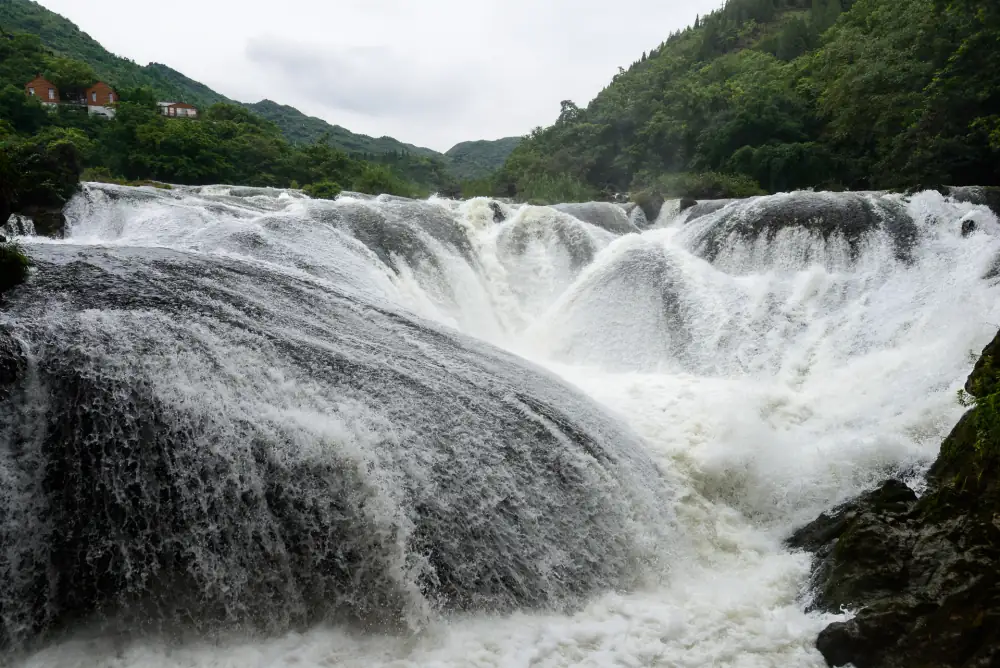
Huangguoshu sits within the Huangguoshu Scenic Area, which contains not one but 18 waterfalls along a 6 km stretch of the Baibu River. The largest (Huangguoshu itself) is the centerpiece, but the system’s other waterfalls, underground rivers and natural bridges make a full-day exploration worthwhile.
Huangguoshu Waterfall (黄果树大瀑布)
The main waterfall can be viewed from multiple levels:
- Base viewing platform (下望台): Eye-level with the pool at the base; maximum spray immersion — bring waterproof gear
- Mid-level viewing path (中望台): Side-angle view of the full height
- Top viewing platform (上望台): Looking down and across at the crest
The Water Curtain Cave (水帘洞): This is the feature that makes Huangguoshu distinctive among the world’s major waterfalls. A natural cave runs behind the waterfall through the limestone cliff, and you can walk through it with the water rushing past just beyond arm’s reach. The cave is 134 meters long with six natural windows and two natural doors opening directly behind the falling water. The play of light through the water curtain into the cave interior is extraordinary. Entry included in main ticket.
Tianxing Bridge (天星桥景区)
3 km downstream from the main falls, a limestone bridge formation spans the river above a series of smaller cascades. The area includes natural bonsai trees growing from the limestone, karst pillars draped with vegetation and a boat ride through flooded cave passages. More intimate than the main falls; allow 2–3 additional hours.
Star Bridge Falls (陡坡塘瀑布)
700 meters upstream from the main falls; 1,080 meters wide and 21 meters high — a different visual character from the vertical main falls (this one is a wide, tiered cascade). Creates extraordinary reflective pools in its aftermath.
When to Visit
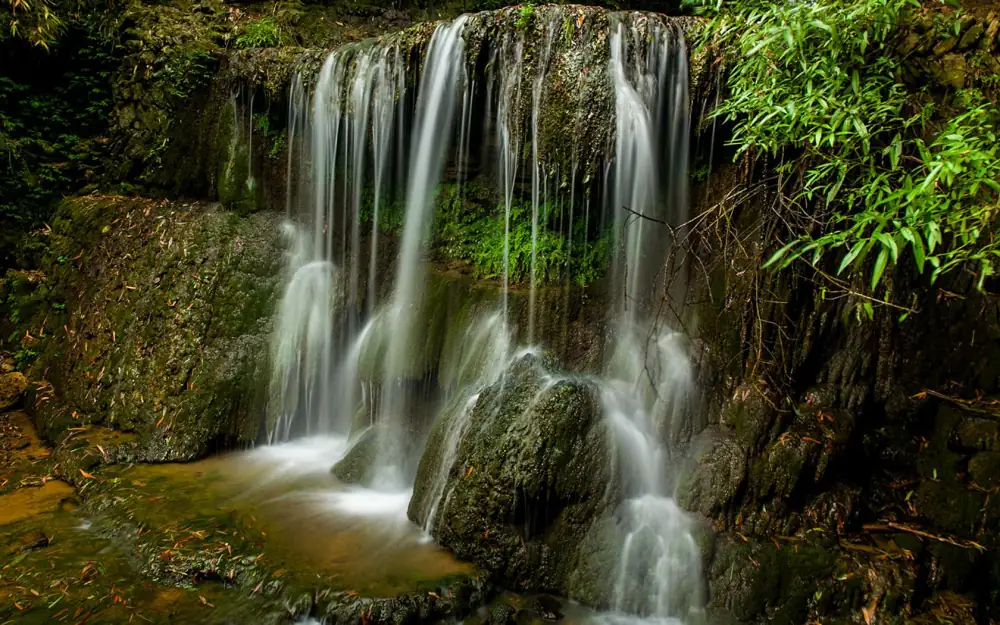
Peak season (June–September): Maximum water volume; the falls are most spectacular. The main waterfall reaches its full 101-meter width. Spray zone extends 100+ meters from the base. Waterproof clothing recommended near the base. Weekday visits avoid the heavy domestic tourism of summer weekends.
Spring (March–May): Lower water volume but the surrounding vegetation is fresh green. Fewer crowds. The waterfall is still very impressive.
Autumn and winter (October–February): Significantly reduced flow; the falls become multiple separate streams rather than one connected curtain. Some sections dry completely. The landscape is dramatic in its own way but not the visceral experience of summer. Cheaper accommodation and no crowds.
Verdict: Visit in summer if you want the full experience of Asia’s largest waterfall in full flow.
The Silong Gorge
The Silong Gorge (犀牛洞/天龙屯堡) area, accessible from Anshun (the nearest major city), adds a karst cave dimension to the trip:
Longgong Caves (龙宫景区): A series of karst caves connected by underground lakes, explored partly on foot and partly by boat. The colored stalactites and the scale of the caverns rival any cave system in China. Allow 3–4 hours.
Anshun’s Tunpu culture (屯堡文化): In the Anshun area, descendants of 14th-century Ming Dynasty soldiers stationed here as colonizers have maintained their original culture — clothing, architecture, language dialects and folk performances frozen for 600 years. The village of Yunshan Tun (云山屯) is a preserved example. An anthropological oddity within the waterfall tourism.
Practical Planning
Entry fee: ¥185 for the main scenic area (peak season); includes shuttle buses within the area
Half-day or full day: Main falls + Water Curtain Cave = 2–3 hours (half day from Guiyang). Full Huangguoshu Scenic Area including Tianxing Bridge + Star Bridge Falls = full day.
Getting there from Guiyang:
- High-speed train: From Guiyang North (贵阳北) to Anshun West (安顺西): 30 minutes, ¥50. From Anshun, tourist shuttle bus or Didi to Huangguoshu: 30 minutes, ¥15–40.
- Bus: Direct tourist buses from Guiyang North Bus Terminal to Huangguoshu: 2 hours, ¥60–80. Convenient for day trips.
- Tour package: Many operators run day tours from Guiyang combining Huangguoshu with Longgong Caves; reasonable value if you want logistics handled.
Accommodation near the falls: Anshun city has good hotel selection (¥150–400/night); staying in Anshun allows an early start to be at the falls at opening time before tour group buses arrive.
Combining with Guizhou Itinerary
Huangguoshu is typically combined with:
- Guiyang (modern Miao/Buyi minority cuisine and nightlife): 1 night before or after
- Kaili and the Miao village region (see separate guide): Southeast Guizhou
- Zhenyuan Ancient Town (镇远古镇): A preserved riverside town in eastern Guizhou
A 3-day Guizhou itinerary: Day 1 Guiyang city, Day 2 Huangguoshu Falls, Day 3 Longgong Caves and Tunpu village.
Huangguoshu earns superlatives honestly. The volume of water falling from 78 meters into a turbulent pool, with the option to walk behind it through a cave and watch the curtain from the inside — it is one of the genuine natural wonders of China’s interior, and the cave behind the falls is a detail that elevates it above most of the world’s major waterfalls.