
Guizhou is the province that gets bypassed in favour of its flashier neighbours — Yunnan’s mountains, Sichuan’s pandas, Hunan’s Zhangjiajie pillars. The result is a landscape of extraordinary diversity and historical depth that most international visitors never reach: ancient minority villages where Miao and Dong cultures have been practiced continuously for centuries, dramatic karst gorges, and at the centre of it all, the Huangguoshu Waterfall — at 77 metres high and 101 metres wide, the largest waterfall in Asia by surface area.
Guizhou also happens to have exceptional food, China’s best-known rice wine (Moutai), and the most affordable travel costs of any major scenic region in the country.
Table of contents
Open Table of contents
Essential Information
| Detail | Info |
|---|---|
| Province | Guizhou |
| Getting there | Fly to Anshun (AKU) from major cities; or high-speed rail to Guiyang (2–4 hrs from most major cities), then 1 hr train to Anshun |
| Huangguoshu ticket | ¥160 (waterfall + surrounding park); book online in advance |
| Best season | June–September when rainfall is highest and falls are most powerful; May and October for balance of flow and weather |
| Combine with | Zhijin Cave (30 km north), Buyi stone villages, Anshun old town — see the Anshun guide for a full regional itinerary |
Huangguoshu Waterfall (黄果树瀑布)
Scale and Setting
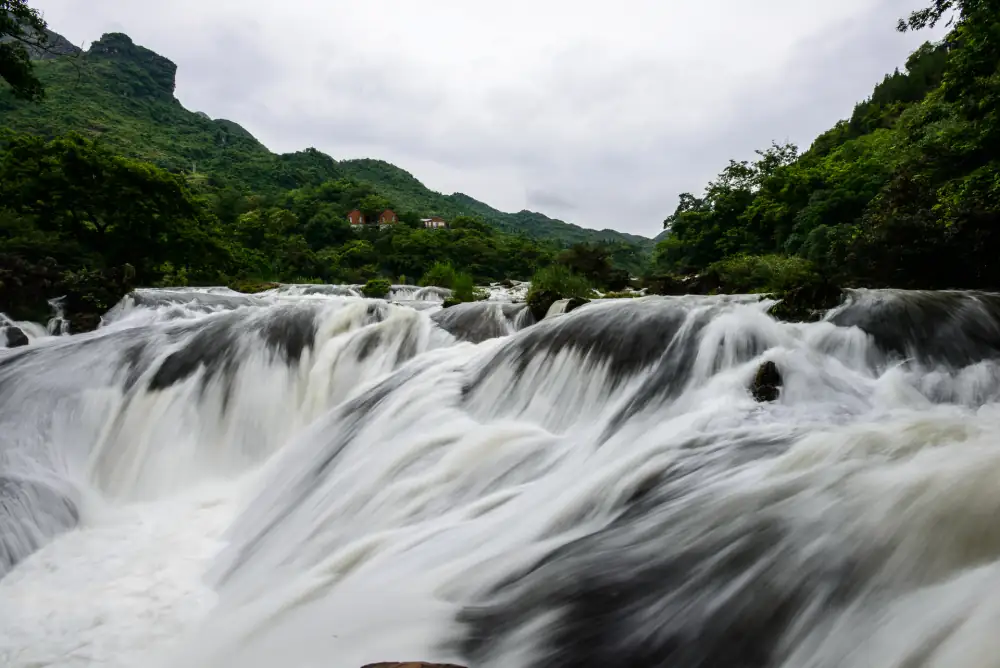
The main waterfall drops 77.8 metres over a series of limestone steps — not a single sheer drop but a stacked cascade of interconnected falls, creating a frontage of 101 metres at peak flow. The volume of water during rainy season (June–August) is extraordinary: the roar is audible from a kilometre away, and the spray creates a permanent rainbow and mist zone 200+ metres out.
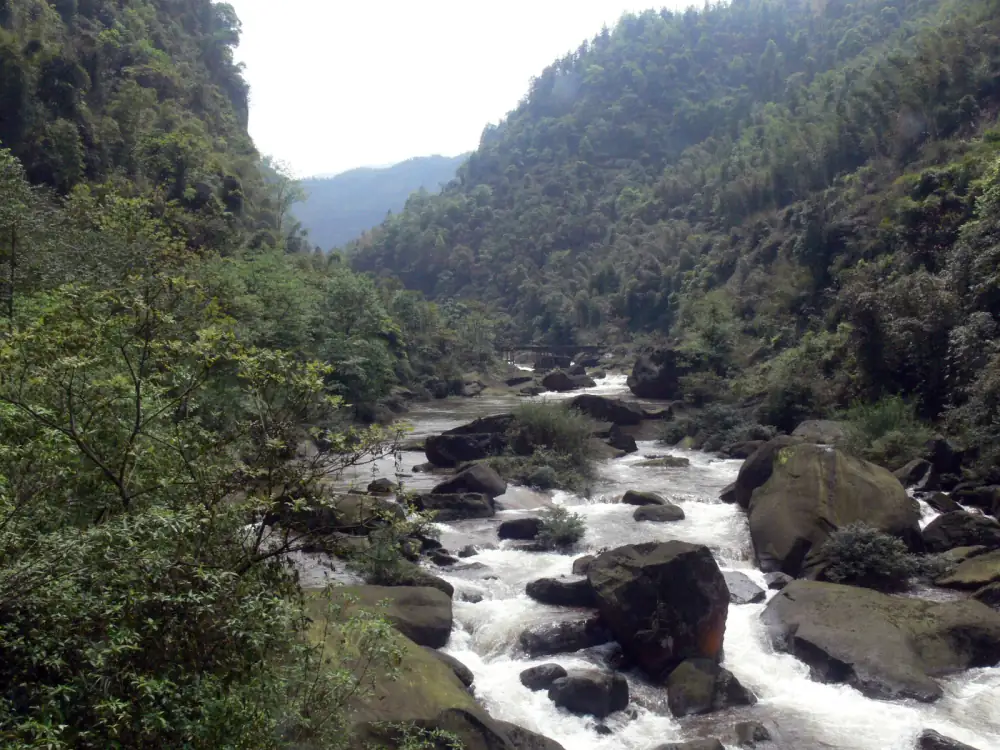
The Baishui River (白水河) runs through a deeply carved limestone gorge that created the waterfall over millennia of erosion. The entire valley — several kilometres of the gorge — is part of the scenic area, with a series of smaller waterfalls upstream and downstream from the main cascade.
The Cave Behind the Falls (水帘洞)
The most extraordinary feature of Huangguoshu is not the waterfall itself but the passage behind it. A natural cave system (水帘洞, “Water Curtain Cave”) runs 134 metres through the cliff behind the falls, with six windows and two entrances opening directly behind the falling water curtain.
Standing inside, looking out through the translucent white veil of falling water, with the roar filling the cave and spray on your face, is unlike any other waterfall experience in China. The cave is accessible on foot from the valley floor via a path; no additional ticket required; waterproof jacket advisable.
Viewing Platforms
Multiple viewing platforms at different heights on both sides of the gorge offer different perspectives:
- Valley floor platform: Closest to the base, maximum spray, most dramatic sense of scale
- Upper observation deck (left bank): Best overview of the full width of the falls
- Opposite cliff path: A path along the right bank cliff allows a more distant but panoramic view of the entire gorge
The park is large; allow 2–3 hours minimum to walk the full circuit.
The Surrounding Region
Tianxingqiao Scenic Area (天星桥)
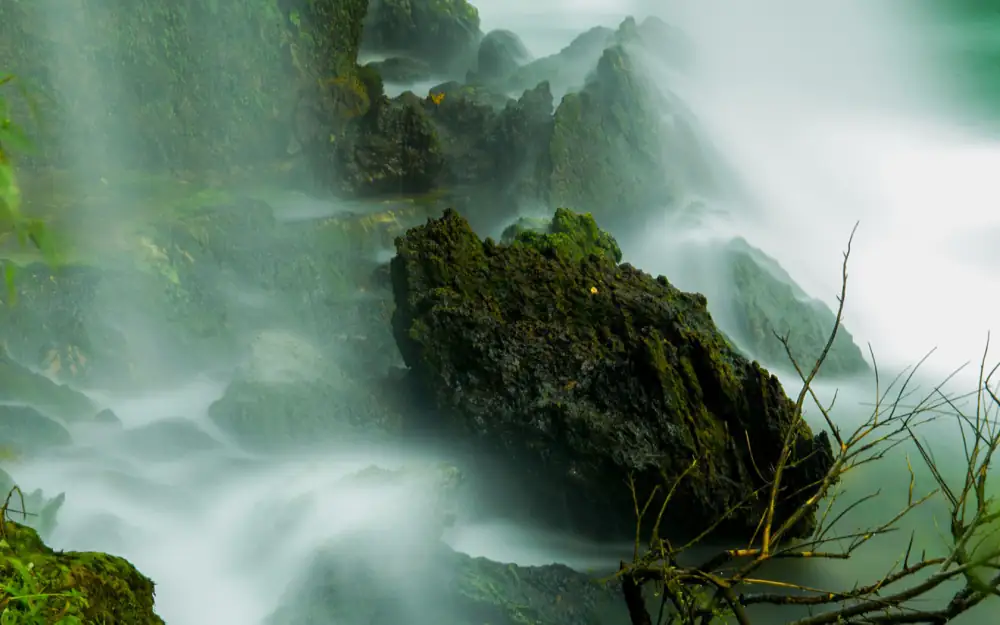
3 km downstream from Huangguoshu, a different landscape: the Baishui River flows through a flat karst basin studded with limestone formations — bonsai-shaped rocks, natural bridges, small cascades. Less dramatic than the main falls but genuinely beautiful; several traditional stone waterwheels still turn in the river. 45-minute walking circuit. Ticket included in combined park pass.
Doupotang Waterfall (陡坡塘瀑布)
3 km upstream from the main falls, this 105-metre-wide fan-shaped waterfall is less tall than Huangguoshu but wider and more photogenic in morning light. Almost nobody comes here after seeing the main falls; early morning visit gives the falls to yourself.
Minority Culture: Miao and Buyi Villages
Guizhou is home to the largest concentration of Miao (苗族) and Buyi (布依族) minority communities in China. Around Huangguoshu, several traditional villages are accessible within 30 km.
Zhongdong “Cave Village” (中洞苗寨)
One of the most remarkable human habitats in China: approximately 18 Miao families live inside an enormous natural cave — a cathedral-sized cavern with a basketball court, a school, and farmhouses with working vegetable gardens inside the cave mouth. Access requires a 2-hour hike or vehicle plus hike. An astonishing place.
Practical: Arrange through a local guide service in Anshun; a full-day trip is required (¥200–300/person including guide and transport).
Shitouzhao Buyi Village (石头寨)
A Buyi village entirely constructed from local limestone — roofs, walls, floors, bridges, all grey stone. The village has been occupied for over 500 years; the Buyi families continue to farm the surrounding rice terraces using traditional methods. The annual Sanyuesan Festival (农历三月初三) involves traditional costumes, bamboo flute music, and bullfighting.
Getting there: 6 km from Huangguoshu; taxi or electric tricycle from the park entrance.
Miao Silver and Embroidery
The Miao people have one of the most elaborate textile and silverwork traditions in China — intricate embroidered costumes depicting creation myths, combined with extraordinary silver headdresses worn at festivals. The main market for authentic Miao craft products is in Kaili (凯里), 150 km east of Guiyang — a full separate trip, but worth it for the Thursday market at Leishan (雷山).
Guizhou Food
Guizhou food is aggressively flavoured — sour, spicy, and numbing in a way that distinguishes it from the Sichuan numbing-spicy (麻辣) or the Hunan straight-heat style.
Sour fish soup (酸汤鱼): The defining Guizhou dish — fish simmered in a fermented tomato-based sour broth with chilli and local herbs. The sourness comes from a specific fermentation process (让鱼) that creates lactic acid. The best version uses local river fish.
Rice tofu (豆腐果): Cubes of pressed tofu grilled over charcoal, then dipped in a sauce of chilli, garlic, spring onion, and Guizhou pickled vegetables. Street food available everywhere from ¥3–5.
Moutai baijiu (茅台酒): The world’s most consumed spirit by volume — a sorghum-based baijiu made in Renhuai, 3 hours north of Guiyang. The bottle you buy in the Moutai distillery town costs half what it costs in Beijing or Shanghai. The distillery is open for tours (pre-book).
Practical Tips
Transport within Guizhou: High-speed rail connects major cities (Guiyang, Kaili, Zunyi) well. For Huangguoshu and surrounding villages, a car hire with driver (¥300–500/day, arrange through hotels in Anshun or Guiyang) is the most flexible option.
Crowds: Huangguoshu is extremely busy during Golden Week (October 1–7) and the summer school holidays (July–August). Weekday visits in May, June, or September are significantly calmer.
Rain gear: Even in dry season, the spray from the main falls and the Cave Behind the Falls will soak you. Waterproof jacket and waterproof phone case essential.
Guizhou remains one of the genuinely undiscovered provinces of China — extraordinary landscapes, living minority cultures, and excellent food at prices that feel like a different decade. The Huangguoshu area is the place to start.
Last updated: May 2026