
Table of contents
Open Table of contents
Anshun — Guizhou’s Natural Wonder Capital
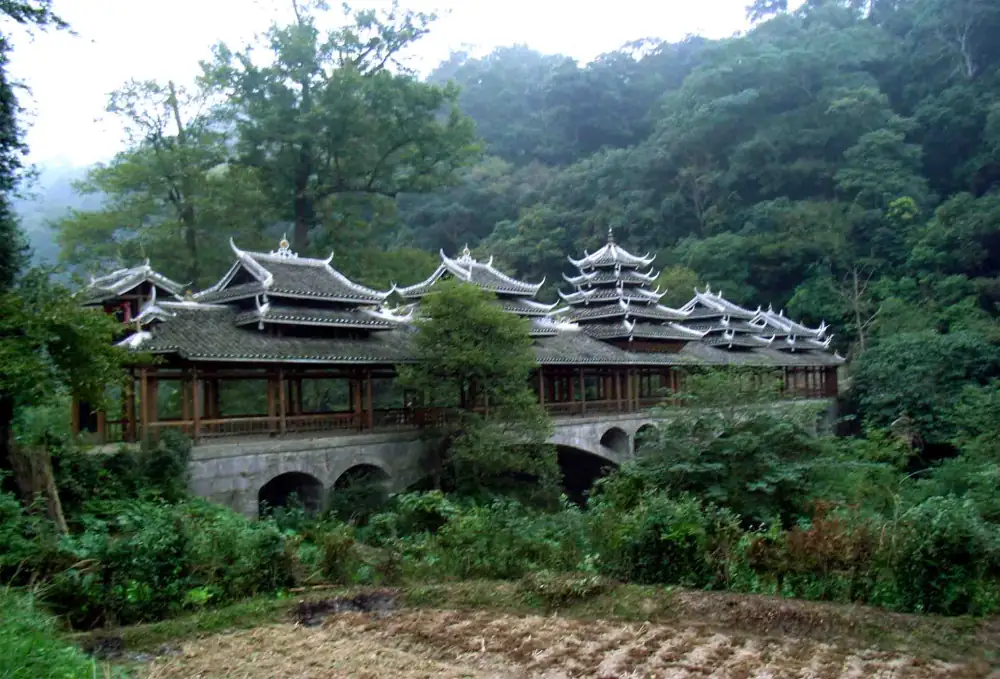
Anshun (安顺) has been dealt an extraordinary geographical hand. Within a 100 km radius of this modest Guizhou city, you’ll find Asia’s largest waterfall, one of the world’s most impressive caves, traditional Buyi minority stone villages, and a karst landscape so dramatic it makes other limestone regions look demure. For years, Anshun was a sleepy backwater, bypassed by travellers heading to Guizhou’s more famous Miao and Dong minority areas. But improved transport connections and growing domestic tourism have put it firmly on the map.
I visited Anshun on a rainy April trip, and the rain turned out to be a blessing — Huangguoshu Falls was thundering at full capacity, the cave was dripping with theatrical atmosphere, and the Buyi villages were wrapped in mist that made the stone houses look like something from a scroll painting. Anshun may not have the cultural cachet of southeast Guizhou, but as a base for natural wonders, it’s hard to beat.
Huangguoshu Waterfall (黄果树瀑布)
Huangguoshu is the reason most travellers come to Anshun — and it lives up to the hype. For an even deeper look at the falls and the surrounding region, see the dedicated Huangguoshu Waterfall guide.
The Main Falls
At 77.8 metres high and 101 metres wide, Huangguoshu is the largest waterfall in Asia and one of the most spectacular in the world. But statistics don’t capture the experience. Standing on the viewing platform as millions of litres of water crash over the cliff face, sending spray 100 metres into the air, you feel the ground vibrate beneath your feet. The sound is a continuous, chest-rattling roar that makes conversation impossible and seems to come from everywhere at once.
What makes Huangguoshu unique among major waterfalls is the Water Curtain Cave (水帘洞) — a 134-metre-long cave that runs behind the actual waterfall. You can walk through the cave and look out through the curtain of water from the inside. It’s an extraordinary, slightly terrifying experience — the rock is slippery, the spray is constant, and the noise is overwhelming. But looking through the waterfall at the world outside is something you will never forget.
Entrance fee: ¥160 ($22 USD) peak season (March — November), ¥150 ($21 USD) off-peak. The scenic area is large — allow a full day.
The Scenic Area
The Huangguoshu scenic area encompasses several sites beyond the main falls:
Doupotang Waterfall (陡坡塘瀑布): The widest waterfall in the group, at 105 metres across but only 21 metres high. It’s a curtain of water rather than a plunging torrent — elegant and photogenic. A 20-minute walk from the main falls.
Tianxingqiao Scenic Area (天星桥): A karst landscape of stone forests, natural bridges, and pools formed over millions of years. The highlight is the “Silver Chain Waterfall” — water cascading over a series of small limestone steps like, well, a silver chain. Allow 2-3 hours for the full loop trail. This area is often rushed but genuinely worth proper exploration.
Rhinoceros Pool (犀牛潭): The pool at the base of the main falls, named for a legend involving a rhinoceros that fell in and was never seen again. The viewing platform here offers the classic full-frontal waterfall view.
Practical Tips for Huangguoshu
- Arrive early: The park opens at 7:30 AM. Getting there by 8:00 AM means you’ll have the Water Curtain Cave to yourself before the tour groups arrive
- Bring a rain jacket: You will get wet — not just from the Water Curtain Cave but from the spray at every viewpoint
- Wear shoes with grip: The paths are perpetually wet and slippery
- Sightseeing bus: The park is large — buy the ¥50 ($7 USD) sightseeing bus ticket to move between the three main areas
- Photography: Bring a waterproof cover for your camera. A polarising filter helps manage the spray and reflections
Zhijin Cave (织金洞)
A Cathedral Underground
About 120 km from Anshun (2 hours by road), Zhijin Cave is one of the largest and most impressive caves in China — and that’s saying something in a country with enormous karst cave systems. The cave extends for over 12 km, with chambers reaching heights of 150 metres. The scale is difficult to convey — standing in the main chamber is like standing inside a natural cathedral, with stalactites hanging like chandeliers and flowstone cascading like frozen waterfalls.
The cave was only properly explored in 1980, and significant sections remain undeveloped. The tourist route covers about 3.5 km and takes about 2 hours to walk.
Highlights
The Silver Rain Tree (银雨树): A 17-metre-tall stalagmite that’s shaped remarkably like a giant flower. It’s one of the most famous individual cave formations in the world.
The Crystal Palace: A chamber covered in delicate aragonite crystal formations that sparkle under the lighting. It’s genuinely magical.
The Pagoda Forest: A group of stalagmites that resemble a forest of Buddhist pagodas — some over 20 metres tall.
The Overturning Sea: A vast flowstone formation that looks like a frozen ocean wave. The colour gradations from white to deep amber are stunning.
Entrance fee: ¥110 ($15 USD) in peak season, ¥80 ($11 USD) off-peak. Combined ticket with Zhijin Grand Canyon ¥160 ($22 USD).
Practical Tips
- Temperature: The cave is a constant 10-15°C — bring a jacket regardless of outside weather
- Footwear: The path is wet and uneven — proper walking shoes are essential
- Lighting: The cave has artificial lighting, but it’s atmospheric rather than bright. A small torch is useful for seeing details
- Photography: Tripods are not permitted (the paths are too narrow and crowded). A camera with good low-light performance is essential
- Crowds: Visit on a weekday if possible — the narrow paths become congested with tour groups on weekends
Buyi Minority Stone Villages
Tianlong Tunpu (天龙屯堡)
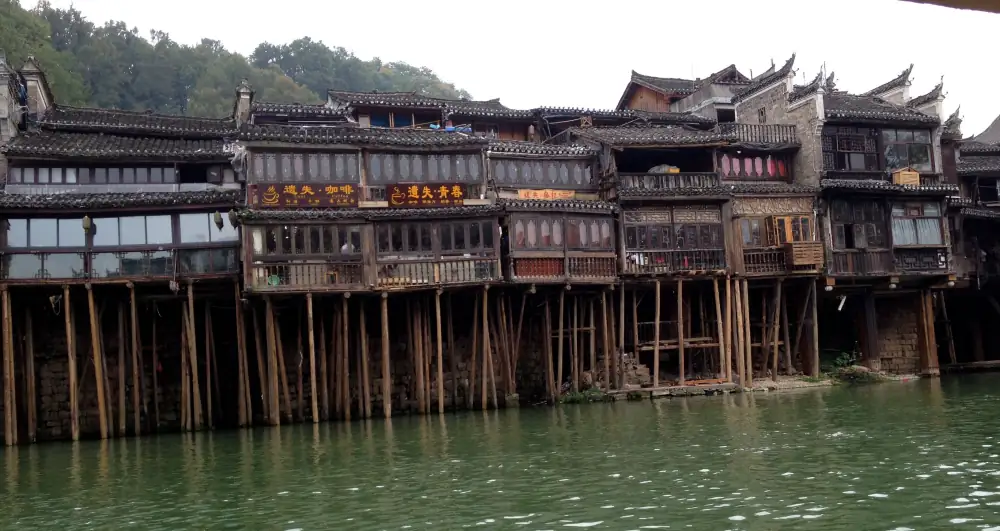
About 30 km from Anshun, Tianlong Tunpu is a 600-year-old garrison village whose inhabitants are descendants of Han Chinese soldiers sent by the Ming Dynasty to guard the southwest frontier. Over the centuries, they’ve maintained their Ming-era customs, clothing, and architecture in extraordinary isolation from the rest of China.
The women of Tunpu still wear Ming Dynasty-style clothing — blue robes with embroidered borders, elaborate hair arrangements — and the local opera (Tunpu Dixi, 地戏) features performers wearing wooden masks and enacting stories from the Three Kingdoms period.
Entrance fee: ¥45 ($6.20 USD) including a Dixi opera performance. Performances at 10:30 AM and 2:30 PM.
Buyi Stone Village (石头寨)
About 20 km from Huangguoshu, this Buyi minority village is built entirely from stone — stone houses, stone paths, stone walls, stone roofs. The effect is remarkably picturesque, especially when the women sit outside their stone houses working at their traditional batik (蜡染) craft.
The Buyi batik tradition produces beautiful indigo-dyed fabrics with intricate patterns. You can watch the entire process — from drawing the pattern in beeswax to dipping in the indigo vat to boiling off the wax to reveal the design. Purchasing directly from the makers costs ¥50-200 ($7-28 USD) depending on size and complexity.
Entrance: Free. Batik demonstrations and workshops ¥20-50 ($2.80-7 USD).
Anshun Old Town
The old section of Anshun retains some traditional architecture and has a lively night market. It’s not a major attraction, but worth an hour’s wander for the atmosphere and the street food. The old town’s Confucian Temple (文庙), dating from the Ming Dynasty, has some beautiful stone carvings and a peaceful courtyard. Entrance ¥10 ($1.40 USD).
Guizhou Cuisine
Anshun Specialities
Sour Soup Fish (酸汤鱼): Guizhou’s signature dish — fish poached in a vibrant red sour broth made from fermented tomatoes and chillies. The sourness is addictive. ¥48-78 ($6.70-11 USD).
Huajiang Dog Meat (花江狗肉): A traditional Guizhou dish that’s controversial but culturally significant. If dog meat isn’t for you, the same restaurants serve excellent lamb and beef alternatives.
Anshun Roast Fish (安顺烤鱼): Whole fish grilled over charcoal, then braised in a spicy broth with vegetables. Different from Chongqing-style roast fish — the Guizhou version is soupier and more sour. ¥48-68 ($6.70-9.40 USD).
Sticky Rice with Meat (肉末糯米饭): A breakfast staple — glutinous rice topped with seasoned pork, peanuts, and pickled vegetables. ¥8-12 ($1.10-1.70 USD).
Anshun Tofu Round (安顺豆腐圆子): Deep-fried tofu balls — crispy outside, soft inside, served with chilli dip. ¥5-8 ($0.70-1.10 USD) each.
Buckwheat Noodles (荞凉粉): Cold buckwheat jelly noodles with a spicy-sour sauce. Refreshing in summer. ¥8-12 ($1.10-1.70 USD).
Recommended Restaurants
Huangguoshu Scenic Area Restaurants: Overpriced and mediocre. Eat before or after your visit instead.
Anshun Old Town Night Market: The best eating in the city. Dozens of stalls serving local specialities. Budget ¥20-40 ($2.80-5.50 USD) per person.
Anshun Roast Fish Street (烤鱼一条街): A block of restaurants near the old town specialising in roast fish. Meals ¥40-60 ($5.50-8.30 USD) per person.
Practical Information
Getting to Anshun
By High-Speed Train: Anshun West Station on the Shanghai-Kunming high-speed line. From Guiyang: 30 minutes, ¥35-50 ($4.90-7 USD). From Kunming: 2 hours, ¥150-220 ($21-30 USD).
By Bus: Regular buses from Guiyang (2 hours, ¥40/$5.50 USD).
By Air: Anshun Huangguoshu Airport has limited flights. Most visitors fly into Guiyang and take the train.
Getting Around
To Huangguoshu: Buses depart from Anshun Bus Station every 20 minutes (45 minutes, ¥22/$3 USD). Taxis ¥80-100 ($11-14 USD) each way.
To Zhijin Cave: No direct public transport. Hire a car for ¥500-600 ($69-83 USD) for the day trip, or join an organised tour from Anshun.
Accommodation
Anshun City: Huangguoshu Grand Hotel — doubles from ¥250-450 ($35-62 USD). Good base for exploring.
Huangguoshu Area: Several hotels near the park entrance. Poplar Hotel — doubles from ¥200-400 ($28-55 USD). Book ahead in summer.
Zhijin County: Basic guesthouses from ¥80-150 ($11-21 USD).
Best Time to Visit
- Summer (June — August): The falls are at their most powerful from summer rains. Hot and humid (25-32°C) but the spray from the falls provides natural cooling.
- Autumn (September — November): Comfortable weather and still good water flow. The best overall season.
- Spring (March — May): Rainy but the increased water flow makes the falls more dramatic.
- Winter (December — February): Low water levels — the falls can be underwhelming. Quietest season.
Budget Estimate (3 Days)
| Item | Budget (¥) | Mid-Range (¥) |
|---|---|---|
| Train from Guiyang (round trip) | 70 | 100 |
| Accommodation (2 nights) | 200 | 600 |
| Meals | 200 | 450 |
| Huangguoshu entrance + bus | 210 | 210 |
| Zhijin Cave (including transport) | 250 | 350 |
| Village visits/miscellaneous | 50 | 150 |
| Total | ¥980 ($136 USD) | ¥1,860 ($258 USD) |
Power and Beauty
Anshun’s appeal is elemental. These are not subtle, contemplative landscapes — they’re raw demonstrations of geological power. A river carving a cave system over millions of years. A waterfall that shakes the ground. Stone villages that have weathered centuries of rain. There’s something deeply satisfying about visiting a place where nature so clearly dominates, and where human culture has adapted to rather than conquered the landscape. Come for the big sights, but let the small moments — the batik workshop, the Tunpu opera, the bowl of sour soup fish — be what stays with you.