
Guizhou Province (贵州) has the highest concentration of ethnic minority cultures of any Chinese province after Yunnan. In the southeast of the province (黔东南), Miao (苗族) and Dong (侗族) peoples maintain living cultural traditions — terraced rice farming, extraordinary silver-work, polyphonic singing, and wooden architecture — in villages that have remained largely outside the mainstream Han-Chinese cultural orbit.
Table of contents
Open Table of contents
The Miao People and Xijiang (西江千户苗寨)
Xijiang: The Thousand-Family Miao Village
Xijiang Miao Village (西江千户苗寨) in Leishan County is the largest Miao village in the world — over 1,300 households arranged on a mountain valley slope, with wooden stilted houses (吊脚楼) cascading down the terraced hillside. When the lights come on at dusk, the illuminated slope is one of the most photographed landscapes in southwest China.
What’s genuine: Xijiang has significant tourist infrastructure, and a large portion of the population is engaged in hospitality. But the village is real — families still live in the original houses, silver craft workshops are still operating, and the morning market at the base of the village has the rhythm of genuine daily life.
What to see:
- Silver craftsmanship workshops (银饰工坊): Miao silverwork is extraordinarily fine; headdresses, neckpieces, and earrings worn at festivals can weigh 5–15kg. Workshops in the village demonstrate the hand-hammering and filigree techniques.
- Village museum (西江苗族博物馆): good introduction to Miao history, clothing variations by sub-group, and festival customs.
- Evening performance: a nightly show on the central stage features traditional singing, bronze drum music, and the “Long Table Banquet” (长桌宴). Tourist-oriented but visually impressive.
Miao Silver Festival (苗族苗年)
The Miao New Year (苗年, Miáo Nián) is celebrated in November (lunar calendar). During this period, Miao women wear the full silver headdress and embroidered festival clothing. Events: bullfighting, singing competitions between villages, and the famous “sister’s meal festival” (姊妹节) in spring (March lunar calendar) when unmarried Miao women present sticky rice packages as coded love messages.
The Dong People: Zhaoxing and Chengyang
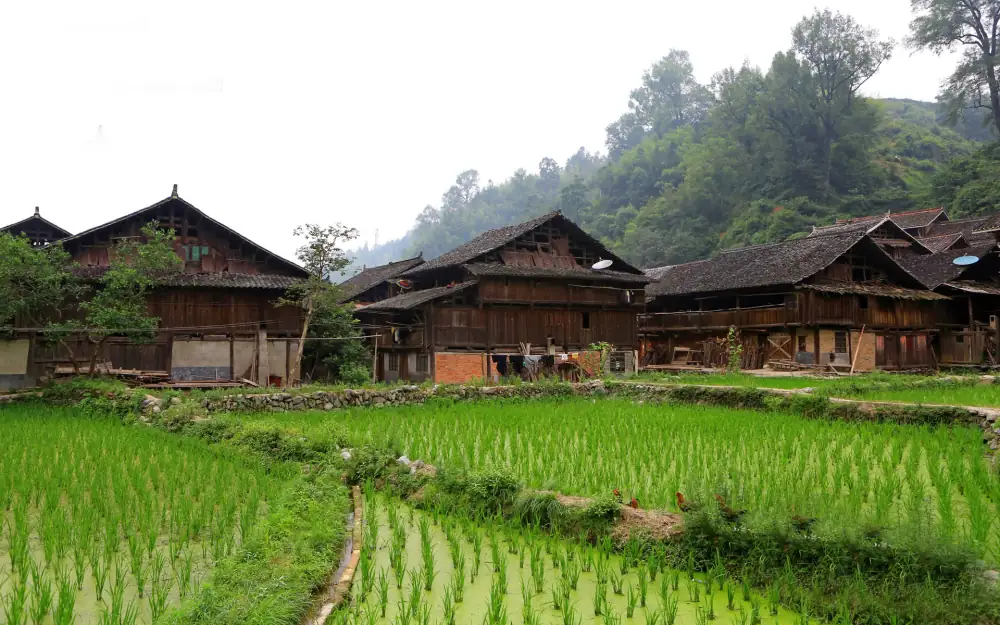
Zhaoxing (肇兴侗寨)
Zhaoxing is the largest Dong village in China — approximately 1,000 households in a mountain valley in Liping County. The village’s defining features:
Five drum towers (鼓楼): Each of the village’s five clan groups has its own drum tower — octagonal wooden structures rising to 21 storeys, used as community gathering and performance spaces. No nails are used in their construction; the entire structure is held together by the precision fitting of timber joints.
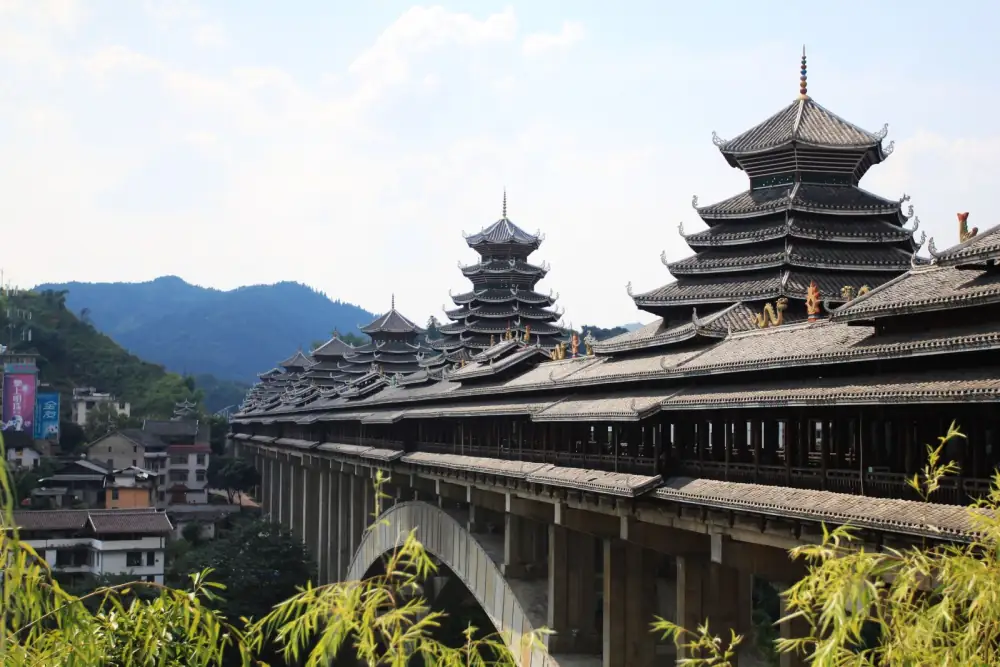
Wind-Rain Bridges (风雨桥): Covered wooden bridges that cross the streams around the village. Each bridge has a pavilion section used as shelter and gathering space; rooflines are decorated with fighting cocks and other carved motifs. The bridges are simultaneously functional infrastructure and community living rooms.
Dong Grand Singing (侗族大歌): Polyphonic choral singing with no conductor and no written notation — multiple voice parts woven together in complex harmonies learned entirely by oral transmission. UNESCO listed this tradition in 2009. Performances are given nightly in Zhaoxing’s drum tower square.
Chengyang Wind-Rain Bridge (程阳风雨桥)
The most famous and most photographed Wind-Rain Bridge in China is at Chengyang (程阳), near Sanjiang (三江) in the Guangxi-Guizhou border area. This particular bridge (1916, 76m long) spans the Linxi River with five pavilion towers and 19 rooflines in a perfect composition.
Chengyang village itself is quieter and less developed than Zhaoxing; the bridge can be visited as part of a Guilin-area trip or combined with Guangxi’s Longji rice terraces.
Smaller Villages Worth Seeking Out
Biasha Miao Village (岜沙苗寨)
30km from Congjiang (从江), Biasha is home to one of the last communities of Miao men who carry weapons (a right granted by the Qing Dynasty) and who maintain the tradition of shaving their head with a sickle, leaving a topknot. The village remains largely traditional; the elaborate grass-cutting ceremony and hunting rituals are performed for visitors on a small scale. No entrance gate — just a mountain path leading to wooden houses.
Zhijin Cave Village Circuit (织金洞)
Guizhou’s largest karst cave system (织金洞) is 20km from Zhijin County. The cave tour reveals chambers of extraordinary stalactite and stalagmite formations in a 6.6km underground passage. The surrounding villages are Buyi (布依族) minority communities; combined cave-village trips are organised from Guiyang.
Getting Around Qiandongnan

The southeastern Guizhou minority villages require planning — public transport is limited and connections between villages aren’t always obvious.
Hub cities:
- Kaili (凯里): the main city in Qiandongnan prefecture; good transport connections from Guiyang (1.5 hours by high-speed rail); base for Xijiang and other Miao villages
- Liping (黎平): the main city in Dong country; accessible by train from Guiyang or overnight bus from Guangzhou; base for Zhaoxing
Getting between villages: shared minibuses run between major villages and county seats; arrange through your guesthouse or at the county bus station. Some routes require connecting journeys.
Accommodation: most villages have basic guesthouses in traditional wooden houses. Xijiang and Zhaoxing have good options (¥100–¥250/night). Remoter villages have basic facilities.
Festivals Calendar (Qiandongnan)
| Month | Festival | Location |
|---|---|---|
| March (lunar) | Sister’s Meal Festival (姊妹节) | Taijiang area |
| April (lunar) | Drum Tower Singing Competition | Various Dong villages |
| June (lunar) | Dragon Boat Festival (Miao style) | Shidong (施洞) |
| October (lunar) | Miao New Year (苗年) | Xijiang and surrounding villages |
| November (lunar) | Dong Grand Singing Festival | Zhaoxing |
Last updated: May 2026 · Festival dates change with the lunar calendar. Check specific dates annually before planning a visit around them.