
Qufu: The Birthplace of Confucius
Qufu (曲阜, Qūfù) in Shandong province is one of the most significant cultural pilgrimage sites in East Asia. This small city was the birthplace of Confucius (551-479 BCE), whose philosophical and ethical system became the dominant ideology of Chinese civilization for 2,500 years and profoundly influenced Korean, Japanese, and Vietnamese culture as well.
The “Three Kongs” (三孔) — the Confucius Temple (孔庙), Kong Family Mansion (孔府), and Confucius Cemetery (孔林) — form a UNESCO World Heritage Site of extraordinary historical and cultural significance. Together they constitute one of China’s largest surviving complexes of pre-modern architecture outside Beijing’s Forbidden City.
Historical Context
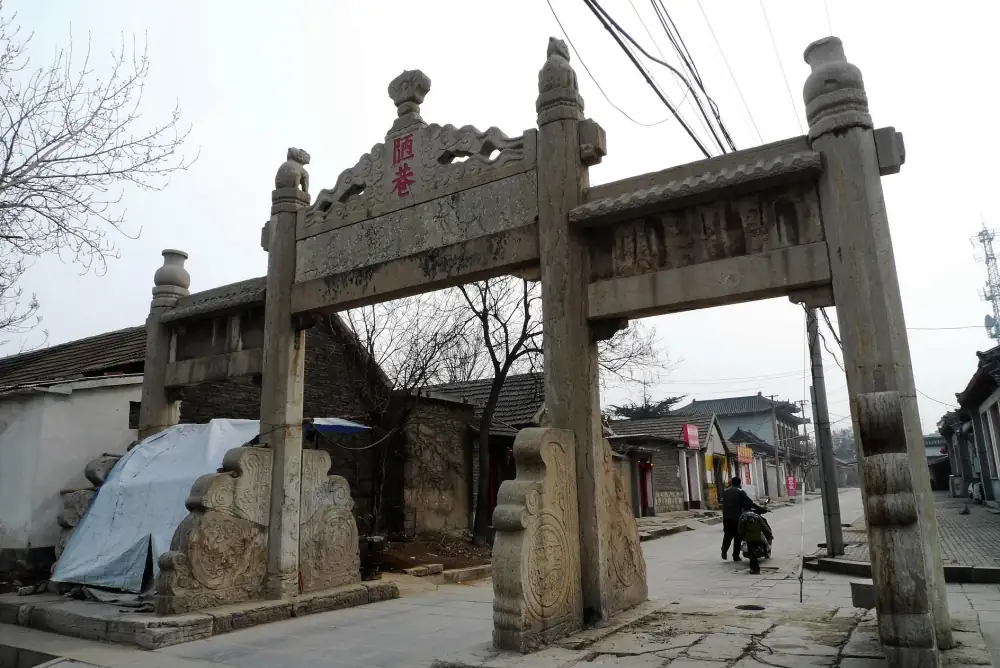
Confucius (孔子, Kǒng Zǐ), born Kong Qiu (孔丘), lived during the Spring and Autumn period — an era of political fragmentation and social upheaval as the Zhou dynasty’s authority collapsed. His teachings emphasized ethical behavior, proper social relationships, ritual propriety, and moral governance as the foundations of stable, humane civilization.
The Han dynasty emperor Wu (r. 141-87 BCE) officially adopted Confucianism as the state ideology — a status it maintained with varying emphasis through twenty subsequent dynasties. The Kong family was repeatedly honored by successive rulers, granted noble titles, and given the resources to maintain the ancestral sites at Qufu.
The result is one of history’s most remarkable examples of institutional continuity: the Kong family (direct descendants of Confucius) maintained unbroken residence in Qufu for over 2,500 years, with the 77th-generation descendant Kong Decheng fleeing to Taiwan with the Nationalist government in 1949. The 79th-generation descendants now live in various countries.
Confucius Temple (孔庙)
The Confucius Temple is one of China’s three great palace complexes (alongside the Forbidden City and the Temple of Heaven complex) and arguably the one with the longest continuous history. The original temple was built one year after Confucius’s death in 478 BCE, occupying his former residential compound. Subsequent emperors expanded it repeatedly — the current layout reflects Song, Ming, and Qing dynasty expansions.
Key Structures:
Dacheng Hall (大成殿): The main hall and spiritual center of the complex. The 54 stone columns lining the front portico are carved with intertwined dragons in low relief — considered masterworks of Song dynasty stone carving. The interior houses a large statue of Confucius flanked by his principal disciples.
Xingtan Pavilion (杏坛): A small pavilion marking the site where Confucius supposedly gave his most important lectures, sheltered by a large apricot tree. The current pavilion dates to 1018 CE.
Thirteen Stele Pavilions (十三碑亭): Thirteen pavilions house imperial stone tablets inscribed by various emperors commemorating visits to the temple. The tablets span from Han through Qing dynasties, representing 2,000 years of imperial veneration.
Kuiwen Pavilion (奎文阁): A remarkable Song dynasty tower library that housed the imperial gifts of books to the Confucius Temple. The woodwork and structural system are architectural history.
Visiting Tips:
- Entry: ¥140 (combined ticket for all three sites)
- Opening hours: 8:00 AM – 6:00 PM (summer); 8:30 AM – 5:30 PM (winter)
- Time needed: 2-3 hours
- Audio guide: Available for rent at the gate (¥30)
Kong Family Mansion (孔府)
The Kong Family Mansion is the official residence and administrative headquarters of successive generations of the Kong family, who held the honorary title of “Duke Yansheng” (衍圣公). The complex functioned simultaneously as a noble residence, a government office (the family had semi-independent administrative authority over Qufu), and a center of ritual and scholarship.
The mansion covers 24,000 square meters with over 460 rooms arranged across 9 courtyards. The division between the “public” (official) areas and the “private” (residential) areas is architecturally explicit — the front courtyard areas were formal reception spaces comparable to a government office; the inner courtyards were private family residences.
What to See:
- Front Gate and Official Courtyard: The formal reception areas with magnificent carved stone and painted decoration
- The Second Gate (二门): A gate reserved for receiving imperial representatives; commoners were not admitted
- Private Apartments: The living quarters preserved in their Qing dynasty configuration, including the furniture and decorative objects of the late imperial period
- Back Garden: A classical Chinese garden at the mansion’s rear
Entry: Included in the combined ticket.
Confucius Cemetery (孔林)
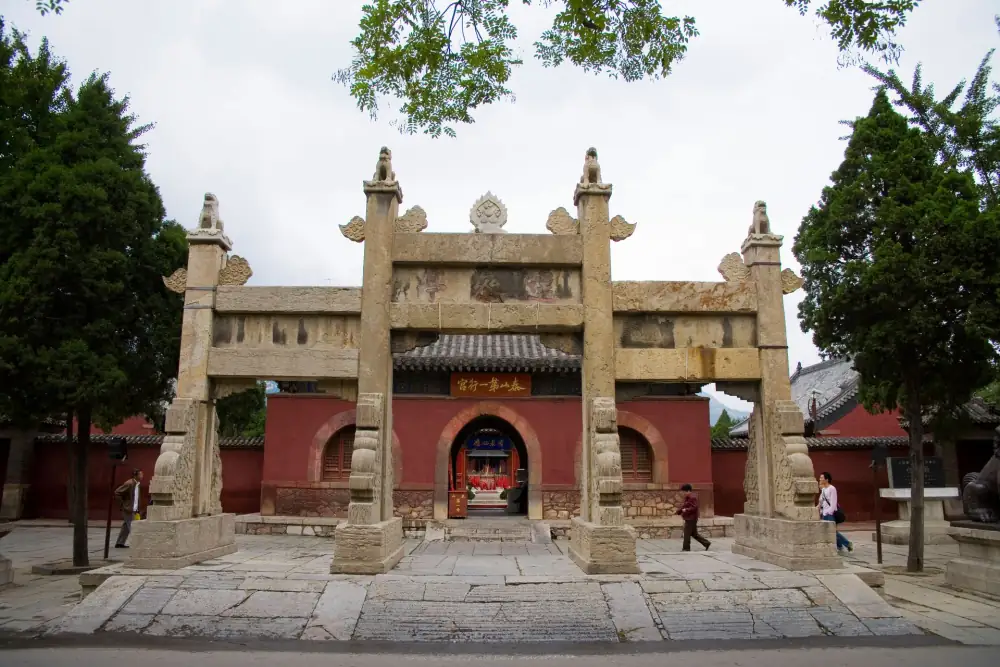
The Confucius Cemetery is the world’s largest family cemetery — a walled forest of 200,000 graves spanning 2 km², where Confucius himself is buried alongside 80+ generations of his direct descendants. The forest has been continuously maintained for over 2,500 years.
Walking Through the Forest: The 800-year-old trees (ancient cypress, ginkgo, elm) shade a forest of stone-stelae marking graves from every period of Chinese history. Early morning walks through the cemetery, with mist filtering through the ancient trees and the sounds of birds, is an experience of profound stillness.
Confucius’s Own Tomb: The simple burial mound is a three-dimensional dome 6 meters high; there’s no elaborate structure — just the earthen mound, a simple stone tablet, and the ancient trees. The simplicity is striking given the grandeur of the temple.
Zilu’s Tomb: The tomb of Zi Lu (子路), one of Confucius’s most beloved disciples, is located in the cemetery and marked with a memorial stone.
Entry: Included in combined ticket. Travel: The cemetery is 1 km north of the Kong Family Mansion; most visitors take a horse-drawn cart (¥10-15) or walk.
Confucius Ceremony
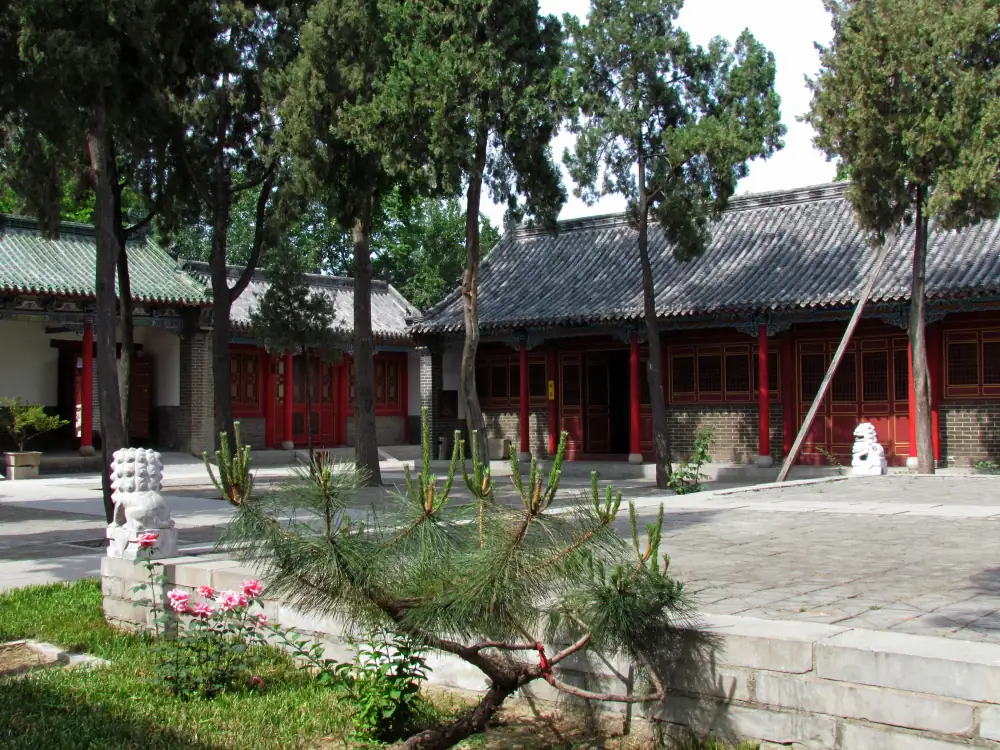
Twice annually — on Confucius’s birthday (September 28th) and on New Year — elaborate traditional ceremonies are held at the Confucius Temple. The September 28th ceremony (Confucius Culture Festival) is the most significant: participants in Tang dynasty-style robes perform ritual dances, music, and offerings that have been unchanged for centuries.
Attending the ceremony: The main ceremony is free to observe (with the general admission ticket). Arrive early for a viewing position.
Nishan Birthplace
Confucius was actually born at Nishan (尼山), 28 km southeast of Qufu, where his mother is said to have prayed at the Niqiu Mountain shrine. The Nishan Academy (尼山圣境) has recently been developed into a large cultural tourism complex — architecturally impressive, somewhat theme-park in execution. The birthplace cave and small temple here are more historically authentic.
Getting there: Tour buses from Qufu bus station; taxi approximately ¥60-80 return.
Practical Information
Getting to Qufu:
- High-speed train: Qufu East Station (曲阜东站) on the Beijing-Shanghai HSR line
- From Beijing: 2.5-3 hours
- From Shanghai: 3.5-4 hours
- From Jinan: 30 minutes
- From Nanjing: 2.5 hours
- Note: Qufu East Station is 15 km from the center; taxi ¥25-35, or shuttle bus
Accommodation: Several hotels operate in the city center, with the Confucius International Hotel being the most prominent. Budget guesthouses are available near the three main sites. Day-trip from Ji’nan or Nanjing is possible; overnight stay allows more time for the cemetery.
Food: Qufu’s local cuisine reflects Shandong’s tradition of “Confucian cuisine” (孔府菜) — the elaborate, refined cooking of the Kong family mansion kitchen. Several restaurants offer Kong family-style meals (expensive and somewhat formalized). The more accessible local food is excellent Shandong-style cooking: braised pork (红烧肉), fresh seafood (Shandong is a coastal province), and various wheat-based preparations.
Best Season: Spring (April-May) and autumn (September-October) are ideal. The September ceremonies add cultural value to autumn visits. Summer is hot; winter is cold but uncrowded.
Combined Itinerary: Qufu pairs well with Taishan Mountain (泰山), approximately 60 km to the north — the sacred mountain where Chinese emperors historically performed the “Feng Shan” ceremonies to report to heaven. A 2-3 day itinerary combining Qufu and Taishan covers two of China’s most historically significant sites.
Qufu is one of those places that rewards visitors with any knowledge of Chinese history and philosophy with extraordinary depth, and rewards even casual visitors with remarkable architecture. The cemetery alone — walking through 2,500 years of continuous family history under ancient trees — is among Asia’s most remarkable experiences.