
Shanxi sits on a plateau between the Yellow River and the Taihang Mountains — geographically isolated enough that it preserved more of China’s ancient architecture than almost any other province. The province has the highest concentration of pre-Ming Dynasty wooden buildings in China; Datong has some of the finest Buddhist cave art in the world; and Pingyao is the best-preserved ancient Chinese commercial city standing anywhere.
It’s not on most international visitors’ radars, which makes it better. The sights are extraordinary and the crowds are a fraction of what you’d face at equivalent sites elsewhere.
Table of contents
Open Table of contents
Getting There & Around
Entry points: Taiyuan Wusu Airport (TYN) is the main hub, with domestic connections from Beijing (1 hour), Shanghai (2 hours), and Chengdu (2 hours). Datong Airport (DAT) also has domestic connections from Beijing (45 min).
HSR connections:
- Beijing → Datong: 2 hours by HSR (¥140-175)
- Datong → Taiyuan: 2.5 hours (¥120-150)
- Taiyuan → Pingyao: 30 minutes (¥35-45)
Recommended routing: Fly/train into Datong, explore Datong and surroundings for 2 days, then south to Wutaishan (1 day detour), then Taiyuan → Pingyao, fly out from Taiyuan.
Days 1-2: Datong
Datong (大同) was the capital of the Northern Wei Dynasty (386-534 CE) — a Xianbei (proto-Mongolian) ruling dynasty that commissioned some of the greatest Buddhist art in China. The legacy of that period is still astonishing.
Yungang Grottoes (Day 1)
Yungang Grottoes (云冈石窟, ¥120) is a UNESCO World Heritage Site and one of the three great Buddhist cave art complexes in China (alongside Dunhuang and Longmen). 252 caves contain over 51,000 Buddhist sculptures carved between 460-525 CE.
The scale is extraordinary. Cave 20’s seated Buddha is 13.7m tall, sitting in the open air after the front cave wall collapsed. Caves 5 and 6 are the most elaborate, with floor-to-ceiling carved panels depicting Buddhist cosmology and stories. The cave art shows clear Central Asian influences — the Buddha faces show Afghan and Indian features rather than Chinese ones — evidence of the international Buddhist network of the 5th century.
Allow 3-4 hours minimum. Bring a flashlight for the darker inner caves (most have lighting but supplementary light helps appreciate the detail).
Getting there: Bus 3 or 4 from Datong city center (¥2, 30 minutes) or taxi (¥30-40).
Datong City (Day 1 Afternoon)
Datong was extensively renovated from 2008-2015 in a controversial project that rebuilt the ancient city walls and demolished many historic but deteriorating buildings to create a cleaner “ancient” appearance. The rebuilt Datong Ancient City Walls (¥45) are impressive regardless of the controversy.
Huayan Monastery (华严寺, ¥45) in the old city center has two intact Liao Dynasty wooden halls (11th century) — some of the oldest surviving wooden halls in China.
Shanhua Monastery (善化寺, ¥20) — another Liao Dynasty complex, smaller but more intimate and less visited than Huayan.
Hanging Temple (Day 2)
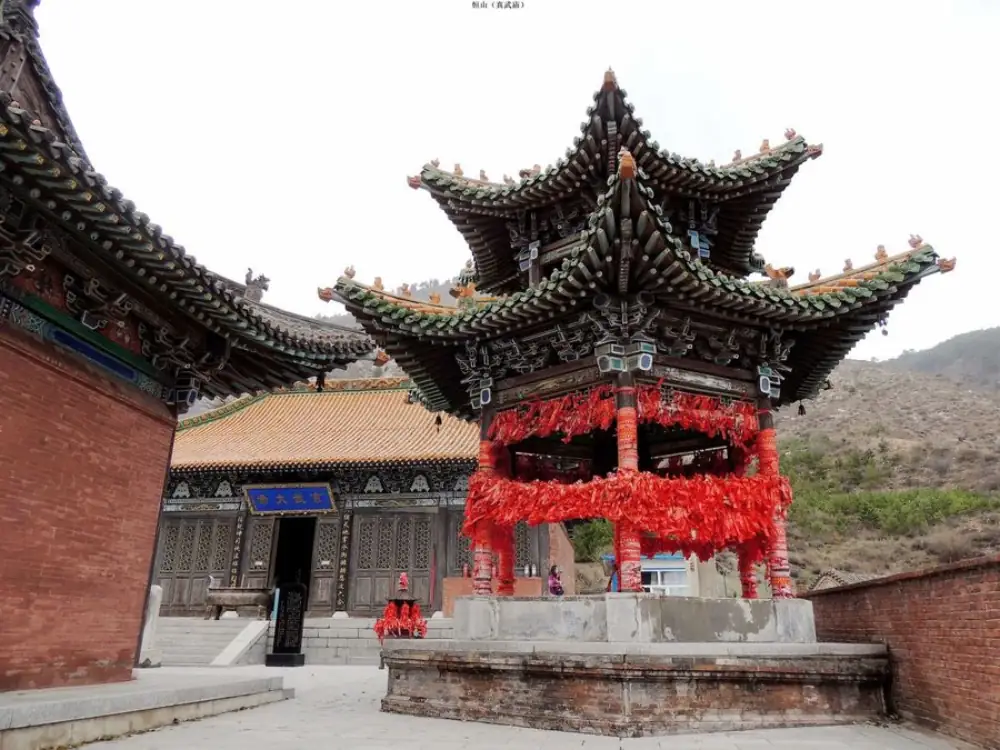
Hanging Temple (悬空寺, ¥130) is 60km southeast of Datong — a 1,400-year-old temple complex built directly into a sheer cliff face above the Hengshan gorge. The main pavilions are supported by thin wooden poles driven into the rock; viewed from below, the temple appears to defy gravity. It’s one of the most visually extraordinary temples in China.
The interior has shrines to Taoist, Buddhist, and Confucian deities side by side — a rare example of China’s three major philosophical traditions sharing the same sacred space.
Getting there: Shared minibuses from Datong South Bus Station (¥30, 1.5 hours) or join a day tour (¥150-200 including transport and ticket). The Hanging Temple is usually combined with the nearby Mount Hengshan Scenic Area (恒山, ¥55).
Day 3: Wutai Mountain
Journey: Bus from Datong to Wutaishan (五台山) takes 3.5 hours (¥60). Alternatively, HSR to Xinzhou and then bus/taxi — slower overall.
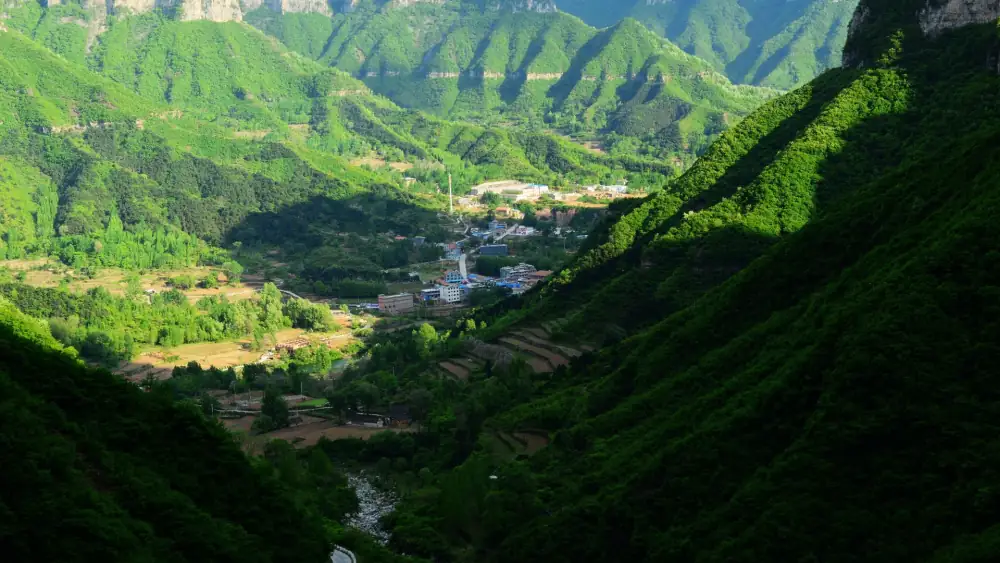
Wutai Mountain (五台山, ¥168 entrance) is one of the four sacred Buddhist mountains of China and the only one associated with the bodhisattva Manjushri (文殊菩萨). It’s a complex of five flat-topped peaks at 2,000-3,000m altitude, with 47 active temples distributed across the mountain valleys.
Unlike China’s other tourist mountains, Wutaishan is a functioning monastic community. Thousands of monks and nuns live and practice here; morning chanting begins at 4am; the atmosphere is genuinely devotional rather than merely historical.
Taihuai Town
The main cluster of temples is around Taihuai Town (台怀镇) in the valley between the five peaks. Key temples:
Tayuan Temple (塔院寺, ¥5) — the large white stupa (dagoba) that’s the symbol of Wutaishan. The stupa was originally built in 1301 under Kublai Khan’s patronage and is still a major pilgrimage focus.
Xiantong Temple (显通寺, ¥5) — the largest and oldest temple complex on the mountain, founded in 68 CE. The Copper Hall (铜殿) — an entire hall cast in bronze — and the Wuye Temple (五爷庙, ¥5) nearby (the most popular for worshippers, with a waiting list for incense offerings) are the highlights.
Nanshan Temple (南山寺, ¥5) — a Qing Dynasty temple complex carved into a cliff terrace, with ornate stonework and excellent views down the valley. A 30-minute climb from Taihuai.
Overnight: The temple-run guesthouses (¥100-200/night) inside the scenic area offer an authentic atmosphere. There are also mid-range hotels in Taihuai Town.
Day 4: Pingyao
Journey: Bus from Wutaishan to Xinzhou (3 hours), then HSR to Pingyao (30 min). Or direct bus Datong → Taiyuan (3 hours) and HSR to Pingyao. Total: 5-6 hours depending on routing.
Pingyao (平遥, ¥130 combined ticket for the old city sites) is the most intact ancient commercial city in China — a Ming and Qing Dynasty walled city that prospered as China’s financial center during the 19th century and declined fast enough afterward that the old town survived demolition. The 6.4km city wall (built 1370) is the most complete in China after Xi’an.
Walking the Old Town
Unlike Xi’an’s old city (which has a modern urban core), Pingyao’s walled area is almost entirely preserved as a late-Qing town — low courtyard houses, traditional shops, and flagstone streets without modern buildings interrupting the view.
Ming Qing Street (明清街) is the main commercial thoroughfare — lacquerware, vinegar (Pingyao aged vinegar is nationally famous), and traditional crafts.
The Rishengchang Exchange House (日升昌票号, ¥30 or included in combined ticket) is where China’s first financial instrument — the piaohao (镖号, draft bank) — was invented in 1823. These banks allowed merchants to transfer funds across China without physically carrying silver. Understanding that Pingyao was effectively the city that invented banking in China gives the architecture more meaning.
City Wall walk: The full 6.4km circuit takes about 2 hours. The best view is from the South Gate (迎熏门) looking back into the city at dusk.
Pingyao Accommodation
Stay the night in a traditional courtyard guesthouse (四合院客栈, ¥200-500/night) inside the old city walls — there are dozens of well-run options. This puts you in the old town in the early morning when the tour groups haven’t yet arrived and the streets belong to you.
Day 5: More Pingyao & Return
Morning: Old City Details
With a morning free in Pingyao, explore the lesser-visited corners:
Zhenguo Temple (镇国寺, ¥25) — 15km outside the old city walls, a 963 CE temple with one of the five oldest wooden buildings in China. The main hall’s painted figures from the Five Dynasties period (907-960 CE) are some of the oldest surviving polychrome Buddhist sculptures.
Shuanglin Temple (双林寺, ¥35) — 6km from Pingyao, with a remarkable collection of 2,000 painted clay figures spanning the Song to Ming Dynasties. The figures show an unprecedented expressive range — warriors grimacing, bodhisattvas smiling, guardians scowling. One of China’s most remarkable religious art collections and almost always uncrowded.
Afternoon: HSR from Pingyao back to Taiyuan (30 minutes, ¥35) for flight connections or onward travel.
Practical Information
| Item | Cost |
|---|---|
| Yungang Grottoes | ¥120 |
| Datong Hanging Temple | ¥130 |
| Wutaishan entrance | ¥168 |
| Pingyao combined ticket | ¥130 |
| Shuanglin Temple | ¥35 |
| Datong → Taiyuan HSR | ¥120-150 |
| Taiyuan → Pingyao HSR | ¥35-45 |
| Budget guesthouse | ¥150-300/night |
| Pingyao courtyard inn | ¥200-500/night |
Best time: April-October. Wutaishan is particularly beautiful in June-August when the alpine meadows are green and the temples are active with festivals. Pingyao is excellent in autumn (September-October) when the light is warm and crowds thin after Golden Week.
Pingyao vinegar: Shanxi aged vinegar (山西老陈醋) is the most prestigious vinegar in China — dark, complex, and aged for 3+ years. Pingyao’s Gu Zhai brand is a reliable quality indicator. Buy it as a gift rather than the tourist-facing bottles in the main street shops.
What to eat in Shanxi: Knife-cut noodles (刀削面, ¥10-20) — the distinctive Shanxi hand-technique of slashing noodle dough directly into boiling water. Braised pork with vinegar (醋溜肉) and vinegar soup (浆水汤, ¥8-12) at any local restaurant.