
Table of contents
Open Table of contents
Understanding the Sacred Peaks
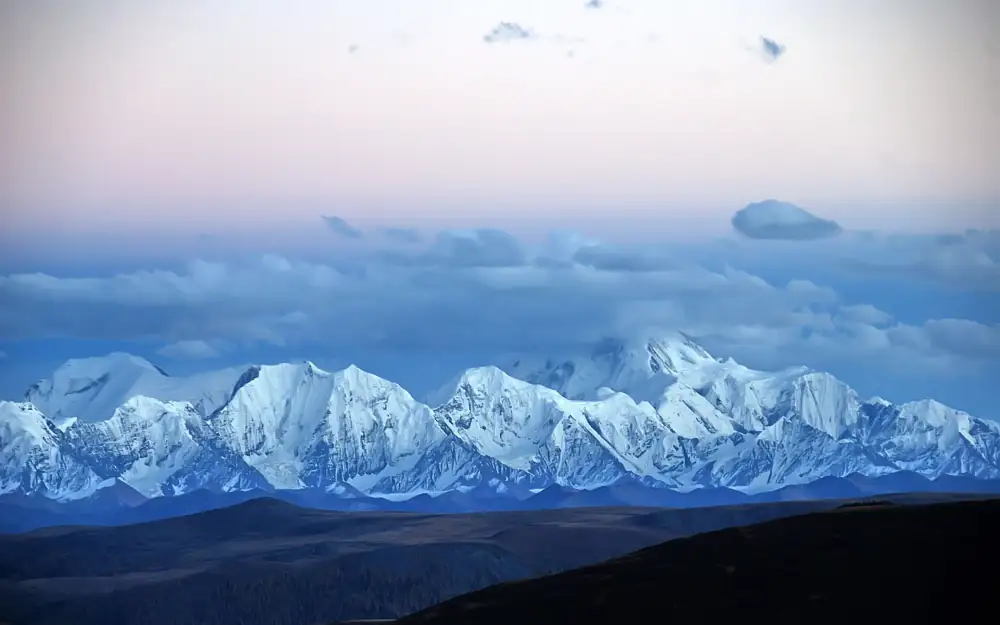
In Tibetan Buddhist tradition, the three peaks are emanations of the Bodhisattvas Chenrezig (Avalokiteshvara, compassion), Jampayang (Mañjuśrī, wisdom), and Chanadorje (Vajrapani, power) — together representing the three most important protective deities of Tibet. The mountains have been sacred since at least the 17th century when the 5th Dalai Lama is believed to have performed consecration rituals here.
This isn’t just historical background — it fundamentally shapes the experience. Local Tibetan communities maintain the kora (circumambulation) routes around the peaks, and you’ll see pilgrims completing the circuit with full prostrations, covering their bodies along the ground for every step. The atmosphere is one of active devotion, not museum reverence.
Getting to Daocheng Yading
By Air (Most Common Route)
Daocheng Yading Airport (稻城亚丁机场) sits at 4,411 meters, making it one of the world’s highest commercial airports. Despite this, it has become the main access point for most visitors.
Direct flights operate from:
- Chengdu Tianfu International Airport: Daily, 55 minutes, from ¥450–1,200 one-way depending on season
- Chongqing: A few weekly flights, from ¥550
- Guiyang: Seasonal routes, from ¥600
- Shanghai Pudong: Seasonal direct flights May–October, from ¥1,200
Critical note: Flights at this altitude are frequently cancelled or delayed due to weather. Build buffer days into your itinerary — arriving two days early before any important onwards journey is smart.
By Long-Distance Bus/Private Driver
From Chengdu, overland travel takes 2 days minimum, usually via Kangding (3–4 hours by bus or high-speed rail), then continuing to Litang or Xiangcheng and finally Daocheng. The drive is spectacular but exhausting — if you do this route, treat it as part of the experience rather than just transit.
A private driver from Chengdu costs approximately ¥2,000–2,800 for the round trip. Many travelers prefer this because it allows stops at Litang, Xinduqiao (a famous photography base), and other highlights en route.
From Yunnan (Southern Route)
Coming from Yunnan via Shangri-La and Xiangcheng is increasingly popular and takes about 8–10 hours by road. This approach also helps with acclimatization — you’re already at altitude in Shangri-La (3,300m) before arriving in Daocheng (3,700m).
Altitude Acclimatization — Critical Information
This cannot be stressed enough. The Yading core scenic area sits at 4,200–4,800 meters. Altitude sickness (acute mountain sickness/AMS) is a real and potentially serious risk for anyone ascending rapidly from sea level.
Symptoms to know
- Headache, nausea, fatigue (mild AMS — rest, hydrate, don’t ascend)
- Severe headache unresponsive to ibuprofen, vomiting, inability to walk straight (serious AMS — descend immediately)
- Confusion, extreme breathlessness at rest, coughing pink froth (HACE/HAPE — medical emergency, immediate descent and evacuation)
Acclimatization strategy
Option 1 (Flying in): Spend your first full day in Daocheng Town (3,700m) resting and hydrating. Don’t do any significant hiking. On Day 2, enter the scenic area and take cable cars rather than hiking. Only attempt lower trails. Day 3+: gradually increase altitude and exertion.
Option 2 (Driving in via Kangding): Spend a night in Kangding (2,600m), then Litang (4,014m), before proceeding to Daocheng. This gradual ascent significantly reduces AMS risk.
Diamox (Acetazolamide) is commonly used as a prophylactic. Consult a doctor before travel — typical dosage is 125–250mg twice daily, starting 24 hours before ascent. It has side effects (tingling extremities, increased urination) but is generally well-tolerated.
The Yading Scenic Area
Entry Tickets and Logistics
- Scenic area entrance fee: ¥150/person (valid for 2 days)
- Eco-tour bus (must-take inside the area): ¥100/person round trip to Luorong牧场
- Cable car to Milk Lake area: ¥100 up, ¥80 down, or ¥160 round trip
- Total basic budget: approximately ¥350–400/person just for entry + transport
The scenic area is large and designed for bus-and-walk exploration. You cannot drive your own vehicle inside.
Key Destinations Inside the Area
Luorong Pastoral Meadow (洛绒牛场) — 4,180m The meadow is the first main stop inside the area. Prayer flags strung between trees, yaks grazing, and the peak of Chanadorje reflected in a small river. This is where most casual visitors turn around, and it’s already spectacular. A horse rental option is available here (¥120–180) for those with altitude symptoms who want to reach higher areas.
Milk Lake (牛奶海) — 4,700m Above Luorong, the cable car brings you to the trailhead for Milk Lake. From the top cable car station, it’s about 2km hiking to the lake — steady but demanding at altitude. The lake’s famous milky blue-green color comes from suspended glacier melt minerals. On calm mornings the surface reflects the snow peak of Chanadorje perfectly.
Five-Color Lake (五色海) — 4,800m A further 1.5km from Milk Lake, uphill. Smaller but even more intense in color — the combination of minerals, glacier silt, and high-altitude light creates an otherworldly palette. This is genuinely hard to reach at altitude; give yourself 3+ hours from the cable car top.
Pearl Lake (珍珠海) — 4,070m Below Luorong meadow, this elongated lake surrounded by forest is actually the most photographed spot in Yading. The boardwalk path around its shore and the mountain reflections in the water are iconic. Don’t skip it in favor of rushing to higher areas.
Trekking Routes
The Inner Kora (小转山) — 2–3 Days
This is the traditional pilgrimage circuit around the base of the three peaks. The route is roughly 50km and involves passes above 5,000m. It follows the same path that Tibetan pilgrims have walked for generations.
Day 1: Enter through the main scenic area, reach Luorong Pastoral Meadow, camp near the meadow or in a nearby guesthouse Day 2: Ascend to cross the high pass toward Chenrezig peak, camp in the valley below Day 3: Complete the circuit back to the trailhead
This requires excellent physical fitness, full camping/cold weather equipment, and ideally a local guide or joining an organized group. Several agencies in Daocheng Town offer guided kora packages for ¥1,500–2,500/person.
Day Hike Options
- Pearl Lake boardwalk: 3km, 1–2 hours, flat, suitable for anyone
- Luorong Meadow from eco-bus: 2km walk, easy terrain at 4,180m
- Milk Lake hike: 4km round trip from cable car top, moderate difficulty at altitude
- Five-Color Lake extension: Add 3km to the above, challenging at altitude
Photography at Yading
Yading is one of China’s great photography destinations, but getting the shots you’ve seen requires timing and positioning.
Chenrezig (仙乃日) reflection: Pearl Lake at dawn on windless mornings produces the clearest reflections. Arrive at the lake before sunrise (7am in October, 6am in July). The light on the peak is warm orange for the first 30 minutes.
Jampayang in clouds: The central peak often sits partially in cloud. Late afternoon, when convection clouds build and then clear, can produce dramatic partial-cloud-peak compositions from the meadow area.
Autumn colors: Mid-October produces the most famous Yading look — golden and red forest against white peaks. The week around October 15 tends to be peak color and peak crowds.
Winter: December–February, fewer visitors and snow transforms the landscape. But some trails close and altitude in winter with cold is significantly more demanding.
Daocheng Town Logistics
Accommodation
Most visitors stay in Daocheng Town (稻城县城) at 3,700m and drive/bus to the scenic area each day (about 45 minutes each way).
- Budget guesthouses: ¥80–150/night, basic but adequate
- Mid-range hotels: Tibetan-style guesthouses ¥200–350/night
- Best option: Hazel Guesthouse (榛子民宿) and similar boutique Tibetan guesthouses: ¥300–500/night with excellent breakfast
You can also stay inside the scenic area at Yading Village (亚丁村) which is closer to the action — limited accommodation at ¥250–500/night.
Food
Daocheng Town has a decent selection of restaurants serving both Tibetan and Sichuan food. Yak butter tea is obligatory (¥10–15), tsampa (roasted barley flour) porridge makes a fortifying breakfast at altitude, and the yak meat hot pot is excellent. Budget ¥60–100/day for food.
Practical Tips
Best months: September–October (autumn colors, clearest skies) and May–June (flowers, fewer crowds, dramatic clouds). July–August has monsoon clouds but vivid green meadows.
Avoid: Chinese National Holiday Week (October 1–7) — the scenic area reaches maximum visitor caps daily and queues are long.
Altitude medicine: Bring Diamox and discuss with a doctor. Many local pharmacies in Daocheng also sell altitude sickness medicines.
Oxygen: Portable oxygen canisters (¥30–50 each) are widely sold in Daocheng and at the scenic area entrance. Having one as a backup is sensible, though they don’t substitute for proper acclimatization.
Warm layers: Even in summer, temperatures at 4,800m can drop to near freezing at night. Bring a down jacket regardless of season.
Cash: Daocheng has ATMs but they sometimes run out of cash or have connectivity issues. Carry ¥1,000–2,000 in cash as backup.
Phone signal: Sporadic inside the scenic area. Download offline maps. Let family know your rough itinerary.
Daocheng Yading is one of those places that justifies the difficulty of getting there and the adjustment of arriving at altitude. The sacred peaks have drawn pilgrims for centuries for good reason — there’s an energy to the landscape that transcends explanation. Come with patience, physical preparation, and an open attitude toward the Tibetan Buddhist culture that gives this place its soul.