
Table of contents
Open Table of contents
The Mountain’s Scale and Structure
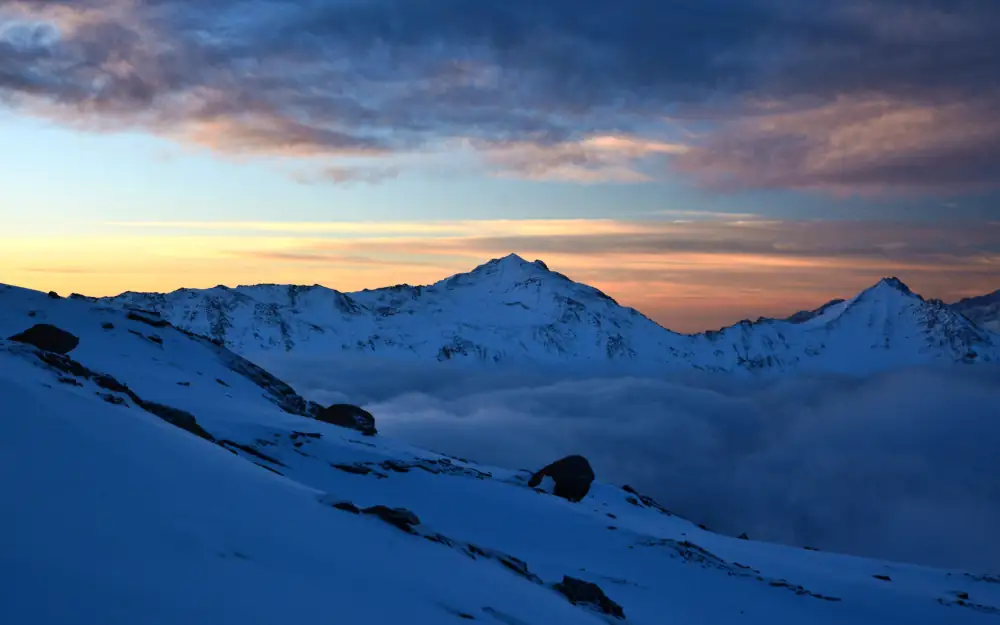
Emei Mountain can be conceptually divided into three sections:
Low mountain (低山区, 500–1,600m): Subtropical forest, most of the temples including Baoguo Temple (the main entry temple), Qingyin Pavilion (清音阁), and Wannian Temple (万年寺). This is where the monkeys are.
Middle mountain (中山区, 1,600–2,500m): Transitional forest, cooler temperatures, fewer temples but more dramatic scenery.
High mountain (高山区, 2,500–3,099m): Subalpine and alpine zone, the summit Jinding (Golden Summit, 金顶) with its famous temple and the sea of clouds.
Most visitors see only the summit via cable car and perhaps one or two lower temples. This is fine but misses much of what makes Emei special.
Route Options
Option 1: Cable Car Fast Track (1 day)
The most popular approach for casual visitors:
- Bus from Emei Town to Leidongping (雷洞坪, 2,400m) — about 2 hours, ¥100 bus ticket included in scenic area admission
- Cable car from Leidongping to Jinding (金顶, 3,077m) — 15 minutes, ¥65 up / ¥55 down / ¥120 round trip
- Explore the Jinding temple complex and sea of clouds
- Return by cable car and bus
Total time: 6–8 hours Best for: Travelers with limited time or mobility limitations Limitation: Misses the forest zones, temples, and monkeys of the lower mountain entirely
Option 2: Partial Hike + Cable Car (2 days)
Day 1: Enter the low mountain, visit Baoguo Temple and Wannian Temple (cable car to Wannian, ¥60 round trip), hike to Qingyin Pavilion, overnight at Hongchunping monastery (洪椿坪, 1,120m) or Xianfeng Temple (仙峰寺, 1,752m) Day 2: Continue ascending through middle mountain, join bus at Qingyin to reach Leidongping, cable car to summit, return
This gives more of the forest ecology, monkey encounters, and temple immersion.
Option 3: Full Trek (3–4 days)
The complete mountain experience: Day 1: Baoguo Temple → Qingyin Pavilion → Wannian Temple → Xianfeng Temple (overnight) Day 2: Xianfeng Temple → Elephant Bathing Pool (洗象池, 2,070m) (overnight) Day 3: Elephant Bathing Pool → Jinding Summit (overnight at the summit guesthouse) Day 4: Sunrise on the summit, descend by cable car and bus
This involves approximately 50km of mountain walking over the full route. The temples en route often have accommodation for pilgrims and tourists alike.
The Jinding Summit Complex
The summit (Jinding, 金顶, 3,077m) is the culmination of the Emei experience. The centerpiece is the Jinding Temple — a complex rebuilt and expanded in the early 2000s, featuring:
- Huazang Temple (华藏寺): The main temple building, rebuilt in 2006 after fire
- The Ten-Direction Samantabhadra Statue (十方普贤圣像): A massive 48m bronze statue of the Bodhisattva Samantabhadra on his white elephant, installed in 2006. The four-directional design (actually ten faces at different vertical levels, each facing a different direction) is both an impressive engineering feat and a genuine religious focal point. The base of the statue contains multiple temple halls.
Entry to Jinding: Included in the scenic area ticket.
The Sea of Clouds
The phenomenon that makes Jinding famous as a photography destination — when morning cloud fills the valleys below and only the mountain peaks protrude above a white ocean — is spectacular but not guaranteed.
The sea of clouds is most reliable:
- October–December: Highest frequency of cloud inversions
- Spring (March–April): Common but with more variability
- Summer: Less common as warm air allows more mixing
Weather at the summit is changeable and often colder than expected. Even in July, temperature at 3,077m can be 10–15°C and drops significantly after clouds roll in. The summit can also be completely clear while the valleys are fogged in — or vice versa.
Staying overnight at the summit is the best strategy for catching both sunset and sunrise cloud phenomena. The Jinding Hotel (金顶宾馆) and several guesthouses operate at the summit. Rooms are basic but functional; expect to pay ¥200–400/night for a double. Book in advance for October–November and during national holidays.
The Monkeys
The Tibetan macaques (Macaca thibetana) of Emei Mountain are famous — large, confident primates that have lived on the mountain long enough to lose their fear of humans and develop a sophisticated understanding of how to extract food from tourists.
Monkey hotspot: The most concentrated monkey encounters are between Qingyin Pavilion and Wannian Temple on the lower mountain, particularly around the Bailong Bridge (白龙桥) area.
How they behave: The Emei macaques are genuinely opportunistic. They will steal bags, grab food from hands, and if not approached correctly, scratch or bite. The park provides warnings; take them seriously.
Safe approach:
- Don’t carry food in visible packaging
- Don’t hold food in your hands near monkeys
- Keep bags zipped and close to your body
- Don’t stare into a monkey’s eyes (challenge signal)
- If a monkey approaches, face it calmly and don’t run
Photography: Excellent opportunities for primate photography. Keep a safe distance (2–3m minimum) and use a zoom lens rather than getting close. The macaques are spectacularly photogenic in the dappled forest light.
Major Temples
Baoguo Temple (报国寺, 550m)
The main entry gate to the mountain, with the tourist service center and ticketing. A large active Buddhist monastery with good introductory exhibits on Emei’s Buddhist history. Entry included in scenic area ticket.
Wannian Temple (万年寺, 1,020m)
The most historically significant temple, founded in the 4th century CE. The main attraction is the brick and stone hall housing a large bronze statue of Samantabhadra on a white elephant (cast in the Song Dynasty, 980 CE). The cable car from below costs ¥60 round trip — good to go up, then hike down through the forest.
Qingyin Pavilion (清音阁, 710m)
Two streams converge here beneath a rock pavilion — the sound of the water gives the pavilion its name. The setting is beautiful and the site is a natural gathering point for hikers. Multiple trails branch out from here.
Xianfeng Temple (仙峰寺, 1,752m)
A mid-mountain temple that makes the best overnight stop for multi-day trekkers. The accommodation is basic (monastery guesthouse) but the location, above most clouds in certain conditions, is magical.
Entrance Tickets and Logistics
Scenic area entrance fee: ¥160/person (peak season March–November); ¥130/person (off-season)
- Includes access to all areas, internal bus service, and Wannian cable car station access
Key cable cars (additional cost):
- Wannian Cable Car: ¥65 one way up, ¥55 down
- Summit (Jinding) Cable Car: ¥65 up, ¥55 down, ¥120 round trip
Internal shuttle bus (included in ticket): Connects Baoguo Temple with Wannian Temple, then the main road up to Leidongping.
Opening hours: Scenic area open 24 hours (for pilgrims and trekkers). Cable cars: 6:30am–7pm (last cable car up; last down follows closing of summit).
Getting to Emei Mountain
From Chengdu:
- High-speed train: Chengdu South Station (成都南站) to Emei Station (峨眉站), about 1 hour, ¥35–50. Trains run frequently.
- Bus: From Chengdu Xinnanmen Bus Station, 2 hours, ¥45–60.
From Emei Station (in Emei Town), a 15-minute bus or taxi (¥15) takes you to Baoguo Temple (报国寺) at the mountain entrance.
Combine with Leshan Giant Buddha: Just 30km from Emei, the Leshan Giant Buddha (乐山大佛) — the world’s largest stone Buddha at 71m — is a perfect half-day add-on. Buses connect the two sites. Leshan entry: ¥90.
Where to Stay
Emei Town (Baoguo area): Most convenient for early morning starts. Multiple hotels from ¥80–300/night.
Inside the mountain: Temple guesthouses at Qingyin Pavilion, Xianfeng Temple, and the summit. Vary from ¥80 dormitory bunks to ¥300 private rooms. Book through hotels rather than at the door for peak season.
Best option: Stay one night in Emei Town, one night at a mid-mountain temple, and one night at the Jinding summit — this gives the full mountain experience spread across 3 days.
Practical Tips
Best seasons: Spring (April–May) for wildflowers and comfortable hiking; Autumn (September–October) for clearest summit views; Winter (December–February) for the stunning snowy peak and icy temple rooftops (bring microspikes/crampons for the icy paths — available to rent at the summit for ¥10/day).
Physical preparation: The full trek route involves sustained steep stair-climbing. Even the cable car + bus approach requires walking. Good footwear is essential.
Weather: Always carry rain gear and warm layers. The mountain creates its own weather and conditions change within an hour.
Altitude: The summit at 3,077m is high enough for some people to feel breathless on exertion. Rest and hydrate; don’t exert yourself immediately after the cable car ascent.
Emei Mountain is sacred not just in a historical sense but in the immediate experience of climbing it — the ancient stone steps worn smooth by millions of footfalls, the incense smoke rising from mountain temples, the immense quiet of old-growth forest. Whatever your relationship to Buddhism, you’ll feel the mountain’s weight and distinctiveness in a way that stays with you.