
Turpan sits in a depression 154 metres below sea level — the second-lowest point in the world after the Dead Sea — in the middle of the Xinjiang desert. Summer temperatures here reach 47–48°C at their extreme, and the land is technically one of the most arid places on earth. And yet this area has been continuously inhabited and farmed for at least 2,000 years.
The reason is water: an extraordinary system of underground channels called karez (坎儿井) brings snowmelt from the Tianshan mountains through underground tunnels that prevent evaporation in the desert heat. This engineering feat — developed around 2,500 years ago — made Turpan an oasis city and a crucial stop on the Silk Road.
Table of contents
Open Table of contents
The Ancient Cities
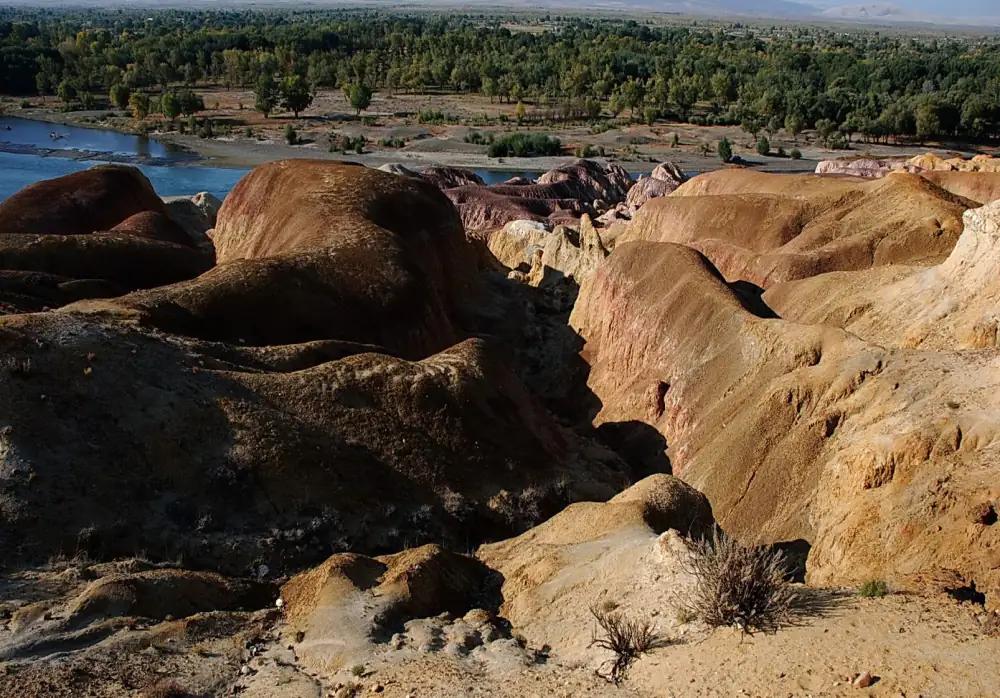
Jiaohe Ruins (交河故城)
Jiaohe is one of the best-preserved ancient cities in Central Asia. Founded around the 2nd century BC on a naturally fortified island in the middle of a river delta (the rivers have long since dried up), the city was inhabited for about 1,700 years before being destroyed by the Mongols in the 13th century. The climate is so dry that the mud-brick structures have never fully deteriorated.
Walking through Jiaohe is walking through an actual ancient city — not reconstructed, not a replica, but the original streets, walls, and building remains at 1:1 scale. The central Buddhist monastery complex, the government district, residential neighborhoods, and the cliff face edge of the island are all clearly readable.
Opening hours: 8:00am–6:30pm (summer), 9:00am–5:30pm (winter)
Entry fee: ¥70 per person
Location: 13km west of central Turpan; taxi (¥20–30 each way) or included in tour packages
Time needed: 1.5–2 hours; morning visit recommended in summer (pre-8am if possible) to avoid peak heat
Gaochang Ruins (高昌故城)
Larger than Jiaohe, Gaochang was the capital of multiple Silk Road kingdoms over several centuries. The ruins spread over 2 sq km and include remnants of the outer city wall (up to 8 metres high in places), the palace complex, a Buddhist monastery, and a large temple.
The famous Chinese monk Xuanzang (玄奘, the inspiration for the Monkey King story) passed through Gaochang in 629 AD on his way to India to collect Buddhist scriptures. The King of Gaochang was so impressed that he tried to keep Xuanzang permanently — the monk refused but accepted gifts, and the relationship between the two is documented in historical sources.
Opening hours: 8:00am–6:00pm
Entry fee: ¥65 per person
Getting there: 47km east of central Turpan; best reached by hired car or tour
Flaming Mountains (火焰山)
The Flaming Mountains are a range of red sandstone cliffs that glow orange-red in the sunlight, creating the appearance of flames — particularly at sunset. They achieved international fame as the setting in the 16th-century novel “Journey to the West” (西游记) where the Monkey King Sun Wukong had to borrow a magical fan to extinguish the flames before the pilgrimage could continue.
The mountains are real and genuinely striking — 100km long, rising to 831 metres, with the eroded red rock formations creating dramatic shapes. The highest temperatures ever recorded in China (nearly 50°C ground temperature) have been measured here.
Entry fee: ¥40 per person (for the tourist scenic area; the mountains themselves are visible from the road)
Best time to visit: Early morning or late afternoon, when the red colour is most intense
Heat warning: In summer, the ground surface here can reach 80°C. Closed-toe shoes, sun protection, and timing are essential.
A large thermometer monument marks the scenic area entrance — Chinese tourists photograph themselves next to the temperature reading (often 40°C+). It’s excellent content.
Karez Irrigation System (坎儿井)
The karez is the engineering achievement that made Turpan’s civilisation possible. The system consists of vertical wells dug into the mountain slope, connected by horizontal underground channels that carry snowmelt down to the oasis farms below. Because the channels are underground, evaporation is minimal.
Turpan has about 1,100 karez channels with a total combined length of over 5,000 kilometres — longer than the Grand Canal. The system was likely developed independently in parallel with similar Persian qanat systems.
Karez Museum: A tourist site near Turpan city where you can descend into a restored karez channel and walk through it. Well explained with English signage.
Entry fee: ¥45 per person
Opening hours: 9:00am–7:00pm
The Grape Valley (葡萄沟)
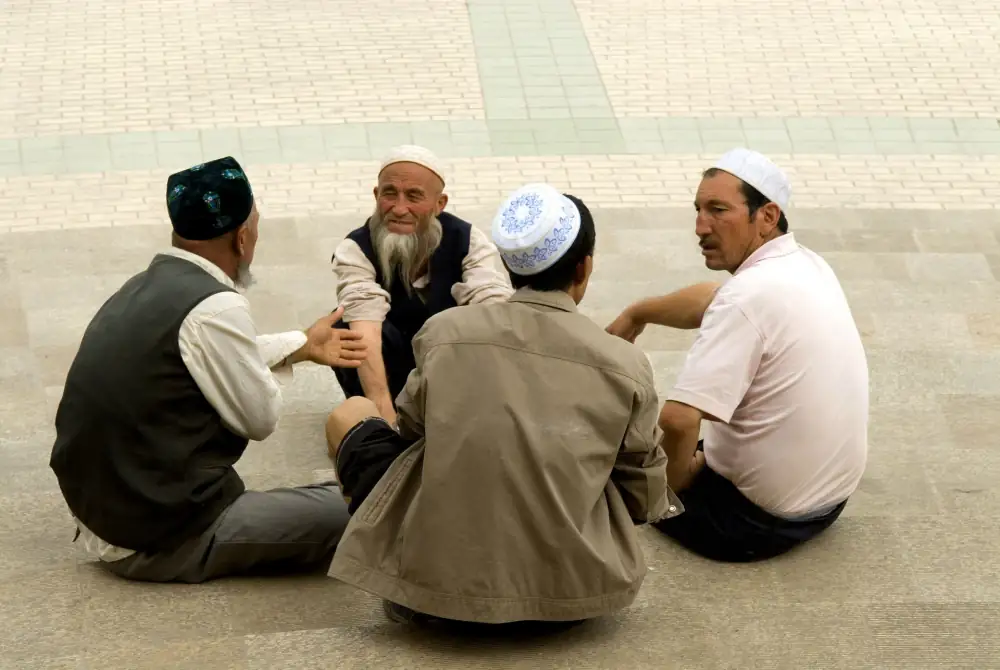
Turpan’s grapes are famous throughout China — varieties developed over 2,000 years of selective cultivation in this unique climate produce enormous, sweet fruits with thin skins. The Grape Valley (葡萄沟) northwest of the city is the primary growing area, with trellised vines creating shaded walkways through the orchards.
Entry fee: ¥60 per person
Best time to visit: August–September (grape harvest season)
Open: 8:00am–8:30pm
In the village section of the Grape Valley, Uyghur families sell fresh grapes, dried grapes (the green seedless Xinjiang raisins are excellent), and grape juice from stalls. This is the commercial end — a festival atmosphere with local food, music, and the opportunity to eat very good grapes.
Grape varieties to try:
- Muhe (无核白): The classic Xinjiang seedless green grape; sweet and thin-skinned
- Horse’s teat (马奶子): Large, elongated grape with a distinctive sweet flavour
- Rose fragrant (玫瑰香): Purple, with an intense floral aroma; best eaten fresh
The dried fruits: Turpan dried fruits — raisins, dried apricot, dried mulberry, dried melon — are available at shops throughout the city and make excellent purchases. Quality is far higher than anything sold in Chinese supermarkets. Budget ¥30–80 per 500g.
Uyghur Culture in Turpan
Turpan is one of the most culturally Uyghur cities in Xinjiang, with a large Uyghur majority and a distinct cultural character.
Food:
- Laghman (拉条子): Hand-pulled noodles stir-fried with vegetables and lamb; the definitive Uyghur noodle dish; ¥15–25
- Samsa (烤包子): Baked lamb and onion pastries from clay ovens; ¥5–8 each
- Polo (抓饭): Rice cooked with lamb, carrots, and onion in the Central Asian pilaf tradition; ¥20–35
- Nan bread (馕): Flatbread baked in tandoor ovens; ¥2–5, buy fresh from bakeries
Sunday Bazaar: The weekly market in the old city has fresh produce, animals, handicrafts, and general goods. More chaotic and authentic than the tourist sites.
Getting to Turpan
From Urumqi: The most common entry point. High-speed train from Urumqi South Station to Turpan North Station: about 30 minutes, ¥30–50. Or bus, about 1.5 hours.
From Xi’an: Long distance train or plane to Urumqi, then transfer.
From Kashgar: Train to Urumqi (10–15 hours) or fly, then connect to Turpan.
Note: Turpan North Station (吐鲁番北站) is the high-speed rail station, located about 50km from the city centre. Taxi from the station to central Turpan: ¥60–80, about 40 minutes. Don’t be surprised by this — the station is genuinely far from the old city.
When to Visit
August–September: Harvest season; grapes, melons, pomegranates all at peak. Hot (38–42°C) but this is when the city is most vibrant.
May–June and October: More comfortable temperatures (25–35°C); still excellent for the ruins and cultural sites.
July: Hottest month; 45°C+ is possible. Visit only if you enjoy extreme heat or are determined.
Winter (November–February): Cold (0°C to -15°C), minimal tourists. Ruins are uncrowded. Dried fruits and nuts available year-round.
Practical Tips
- Drink at least 3 litres of water per day in summer — dehydration is a real risk
- Sun protection (hat, long sleeves, sunscreen) is essential even for short outdoor walks
- The Xinjiang time offset: officially the same time zone as Beijing, but local Uyghur practice often follows “Xinjiang time” (2 hours behind Beijing time) — restaurants may open at 10am Beijing time (which is 8am local time)
- Most sites are accessible from central Turpan by short taxi ride