
Xinjiang Uyghur Autonomous Region is China’s largest administrative division — as big as Western Europe — and among its most geographically and culturally diverse. The region spans the Taklimakan Desert (one of the world’s largest), the Tian Shan mountain range, and the lush Altai region near Russia.
Table of contents
Open Table of contents
Important Travel Notes
Xinjiang has a heightened security environment. Travellers should:
- Carry your passport at all times — checkpoints are frequent
- Register at guesthouses (handled automatically at licensed accommodation)
- Follow instructions from security personnel — compliance makes travel smooth
- Allow extra time at airports — additional security screening is common
- Some areas require specific local registration — your tour guide or hotel will advise
Despite the security environment, foreign tourists are generally welcomed, and the experiences available are extraordinary.
Kashgar (喀什)
Kashgar is one of the most ancient and atmospheric cities in Asia — a Central Asian oasis trading city that served as a crossroads of Silk Road routes for 2,000 years. The city feels more like Pakistan or Kyrgyzstan than China.
Old City (喀什古城)
The mud-brick old city — the largest preserved earthen city in Central Asia — is a labyrinth of winding lanes, bazaars, craft workshops, and residential buildings built directly from yellow earth. An extraordinary living heritage site.
Best experience: Get lost in the southern quarter of the old city early morning (7–9am) before tourist activity begins — you’ll encounter daily Uyghur life: bread bakers removing nan from clay ovens, knife-sharpeners with foot-powered wheels, children going to school.
Id Kah Mosque (艾提尕尔清真寺)
The largest mosque in China by attendance — up to 10,000 worshippers for Friday prayers. The yellow-and-white facade on Kashgar’s central square is architecturally striking. Open to non-Muslim visitors outside prayer times (respectful dress required; no entry during Friday Jumu’ah prayer).
Sunday Livestock Market (牲畜大巴扎)
One of the world’s great traditional markets — thousands of sheep, goats, donkeys, and horses traded between Kyrgyz, Tajik, Uyghur, and Han herdsmen. A timeless spectacle that has operated for 2,000 years. Sunday mornings only; take a taxi to the market grounds 10km from the city.
Karakol Lake (卡拉库里湖)
140km south of Kashgar on the Karakoram Highway toward Pakistan — an alpine lake (3,600m) with a mirror-perfect reflection of 7,546m Muztagh Ata Peak. One of the most magnificent mountain landscapes in Asia. Day trip from Kashgar (¥55 entry).
Kanas Lake (喀纳斯湖)
Located in the Altai Mountains of far northern Xinjiang near the Russian and Mongolian borders — Kanas is one of China’s most beautiful places. A long ribbon lake of milky-blue water (caused by glacial silt) in taiga forest.
Best time: September–October for autumn foliage — the surrounding larch and birch forest turns brilliant yellow and orange, reflected in the blue lake.
Key Sites
Kanas Lake Viewpoint (喀纳斯湖观鱼台) — A hillside viewpoint giving the iconic view of the full lake and forested valley. 2-hour hike from Kanas village or shuttle bus.
Hemu Village (禾木村) — A Tuvan minority village (Tuvans are a Turkic people related to those in Russian Tuva) of small log cabins in a highland meadow surrounded by golden autumn trees. The most photographed village in northwest China.
White Birch Forest — Extensive stands of silver birch between Kanas and Hemu; extraordinary in autumn light.
Lake Monster: Local Tuvan legends describe enormous fish (or creature) in Kanas Lake; scientists have confirmed enormous Hucho salmon (taimen) up to 10m in length inhabit the lake — possibly the source of monster legends.
Turpan (吐鲁番)
See the Silk Road Itinerary guide for comprehensive coverage. Key points:
- Jiaohe Ancient City (1,800-year-old city carved from a mesa)
- Flaming Mountains (red sandstone ridges; 70°C surface temperature in summer)
- Karez underground irrigation system (2,000-year-old snow-melt channels)
- Grape Valley (best August–September for fresh Xinjiang grapes)
Urumqi (乌鲁木齐)
Xinjiang’s capital and the city furthest from any ocean on Earth (furthest from the sea in any direction).
Xinjiang Regional Museum — the Tarim mummies (3,000-year-old Caucasian mummies with blonde/red hair) are the most remarkable exhibits; extraordinary evidence of ancient Eurasian migration. Free.
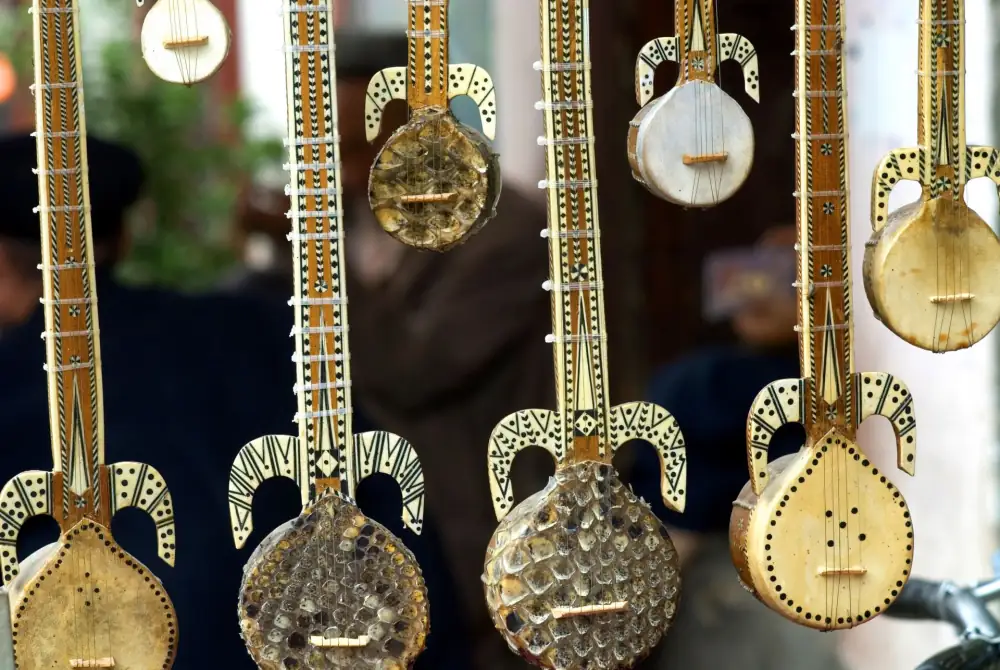
Erdaoqiao Grand Bazaar (二道桥国际大巴扎) — Central Asia’s largest bazaar; carpets, spices, saffron, dried fruit, traditional music instruments.
Tianchi (天池, Heaven Lake) — 1,980m elevation lake in the Tian Shan mountains above Urumqi; 2-hour drive. Entry ¥100. Day trip or overnight.
Qinghai and Gansu Extensions
For the classic Silk Road route (Xi’an–Zhangye–Jiayuguan–Dunhuang–Xinjiang), see the dedicated 14-Day Silk Road Itinerary guide.
Practical Info
Getting to Xinjiang: Urumqi and Kashgar both have airports with flights from major Chinese cities. Urumqi to Kashgar: 1.5 hours by air or 24 hours by overnight train.
Time zone note: Xinjiang uses Beijing Time (UTC+8) officially but operates on informal “Xinjiang Time” (UTC+6) — restaurants, shops, and some locals work on Xinjiang Time. Dinner is eaten at “7pm Xinjiang Time” which is 9pm Beijing Time.
Food: Xinjiang cuisine is Central Asian-influenced — polo (pilaf rice with lamb and carrots), laghman (hand-pulled noodles), samsa (baked lamb pastry), kebabs (串串). Exceptional quality.
Xinjiang fruit: World-famous — Hami melons (哈密瓜), Turpan grapes, Xinjiang walnut, pomegranate. Buy from roadside sellers for the freshest.