
Putian (莆田) occupies a stretch of the Fujian coast south of Fuzhou, on a coastal plain that was once largely wetland and tidal flat before centuries of land reclamation. It’s known across the Chinese-speaking world primarily for one thing: Meizhou Island, the birthplace of Mazu (妈祖), the sea goddess whose worship has spread to Taiwan, Hong Kong, Southeast Asia, and wherever people of Fujianese and Cantonese origin have settled around the world.
The Mazu cult began here in the Song Dynasty, when a woman named Lin Mo (林默) from Meizhou Island was said to have possessed spiritual powers that allowed her to protect sailors from storms. After her death at a young age, she was deified and her worship spread rapidly across maritime communities. Today the Mazu temple on Meizhou Island is one of the most important pilgrimage sites in the Chinese world, and the annual Mazu Festival draws devotees from across China and the broader Chinese diaspora.
Beyond Mazu, Putian has a remarkable coastal ecology — the Xinghua Bay (兴化湾) wetlands are one of China’s most significant winter shorebird staging grounds, hosting tens of thousands of migratory birds including rare species like the Spoon-billed Sandpiper.
Table of contents
Open Table of contents
Getting to Putian
By high-speed train:
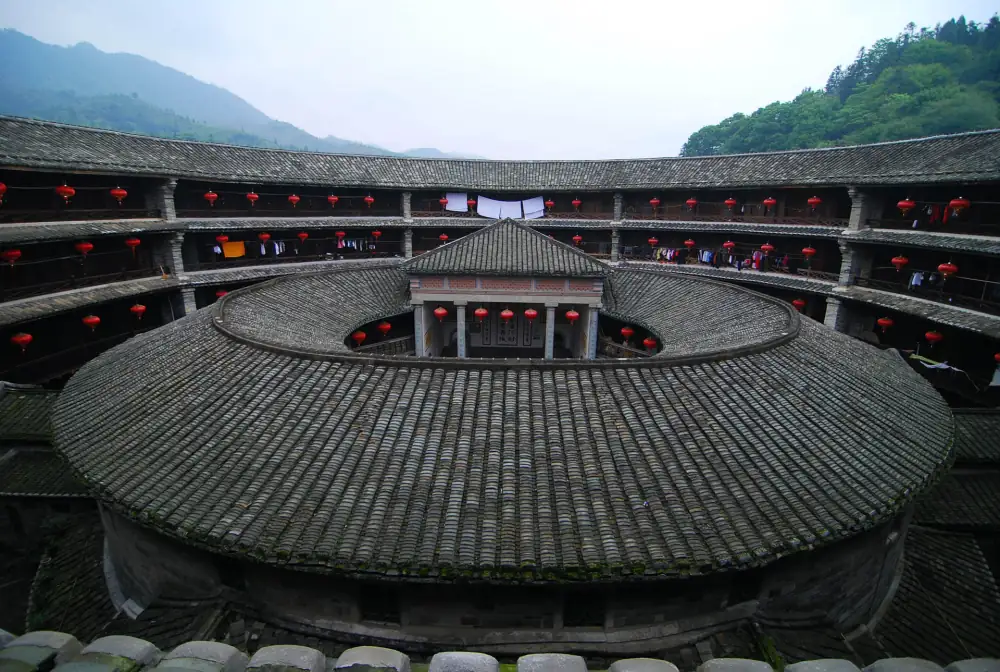
- From Fuzhou: About 30–40 minutes; ¥35–60; very frequent departures
- From Xiamen: About 1 hour; ¥80–120; multiple daily services
- From Shanghai: About 4 hours; ¥300–450
- From Beijing: About 6 hours; ¥450–600
- Putian Railway Station is well-connected; taxis and buses to the city center and ferry terminals are available outside the station
Getting to Meizhou Island:
- From Putian city center: Take Bus 7 or 8 to Wenjia Ferry Terminal (文甲码头); buses run every 20–30 minutes
- Ferry from Wenjia to Meizhou Island: 20 minutes; departures approximately every 30 minutes from 7:00am to 5:30pm; tickets ¥35 per person one-way
- The last ferry back is critical to note — missing it means overnight on the island or an expensive private boat
Meizhou Island & Mazu Temple (湄洲岛 / 妈祖祖庙)
Meizhou Island is a narrow island about 14km long and 1.3km at its widest, shaped by the waves of the Taiwan Strait into granite headlands and protected coves. The Mazu Ancestral Temple complex occupies the northern end of the island.
The Mazu Ancestral Temple (妈祖祖庙): The original temple on the site is said to date to 987 AD, shortly after Lin Mo’s death. The current complex is the result of centuries of expansion and reconstruction, with the most recent major additions in the 1980s and 1990s. It’s a large and impressive complex rising up the hillside in multiple terrace levels:
- Main Hall (正殿): Houses the central deity statue of Mazu; the atmosphere during major festivals is overwhelmingly incense-laden and emotionally charged
- Eternal Light Pavilion (圣旨门): The main gateway through which pilgrims enter
- Linghui Temple (灵慧庙): The oldest surviving structure on the site
- Holy Mountain Temple (圣山寺): Higher up the hillside; views across the Taiwan Strait
The pilgrimage experience: Visiting during the main festival periods (see below) is transformative — pilgrimage groups from Taiwan in particular arrive in large organized tours, often with elaborate processional practices including carrying Mazu statues, burning incense bundles, and performing traditional rituals. The religious intensity is genuine and impressive.
Entry fee: ¥95 per person for Meizhou Island Scenic Area (includes ferry and main temple access in combined tickets)
Island accommodation: Several guesthouses and hotels on the island allow overnight stays:
- Basic guesthouses: ¥120–200/night
- Better options: ¥300–600/night
- Staying overnight allows access to evening temple ceremonies and early morning seaside light
Mazu Festival (妈祖文化旅游节)
The annual Mazu Festival is held twice yearly:
- The Birthday of Mazu (妈祖诞辰): The 23rd day of the 3rd lunar month (usually April or May); the single largest event
- Mazu Ascension Day (妈祖升天祭): The 9th day of the 9th lunar month (usually October)
During the Birthday festival in particular, over 100,000 visitors arrive on Meizhou Island over a two-week period. Pilgrimage groups from Taiwan represent the largest contingent; the festival is both a religious event and a politically significant meeting point between the two sides of the Taiwan Strait.
What happens:
- Grand ritual ceremonies with traditional costumed priests, incense burning, and offerings
- Sea processions with decorated boats
- Traditional Fujian opera performances
- Lantern ceremonies on the water
Practical warning: During the festival period, ferries run at high frequency but are crowded; book island accommodation months in advance; some hotels in Putian city also fill up.
Xinghua Bay Wetlands (兴化湾湿地)

One of coastal China’s most important birding destinations sits largely unknown to international visitors within easy reach of Putian city. Xinghua Bay’s tidal flats — partly protected under the Fujian Wetlands Nature Reserve system — serve as a critical staging ground for migratory shorebirds on the East Asian-Australasian Flyway.
Key bird species:
- Spoon-billed Sandpiper (勺嘴鹬): Critically endangered; Xinghua Bay is one of the most reliable sites in China to see this remarkable bird, which has a spoon-shaped bill unlike any other shorebird species
- Far Eastern Curlew (大杓鹬): The world’s largest shorebird; significant numbers winter on these mudflats
- Bar-tailed Godwit (斑尾塍鹬): Stages here before undertaking epic non-stop trans-oceanic migrations
- Dozens of other sandpiper, plover, heron, and egret species
Best birding period: Late August to October for southbound migration; March–April for northbound; winter (November–February) for wintering species
Access: The wetlands are accessible from several points along the Xinghua Bay coast; the village of Jiangkou (江口镇) and the reclaimed land edges south of Putian city provide the best access. Birding guides are available through the local birding clubs — contact the Fujian Birding Association for recommendations.
Note on development: The Xinghua Bay tidal flats have faced pressure from land reclamation for industrial development. Some areas have been lost; advocacy by conservation organizations continues to protect the remaining habitat.
Putian Old City & Jiulishan
Putian’s older city area and surrounding countryside have historical sites that complement the pilgrimage and nature draws:
Guanghua Temple (广化寺): One of the most important Buddhist temples in Fujian, founded in the Southern Liang Dynasty (555 AD). The current Tang-era main hall and the famous triple-level stone pagoda (built 1082 AD) are significant architectural heritage. Entry ¥15.
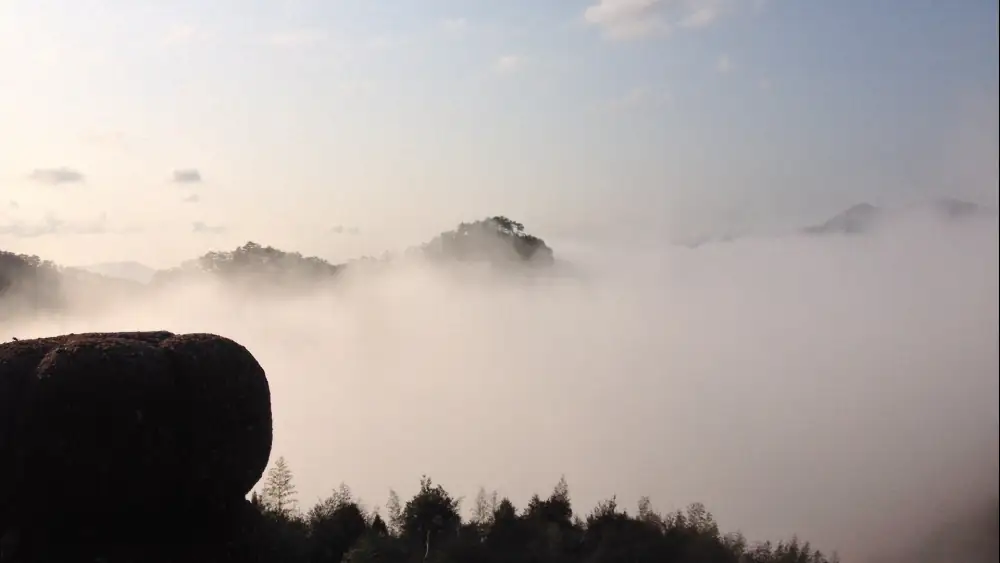
Jiulishan (九鲤湖): A scenic mountain lake area about 30km from Putian city, known for its nine waterfalls and the Jiuli Lake (九鲤湖) shrine associated with the Nine Carp Immortals of Taoist legend. The walk past the waterfalls along the gorge takes about 2 hours. Entry ¥45.
Meizhou Bay Coast: The coastline south of the ferry terminal has rocky headlands, fishing villages, and views of the offshore islands. The Meizhou Lighthouse is accessible by a coastal path from the main temple area.
Putian Food
Putian food is a distinct sub-style of Fujian cuisine, characterized by fresh seafood preparation, rice wine-based marinades, and a range of preserved and dried seafood products that reflect the coastal trading history.
Must-try dishes:
- Putian braised rice noodles (莆田卤面): Thick wheat noodles in a dense, sweet-savory dark sauce with mushrooms, pork, shrimp, and oysters; the definitive local comfort food
- Putian oyster porridge (蚵仔粥): Fresh oysters in a thin congee-style rice porridge; found at breakfast stalls throughout the city
- Braised abalone (焖鲍鱼): Putian has historically been a major abalone-harvesting area; the local braised preparation uses soy, rock sugar, and dried scallop to create a rich sauce
- Dried seafood market: The area around Pinghai (平海) has the best selection of dried seafood products including high-quality dried abalone, scallops, and fish maw
Restaurant areas: The Putian food stalls around Wenfeng South Road (文峰南路) are the best place for cheap, authentic local food. Dinner for two ¥50–120.
Practical Information
Best times to visit:
- October to April: Dry season; best for the wetlands and shorebird watching; comfortable temperatures
- Festival periods (April/May and October): For the Mazu festival; book accommodation months in advance
Accommodation:
- Putian city: Multiple mid-range hotels (¥150–350/night); Hilton and Marriott properties are available in the new business district (¥500–900/night)
- Meizhou Island: Limited options, book ahead especially for festival seasons
Day trip potential: Putian is easily combined with Xiamen (1 hour by train), Fuzhou (40 minutes), or Quanzhou (45 minutes) for a multi-city Fujian itinerary.
Weather note: Fujian’s coast is typhoon-prone July–September; check forecasts before traveling during this period.