
Lijiang Old Town (丽江古城) is both overrun by tourism and genuinely extraordinary. These two facts coexist uncomfortably, but managing the balance — knowing where the crowds are and where they aren’t — makes a Lijiang visit rewarding rather than frustrating.
The town was built by the Naxi people (纳西族) from the 10th century onward, on a system of three spring-fed waterways that still run through the labyrinthine stone-paved lanes. UNESCO inscribed it in 1997 as one of the best-preserved old towns in China. What it didn’t anticipate was 15 million annual visitors.
Table of contents
Open Table of contents
Essential Information
| Detail | Info |
|---|---|
| Province | Yunnan |
| Getting there | Fly to Lijiang Sanyi Airport (LJG) from most major Chinese cities; or high-speed rail from Dali (2 hrs), Kunming (3.5 hrs) |
| Old Town maintenance fee | ¥80/person (collected at entry points to the old town; valid for multiple days during your stay) |
| Best season | March–May and September–November; avoid Summer Golden Week |
| Altitude | 2,400m — mild acclimatisation needed for those coming from sea-level cities |
The Old Town: Where to Go (and Where Not To)
Sifang Square and Bar Street (四方街 / 酒吧街)
The geographical and commercial heart of Lijiang — and the most crowded place in the old town. The central square (Sifang) is pleasant in early morning when locals exercise here; by 10 AM it’s dense with tour groups. The adjacent bar street (Xinyi Street and its offshoots) is the Lijiang nightlife zone — cocktails, live music, and the specific atmosphere of a Chinese tourist bar district.
Be direct about expectations: This area is fully oriented toward visitors. It has energy and some genuinely good cafés, but it’s not “authentic” old Lijiang in any meaningful sense.
Strategy: Pass through Sifang Square early morning; experience the bar street once in the evening.
The Quieter Eastern and Northern Sections
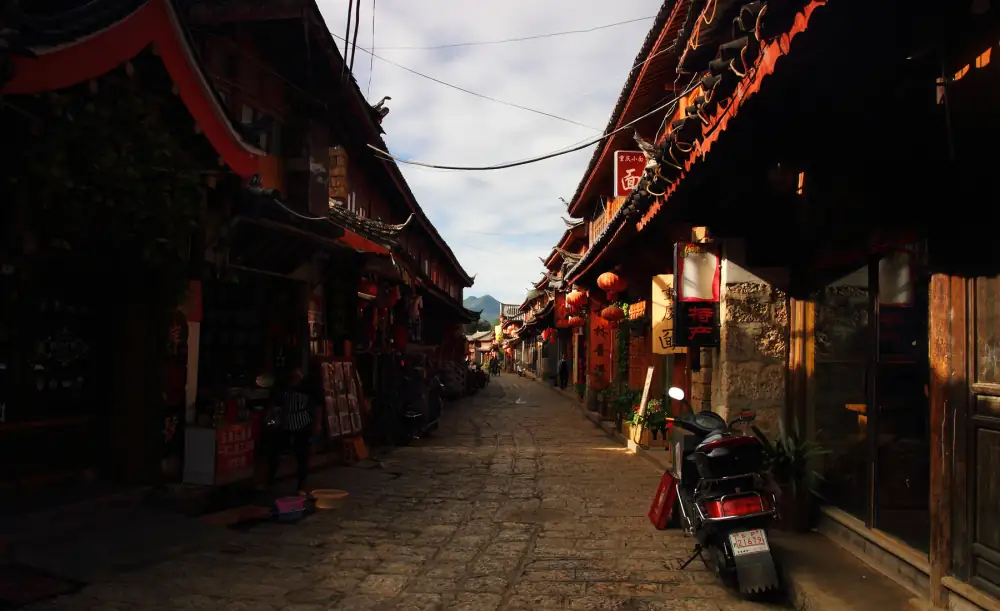
The old town extends well beyond the bar street area. Head north from Sifang Square toward the Mu Palace (木府) and Lion Hill (狮子山), then continue into the Baima Dragon Pool (白马龙潭) area — the density drops dramatically within 300m.
The canal lanes east of Sifang Square — along Qiyi Street and the lanes east of it — are residential and relatively quiet during weekday mornings. Residents, local cats, and small neighbourhood shops.
Wuyi Street and Jishan Lane: Two of the best-preserved and least-visited sections of the old town street network. Stone-paved, canal-lined, with genuine old buildings and residents who have lived here for decades.
Mu Palace (木府)
The former residence of the Mu clan — the Naxi rulers of the Lijiang region for 470 years under the Ming and Qing dynasties. Rebuilt and expanded after the 1996 earthquake; the buildings are historically accurate reconstructions rather than originals. Good exhibition on Naxi history and the Mu clan’s role.
The hill above the palace (Jingxiu Peak): A short climb behind the palace leads to a pavilion with the best elevated view of the old town roofscape and the snowfields of Jade Dragon Snow Mountain beyond. This is the photograph most visitors come for. Ticket ¥60.
Lion Hill Park (狮子山)
The forested hill immediately west of the old town — a city park with old trees and multiple viewing pavilions. The Wangu Tower (万古楼) at the summit provides a 360-degree view of the old town, the valley, and the mountains. ¥15 entry. Less visited than the Mu Palace hill despite arguably better views.
Shuhe Ancient Town (束河古镇)
7 km north of Lijiang — a quieter, less visited version of the old town concept. Shuhe was a Naxi leather-working and trade centre on the Tea Horse Road (古茶马古道) — the overland tea route from Yunnan to Tibet.
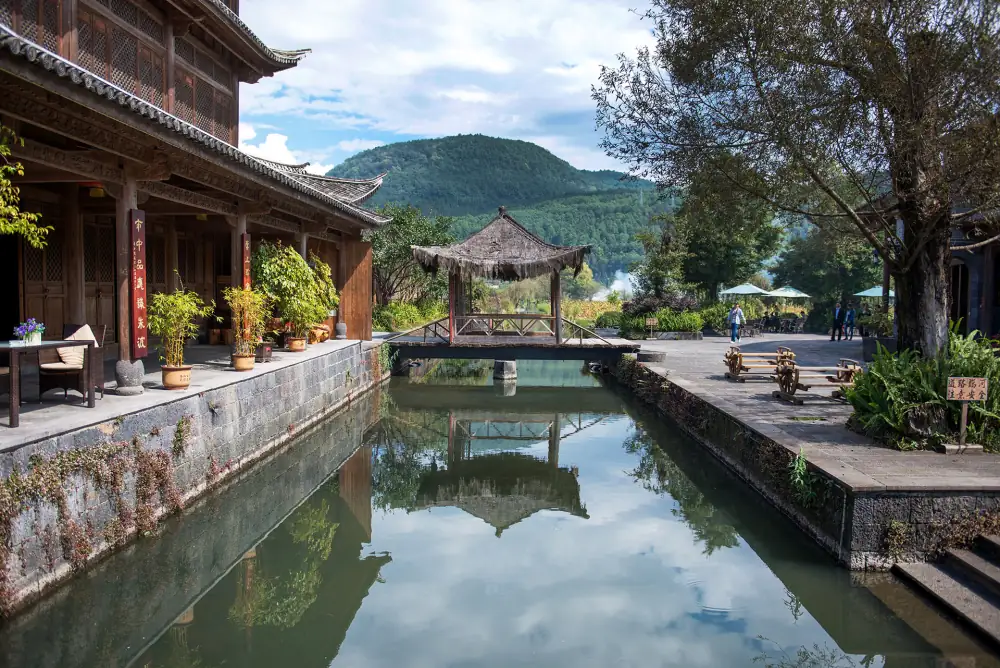
The village is smaller and much less developed than Lijiang Old Town. The central spring pools and the stone-paved streets have genuinely old texture; fewer souvenir shops, more actual residents. Several of the best guesthouses in the Lijiang area are here — staying in Shuhe and day-tripping to Lijiang Old Town gives the best of both.
The Tea Horse Road Museum (茶马古道博物馆) in Shuhe is small but good — the best context for understanding the trade networks that drove Yunnan’s historical wealth.
Naxi Culture
The Naxi people (纳西族) are the indigenous inhabitants of the Lijiang valley — approximately 310,000 people, concentrated in Lijiang and the surrounding mountains. Their culture has several aspects of extraordinary interest.
Dongba Script (东巴文字)
The Naxi Dongba pictographic script is the only pictographic script still in active use in the world. Used by Naxi dongba (shamanic priests) in ritual texts, the script consists of over 1,400 individual pictograms — each representing an object, action, or concept. The texts (called Dongba manuscripts) cover Naxi creation myths, ritual procedures, cosmology, and history.
The Lijiang Dongba Culture Research Institute (东巴文化研究院) has the world’s largest collection of Dongba manuscripts and offers calligraphy workshops.
Naxi Ancient Music (纳西古乐)
Naxi orchestral music is another unique cultural survival — a style of classical music preserved largely unchanged since the Tang and Song dynasties, when it arrived in Yunnan via the trade routes. The Naxi Music Association performs this music nightly in Lijiang.
Naxi Ancient Music Hall (大研纳西古乐会): Tickets ¥160; performances nightly at 8 PM. The musicians are elderly Naxi men (some in their 80s) playing the ensemble in traditional dress. Controversial for its degree of performance versus authenticity, but the music itself is genuinely rare and beautiful.
Jade Dragon Snow Mountain (玉龙雪山)
The massif visible from Lijiang’s old town — 5,596m at its highest peak, accessible by cable car to 4,506m.
The Glacier Park Cable Car (冰川公园索道): The main gondola from the base station (accessible by bus from Lijiang) ascends to 4,506m in 15 minutes. At this altitude, the air is thin (about 60% of sea-level oxygen), the temperature cold (0–10°C even in summer), and the views of the hanging glacier, permanent snowfield, and surrounding valley extraordinary.
Essential altitude precautions: At 4,506m, altitude sickness is a real risk. Several visitors require emergency oxygen each day (sold at the top for ¥50–100/bottle). Do not rush; walk very slowly; bring warm clothing regardless of valley temperature; do not drink alcohol the night before.
Ticket: Cable car ¥330 return (peak season); separate park entry fee ¥120.
The Spruce Meadow (云杉坪): A second, gentler cable car option ascending to 3,240m — a broad alpine meadow surrounded by spruce forest, used by Naxi ritual communities and offering good Jade Dragon Snow Mountain views without the altitude risk. ¥60 return.
Where to Eat
Local Naxi food:
- Naxi sausage (纳西腊肠): Pork sausage cured and smoked in a Yunnan style; richer and more complex than Sichuan or Hunan versions
- Naxi baba (粑粑): Flatbread stuffed with various fillings (ham, brown sugar, walnuts), eaten for breakfast; available from street vendors near Sifang Square from 7 AM
- Naxi pea jelly (碗豆粉): Cold pea starch jelly dressed with chilli oil, sesame paste, and pickled vegetables — refreshing street food ¥8–10
Best food streets: Away from the main bar strip, the residential section of Xinhua Street has several good small restaurants serving Yunnan staples: crossing-bridge noodles (过桥米线), mushroom hotpot, Yunnan goat cheese (干奶饼).
Practical Tips
High season crowds: Lijiang is one of the most visited destinations in China. July–August and national holidays create serious overcrowding in the old town. If you visit then, arrive at sunrise.
Guesthouse recommendation: Book a courtyard guesthouse inside the old town walls for the atmospheric morning and evening experience. Several excellent options around 500–1,200 RMB/night for a private room in an old building.
Getting to Shuhe: Bus from Lijiang Old Town: approximately 20 minutes, ¥6. Or bicycle hire from the old town (¥30–50/day).
Lijiang requires patience — with the crowds, with the commercial overlay, with the distance between the tourist strip and the town underneath. But the town underneath is still there, and still extraordinary. The lanes, the waterways, the mountains above, the Naxi music at night — they reward the visitor who stays longer than a day and walks further than West Street.
Last updated: May 2026