
Table of contents
Open Table of contents
Geographic Context
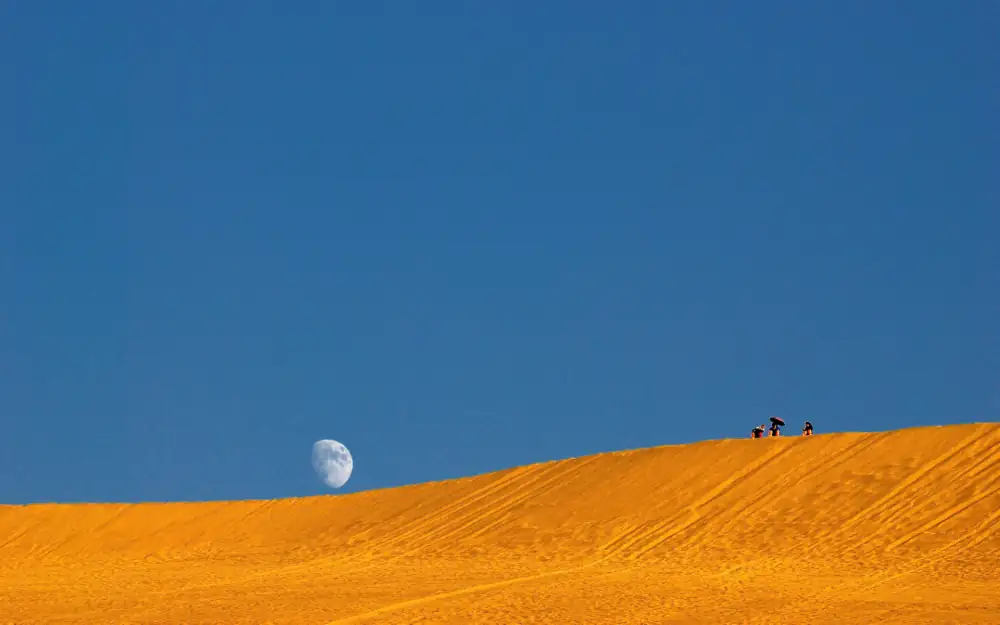
The Yellow River Source Area (黄河源头地区) encompasses a broad wetland complex in the eastern Tibetan Plateau. The headwater streams ultimately trace back to glaciers on the Bayan Har Mountains, but the recognized “source lake” system is centered on two enormous adjacent lakes: Zaling Lake (扎陵湖) and Eling Lake (鄂陵湖), both at around 4,290m elevation.
These are massive bodies of water — Zaling covers 526 km² and Eling 610 km², making them among the largest freshwater plateau lakes in China. Together with the surrounding wetland ecosystem, they support enormous populations of migratory birds and protect the headwater flows that will eventually deliver 7% of China’s total freshwater resource.
The plateau here is also the “Three Rivers Headwaters” area (三江源), where the Yellow River, Yangtze River, and Mekong River all rise within roughly 100km of each other. The Three Rivers Source National Park, established in 2016, covers most of this region.
Getting to Maduo
From Xining
Xining (西宁) is Qinghai’s capital and the most practical starting point. From Xining to Maduo County Town is approximately 470km by road, which takes 6–8 hours depending on conditions.
Options from Xining:
- Shared long-distance bus: Buses run from Xining Bus Station (西宁汽车站) toward Golog Prefecture. The journey to Maduo is long and involves a transfer in Maqin (玛沁). Total journey time: 10–14 hours. Cost: ¥150–200.
- Chartered vehicle: Most practical option. Rent a 4WD with driver from Xining for the full trip. Typical cost: ¥800–1,200/day, with at least 2 days needed to reach Maduo and return. Negotiate a package rate.
- Organized tour: Several Xining-based agencies offer Maduo/Yellow River Source tours of 3–5 days. Costs from ¥2,000–3,500 per person including vehicle, accommodation, and meals.
The road (G214 National Highway and then county roads) is paved but passes through some of the highest, most remote territory in China. Mobile signal disappears for long stretches.
From Yushu (Jyekundo)
Yushu (玉树州府, about 380km from Maduo) has an airport with connections to Xining, Chengdu, and Xi’an. From Yushu, you can rent vehicles locally and approach Maduo from the west.
Fuel and Supplies
Maduo County Town has a gas station. There are limited supplies on the road. Before heading to the lake areas, fill up and carry water and food. There’s essentially nothing between Maduo Town and the source lakes except road and plateau.
The Yellow River Source Area (黄河源头景区)
Zaling Lake and Eling Lake (扎陵湖·鄂陵湖)
The two lakes are about 30km from Maduo County Town by road. Entry to the scenic area costs ¥80 per person. An electric bus runs between the visitor center and the lakeshores (included in ticket).
The lakes appear from a distance like a mirage — sheets of turquoise water reflecting the clouds, surrounded by absolutely flat yellow-brown grassland with mountains on the horizon. The color contrast, especially in morning light, is extraordinary and like nothing else in China.
At the official Yellow River Source Monument (黄河源头纪念碑) near Eling Lake, a stone marker commemorates the hydrological survey that established this as the river’s origin. The monument area has been developed into a small scenic viewpoint.
Photography tip: Arrive early morning (7–9am) for the best light. The lakes’ colors are most vivid in clear conditions; storm light can be even more dramatic. Polarizing filters are useful to manage reflections.
Bird Watching
The lake wetlands are exceptional for migratory birds, particularly May–September. Black-necked cranes (黑颈鹤, China’s only alpine crane species) breed here. Bar-headed geese, various species of ducks and gulls, and occasional rare raptors can be seen. Bring binoculars.
The “Yellow River First Bridge” (黄河第一桥)
There’s a small bridge near the source lakes that’s promoted as the “first bridge over the Yellow River.” It’s not architecturally impressive but the symbolic value — standing over the trickle that becomes one of the world’s great rivers — gives it a strange power.
Maduo County Town
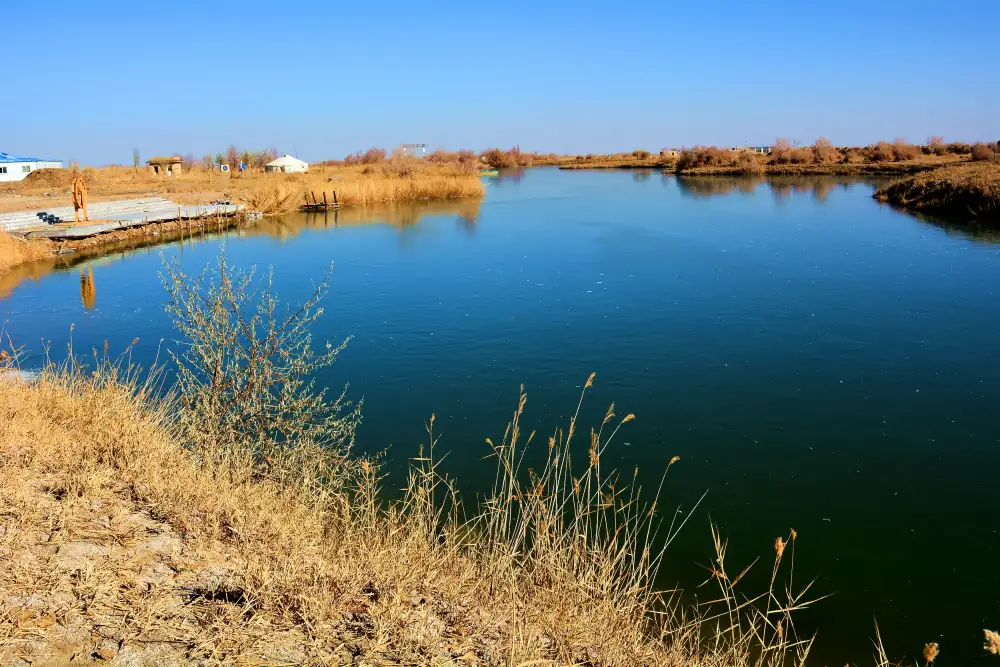
The county town itself (马多县城) is a small administrative settlement of a few thousand people, mostly Tibetan, sitting on the plateau at 4,272m. It has basic hotels, a few restaurants, a gas station, and the shops you’d expect in any Chinese county town.
There’s nothing here in the tourist-attraction sense, but spending time just walking around gives insight into the reality of life at extreme altitude in rural China. The local Tibetan culture is visible — prayer flags on houses, a small monastery at the edge of town, yak butter being sold at the market.
Accommodation: Several guesthouses and small hotels, basic double rooms ¥100–200/night. Don’t expect hot showers to be reliable. Book ahead if possible.
Altitude Warning
Maduo is serious altitude country. The county town sits at 4,272m and the lake area is at 4,290m. For context, this is higher than many Himalayan base camps.
Acclimatization is non-negotiable here. The protocol:
- Spend at least 2 nights in Xining (2,275m) before heading up
- Spend 1 night in an intermediate point like Maqin (3,719m) before pushing to Maduo
- Rest the first day in Maduo before visiting the lakes
- Carry Diamox (discuss with doctor before travel)
- Avoid alcohol for your first few days at altitude
- Descend immediately if symptoms become serious
Altitude sickness here can kill if ignored. This is not hyperbole — the combination of remoteness and high elevation means there is no rapid medical evacuation option.
Three Rivers Source National Park
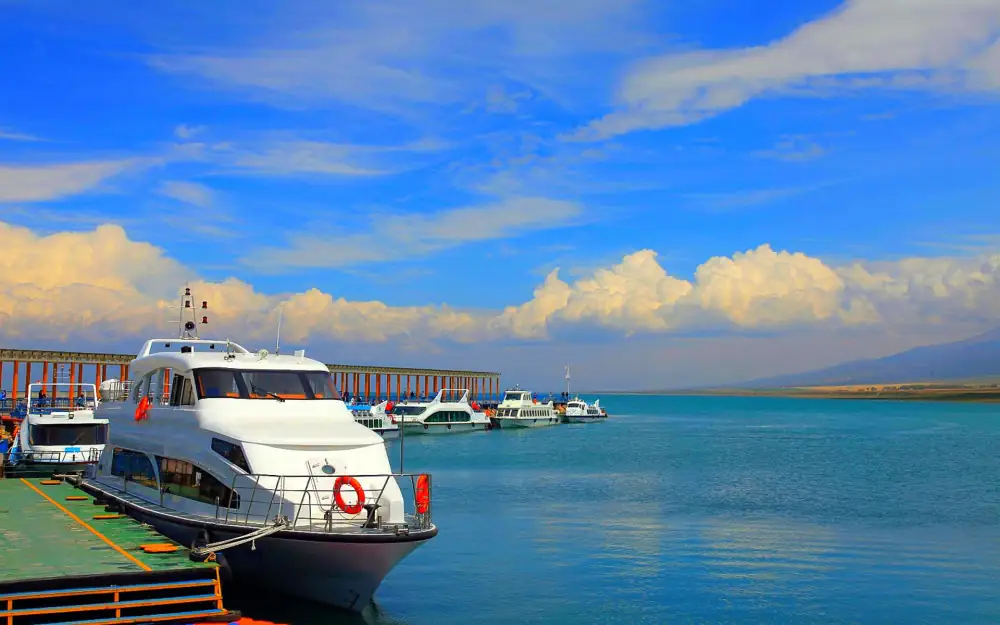
Maduo sits within the Three Rivers Source National Park (三江源国家公园), one of China’s largest and highest-priority ecological preserves. Some areas within the park require permits or have restricted access.
The core protection zones around the river sources are relatively accessible for tourists with no special permit, but if you plan to go off-road or venture into restricted buffer zones, check with the county government or your tour operator about current permit requirements. Regulations have been tightening as the park administration develops.
What to Bring
Essentials:
- Altitude sickness medication (Diamox) and basic first aid
- Warm layers including down jacket — even July nights go below 5°C
- Sun protection (high-altitude UV is intense): sunscreen SPF 50+, sunglasses, hat
- 3+ liters of water carrying capacity; buy bottled water before leaving town
- High-calorie snacks for the road
- Portable battery for phone/camera (cold kills batteries fast)
- Offline maps (no signal in the lake area)
For photography:
- Wide angle lens for landscape scale
- Polarizing filter for lake colors
- Neutral density filter for long exposures of water
- Extra memory and batteries
Practical Information
Best months: June–September. July and August have the most stable weather and the lushest grassland. September offers clearer skies and beginning of autumn color. October–May, the plateau experiences harsh conditions and many facilities close.
Entry requirements: No special Tibet permit needed for Qinghai province (unlike the Tibet Autonomous Region). All nationalities can visit.
Phone signal: Spotty in Maduo Town, absent in the lake area. Download offline maps to your phone (Maps.me or Gaode Maps) before leaving Xining.
Currency: Cash is essential — very limited card acceptance. Carry ¥2,000+ in cash.
Environmental awareness: The Three Rivers Source Area is an ecologically fragile zone. Stay on designated tracks, don’t litter, and respect the wetland ecosystem.
Maduo is a place that confronts you with scale — the scale of the Chinese landscape, the scale of geological time, the scale of human smallness. Standing at the source of a river that waters 400 million people, in a silence broken only by wind and distant yak bells, is an experience that puts everything else in perspective.