
Table of contents
Open Table of contents
Permits Required for Shigatse
Foreign visitors to Tibet require multiple permits:
Tibet Travel Permit: The main permit for all of Tibet. Must be arranged through a registered Tibetan travel agency as part of a guided tour. Plan 2-4 weeks in advance. Cannot be applied for independently.
Alien’s Travel Permit: Required specifically for Shigatse and areas outside Lhasa. Obtained simultaneously through your agency.
Frontier Pass: Required for Everest Base Camp area. Also arranged through your agency.
In practical terms, book a guided tour package that includes permit processing. Lhasa-to-Shigatse 4-day tours including permits, guide, and transport typically start at 2,800-4,500 yuan per person.
Tashilhunpo Monastery
Tashilhunpo is one of Tibet’s six great Gelugpa monasteries and the largest in Tsang (western Tibet). At its peak it housed over 4,000 monks; today the community numbers in the hundreds but remains active and spiritually vibrant.
The Maitreya Temple: Houses the world’s largest gilded bronze seated statue of the future Buddha Maitreya, standing 26.7 metres tall, covered in 279kg of gold and studded with precious stones. Entering this temple is genuinely breathtaking regardless of religious background.
The Panchen Lama Tombs: Stupa-shaped reliquary structures housing remains of past Panchen Lamas. The largest, for the 4th Panchen Lama, stands 11 metres high.
The Assembly Hall: The main prayer hall where monks gather for communal rituals. Visitors may enter during non-ceremony hours. The smell of juniper incense and butter lamps creates an atmosphere unlike anything in secular architecture.
The Monastery Kora: The circumambulation path around the monastery walls takes about 45 minutes. Prayer wheels line sections of the wall. Early morning (7-9am) is when pilgrims are most active.
Tickets: 90 yuan per person. Open 9:00am-6:00pm. Photography is permitted in the grounds but restricted inside individual halls.
Getting to Shigatse from Lhasa
By Train: The Lhasa-Shigatse railway (opened 2014) takes approximately 3 hours and covers remarkable plateau scenery. Tickets: 28-56 yuan second class. Trains run 3-4 times daily.
By Road: The Friendship Highway (G318) connects Lhasa to Shigatse in approximately 4-5 hours by private vehicle. Many tour packages use this route because it allows stops at Yamdrok Lake and Kambala Pass.
Distance: Lhasa to Shigatse is approximately 280km by road.
The Route to Everest Base Camp
From Shigatse, the Tibetan EBC route continues south and west along the Friendship Highway:
- Shigatse to Lhatse: approximately 150km (2.5 hours)
- Lhatse to Tingri: approximately 110km (2 hours)
- Tingri to Rongbuk (EBC area): approximately 65km (1.5-2 hours on rough road)
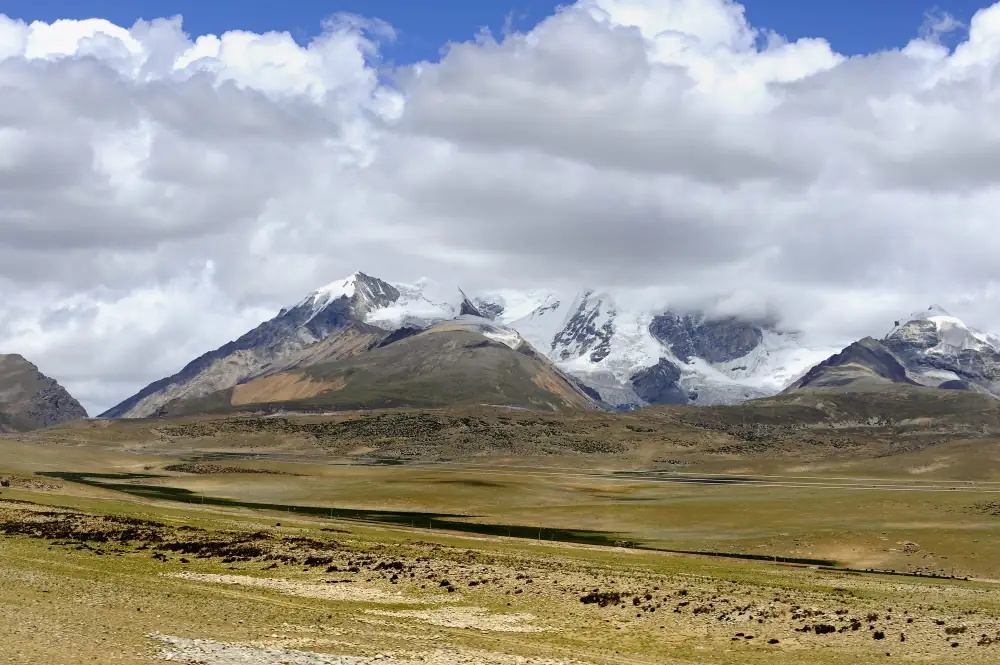
Everest Base Camp Tibet side (5,200m): You arrive by vehicle to within 4km of the camp, then walk or take a shuttle. Views of Everest’s north face at sunrise are extraordinary. The Rongbuk Monastery at 5,100m is the world’s highest monastery open to visitors.
Best season for EBC: April-May and September-October offer the clearest views. June-August has monsoon cloud coverage.
Altitude and Health
Shigatse at 3,840m is higher than anything in the European Alps. Key rules:
- Spend at least 2 nights in Lhasa (3,650m) before travelling to Shigatse
- Rest on arrival day; avoid exertion
- Drink 3-4 litres of water daily
- Avoid alcohol for the first 48 hours
- Carry altitude medication (acetazolamide) as a precaution
If heading to EBC (5,200m), allow additional acclimatisation days in Shigatse.
Where to Stay in Shigatse
Budget: Guesthouses near the monastery, 150-300 yuan per night. Several Tibetan-style guesthouses with basic but clean rooms.
Mid-range: The Shigatse Manasarovar Hotel and similar properties, 300-600 yuan per night.
Upscale: The Shigatse Hotel has been the standard business-class option for years, 600-1,200 yuan per night. Book ahead in peak season (April-May, September-October).
Local Food in Shigatse
Tsampa: Roasted barley flour mixed with yak butter tea — the staple food of Tibetan culture. Worth trying once.
Butter Tea: Yak butter blended with salt and tea. Genuinely warming in cold weather.
Yak Meat: Available as dried jerky, in stews, or as momos (dumplings). The local yak beef hotpot is popular.
Thukpa noodle soup: Wheat noodle soup widely available and approachable for all tastes. Around 20-35 yuan per bowl.
Restaurants near Tashilhunpo cater to tourists with Tibetan, Chinese, and Western options. Budget 50-100 yuan per person for lunch or dinner at a sit-down restaurant.
The Old Market and Shigatse Town
The area around the old Shigatse Dzong (fortress ruins) and the traditional market has been partially reconstructed as a pedestrian heritage zone. Stalls sell traditional Tibetan goods: prayer flags, singing bowls, thangka paintings, dried yak meat, turquoise jewellery, and practical items like yak wool blankets. Prices are genuinely negotiable — begin at about half the asking price for non-food items.
The new Shigatse is a modern Chinese city with wide boulevards and standard urban facilities. The contrast between the monastery quarter and the modern city is quite stark.
Practical Tips for 2026
Internet: Connection is limited and VPNs are particularly difficult to maintain in Tibet due to network restrictions. Download offline maps and content before arriving.
Cash: Carry sufficient yuan cash — ATMs exist but can be unreliable. Card payments are less common than in other parts of China.
Cold nights: Even in summer, temperatures drop significantly after dark at this altitude. Bring thermal layers.
Respectful behaviour: Tibetan Buddhism is practised here with deep sincerity. Walk clockwise around religious structures, don’t point feet at altars, ask before photographing monks or rituals, and dress modestly.
Photography: Do not photograph any security installations or military facilities, which is strictly prohibited.
Combine with Lhasa: Most visitors see Shigatse as part of a broader Tibet itinerary including Lhasa’s Potala Palace, Barkhor Street, and Sera or Drepung monasteries. Allow at least 5-7 days for a meaningful Tibet experience.
Shigatse rewards the effort required to reach it. The monastery alone justifies the journey, and if you can push on to the Everest viewpoints, you’ll have one of the great travel experiences that China offers — vast, humbling, and genuinely unlike anywhere else.