
Xiamen consistently ranks at or near the top of Chinese cities for liveability, and visiting it reveals why. The city sits on a peninsula (and several islands) on the Fujian coast, facing Taiwan across the Strait. The weather is warm almost year-round, the city is clean and well-maintained, the seafood is excellent, and there’s a cosmopolitan, outward-looking character that traces back to centuries of maritime trade with Southeast Asia and beyond.
The Hokkien (Fujian Minnan) diaspora in Malaysia, Singapore, Indonesia, and the Philippines all have deep roots in this part of Fujian. Walking through Xiamen’s old Hokkien neighborhoods and then visiting Gulangyu Island’s colonial architecture, you can feel the accumulated cosmopolitan history.
Table of contents
Open Table of contents
Gulangyu Island (鼓浪屿)
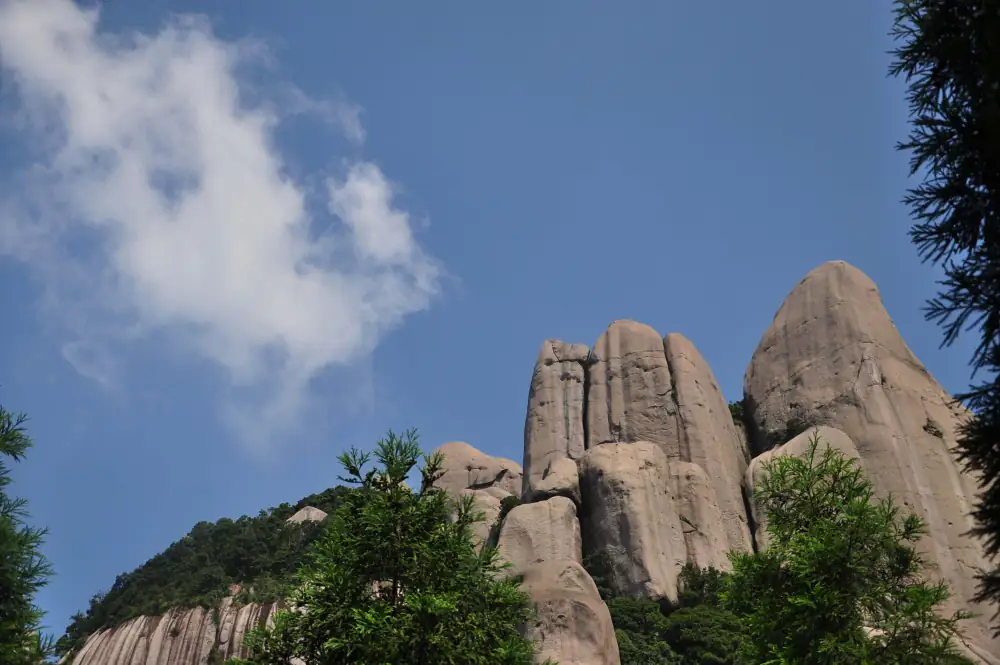
Gulangyu is a car-free island about 600 metres across the water from Xiamen’s main shoreline. The island was designated an international settlement by treaty in 1903, with different colonial powers — British, German, American, Japanese, Dutch — establishing consulates and residential villas. The result is an extraordinary architectural collection: 931 historic buildings in European, American, and hybrid colonial styles.
UNESCO Status: Gulangyu was inscribed as a UNESCO World Heritage Site in 2017.
Getting there: Ferry from Xiamen’s Lundushan Dock (轮渡山码头)
- Day ferry: ¥8 each way (local Xiamen residents); ¥35–50 for tourists (includes return; you pay on arrival from Xiamen, and the return is your exit from the island)
- Night ferry: Runs until about 11pm; the return journey in late evening with the Xiamen skyline lit up is excellent
- Ferry time: About 10 minutes
The island’s layout: Gulangyu is 1.87 sq km and can be walked end-to-end in about 30 minutes, though the winding lanes take longer to explore properly.
Piano Culture
Gulangyu has an unusual connection to European classical music: by the early 20th century, the colonial resident population had brought pianos to the island, local Hokkien families took up the instrument, and it became deeply embedded in the culture. The island produced more pianists per capita than almost anywhere in China during the mid-20th century.
Gulangyu Piano Museum (鼓浪屿钢琴博物馆): A collection of over 100 historic pianos in a beautiful garden setting; entry ¥20. Recitals are occasionally held.
Architecture and Walking
The best approach to Gulangyu is unstructured walking through the lane system rather than following the standard tourist route.
Shuzhuang Garden (菽庄花园): A private garden built by a Taiwanese merchant in 1913, incorporating the sea scenery as part of the design. The garden descends to the sea shore with a covered walkway extending over the water. Entry ¥35.
Sunlight Rock (日光岩): The highest point on the island (92m), accessible via a short hike or cable car. The views from the top cover the island, Xiamen’s skyline, and on clear days you can see the outline of Taiwan’s Kinmen (Quemoy) Island. Entry ¥60.
The consulate buildings: The old British Consulate, German Consulate, and various villa residences are scattered throughout the island. Many are now hotels, restaurants, or museums; some are simply walking-by architecture.
Avoiding the main tourist drag: The pedestrian street closest to the ferry dock is extremely crowded with souvenir shops. Walking 10–15 minutes into the residential lanes (especially the western and southern parts of the island) takes you into a much quieter version of Gulangyu with real residents going about their lives.
Xiamen’s Coffee Culture
Xiamen has the highest density of specialty coffee shops in China — it’s not close. The city has developed an extraordinary café culture over the past 15 years, with hundreds of independent specialty coffee shops in the Zhongshan Road area, the university district, and the Gushan area.
Why Xiamen? The Hokkien diaspora connection to Southeast Asia (where good coffee has been a cultural staple for generations), the high proportion of well-traveled young professionals, and the city’s general quality-of-life culture all play a role.
Where to find the best coffee:
Zhongshan Road area (中山路): Multiple excellent cafes in the old commercial street area; most will have good single-origin espresso from ¥25–45.
University district (厦门大学附近): The area around Xiamen University has an excellent concentration of specialty cafes catering to students and academics. Walk down Furong Tunnel Road (芙蓉隧道) for street art and cafes.
Gulangyu itself: Several excellent cafes in the island’s residential areas — slower, quieter, with sea views.
Recommended spots: Ask for current recommendations at your hotel; the scene changes regularly. Generally, any café with a visible espresso machine and visible coffee beans is a reasonable bet.
Nanputuo Temple (南普陀寺)
Nanputuo is an active Buddhist monastery founded in the Tang Dynasty, set against the backdrop of Wulaofeng (Five Elder Peaks) on the south side of Xiamen Island. The complex is large, well-maintained, and genuinely active — monks live and work here, and the vegetarian restaurant run by the monastery is one of the best Buddhist vegetarian restaurants in Fujian.
Opening hours: 7:00am–7:00pm
Entry: Free
Location: South of Xiamen University; Metro Line 3 to Nanputuo station
Vegetarian restaurant: Operating since 1924, serving elaborate vegetarian cuisine that mimics meat dishes using tofu, mushrooms, and gluten. Lunch and dinner seatings; ¥50–100 per person.
Xiamen University (厦门大学)
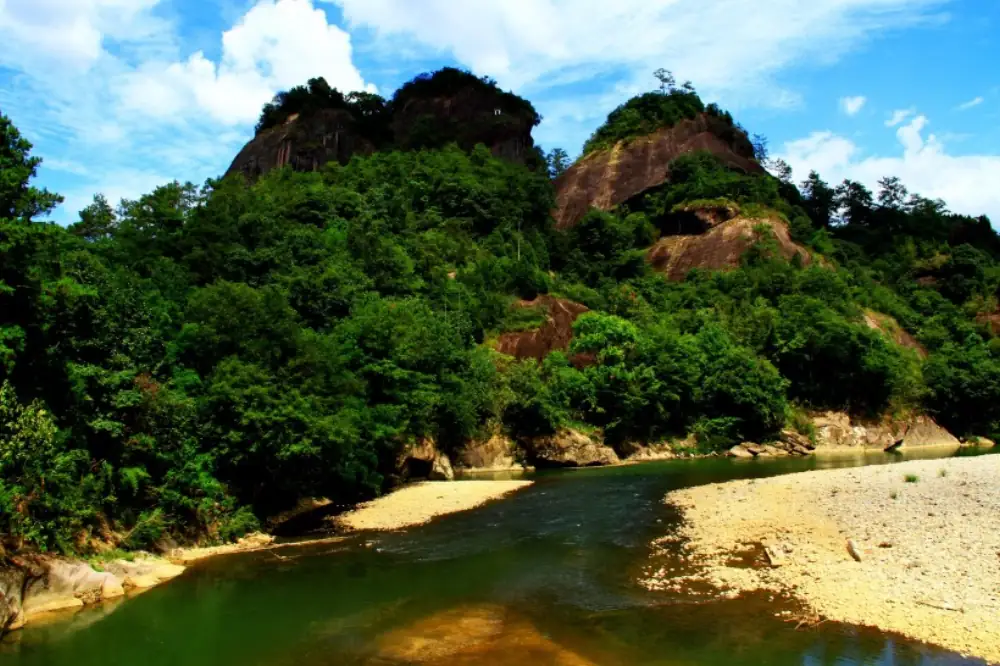
Xiamen University, founded in 1921 by a Hokkien overseas Chinese businessman from Singapore (Chen Jiageng), has one of the most scenic campuses in China — colonial-style buildings set between Furong Lake and Wulaofeng, with direct access to the beach.
The campus is open to visitors (bring ID; register at the gate). The best walk: enter from the main gate, go around Furong Lake, up to the Furong Tunnel (decorated with student murals), and out to the university beach (白城沙滩) on the southern shore.
Beach access: The campus beaches are clean and swimmable June–October; free.
Kinmen (Quemoy) Island Views
From Huandao Road on the east coast of Xiamen Island, or from the top of Sunlight Rock on Gulangyu, on a clear day you can see the Taiwanese-administered Kinmen Islands — the small islands that faced off against the mainland during the 1958 military crisis and are still technically controlled by Taiwan.
There are no regular civilian ferry services between Xiamen and Kinmen (despite geographical proximity of about 3km at the closest point), and crossing requires special arrangements.
Getting to Xiamen
By air: Xiamen Gaoqi International Airport (XMN) is one of China’s busier airports; direct flights to most major Chinese cities. 30 minutes by taxi/metro from the city centre.
By high-speed train: Xiamen North Station (厦门北站) on the Fuzhou-Xiamen high-speed line:
- From Fuzhou: about 1.5 hours, ¥100–140
- From Shanghai: 4–5 hours, ¥250–330
- From Guangzhou: About 3 hours, ¥180–240
Metro from Xiamen North to city centre: Lines 1 or 3, about 40–50 minutes.
Getting Around Xiamen
Xiamen’s metro has 6 lines and covers the main tourist areas well. Key stations:
- Zhongshan Road (中山路): Shopping and old town area
- Nanputuo (南普陀): Temple and university area
- Zhongbu (中埔): Near the Gulangyu ferry dock area
Taxi base fare: ¥12. Didi works throughout the city.
Cycling: Xiamen has a good bike-share system (Meituan bikes) and excellent cycling paths, particularly along the coast.
Where to Stay
Gulangyu Island: Staying on Gulangyu itself is the most atmospheric option — guesthouses in converted colonial villas. ¥300–800/night; book well in advance for weekends.
Zhongshan Road area: Central location, easy access to everything. Hotels from ¥250–600/night.
Near the beach (Huandao Road): More resort-style; good for summer beach visits. International chains at ¥600–1,200/night.
When to Visit
October–April: Best weather — the summer typhoon season (July–September) can bring heavy rain and disruption. Temperatures in October–April: 15–25°C, mostly sunny.
May–June: Hot but pre-typhoon season; generally good conditions.
July–August: Peak Chinese domestic tourist season; crowded and risk of typhoons. Not recommended.