
Golmud (格尔木, also spelled Geermu) sits in the Qaidam Basin (柴达木盆地) at 2,809 meters above sea level, a city of about 220,000 people in one of the most arid and remote regions of China. It exists primarily because of two things: the Qinghai-Tibet Railway, which passes through Golmud on its way to Lhasa, and the Qaidam Basin’s extraordinary mineral wealth — potash, lithium, salt, and rare earths that have made this harsh landscape economically significant.
For travelers, Golmud serves as the practical gateway to Tibet overland. The Qinghai-Tibet Highway (G109) begins its 1,150km journey to Lhasa from here, and the railway stops at Golmud station before beginning its dramatic ascent of the Tibetan Plateau. But Golmud also has its own surprising attractions: a salt lake that’s one of the largest in the world, yardang wind-carved rock formations, and a desert landscape of genuine beauty that’s becoming increasingly recognized.
Table of contents
Open Table of contents
Getting to Golmud
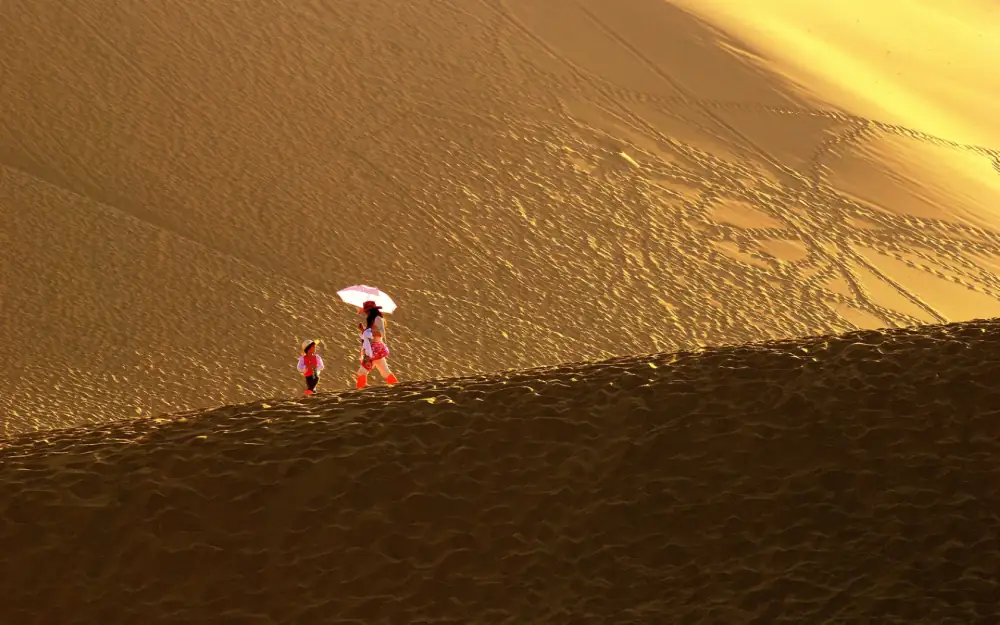
By train:
- From Xining (Qinghai capital): About 8–10 hours; ¥150–230; multiple daily departures on the Qinghai-Tibet Railway
- From Lhasa: About 12–14 hours; ¥220–370
- From Chengdu: About 20 hours (via Xining); ¥280–420
- From Beijing: About 24 hours; ¥350–550
By air:
- Golmud Airport (格尔木机场): Direct flights from Xining (1 hour, ¥300–500) and Chengdu; limited schedule
- Airport is 12km from the city center; taxis ¥30–40
By road:
- From Xining: About 8–10 hours via G109
- From Dunhuang: About 5–6 hours; this is the more dramatic drive through the Gobi Desert
Golmud as Gateway to Tibet
Golmud is the last major supply point before the Tibetan Plateau proper. Whether traveling by road or rail, the journey to Lhasa from here crosses some of the highest terrain accessible by conventional transport:
The Qinghai-Tibet Railway from Golmud: The railway begins its ascent of the Tanggula Pass (唐古拉山口, 5,072m) — the highest railway point in the world. Oxygen is supplied in the carriages above 4,000m. The journey from Golmud to Lhasa takes about 12–14 hours and passes through extraordinary high-altitude landscape including the Kekexili (Hoh Xil) nature reserve where Tibetan antelope and wild yak are sometimes visible from the train.
Booking the Golmud-Lhasa segment: This is one of the hardest train tickets to obtain in China. Book at least 15 days in advance during peak season (June–September). The scenery from the left side of the train (facing the direction of travel from Golmud) is generally better — request a left window seat if possible.
The Qinghai-Tibet Highway (G109): The road to Lhasa from Golmud is about 1,150km; driving time approximately 15–18 hours of actual driving, typically split over two days with an overnight at Amdo (安多) or Nagqu (那曲). The road is paved and generally in reasonable condition, but altitude sickness is a serious concern — the highway crosses multiple passes above 5,000m.
Foreign travelers: The Tibet Travel Permit (TTP) is required. Arrange through a licensed Tibetan travel agency before arriving in Golmud. You cannot board the train or drive to Lhasa without this permit.
Qarhan Salt Lake (察尔汗盐湖)
The Qarhan Salt Lake is the largest salt lake in China and one of the largest in the world, covering about 5,800 square kilometers of the Qaidam Basin floor. It’s a working industrial site — potash and lithium are extracted here at massive scale — but the visual spectacle of the salt flats is extraordinary.
What you’ll see:
- Vast expanses of crystalline salt crust in white, pale green, and occasional pink tones
- The famous Wan Zhang Salt Bridge (万丈盐桥): A 32km road built entirely on the salt crust of the lake — the “bridge” is literally a road on compressed salt; the surface looks like normal asphalt but it’s salt beneath
- Salt harvesting areas where geometric patterns of evaporation ponds create striking color contrasts — pale green potash solution against white salt, with the desert mountains behind
- The sheer emptiness and scale — standing on the salt flats with mountains visible 50km away on every horizon
Getting there: About 60km north of Golmud city; the site is along the main highway toward Dunhuang. Bus services are limited; taxi (¥150–200 round trip) or hired car is the most practical option.
Entry fee: The industrial area requires arrangement through the Potash Company tourism office; some areas are accessible without special permit. Check locally; regulations change.
Best time: June–September for the clearest weather and most vivid evaporation pond colors. Winter is bitterly cold but the salt formations under snow are surreal.
Yardang National Geologic Park (雅丹国家地质公园)
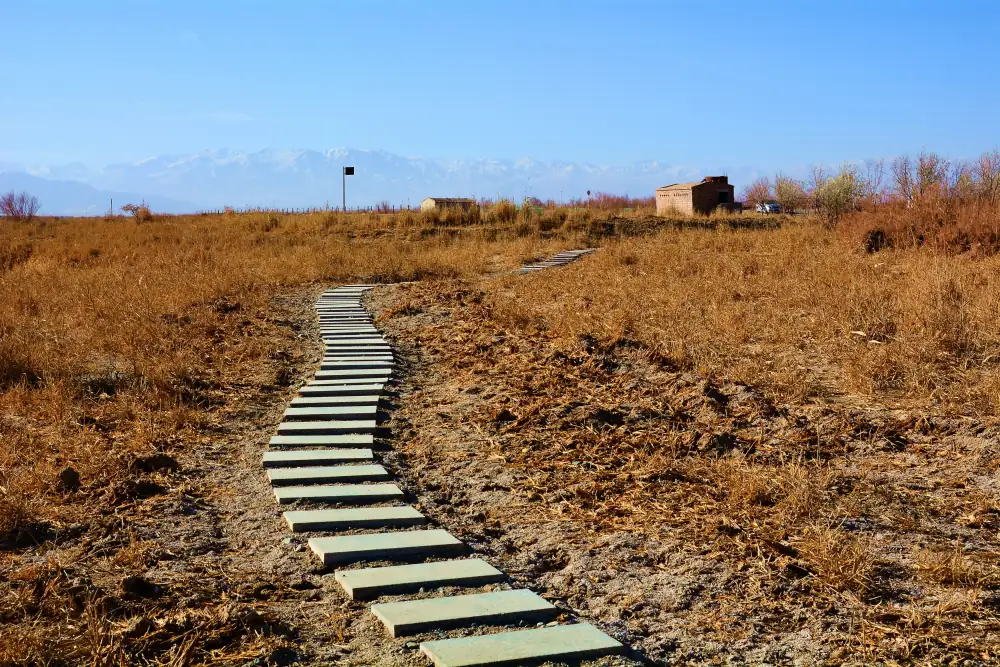
About 100km northwest of Golmud in the Lenghu area, the Yardang (雅丹) formations are one of the most visually striking geological features in China — a landscape of wind-carved sandstone pillars, ridges, and towers stretching across a barren plain.
What yardangs are: Yardangs form when strong prevailing winds erode soft sedimentary rock over millions of years, carving it into streamlined shapes that point in the wind direction. The result resembles a city of stone — hence the Chinese nickname “Devil City” (魔鬼城) applied to many yardang sites.
The Lenghu Yardang park:
- Extensive field of yardang formations covering about 20 square kilometers
- Heights range from 5–25 meters; the shapes vary from sharp ridges to rounded domes to precarious towers
- The wind — constant and strong — is itself part of the experience; it makes the eerie howling sound that gave the “Devil City” name
- Best light: late afternoon when the low sun creates long shadows across the formations
Entry fee: ¥50 per person
Getting there: About 2 hours by car from Golmud; hire a driver (¥300–400 round trip)
Note on Lenghu: The nearby town of Lenghu (冷湖) is itself an extraordinary place — a nearly abandoned former oil town in the middle of the desert that’s being partially repurposed as an astronomical observatory site. The combination of the old oil town ruins and the yardang formations is a photographer’s dream.
The Qaidam Basin Landscape
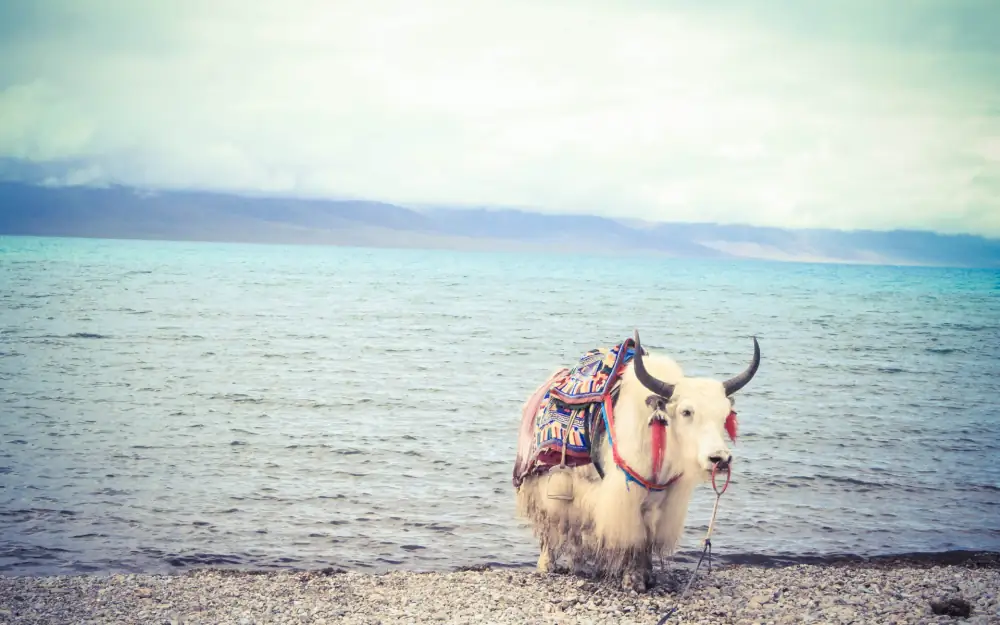
The broader Qaidam Basin — the third largest inland basin in China at about 250,000 square kilometers — is a landscape of extremes. Annual rainfall averages less than 50mm in some areas; summer daytime temperatures reach 35°C while winter nights drop below -25°C. The basin floor is about 2,700m above sea level, ringed by mountain ranges on all sides.
Driving through the Qaidam: The G315 highway west from Golmud toward Ruoqiang (若羌) in Xinjiang passes through some of the most visually dramatic desert in China — sand dunes, salt flats, eroded badlands, and distant snow peaks. This is not a trip for the unprepared (carry extra water, fuel, and emergency supplies) but it’s one of the great road journeys in China.
Other Qaidam attractions:
- Da Qaidam Emerald Lake (大柴旦翡翠湖): A small but vividly colored salt lake near the town of Da Qaidam, 200km north of Golmud; the lake surface reflects emerald green and turquoise; free access
- Tuosu Lake (托素湖): A freshwater lake in the northern Qaidam with birdlife; less visited and more natural than the salt lakes
Golmud City
Golmud city itself is functional rather than beautiful — a grid of wide streets, concrete buildings, and industrial infrastructure. But it has a few points of interest:
Golmud Salt Lake Museum (盐湖博物馆): Documents the geology and industrial exploitation of the Qaidam salt lakes; provides useful context for the landscape you’ll be traveling through. Entry free.
Muji Rubbings (木吉岩画): Ancient petroglyphs found in the hills about 40km from the city; some date to the Bronze Age. Accessible by hired car; no formal entry system (ask locally).
The tree-lined streets: Golmud’s main boulevards are planted with poplar trees — an incongruous sight in the desert, and a testament to the city’s investment in making the environment livable. In October, the poplars turn brilliant yellow.
Practical Information
Altitude: Golmud sits at 2,809m — high enough that some visitors feel mild effects (headache, breathlessness), but not extreme. The surrounding attractions and the road/railway to Tibet go much higher — acclimatize in Golmud for 1–2 days before ascending.
Accommodation: Multiple mid-range hotels in the city (¥150–350/night); the larger hotels (Tuole Hotel, Golmud Hotel) have English-speaking staff and are accustomed to foreign travelers heading to Tibet.
Supplies for the Tibet journey: Golmud is the last place to stock up on snacks, water, and any supplies before Lhasa. The convenience stores along the main streets are well-stocked.
Best time to visit Golmud: May to September. Winter is extremely cold and some desert access roads may be closed by snow.
Health: The dry air causes rapid dehydration — drink more water than you think you need. Sun protection is essential at this altitude and latitude.
Photography note: The Qaidam’s landscapes are best photographed in the golden hours — the flat midday light diminishes the drama of the salt flats and yardangs. Plan your excursions for early morning or late afternoon.